Parsnips are the slowest residents of the vegetable patch — sown in spring, ignored all summer, then left in the ground as the soil cools. Once night temperatures drop below freezing, the root converts stored starch into sugar as antifreeze, and the flavour shifts from earthy to almost confectionary. This recipe leans into that shift: deep-browned edges, caraway-scented butter, and a vinegar splash that stops the sweetness tipping over.
⏱ Prep 15 min🔥 Cook 40 min👥 Serves 4📊 Level Easy
Ingredients for 4 people
2¼ lb (1 kg) parsnips, medium-sized
3 tbsp (45 ml) sunflower or rapeseed oil
1 tsp fine sea salt
2 tsp (5 g) caraway seeds
⅓ cup (40 g) pumpkin seeds
3 tbsp (45 g) unsalted butter
1½ tbsp (30 g) runny honey
Finely grated zest of 1 unwaxed orange
1 tbsp (15 ml) sherry vinegar or cider vinegar
½ cup (15 g) flat-leaf parsley leaves, roughly chopped
½ tsp flaky sea salt, to finish
¼ tsp Aleppo pepper or chilli flakes (optional)
The Recipe
Heat the oven to 425 °F (220 °C conventional / 200 °C fan) and slide a large heavy baking tray in with the oil while it comes up to temperature. Vegetables placed on a cold tray release water before they ever sizzle, and steamed parsnips never build a crust. Do not skip this step.
Peel the parsnips and cut them lengthways into quarters, or into sixths if they are thicker than 2 in (5 cm) at the shoulder. Aim for pieces no more than ¾ in (2 cm) thick at the widest point so the interior turns creamy in the same time the outside colours. If a core looks pale, fibrous and distinctly woodier than the flesh around it, cut it away — it stays stringy however long you roast it.
Pat the cut surfaces completely dry with a cloth, then toss with the fine salt. Surface moisture is the single biggest obstacle to browning: dry faces hit the hot oil and start caramelising within seconds, wet ones hiss and stall.
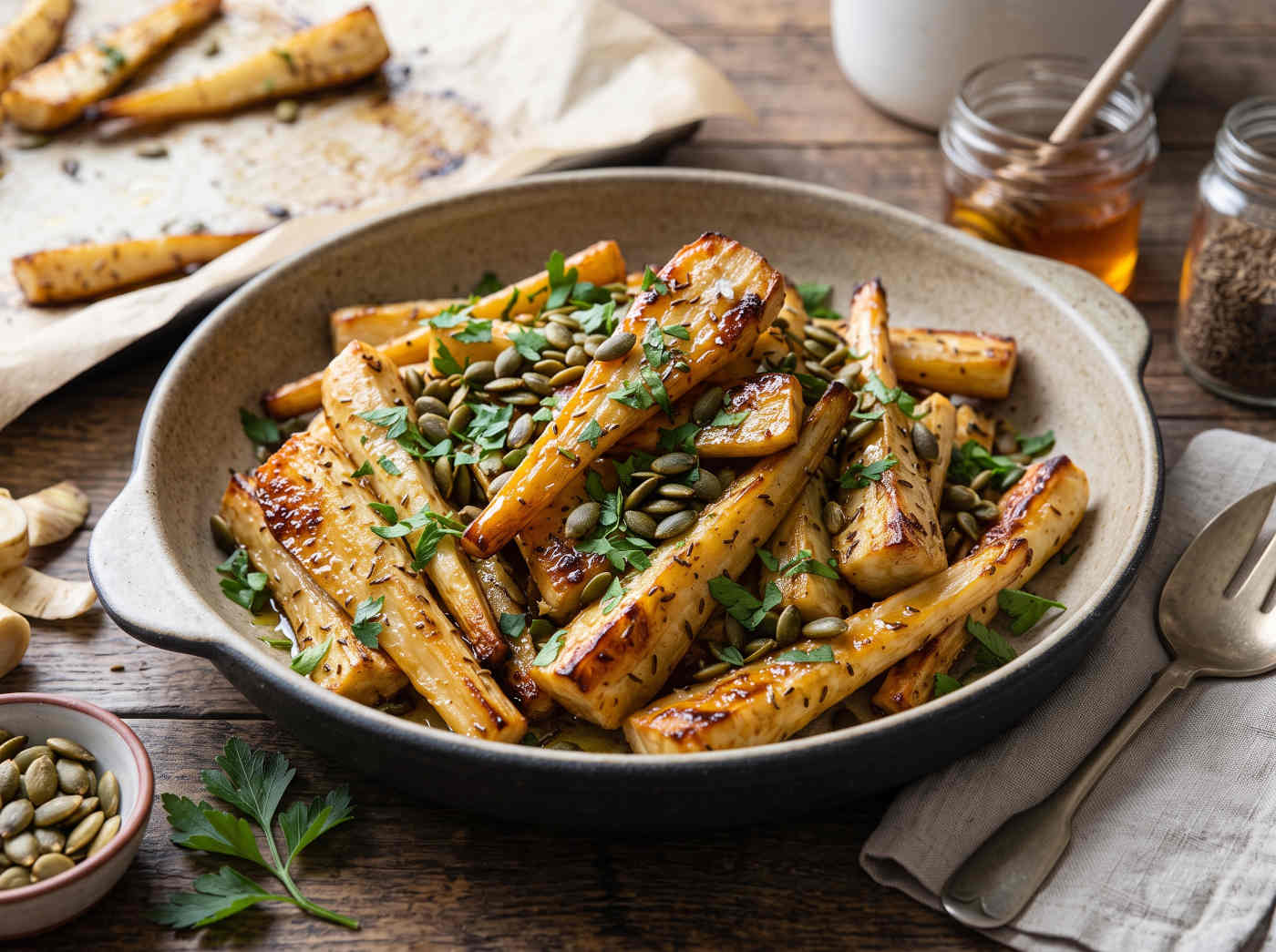
Lay the parsnips on the hot tray in one layer, a flat cut side down, with a thumb’s width between pieces. Roast undisturbed for 25 minutes. Resist turning them early — uninterrupted contact with hot metal is what produces the deep amber underside; lift one at 25 minutes and it should be the colour of maple syrup with crisp edges.
While they roast, toast the caraway and pumpkin seeds in a dry pan over medium heat for 2–3 minutes, shaking constantly, until the pumpkin seeds pop and swell and the caraway smells of aniseed and rye bread. Tip them straight onto a plate — caraway goes acrid within 30 seconds of overcooking. Crush half the caraway in a mortar and leave the rest whole.
Melt the butter with the honey, all the caraway and the orange zest over low heat until it foams gently, about 1 minute. Pour this over the parsnips, turn them cut-side up, and return the tray for 8 minutes. The glaze goes on only at the end because honey’s fructose scorches to bitterness long before a parsnip is cooked through.
Pull out the tray and splash the vinegar over the hot surface, scraping the sticky patches with a wooden spoon as it steams and lifts them. The acid is not optional: parsnip plus honey plus butter is a wall of sweetness, and the vinegar gives it an edge to land on.
Scatter with pumpkin seeds, parsley, flaky salt and Aleppo pepper if using, and serve within 10 minutes. The crisp edges soften as the glaze cools, so these want to go from tray to table rather than sit in a warm dish.