Your herbs are peaking right now — and in roughly a fortnight, the heat’ll push many of them to bolt, flower, and lose that clean, sharp flavour you actually want. Herb-infused vinegar is the fastest, most underused way to lock that flavour in. It’s about 7 days. No special equipment. It produces something genuinely useful that sits on your shelf for up to 12 months.
Herbs produce their highest concentration of volatile aromatic oils just before they flower. Tarragon, thyme, rosemary, basil, mint, lemon balm — they’re all building to that peak right now.
Once flowering begins, the plant redirects energy away from leaf production. The flavour shifts. Bitterness creeps in.
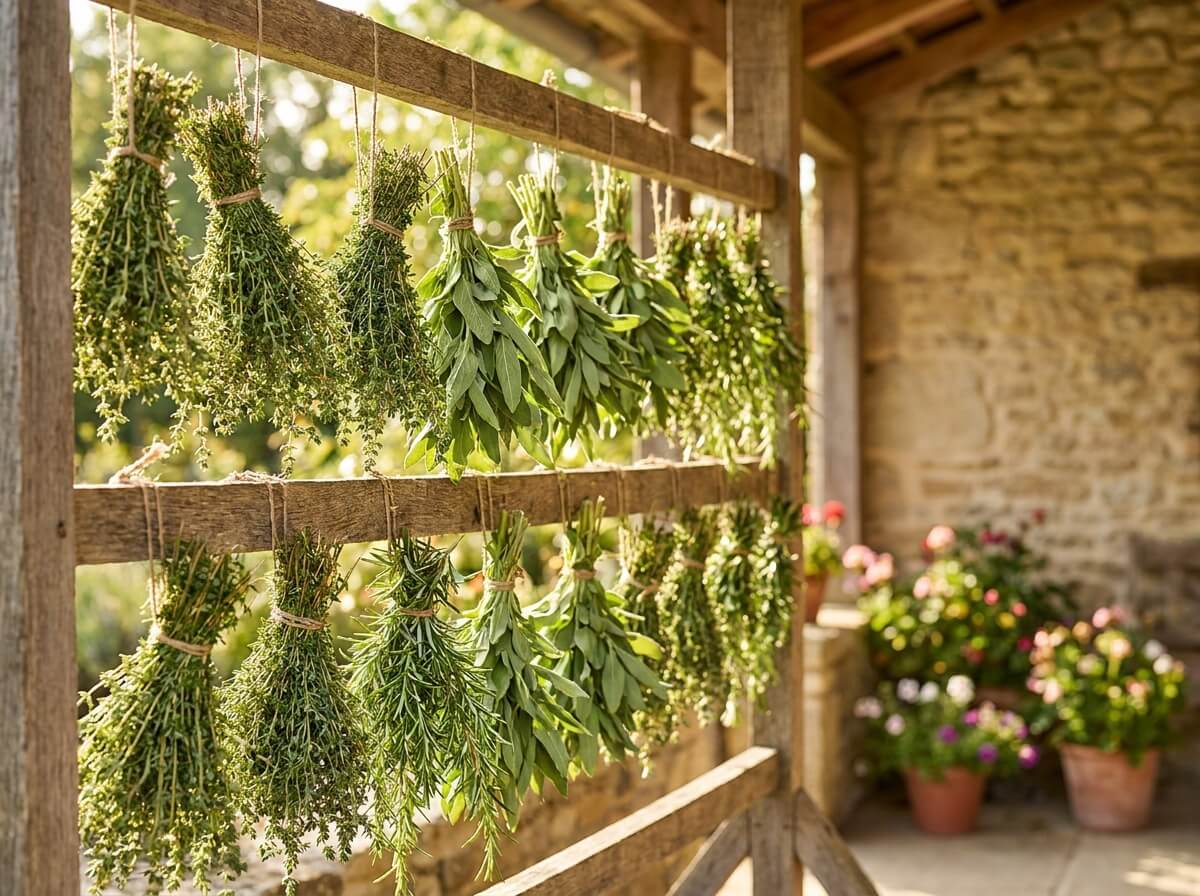
Drying herbs preserves some of that, but heat — even gentle heat — degrades the most delicate volatile compounds. Infused vinegar works cold. You capture the full aromatic profile: the anise sharpness of tarragon, the resinous warmth of rosemary, that particular green-and-sweet note in fresh basil that disappears the moment it dries. Read more about timing your cuts well in Harvest Your Herbs Before Summer Heat Steals Their Flavour.
The science backs this up. The RHS confirms that harvesting herbs in the morning — after the dew has lifted but before the midday sun drives off the oils — produces the most flavourful yield. You want a proper infusion? Pick your stems at around 9am on a dry day. It’s a non-negotiable step.
Miss the window and you’re left with two issues.
First, the flavour weakens. Post-bolting rosemary still smells pleasant, but the infusion’ll be flat. More perfumed water than punchy vinegar.
Second, flowering stems introduce tannins and sometimes a faint bitterness into the infusion that no amount of steeping time will fix.
And bolting isn’t the only risk. With El Niño-linked heat anomalies already disrupting summer weather patterns across the Northern Hemisphere in 2026, temperature spikes are arriving earlier and with less warning than usual.
A few days of 35°C can push basil from perfect to gone overnight. Don’t leave this for next weekend.
The method is straightforward. So, the details are where most people go wrong.
Yes, it’s fiddly. Worth it. But it’s a properly intense flavour experience. The difference between a bought herb vinegar and one made from your own garden tarragon at peak season? Night and day.
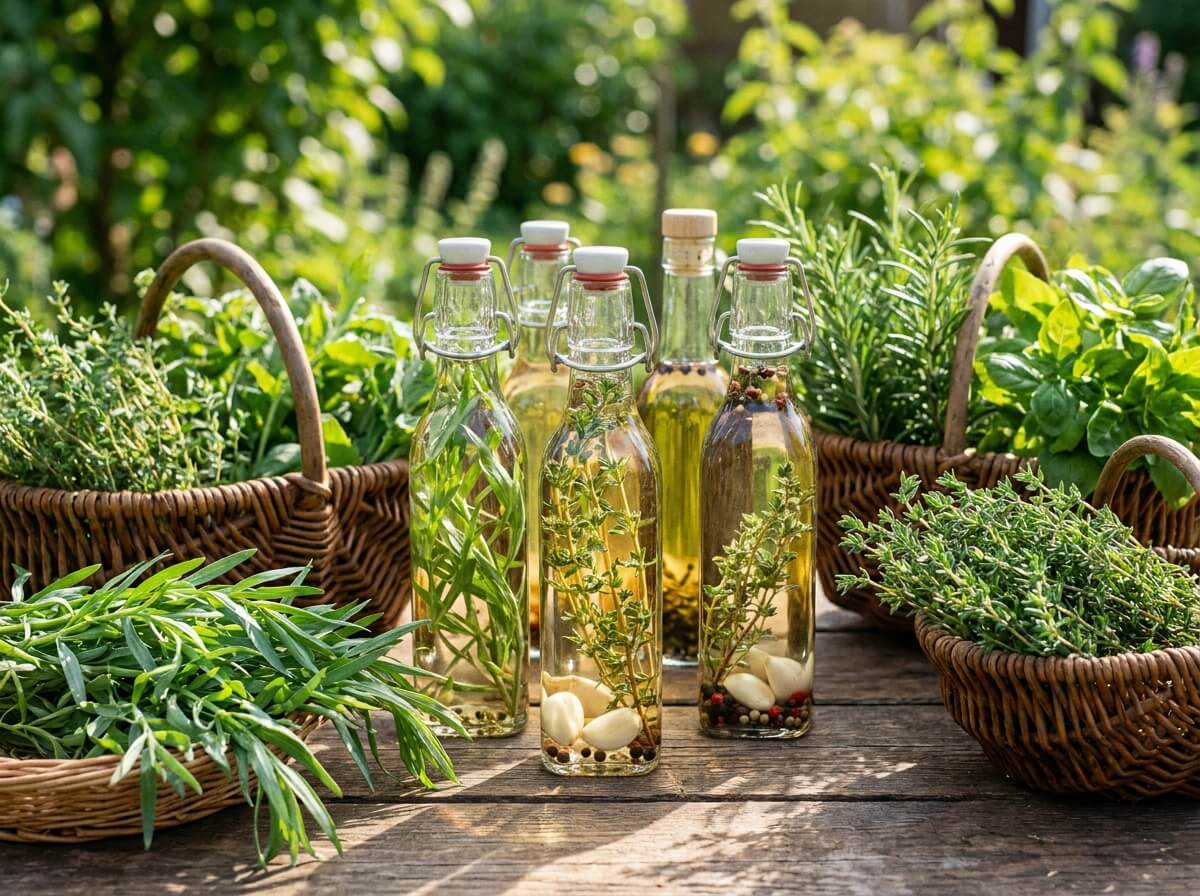
Good herb combinations to start with: tarragon + black peppercorn, rosemary + garlic, lemon thyme + bay, or basil + chilli. Keep combinations to 2 or 3 ingredients maximum — more than that and the flavours compete rather than layer.
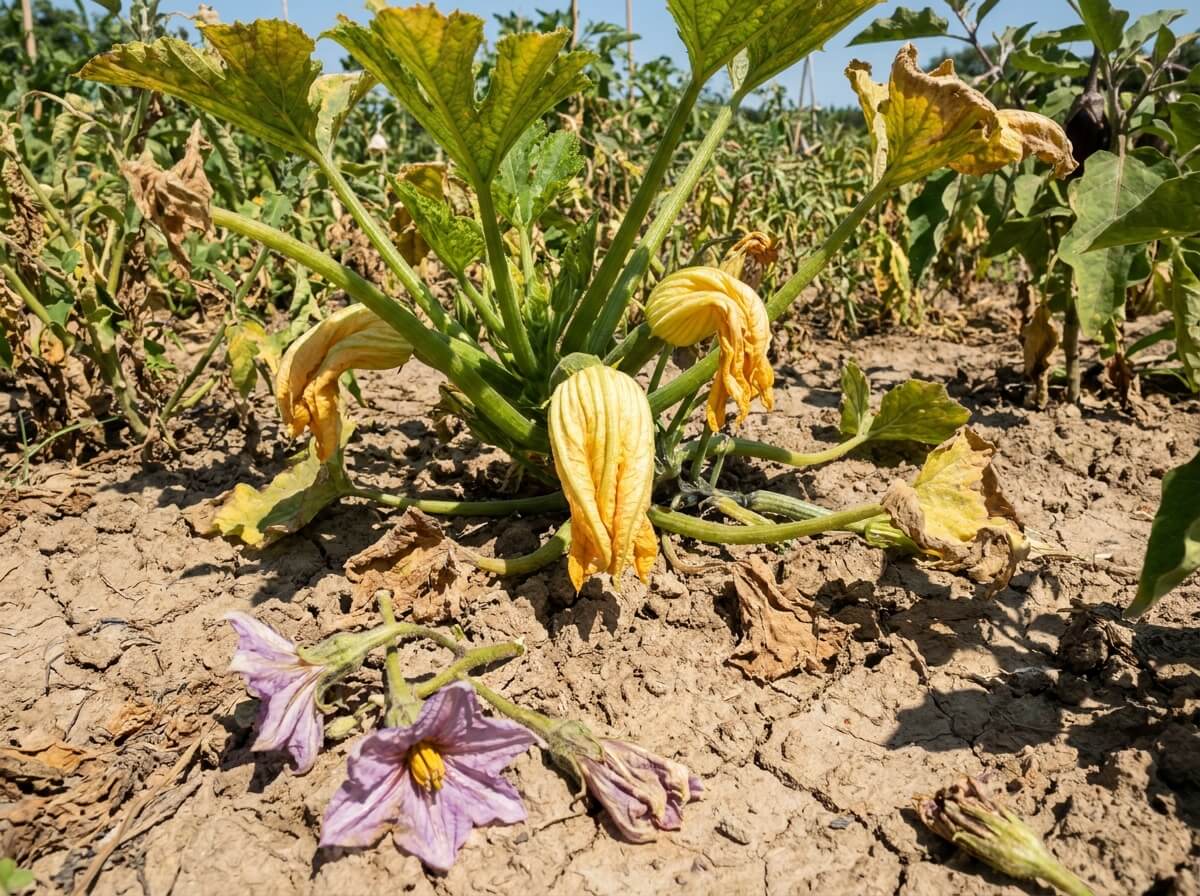
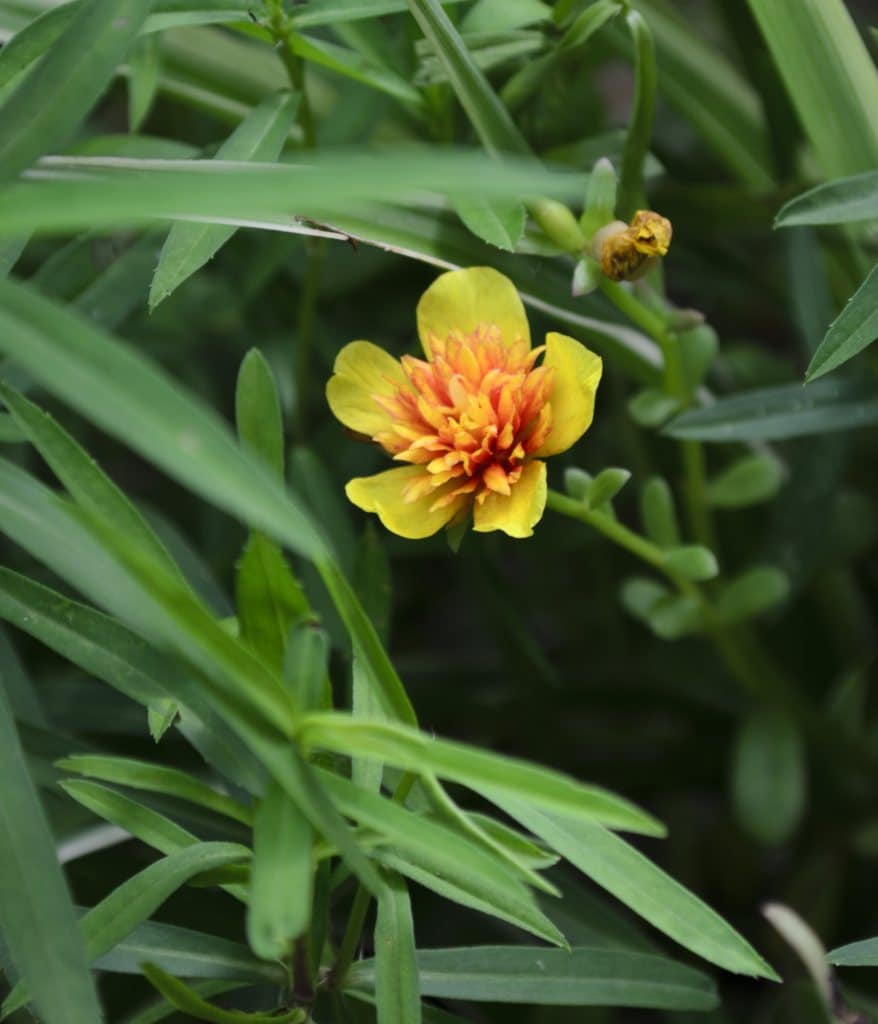
While cutting stems for vinegar, check your plants for these signals:
And if you find yourself with more garden produce than you know what to do with, Your Courgette Glut Is a Recipe Waiting to Happen covers exactly that issue for the rest of your summer glut.
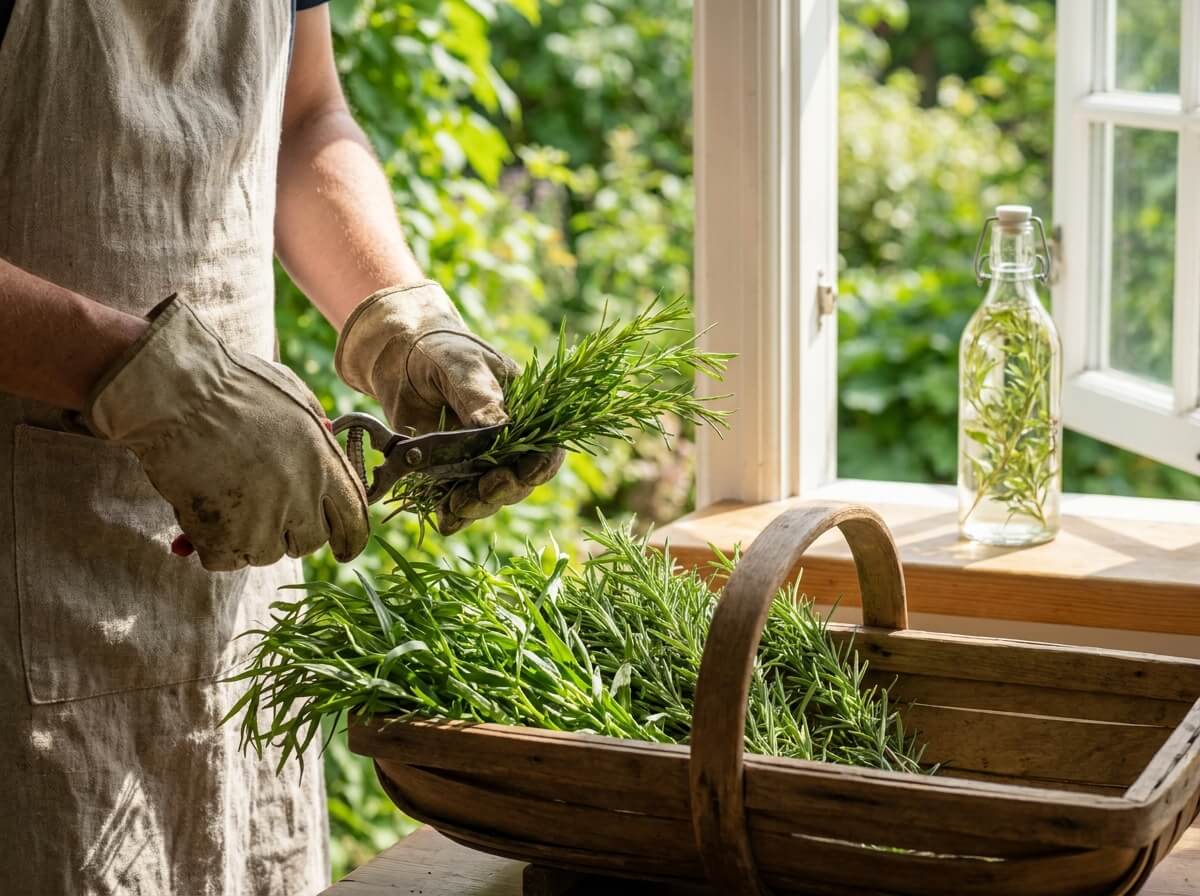
Smart tip: Always use vinegar with at least 5% acidity — anything lower won’t preserve reliably and risks bacterial growth.
Tarragon, rosemary, thyme, basil, and lemon balm all produce excellent results. Delicate herbs like basil infuse in 5 to 7 days. Woody herbs like rosemary benefit from the full 10 days.
Technically yes, but the result is notably duller. The best results require fresh. This is non-negotiable for a punchy vinegar.
Up to 12 months in a sealed, sterilised bottle stored away from direct light. The acidity of the vinegar acts as a natural preservative — no refrigeration needed.
No. Shrubs combine vinegar with sugar and fruit for drinking.
Herb-infused vinegar is purely savoury — for dressings, marinades, sauces, and deglazing pans.