Most gardeners pull off their figs too early. The colour shifts. It looks ready, and off it comes – only to taste flat, slightly astringent, and nothing like what a fig should be.
Real fig ripeness involves at least four distinct physical signs. Colour is the least reliable of all. So, here is exactly what to look for, and why getting this right changes everything about the fruit.
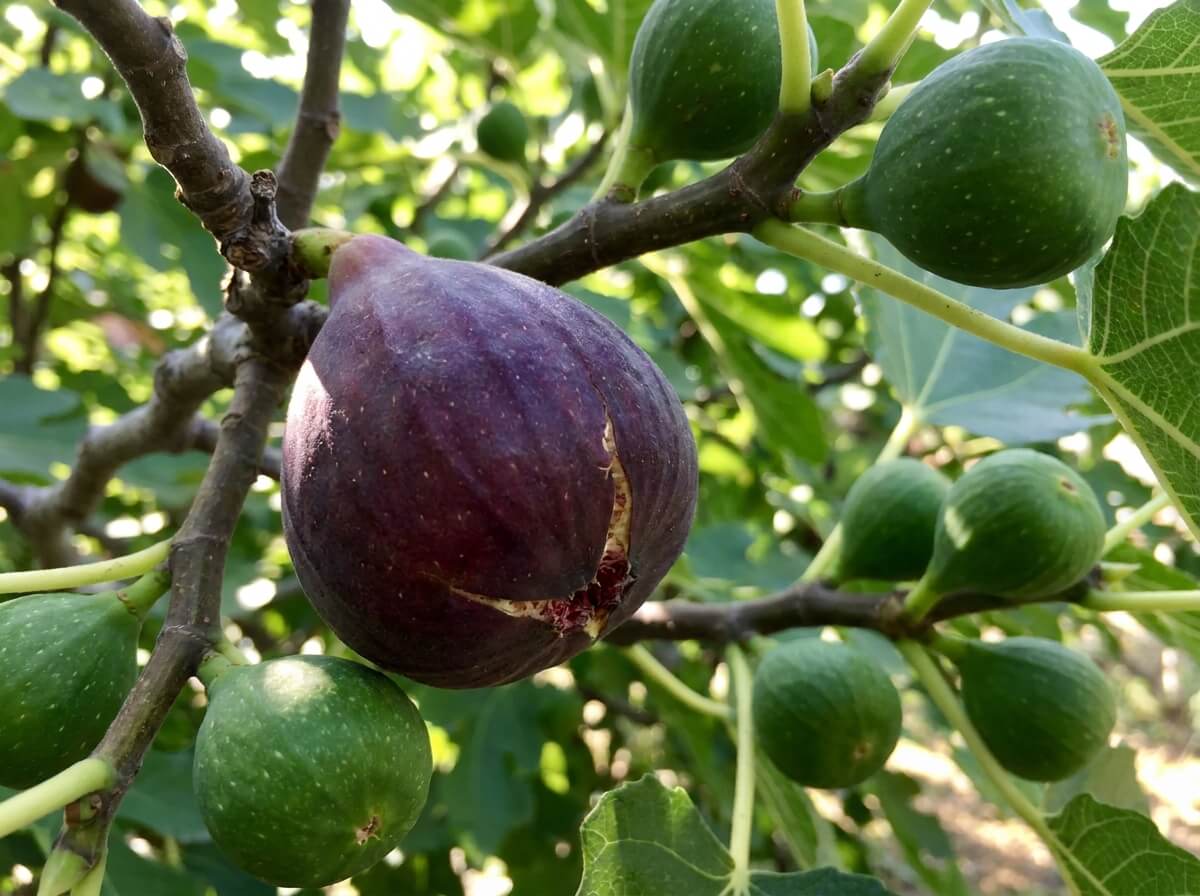
The neck drop is the single most reliable indicator of a truly ripe fig. This is non-negotiable. Watch the stem where the fruit attaches to the branch – when the fig is ready, that neck bends downward at a sharp angle, sometimes nearly 90°, under the fruit’s own weight.
An unripe fig holds itself upright. A ripe one hangs heavy and surrendered.
Colour matters, but only within the variety. Dark varieties like Brown Turkey or Black Mission should be deep brown-purple with a slightly dusty bloom on the skin.
But Kadota and White Adriatic figs ripen to pale yellow-green – they will never go dark. Harvesting by colour alone, without knowing your variety, guarantees picking at the wrong moment. That is a dodgy way to choose.
Two more signs that consistently get ignored:
An under-ripe fig tastes nothing like a fig. It is starchy, slightly bitter, and releases that milky latex sap that can actually irritate sensitive skin. The sugars only fully develop in the final 48 to 72 hours on the tree. Rushing that window by even two days produces a completely different eating experience.
But over-ripe is its own issue. A fig left 3–4 days past peak will split fully. It will weep. It will attract every wasp in a 50-metre radius, and begin fermenting on the branch.
In humid summer conditions, fungal rot can set in within 24 hours of that split widening. The harvest window for a properly ripe fig is genuinely narrow; sometimes it is as short as 36 hours.
And figs do not ripen after picking. Unlike tomatoes or stone fruit, there is no off-tree ripening process.
What you pick is what you eat.
Go out in the morning. The cooler temperature makes the differences easier to feel.
For each fruit that looks close to ready, run through this sequence:
Yes, it is fiddly. Do it anyway. Worth it. This will sort you out.
If you are shooting up figs in containers in a cold climate – UK, Canada, northern US – the RHS recommends restricting the root run to push trees into fruiting earlier. This also compresses the ripening window slightly. Check container-grown trees daily once the fruit softens.
UC Davis extension horticulturalists confirm that fig flavour development is strongly temperature-dependent. Hot days above 30°C accelerate sugar accumulation rapidly in the final ripening phase.
A fig tree sending up lots of vigorous leafy growth but not ripening fruit is almost always one of two things: too much nitrogen, or a young tree not yet old enough to prioritise fruiting over growth. Stop any feeding immediately if fruit is stalling.
Watch for figs that shrivel and harden while still on the tree – this is called “mummification”. It usually indicates irregular watering. Figs need deep watering twice a week in peak summer heat, roughly 15–20 litres per established tree each time, tapering off as fruit matures. Watering properly is a non-negotiable requirement.
Birds and wasps congregating on one side of the tree before you have spotted anything ripe is a signal worth taking seriously. They smell what you can not yet see.
Southern Hemisphere gardeners: your fig harvest season falls in December and January — bookmark this for then.
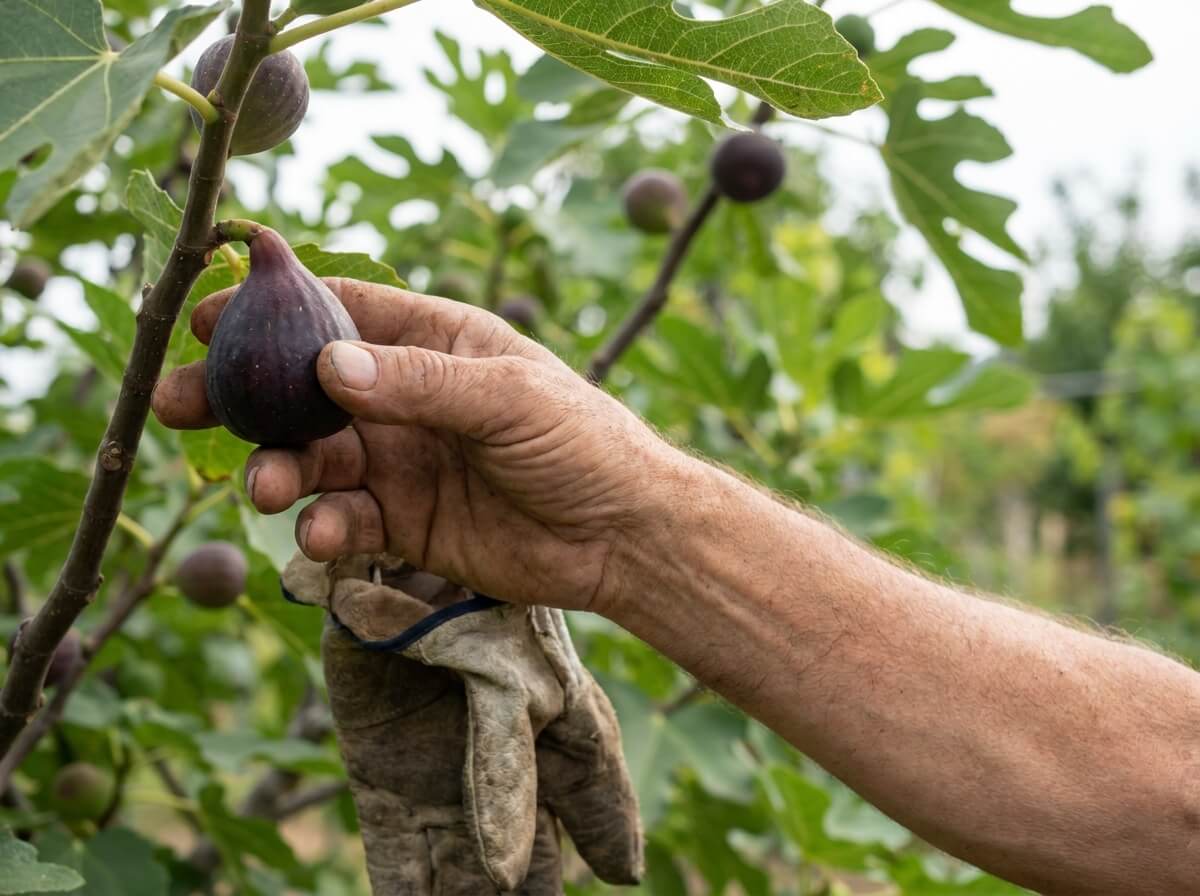
Smart tip: The neck drop never lies — if a fig hangs at 90° from the branch, pick it today.
No. Figs stop developing sugar the moment they leave the tree.
Pick only when fully ripe.
Softness devoid of sweetness often points to the fruit being picked during a cool spell. Figs need consistent heat above 25°C in the final days. It does wonders for converting starches to sugar. It can also mean the variety needs more time than your climate allows.
Irregular watering is the most common cause. Heavy watering after a dry spell forces rapid water uptake that splits the skin. Keep moisture consistent for a fortnight before expected harvest.
Combine the colour check with the feel test – an unripe Brown Turkey that has turned colour will still feel firm and resist gentle pressure. A ripe one yields immediately, almost like pressing room-temperature butter.
🌿 Learn more about growing figs