French beans (Phaseolus vulgaris) rank among the most prolific and fastest vegetables in the kitchen garden. Sow today. Harvest in as little as 8 weeks. But speed does not mean effortless; mismatch the soil temperature, forget to pick for a mere four days, or water inconsistently, and a promising crop turns disappointing fast. This guide details everything: sowing, supports, feeding, common failures, and that crucial harvesting rhythm which keeps plants producing for two months straight. Proper cultivation makes all the difference.
The first decision shapes everything else. So, consider your space carefully. Dwarf French beans shoot up to about 45cm and require no fuss of supports — an ideal choice for raised beds, containers, or exposed, windy plots.
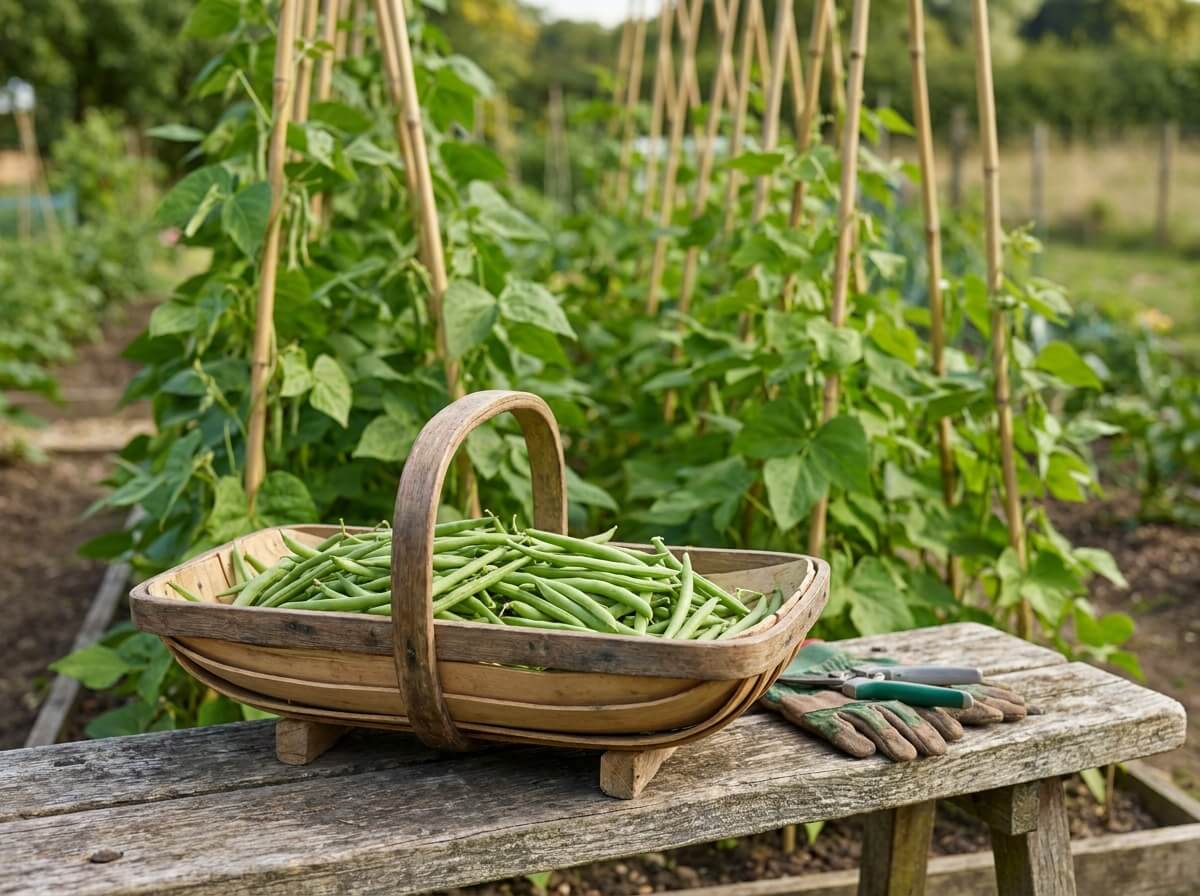
Climbing varieties demand a cane wigwam or trellis; they will reach 1.8–2m. But they do produce for longer. They also generally yield more per square metre over the season, if you have the space for a bit of faff.
Excellent dwarf varieties include ‘Contender’, ‘Purple Teepee’ (vibrant in the garden, though it turns green when cooked), and ‘The Prince’ — an RHS Award of Garden Merit holder, featuring flat, stringless pods. For climbers, ‘Blue Lake’ is consistently heavy-cropping. ‘Cobra’ remains possibly the pre-eminent choice in UK kitchen gardens, and ‘Algarve’ delivers outstanding flavour for a climbing type. ‘Cobra’ is bang on for reliability.
Yellow (wax) and purple varieties are more than mere curiosities; they are genuinely useful. Yellow pods are a breeze to spot at harvest. The thing is, this can make a difference.
Purple pods really pop against foliage, ensuring you will miss absolutely none. And missing pods is the swiftiest route to premature harvest decline. Do not miss them. It is that simple.
French beans are warm-season crops. Soil temperature absolutely must hit at least 12°C (54°F) before sowing direct. Below that, seeds merely rot in the ground rather than germinate. The thing is, this usually indicates no earlier than late spring in the UK. In Australia and New Zealand, direct sowing is best for late winter to early summer in temperate zones. Below that temperature, it is a waste of seed. Skip it.
Sow seeds 5cm deep, 15cm apart in rows spaced 45cm apart for dwarf types. Be precise. For climbing beans on a wigwam, plant two seeds at the base of each cane and pull off the less vigorous seedling once it reaches 10cm height. Make the decision early.
If starting indoors to jump-start your season, use deep modules. Beans absolutely detest root disturbance. Transplant only once nights consistently exceed 10°C. Do not rush this step.
Do not water the seed trench immediately after sowing in cold springs. Wait 24 hours. This is crucial.
Sitting in cold wet soil overnight is exactly the condition that unleashes rotting. The seeds can endure a brief dry spell; it is massively superior to a cold soak.
Put up climbing supports on the day of sowing. Do not wait until plants are already sagging pitifully at 50cm. By then, untangling stems causes proper damage. Just do it at sowing. Sorted.
For a standard wigwam, push eight 2.4m canes into the ground in a circle about 60cm across. Lean them together at the top. Then secure snugly. A figure-of-eight knot in garden twine provides superior grip to a simple wrap. This detail matters.
For longer rows, a double row of canes with a horizontal ridge pole is far more resilient in wind. This is non-negotiable in exposed gardens in Ireland, coastal New Zealand, or the Cape. It saves you grief.
Dwarf beans occasionally do wonders from short pea sticks pushed in around the planting area if your site is exposed. They do not need it structurally, but wind-rock on shallow roots can sideline growth quite dramatically. Proper thought here pays dividends.
Irregular watering is the primary culprit behind most French bean issues. Drought followed by heavy watering provokes tough, stringy pods. Proper consistent watering is bang on for avoiding this.
The plant does not care about rainfall; it demands consistency. End of story.
Water twice a week in dry weather, ensuring roughly a full watering can per square metre at each session. Water at the base, never overhead. Wet foliage in warm weather beckons botrytis (grey mould). Do not do it.
During flowering, never let the soil go bone-dry, not even for a day. That single dry spell during flower-set aborts blossoms before pods form. It is a terrible outcome.
Feeding is more straightforward than with most crops. The thing is, French beans fix their own nitrogen via root bacteria, so nitrogen-heavy feeds actively hamper pod yield by pushing leafy growth at the expense of flowers. Use a high-potash liquid feed — such as a tomato fertiliser — once a week from the moment the first flowers open. Before flowering, no feed is needed at all if your soil was properly prepared. Understand this nitrogen trick; it is vital.
This is where most harvests falter badly. French beans produce pods in waves. But only if you keep pulling them off before seeds engorge inside.
The moment a plant detects a maturing seed, it begins shutting down reproduction. One overlooked pod, fat and lumpy and forgotten at the back of the wigwam, can unleash a devastating cascade that drastically reduces overall production. Be vigilant.
Pick pods at 10–12cm (4–5 inches) long. This size is non-negotiable. At this stage, pods audibly snap crisp, and the seeds inside are scarcely perceptible.
Pods left to 15cm or beyond develop proper stringiness. The plant slows. Your harvest opportunity dwindles by weeks. Do not be greedy.
At peak production — typically 6–8 weeks after sowing — inspect your plants every 2 to 3 days. Yes. That often. No exceptions.
Done consistently, a well-sited climbing bean will keep giving for 6 to 8 weeks. Let it go to seed once, and you will be fortunate to achieve four. This is no dodgy gamble.
The sound of a perfect French bean snapping — that crisp, clean crack — tells you the timing is bang on. Pure perfection.
If you are growing other cucurbit crops nearby, you may find growing a productive balcony or raised-bed kitchen garden does wonders for clustering harvesting visits into one efficient daily round. And efficiency truly matters in the garden.
Almost always a pollination or heat issue. Temperatures above 30°C force bean flowers to abort before pods set. It is a harsh reality.
Shade cloth at 30% in a heatwave can make a palpable difference. Consistent soil moisture does wonders too. Water stress during flowering shuts down blossom production within 48 hours. This is an abrupt failure.
Some yellowing of the oldest, lowest leaves is entirely normal and no cause for concern. But yellowing racing quickly up the plant, with a mosaic or mottled pattern, signals bean mosaic virus — spread by aphids.
Pull off affected plants promptly. No cure exists. Period.
Aphid control early in the season is your sole defense. Act decisively.
Aphis fabae — black bean aphid — colonises the soft growing tips in dense, alarming clusters. Pinch out the top 5cm of affected stems as soon as you see the first colonies. This eliminates the most heavily infested tissue and drastically curbs further propagation. A spray of diluted washing-up liquid (5ml per litre) is potent on remaining infestations. But, steer clear of systemic insecticides while plants are flowering. Pollinators visit bean flowers frequently, and they matter.
The first two weeks after germination are acutely vulnerable. Seedlings at 3–8cm are a slug‘s perfect feast. Grit or crushed eggshell around emerging seedlings does wonders for deterring them. But if using slug pellets, you must understand the dire risks covered in detail in our guide to slug bait safety for pets.
Fresh French beans store well for 4–5 days in the fridge, unwashed, in a paper bag. Washing before storage hastens their demise. Do not wash them yet.
For gluts — which materialize quickly with climbing varieties — blanch pods for 2 minutes in boiling water. Cool immediately in iced water. Ensure they are bone-dry, then freeze. Yes, it is a bit fiddly. Worth it. Frozen this way, they last for 12 months and retain excellent texture.
Surplus beans that have fully ripened on the plant (fat, dried pods) can be shelled as haricot beans and thoroughly dried for winter use. Leave the pods on the plant until they become papery and the seeds chatter distinctly within. This usually takes 4–6 weeks after prime picking time. It is a good secondary crop.
Shell them. Spread them on a tray for two further weeks indoors to go bone-dry. Then store in an airtight jar. Simple. Efficient.
Never store green beans at temperatures below 7°C. They succumb to chilling injury, turning them brown and watery within 24 hours. A cool kitchen worktop trumps a cold fridge shelf every time for short-term storage. No dodgy outcomes here. Avoid the chill.
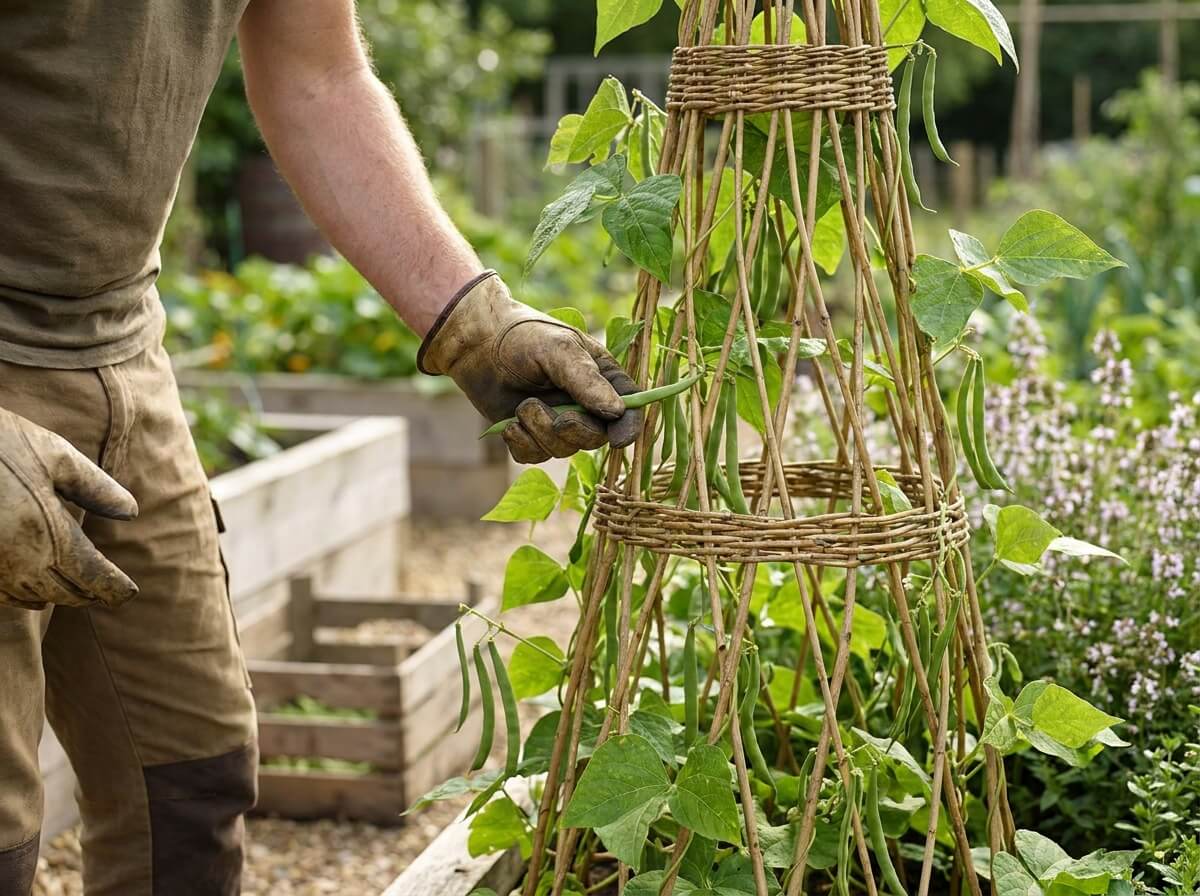
Smart tip: Pick French beans every 2–3 days at 10–12cm and the plant will keep producing for up to 8 weeks.
Dwarf varieties flourish in pots at least 30cm deep and 40cm wide. Provide daily hydration in warm weather. Use a peat-free multipurpose compost mixed with 20% horticultural grit for optimal drainage.
Pods picked too late or grown under drought stress develop woody fibres. Harvest at 10–12cm before seeds engorge inside. And water consistently — never let the soil go bone-dry between sessions. This is key.
French beans are primarily self-pollinating, so they set pods even in the absence of bees. However, bumblebee visits do enhance pod formation in cool or overcast weather when self-pollination is less vigorous. Their presence is a bonus.
Stop sowing about 10–12 weeks before your first expected autumn frost. Later sowings will not mature before cold nights arrest growth completely. Timing is everything.
In the UK, mid-summer is generally the last realistic sowing date for a full harvest.
No. French beans (Phaseolus vulgaris) and runner beans (Phaseolus coccineus) are distinct species altogether. French beans are typically more tender, cook faster, and include both climbing and dwarf forms. Runner beans are always climbers, possessing a distinctly more robust, earthy flavour profile. Understand the difference. It matters.