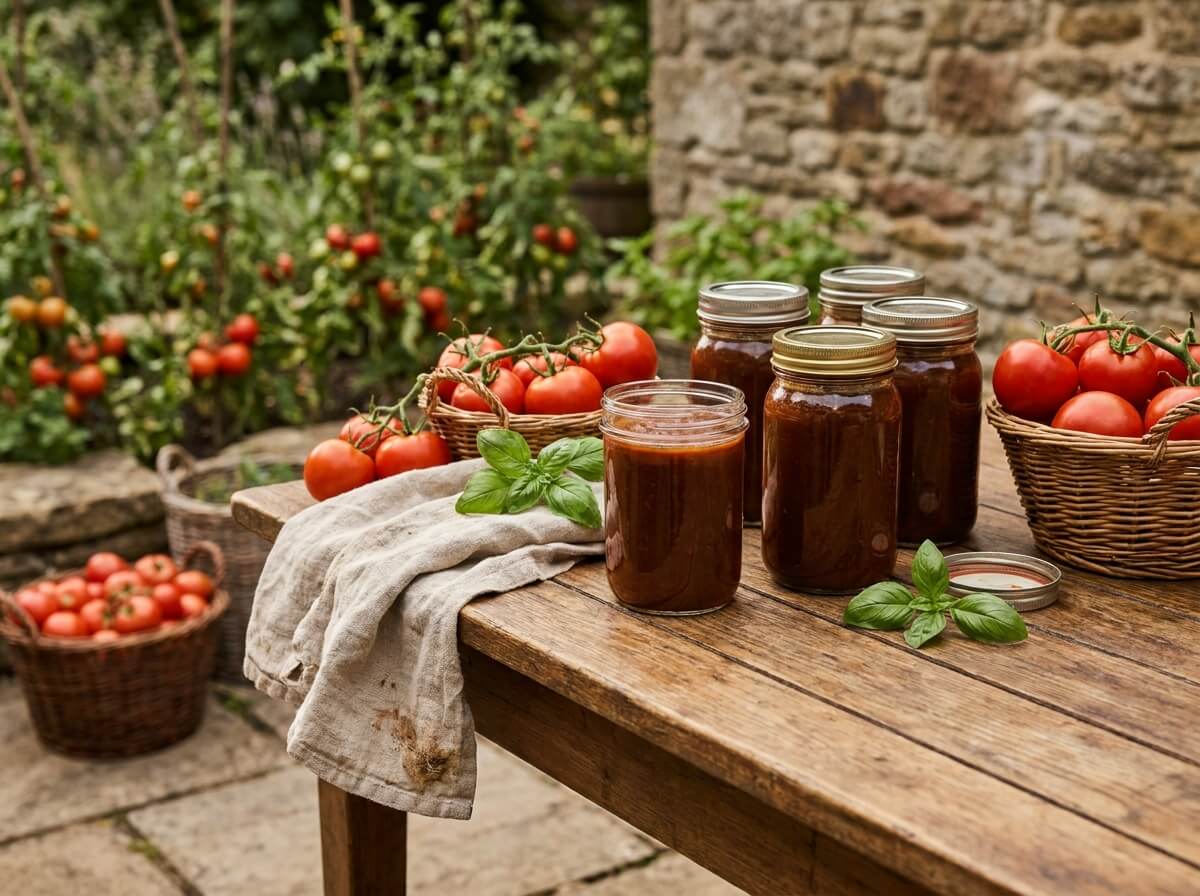
Your tomatoes are ripening faster than you can eat them. Right now is exactly when to make sauce — and jar it for the months ahead. Roast the tomatoes first, blend them second, and seal with lemon juice third. That is the whole method. The thing is, no water bath canner needed. No years of experience required. Just ripe tomatoes, a hot oven, and jars. The result is something truly superior to anything from a supermarket shelf. You will have dinner sorted for months.
Shop-bought tomato sauce is made from concentrate, then rehydrated, then cooked again. By the time it reaches you, the tomato has been processed three times over.
Your garden tomatoes go from vine to jar in a single afternoon. A deep, almost caramelised heat fills the kitchen when the roasting tray comes out of the oven. The pure freshness sings.
The other reason to make your own? You control everything. No added sugar. No citric acid listed in size-6 font. No mystery stabilisers whatsoever. And if you have shot up your own herbs this season, a sprig of basil from the garden costs nothing. Pair it with a bouquet garni bundle dropped in during cooking and the flavour complexity goes up several notches immediately. Proper good, it is.
Start with 1 kg of ripe tomatoes. Any variety will do. San Marzano or Roma-types, however, simply yield a thicker sauce with less water to cook off. Halve them, cut-side up, on a baking tray. Drizzle with 2 tablespoons of olive oil. Scatter 4 unpeeled garlic cloves around them. Then, roast at 200°C (400°F) for 40 minutes. The skins should blister and the edges darken.
Then:
One kilogram of fresh tomatoes yields roughly 500ml of finished sauce. Scale up as your harvest demands. Three kilograms is a proper single batch for most home kitchens. Sorted.
Glass jars must be sterilised before filling. Run them through a hot dishwasher cycle, or submerge them in boiling water for 10 minutes, then stand them upside down on a clean towel.
Do not skip this. Ever. A contaminated jar wastes the whole batch. You have been warned.
Add 1 tablespoon of lemon juice per 500ml jar before pouring in the hot sauce. This is not optional. The acidity must be raised to prevent bacterial growth. The National Center for Home Food Preservation is unambiguous on this point. This addition is non-negotiable.
Pour the sauce in while still hot. Wipe the rims clean. Seal the lids firmly, then invert the jars for 5 minutes. As they cool, you will hear the lids pop inward. That is your vacuum seal forming.
Properly sealed jars keep at room temperature for 12 months. Any jar that does not seal goes straight to the fridge. Use it within 5 days. Or face a dodgy outcome.
If you are dealing with other garden abundance at the same time, the same principles from our courgette glut guide apply. Harvest pressure is real. But the kitchen solutions are simple.
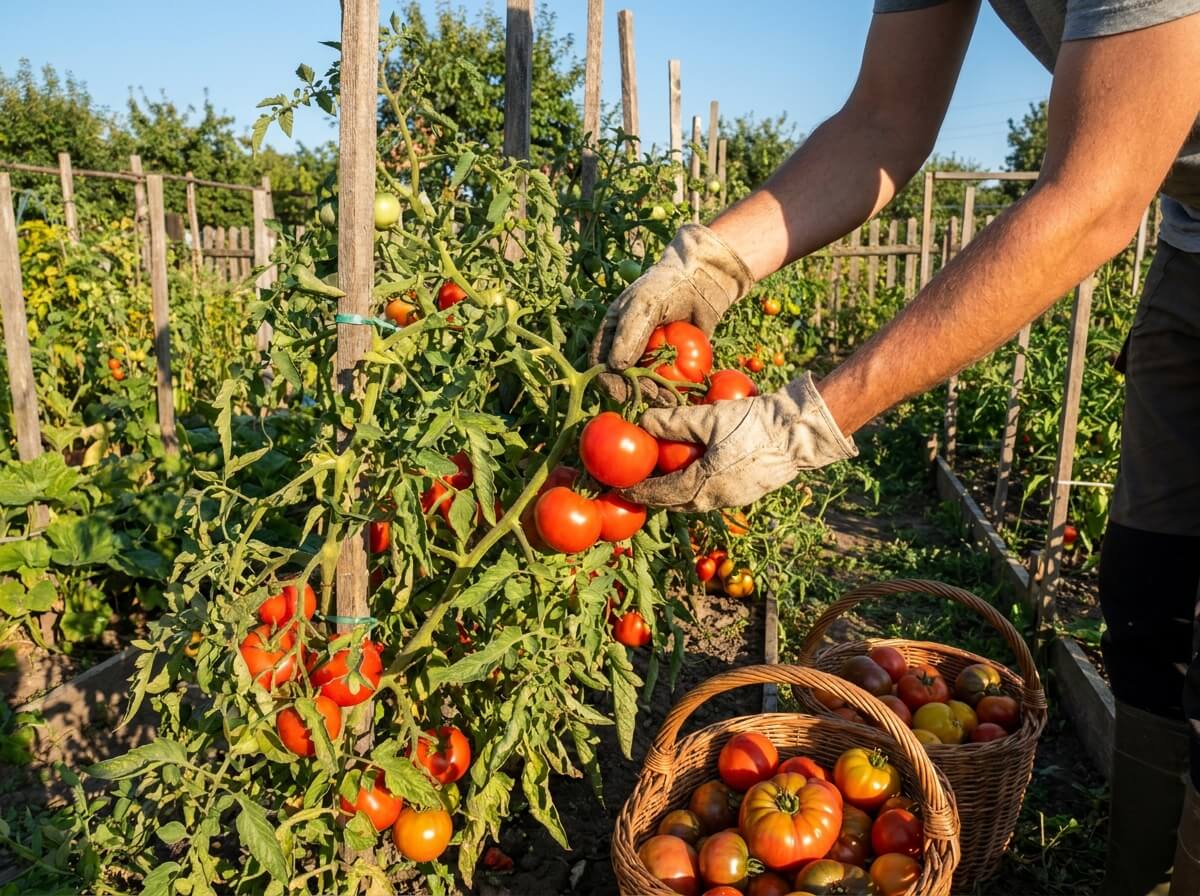
Pick tomatoes the moment they are fully coloured. Leaving them on the vine past peak ripeness does not deepen flavour. It just invites split skins and fruit flies. That is a proper issue.
Every tomato you pick triggers the plant to redirect energy into the next fruits forming behind it.
Water your plants deeply twice a week at soil level. That means 20 minutes at the base. Never overhead. This does wonders for avoiding blossom end rot and fungal issues that would disqualify fruit for jarring. If the leaves are yellowing at the bottom, check for early blight. Proper observation is key.
Sauce made from blemished but sound tomatoes is perfectly fine; sauce made from infected fruit is not.
And if your herbs are at their summer peak right now, harvest them before the heat turns them bitter. Our guide on harvesting herbs before summer heat steals their flavour details the perfect timing for maximum intensity. It is worth reading before you add anything to the pot.
Southern Hemisphere gardeners: this applies to your December–January summer harvest season.
Smart tip: Always add lemon juice before sealing. It is food safety, not flavour. Bang on with this one.
Yes, though paste tomatoes like Roma or San Marzano have less water content and yield a thicker sauce faster. Cherry tomatoes perform brilliantly but need an extra 10–15 minutes of simmering to reduce.
Not for small batches made with sufficient acidity. The inversion method with sterilised jars and added lemon juice is proven for 12-month shelf storage. The RHS supports this approach for home preservers.
The tomatoes had too much water and were not roasted long enough. Extend roasting by 10–15 minutes until you see more caramelisation. Simmer the blended sauce for 20 minutes instead of 10. That should sort it out.
Absolutely. Pour cooled sauce into freezer-safe bags or containers, leave 2cm of headroom for expansion, and freeze for up to 6 months.
No lemon juice needed for frozen batches.