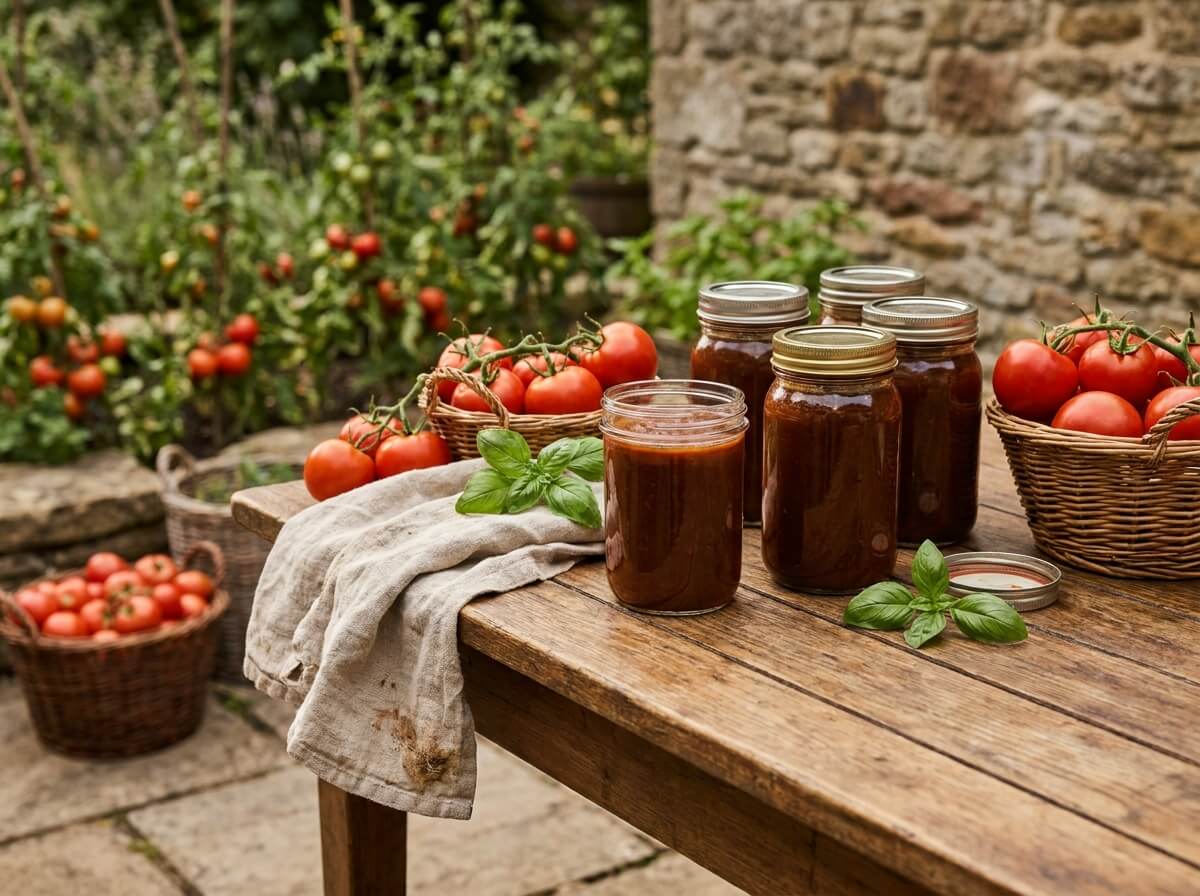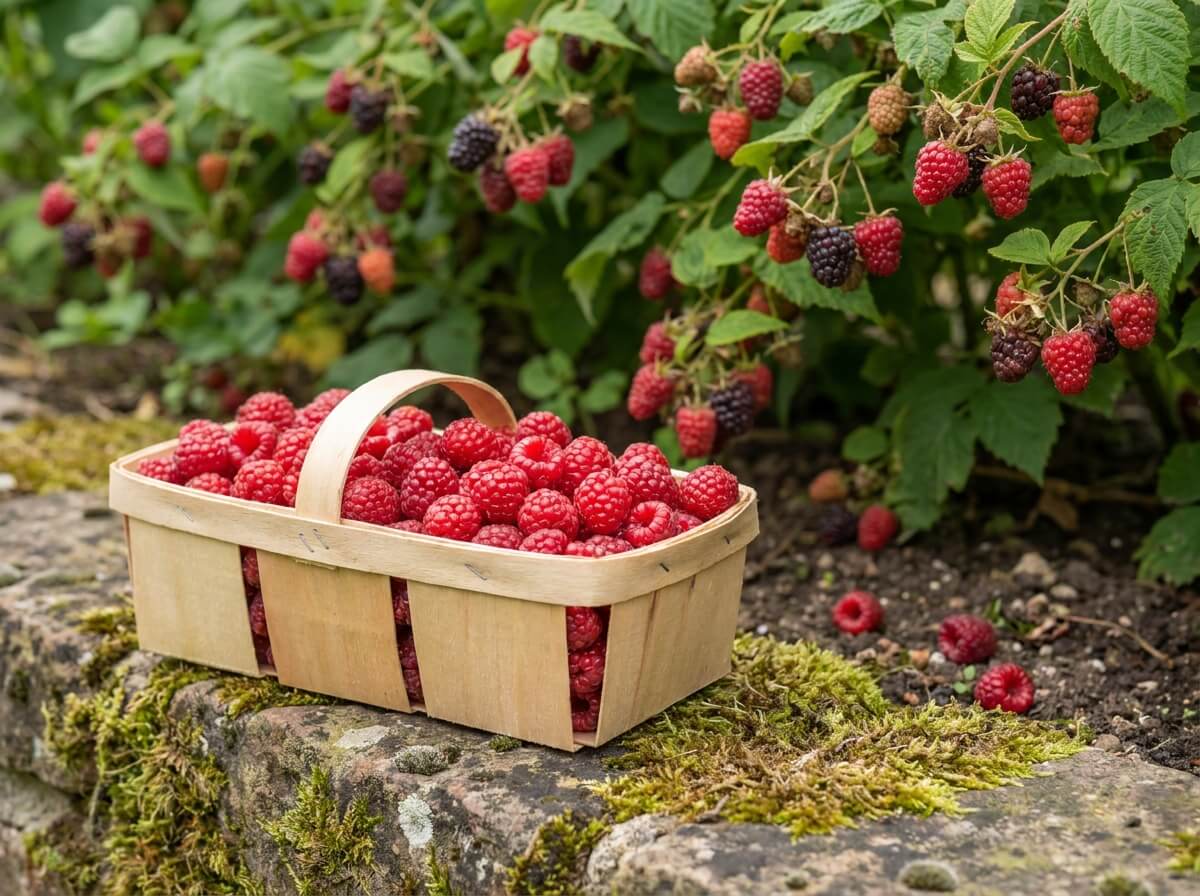
Raspberries wait for no one. When the canes are loaded and the berries are deep red, almost bruising against your fingers as you pick — that is the bang-on moment.
Two days later they are splitting, fermenting on the cane, or gone to birds. Turn that glut into jam today and you will have four jars of the most intensely flavoured preserve of the year, made in under an hour with no special equipment.
The flavour window in raspberries is brutally short. Peak ripeness on a single cane lasts roughly 4 to 5 days.
After that, the natural sugars convert, the texture collapses, and the sharp-sweet balance that makes raspberry jam extraordinary simply disappears. You cannot recover it by cooking longer or adding more sugar.
And here is what most gardeners get wrong: they wait for every berry to be “ready” at once. That never happens.
Pick the ripe ones daily — or every other day at minimum — and your total harvest doubles compared to leaving them to ripen together.
If you are looking at berries that are already slightly past perfect, use them anyway. Slightly overripe fruit actually delivers richer jam, just reduce the sugar by 10% and expect a softer set.
Waste, mostly. But also something more frustrating — you lose the natural pectin.
Pectin concentration in raspberries peaks at near-ripe and drops sharply as the fruit becomes overripe. Leave it too long and you will spend twice as long cooking the jam trying to get it to set, which drives off volatile flavour compounds and leaves you with something dull and over-sweet.
Birds and wasps know the same schedule you do. A cane left unpicked on a warm afternoon will look entirely different by morning.
You need two things. Raspberries and sugar, in equal weights.
That is it. No pectin sachets, no jam sugar, no lemon juice unless you want a sharper flavour.
Yes, it is fast. Faster than most people believe.
The whole process from cold fruit to sealed jar takes about 45 minutes, and 1kg of raspberries fills three to four 340g jars. Sterilise your jars in an oven at 140°C (285°F) for 15 minutes while the jam cooks. Job sorted.
For a flavour twist that genuinely works: add 4 fresh rose geranium leaves to the pan while it boils, pull off before jarring. The floral note does wonders for deepening the raspberry without masking it. You can also pair it with herb-infused vinegar as a glaze for grilled meat — both made from the same summer garden in the same afternoon.
The RHS raspberry growing guide attests that summer-fruiting varieties — the ones filling your canes right now — should be harvested every two days at peak season to maintain quality and encourage continued cropping.
The colour should be uniformly deep red, not patchy pink. Berries that slide off the core without resistance are precisely ripe.
If they pull hard and feel tight, give them one more day.
Overripe berries are not waste. Blend them, push through a sieve, incorporate a little icing sugar and you will have the best coulis you will ever pour over ice cream. Brooklyn Botanic Garden’s fruit ripeness guide explains the enzymatic changes behind that transition in detail.
But if your canes are light this year and you are also wrestling with a courgette surplus, the same preserve-it-now urgency applies — your courgette glut is a recipe waiting to happen.
Southern Hemisphere gardeners: your raspberry season peaks in December and January — bookmark this for then.
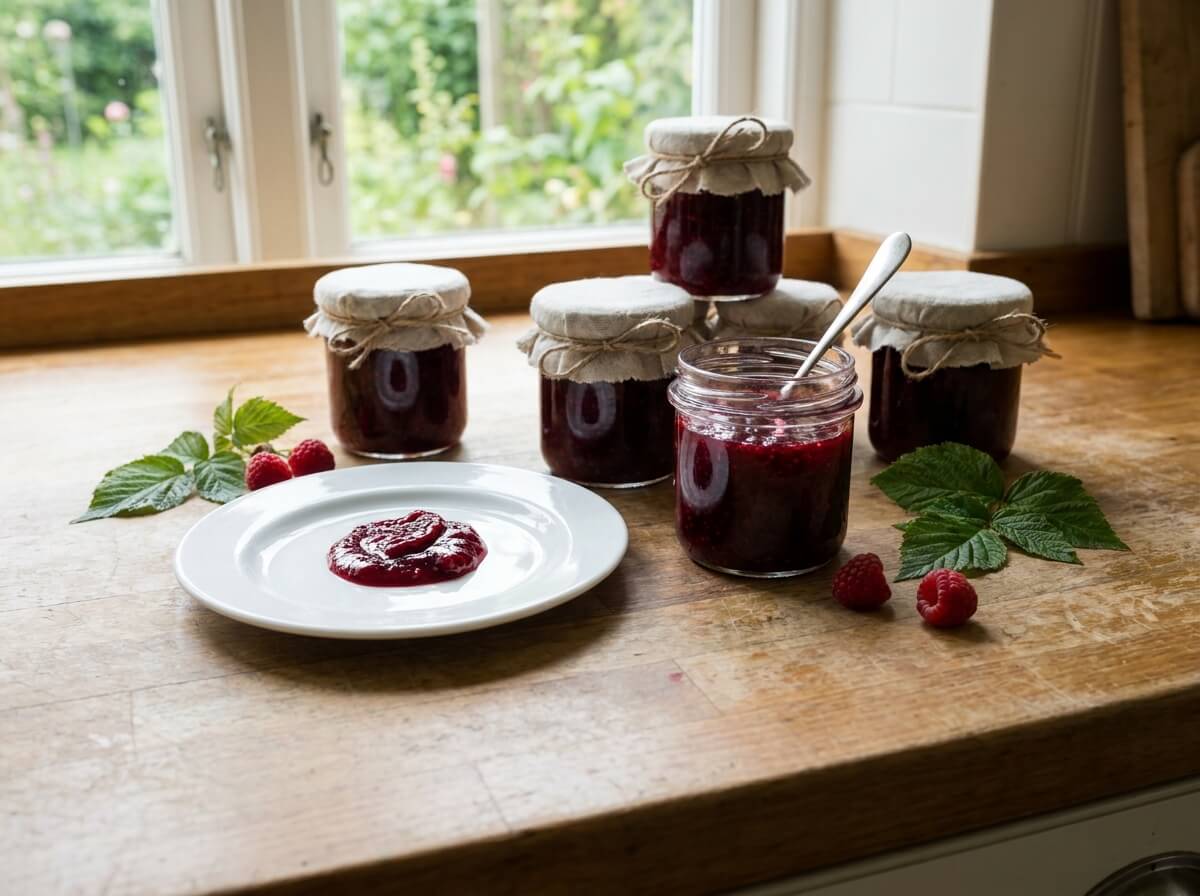
Smart tip: Freeze any raspberries you cannot process immediately — they jam perfectly from frozen, no quality loss.
No. Raspberries contain enough natural pectin to set with plain white granulated sugar at a 1:1 ratio.
Jam sugar just adds commercial pectin you do not need.
Properly sealed in sterilised jars, it keeps 12 months in a cool dark cupboard. Once opened, refrigerate and use within 6 weeks.
Either the boil was not hard enough, or the fruit was overripe and low in pectin. Return the jam to the pan, add the juice of half a lemon, and boil hard for another 5 minutes.
You can drop to 700g sugar per 1kg fruit, but the jam will be softer and must be refrigerated — it will not keep safely at room temperature for more than a few weeks.