Apple Dutch Baby Pancake with Brown Butter and Cinnamon
0
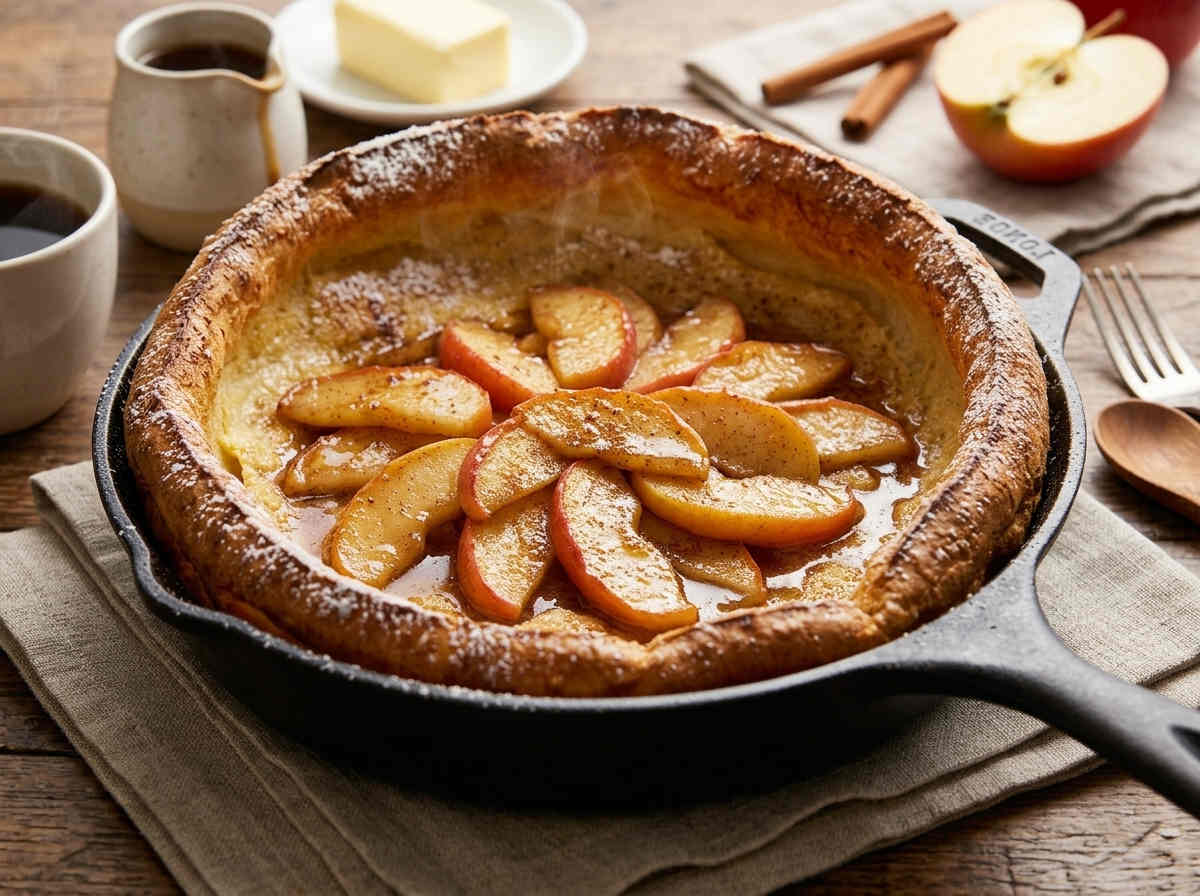
By October the orchard has given up its last keepers, and the windfalls with bruised shoulders — too dented for the storage rack — need eating within the week. A Dutch baby turns three or four of them into a brunch centrepiece: batter climbs the sides of a screaming-hot skillet, sets into a custardy crown, then sinks slowly into caramelised fruit the moment it reaches the table. Fifteen minutes of work, one pan.
⏱ Prep 15 min🔥 Cook 25 min👥 Serves 3📊 Level Easy
Ingredients for 3 people
3 large eggs, about 5 oz (150 g) shelled
⅔ cup (150 ml) whole milk, at room temperature
¾ cup (75 g) plain/all-purpose flour
1 tbsp (12 g) caster or fine white sugar
½ tsp fine sea salt
½ tsp vanilla extract
3 tbsp (45 g) unsalted butter
2 firm dessert apples, about 12 oz (350 g) — Braeburn, Gala, Fuji, Cox or Pink Lady
2 tbsp (25 g) light brown sugar
¾ tsp ground cinnamon
1 tbsp lemon juice, plus the finely grated zest of half a lemon
To serve: 1 tbsp icing sugar, plus thick yogurt, crème fraîche or maple syrup
The Recipe
Blend the eggs, milk, flour, caster sugar, salt and vanilla for a full 30 seconds, until the batter is as loose as single cream and foamy on top. The aeration and the smoothness matter: lumps of dry flour become dense patches that refuse to rise. Leave the batter on the counter for 20–30 minutes so the starch hydrates and the gluten relaxes — a rested, room-temperature batter climbs noticeably higher than one straight from the fridge.
Slide a 10 in (25 cm) cast-iron or other heavy ovenproof skillet onto the middle shelf and heat the oven to 425 °F (220 °C). Give it a full 15 minutes after the oven reaches temperature. Do not skip this step: the puff is pure steam, and steam only forms if the batter hits metal hot enough to sizzle on contact.
Meanwhile, quarter and core the apples and cut them into slices a scant ¼ in (5 mm) thick — thinner and they dissolve, thicker and they stay raw in the centre. Toss with the lemon juice and zest, which slows the browning enzymes and keeps the finished pancake tasting of fruit rather than sugar.
Take the hot pan out, set it over medium heat on the hob and add the butter. Swirl for 2–3 minutes until the foam subsides, the smell turns nutty and biscuity, and brown flecks appear at the edge of the swirl. Those flecks are toasted milk solids, and they give the pancake its caramel backbone.
Add the apples in one layer and cook for 4–5 minutes, turning once, until the edges are translucent and amber in places but the slices still hold their shape under a spoon. Only now scatter over the brown sugar and cinnamon and shake the pan for 30 seconds — added earlier, the sugar scorches in the brown butter and turns bitter.
Pour the rested batter evenly over the fruit and return the pan to the oven immediately. Bake for 18–20 minutes without opening the door. A draught of cool air at this stage collapses the structure before the egg protein has set, and it will not recover.
The pancake is ready when the rim has climbed 3–4 in (8–10 cm) above the pan, is deep gold and crisp at the edges, and the centre has lost its wet shine and wobbles only faintly when you shake the handle. A pale, jiggling middle means two more minutes.
Dust with icing sugar through a small sieve and bring it to the table in the pan — it begins to sink within a minute, which is expected and is half the pleasure. Cut into wedges and serve with cold thick yogurt or crème fraîche against the hot fruit.