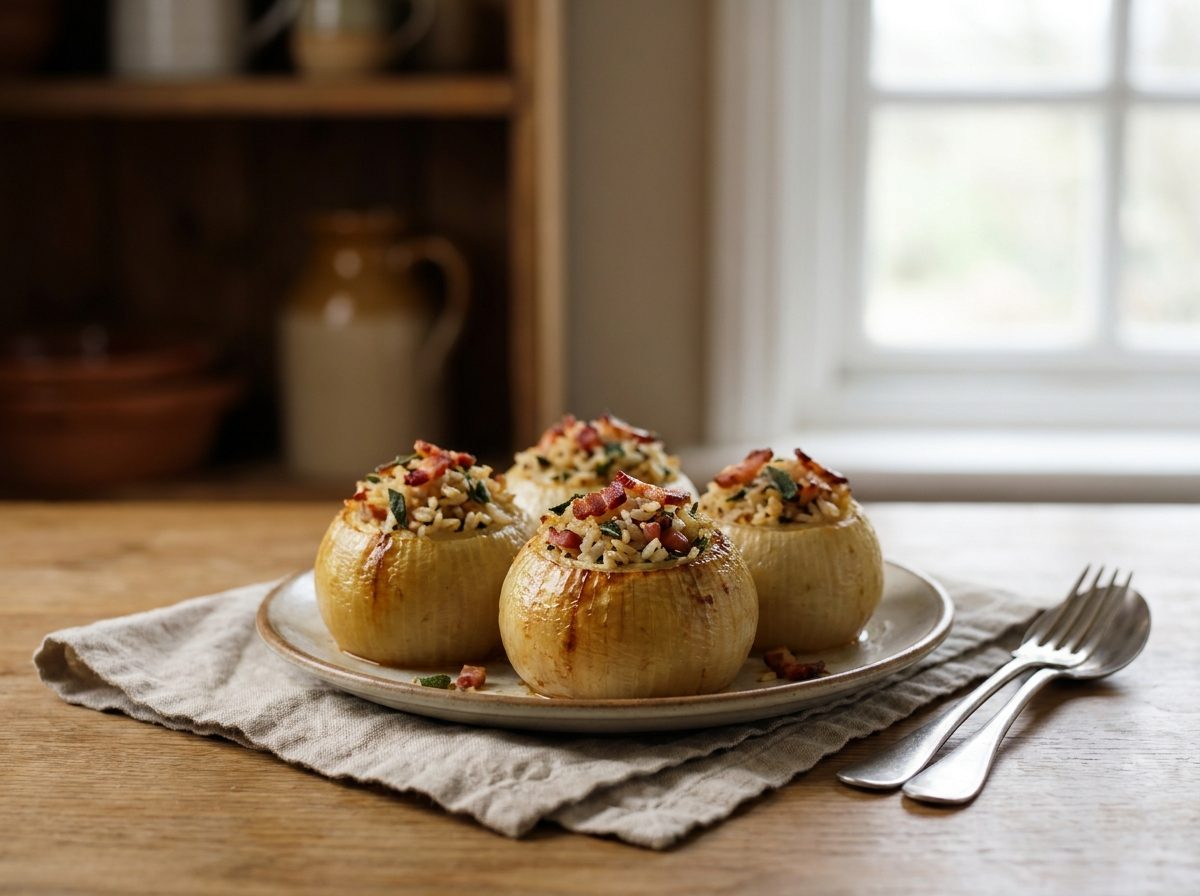
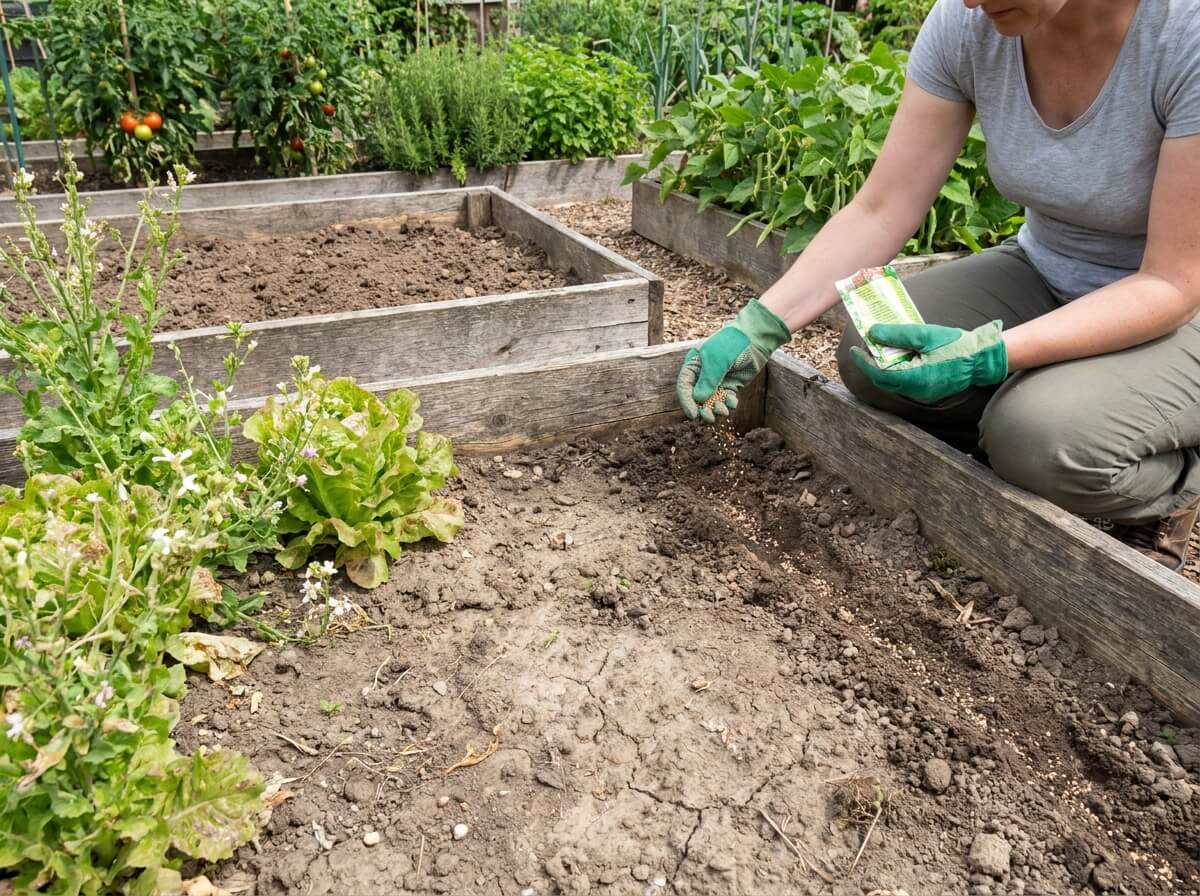
Onions sown in early spring spend the summer fattening their leaf bases underground, flop their tops in late July, then cure to papery gold on a rack in the sun. The thick-necked bulbs in that harvest will never last until spring — they are exactly the ones to hollow out and stuff. Simmered, filled with rice, sage and smoked bacon, then braised in cider, they turn soft enough to eat with a spoon.
¾ cup (70 g) grated hard cheese — pecorino, aged Cheddar or Gruyère
1 large egg
⅓ cup (40 g) coarse dry breadcrumbs or panko
1 cup (250 ml) dry cider, or chicken/vegetable stock
2 tbsp (30 g) butter
1 tsp fine sea salt, ½ tsp black pepper, ¼ tsp grated nutmeg
The Recipe
Peel the onions, then trim the top but cut the root end only barely flat, leaving the brown root plate attached. That plate is the disc every layer is anchored to — cut it off and the onion unravels into rings in the pot. Do not skip this.
Simmer the whole onions in a large pan of well-salted water for 20–25 minutes, until a skewer pushed into the second layer meets the same slight resistance as a just-cooked potato. Undercooked onions crack when you hollow them; overcooked ones slump into mush in the oven.
Lift them out with a slotted spoon and cool for 10 minutes, then boil the cooking water hard until reduced to about 1 cup (250 ml). It is pale sweet onion stock and it will become the braising liquid — pouring it down the drain throws away half the flavour of the dish.
Slice the top third off each onion and scoop out the centres with a teaspoon, leaving a wall of two to three layers, roughly ⅜ in (1 cm) thick. Chop the scooped-out flesh and the lids finely; hold the shells cut-side up in a baking dish where they sit snugly, so they support each other upright.
Cook the rice in plenty of salted water for 10 minutes only — half done, still chalky at the core. It will finish inside the onions by drinking their juices, and fully cooked rice would turn to paste.
Fry the bacon in the olive oil over medium heat until the loud hissing of escaping water quietens to a soft ticking and the edges are bronze, about 6 minutes. Add the chopped onion flesh and cook 8 minutes until translucent and collapsed, then stir in the garlic and sage for 1 minute, just until the sage smells resinous rather than grassy.
Off the heat, fold in the drained rice, half the cheese, the egg, salt, pepper and nutmeg. Taste: the filling should taste faintly too salty on the spoon, because the bland, watery onion walls will dilute it as everything bakes.
Pack the filling into the shells, mounding it slightly. Pour the reduced onion stock and the cider around (not over) them, dot with butter, cover with foil and bake at 350 °F (180 °C) for 40 minutes — the foil traps steam so the walls soften without the tops scorching.
Uncover, scatter with the breadcrumbs and remaining cheese, and bake 20–25 minutes more until the crumbs are deep gold and the pan liquid has thickened to a glossy, caramel-coloured syrup that coats a spoon. Rest 10 minutes before serving — straight from the oven the centres are molten and the layers slide apart.