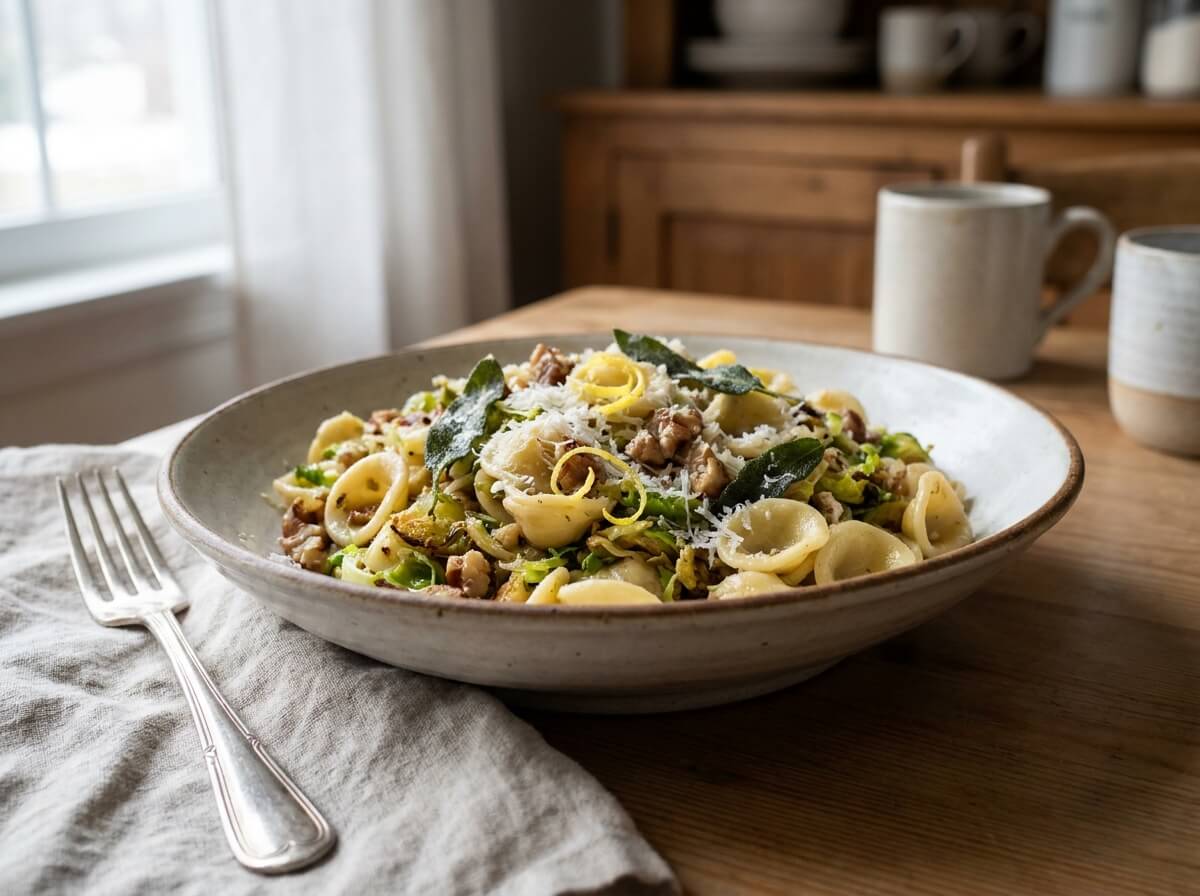
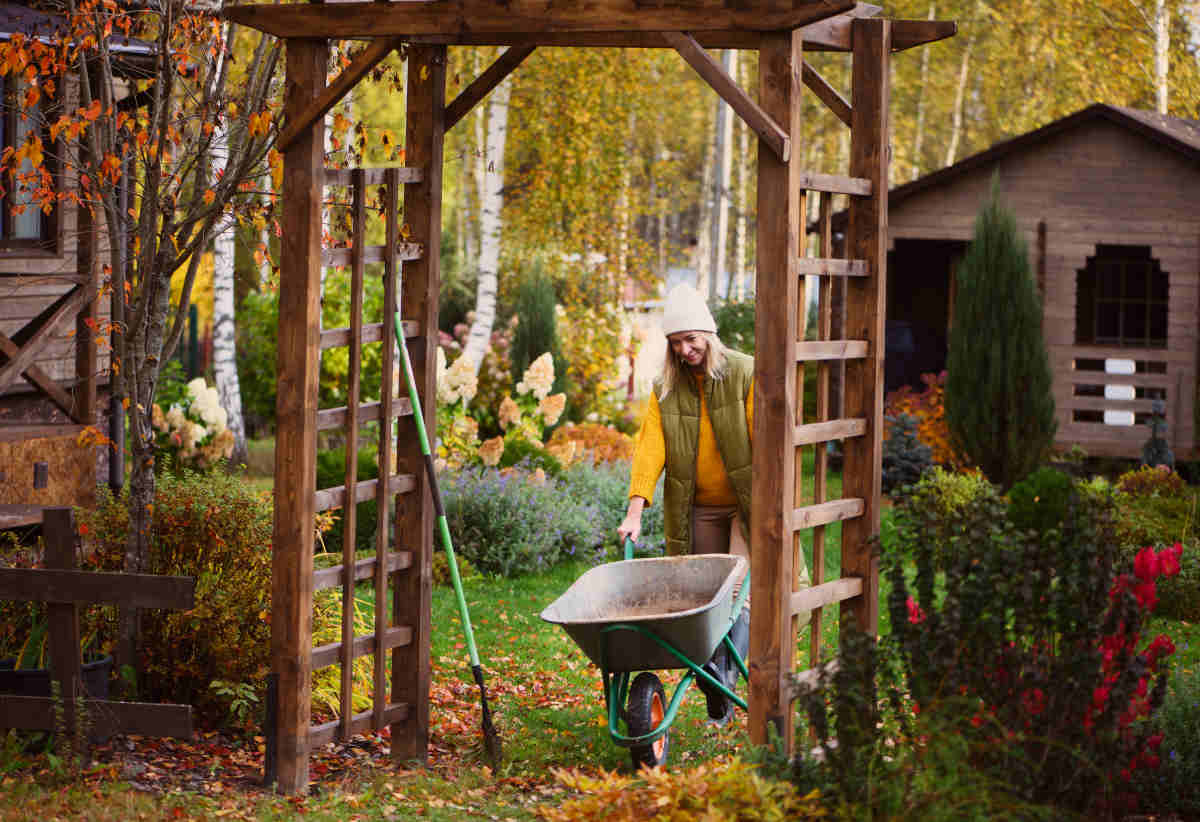
Brussels sprouts grow as tight buds spiralling up a single thick stalk, and the gardener’s reward comes late: after the first hard frosts, when the plant floods its cells with sugar as antifreeze and the bitterness drops away. Paired with chestnuts gathered from under *Castanea sativa* in October, they make a pasta with real backbone — shredded sprouts seared until their edges turn mahogany, sweet crumbling chestnut, salty pecorino.
14 oz (400 g) orecchiette (conchiglie or fusilli also work — you want a shape that traps shreds)
1 lb 2 oz (500 g) Brussels sprouts, trimmed
5 oz (150 g) cooked peeled chestnuts (vacuum-packed or jarred are fine)
3 tbsp (45 ml) olive oil
2 tbsp (30 g) unsalted butter
3 garlic cloves, thinly sliced
10 sage leaves (or 1 tsp picked thyme)
½ tsp dried chilli flakes
1 tbsp (15 ml) cider vinegar, plus 1 unwaxed lemon for zest
2 oz (60 g) pecorino romano, finely grated, plus more to serve (Parmesan or a firm aged goat’s cheese substitute well)
Fine sea salt and coarsely cracked black pepper
The Recipe
Pull off any loose outer leaves from the sprouts and set them aside in a separate bowl — they will crisp rather than wilt, and they give the finished plate two different textures. Halve the remaining sprouts, then slice each half into 3–4 shreds. Shredding, rather than quartering, multiplies the cut surface area, and cut surfaces are where browning and sweetness happen.
Crumble the chestnuts coarsely by hand into pieces roughly the size of a hazelnut. Do not chop them finely: fine chestnut dissolves into the sauce and goes pasty, whereas rough rubble stays distinct and gives the dish its bite.
Bring a large pot of water to a rolling boil and salt it until it tastes like a mild broth, about 1 tbsp (10 g) salt per 4 cups (1 litre). Start the pasta only when the sprouts are in the pan (step 5) — orecchiette takes 10–12 minutes and you want both components finishing together, since reheated sprouts lose their crispness.
Heat 2 tbsp (30 ml) of the olive oil in your widest frying pan over medium-high until it shimmers and a shred of sprout sizzles on contact. A wide pan matters more than you think: crowded sprouts release steam faster than it evaporates and you get dull grey-green stewing instead of browning.
Add the shredded sprouts in one layer, season with a good pinch of salt, and leave them completely still for 2–3 minutes. You are listening for a steady crackle and looking for dark bronze patches on the undersides. Then toss and repeat for another 3–4 minutes. Do not skip the still period — constant stirring drops the pan temperature below the browning threshold and you lose the nuttiness entirely.
Push the sprouts to one side, lower the heat to medium, and add the butter, remaining olive oil, garlic, sage and chilli flakes to the clear space. Cook 60–90 seconds until the garlic turns pale gold at the edges and the sage stops bubbling loudly — that fading sizzle means the leaves have given up their water and turned crisp. Garlic past gold goes acrid and nothing will rescue the sauce.
Stir in the chestnuts and the reserved loose leaves, toss everything together, and add the cider vinegar. It will hiss and evaporate in seconds. Acid here is not optional: it cuts the sulphurous note that brassicas develop with heat and makes the whole pan taste brighter.
Scoop out 1 cup (240 ml) of pasta water, then drain the orecchiette one minute before the packet’s stated time — it will finish in the pan. Tip the pasta into the sprouts with ½ cup (120 ml) of the water and toss hard over medium heat for a minute, until the liquid turns cloudy and clings to the pasta rather than pooling.
Take the pan off the heat, wait 30 seconds, then add the grated pecorino in three additions, tossing between each. Off-heat matters: above about 160 °F (70 °C) sheep’s cheese splits into stringy curds and greasy pools instead of emulsifying. Finish with lemon zest, plenty of cracked pepper and a little more pasta water if it tightens.