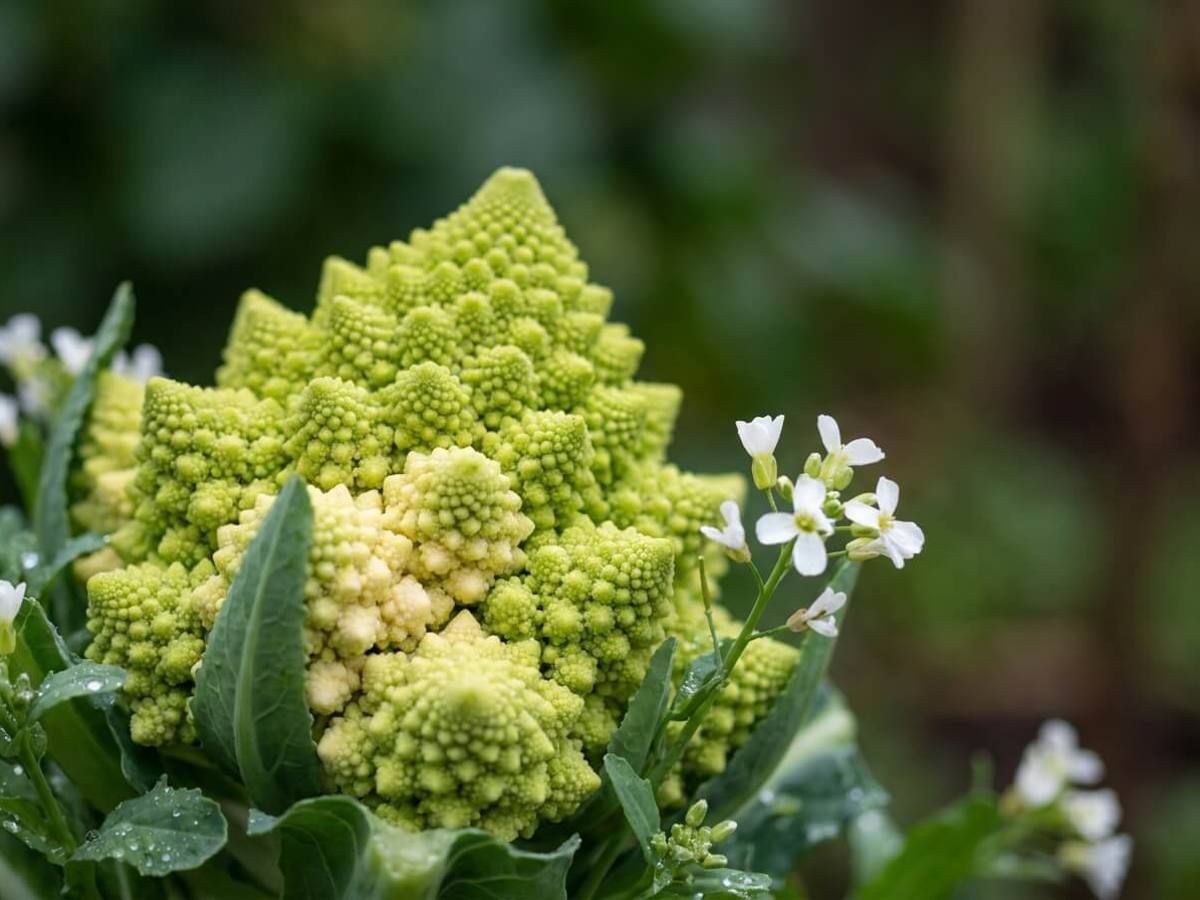
Romanesco is the most sculptural vegetable you can grow, forming a lime-green dome of spiralling, pointed turrets that repeat the same shape at ever smaller scales. It sits somewhere between cauliflower and broccoli in flavour — nutty, sweet and far less sulphurous than either — and holds its shape beautifully when cooked. Few plants earn their place in an ornamental potager quite so easily.
Growing conditions
Give Romanesco the sunniest open spot you have — a minimum of six hours of direct light keeps the plants stocky and the curds tight. In hot southern gardens, a little dappled shade from midday onwards prevents the heads from loosening and discolouring. Shelter from strong wind matters too, as the broad leaves rock top-heavy plants and tear their roots.
The ideal soil is deep, rich loam with plenty of organic matter but, crucially, a firm structure. Brassicas sulk in fluffy, freshly dug ground; tread the bed gently before planting. Aim for a pH of 6.5–7.5, as slightly alkaline soil suppresses clubroot and improves the uptake of calcium and boron.
Romanesco needs a long, cool finish — roughly 75 to 110 days from transplanting — so it is at its best as an autumn crop in temperate climates. In mild maritime regions heads will stand into December, whilst gardeners in hot summer areas should sow for autumn maturity rather than attempting a midsummer harvest.
How to plant Romanesco
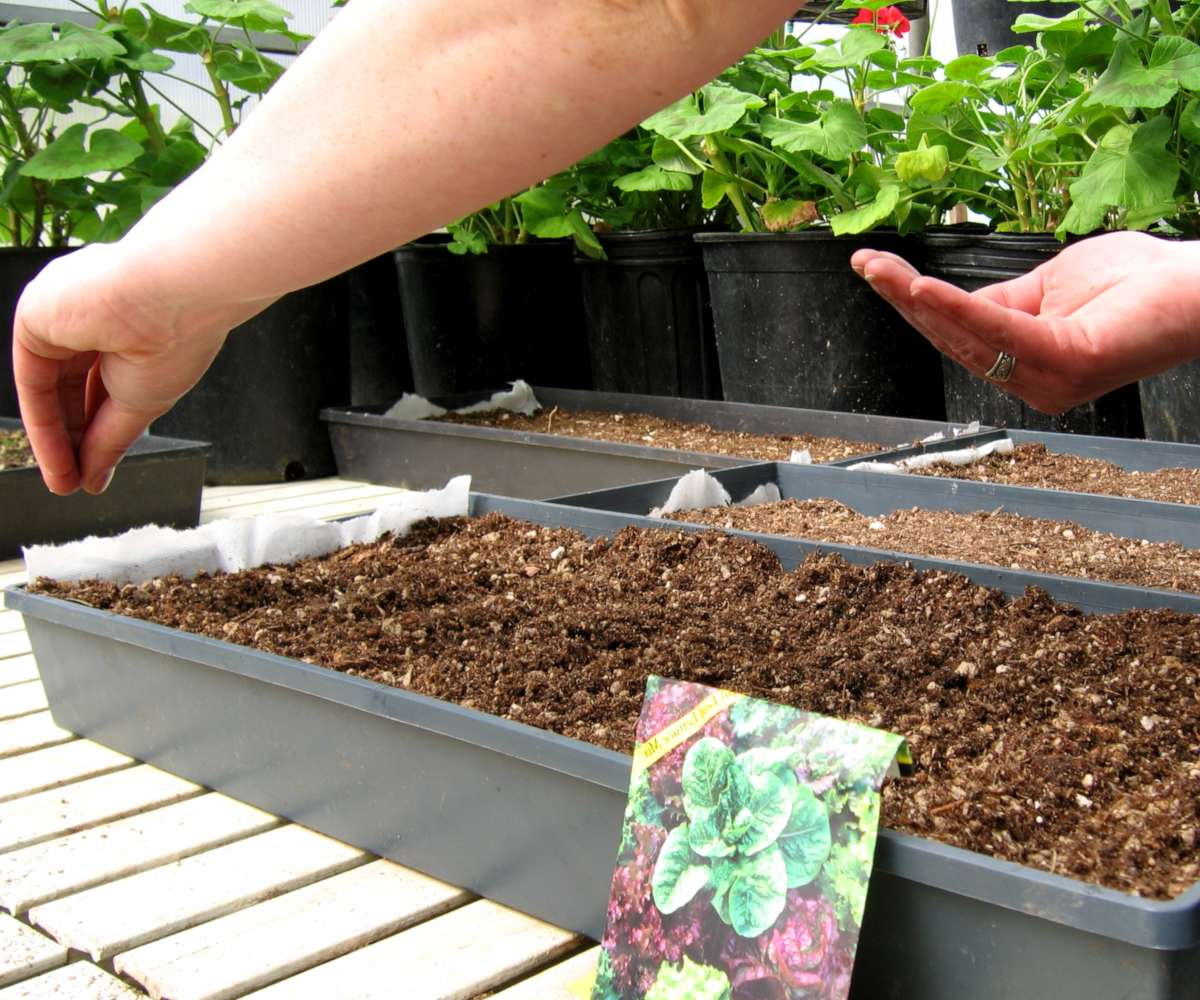
Sow in modules from April to early June and transplant when seedlings have four or five true leaves, usually five to six weeks later. Later sowings mature as temperatures fall, which is exactly when Romanesco forms its finest, most sharply defined curds.
Spacing: set plants 60–75 cm apart each way — closer spacing produces small, loose heads because each plant needs a large leaf canopy to feed a single curd.
Depth: plant slightly deeper than the module, with the lowest leaves just above soil level, then firm hard with your knuckles or heel.
Soil preparation: dig in well-rotted manure or compost the previous autumn and add garden lime to acidic soils several weeks before planting.
Watering-in: flood each planting hole before setting the plant in, then water again afterwards; a dry check at transplanting causes “buttoning”, or tiny premature heads.
Propagation: Romanesco is raised only from seed. Save your own by leaving one plant to flower in its second spring, but isolate it from other brassicas, which cross freely.
Romanesco growing in a naturalistic garden border
Care through the seasons
Spring: Sow under cover at 15–20 °C and grow seedlings cool and bright so they do not become drawn. Harden off over ten days before planting out, and fit brassica collars or fleece immediately to deter cabbage root fly. A balanced base dressing of blood, fish and bone worked into the bed sets plants up for the season.
Summer: Water deeply and consistently — 10–15 litres per square metre each week in dry spells — because fluctuating moisture causes uneven, ricey curds. Feed with a high-nitrogen liquid feed every fortnight until the head begins to form, then switch to a balanced feed. Keep netting in place against cabbage white butterflies and check leaf undersides for eggs weekly.
Autumn: This is the payoff: harvest heads whilst the turrets are still tight and pointed, cutting with a good collar of leaves to protect them. Earth up or stake tall plants before autumn gales. Mulch around the stems with compost to insulate roots and conserve moisture for any late-maturing plants.
Winter: Late varieties stand through light frost, which sweetens the flavour, but prolonged spells below −5 °C will damage exposed curds. Snap a few outer leaves over the head as natural insulation, or drape fleece on hard nights.
Best varieties to grow
Choose according to when you want to cut, as maturity dates vary by several weeks.
‘Veronica’ F1 — reliable, uniform and quick to mature, producing well-defined lime-green spirals from late summer; the best first choice.
‘Natalino’ — the traditional open-pollinated Italian type, later and more variable but with outstanding flavour and ideal for seed saving.
‘Navona’ F1 — a vigorous autumn variety with large, heavy heads and good tolerance of cooler, wetter conditions.
‘Celio’ F1 — an early, compact selection that suits smaller plots and closer spacing of around 50 cm.
Pests, diseases and common problems
Cabbage white caterpillars: ragged leaves and green droppings in the heart of the plant. Cover crops with fine insect mesh from planting, and pick off clusters of yellow eggs by hand; Bacillus thuringiensis is an effective organic spray for heavy attacks.
Clubroot: wilting in sunshine despite moist soil, with swollen, distorted roots. Lime the soil to pH 7, improve drainage, raise plants in large pots so they establish a strong root system, and rotate brassicas on a four-year cycle.
Buttoning and ricey curds: tiny heads or fuzzy, separating turrets, caused by root disturbance, drought, heat above 25 °C or nitrogen shortage. Transplant young, water generously and feed regularly to keep growth unchecked.