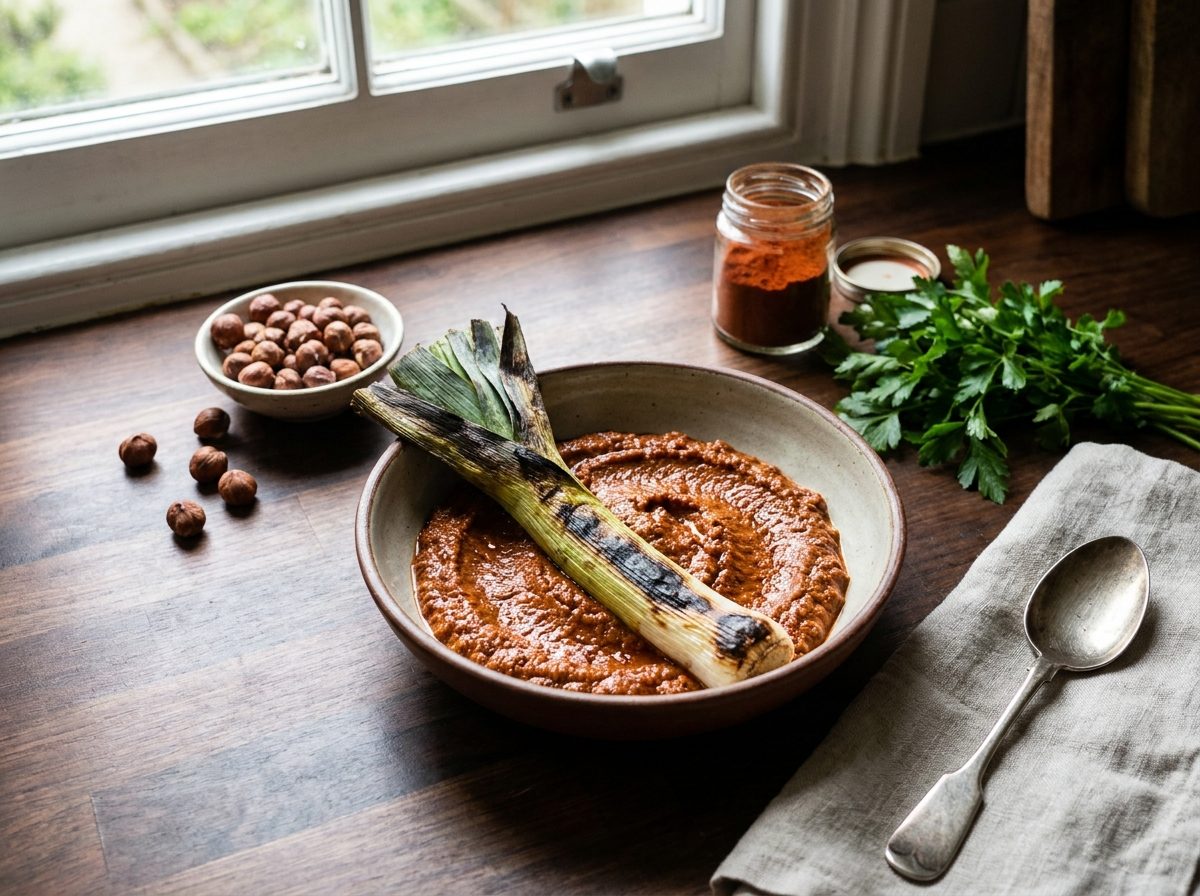
Leeks sit in the ground doing almost nothing all year, then turn generous once the first frosts hit — cold pushes them to convert starch into fructans, and a November leek tastes markedly sweeter than the same plant pulled in September. Blackening them whole over fire traps that sweetness inside a crust of ruined outer leaves while the core steams to silk. Peeled at the table and dragged through hazelnut romesco, they are finger food in the Catalan *calçotada* tradition.
⏱ Prep 20 min🔥 Cook 35 min👥 Serves 6 as tapas📊 Level Medium
Ingredients for 6 people
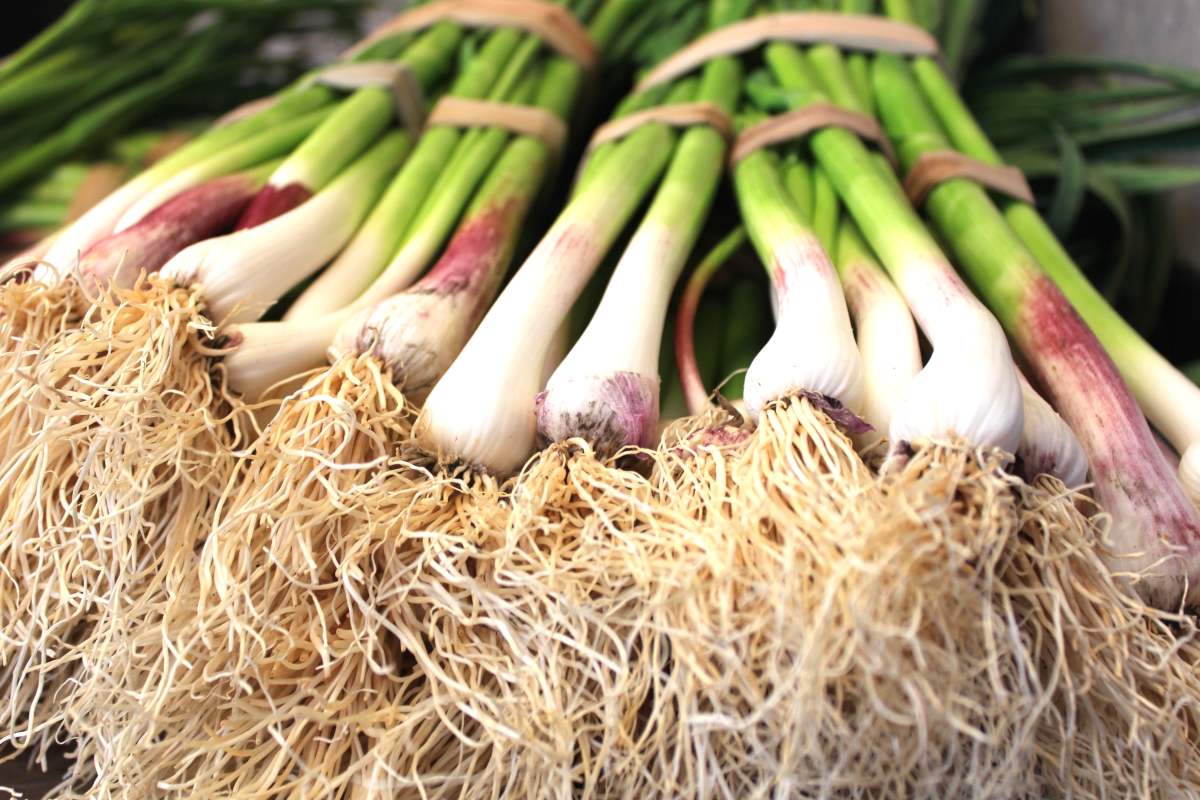
12 slender leeks, about 2 lb (900 g) total, each no thicker than a thumb
2/3 cup (90 g) blanched or skin-on hazelnuts
2 large roasted red peppers, about 7 oz (200 g) drained weight — jarred piquillo or ramiro peppers work
1 thick slice of day-old country bread, about 1 oz (30 g)
1/4 tsp (0.5 g) hot smoked paprika or a pinch of cayenne
2 tbsp (30 ml) sherry vinegar, plus a few drops to finish
2/3 cup (150 ml) extra-virgin olive oil, divided
1 tsp (6 g) flaky sea salt, plus more for the table
1 tbsp (4 g) flat-leaf parsley, chopped, to finish
The Recipe
Trim the leeks to roughly 8 in (20 cm), cutting off the dark fibrous tops but leaving the root plate completely intact. Do not skip this: the root holds the concentric layers together, so the leek chars as a sealed parcel instead of unravelling into loose leaves over the heat. Rinse the outsides and pat dry — surface water delays charring and steams the skin grey rather than blackening it.
Build a hot charcoal fire, heat a gas grill to maximum, or set an oven broiler to its highest setting with a rack 4 in (10 cm) below the element. You want fierce, direct, dry heat: the goal is to destroy the outer two layers quickly while the inside is still raw, so the core cooks in its own trapped steam rather than drying out.
Lay the leeks directly on the grill bars (or on a foil-lined tray under the broiler) and cook 12–16 minutes, turning every 3–4 minutes with tongs. They are ready when the outer skin is uniformly black and papery, splitting along the length, and the thickest part gives no resistance when pressed with tongs. You should hear faint hissing as the inner layers release steam through the splits — that sound means the core is cooking.
Pile the hot leeks onto a sheet of newspaper or parchment, wrap tightly, and leave 15 minutes. This is the step most people skip and it matters most: the trapped steam softens the core by another stage and lifts the charred skin away from the flesh, so peeling takes a single pull instead of a fight.
While the leeks rest, toast the hazelnuts on a tray at 350 °F (180 °C) for 9–11 minutes, until the centre of a split nut is the colour of light caramel and the kitchen smells of them. If using skin-on nuts, tip them hot into a tea towel and rub hard — the papery skins are tannic and will make the romesco taste bitter and dusty. Cool completely before blending; warm nuts release oil and turn the sauce into paste.
Fry the bread and whole garlic cloves gently in 3 tbsp (45 ml) of the olive oil over medium heat, 3–4 minutes, turning until the bread is gold on both sides and the garlic is soft and blond, not brown. The bread is the thickener and emulsifier that keeps the romesco from splitting; frying the garlic removes its raw bite so you taste pepper and nut, not allium burn.
Pulse the cooled hazelnuts in a food processor to coarse gravel — stop while you can still see individual fragments. Add the fried bread, garlic, red peppers, both paprikas, sherry vinegar and the flaky salt, and pulse again to a nubbly purée. With the motor running, pour in the remaining olive oil in a thin, steady thread until the sauce thickens and takes on a matte, brick-orange sheen. Rest it at least 20 minutes: the paprika needs that time to hydrate and bloom, and the sauce tastes noticeably rounder afterwards.
At the table, hold each leek by its root end, pinch just below the charred section and pull the blackened outer layers down and off in one movement — the pale, collapsed inner shaft slides out glossy and steaming. Trim the root, scatter with flaky salt, parsley and a few drops of sherry vinegar, and dip the length of it into the romesco. Serve the discarded skins in a second bowl; this is deliberately messy food, so hand out paper napkins or small bibs as they do in Valls.