Cavolo nero stands through October rain with its blistered, blue-black leaves arching like small palms, and the colder the nights get, the sweeter it tastes — the plant floods its cells with sugars to keep from freezing. That sweetness deserves more than a quick sauté. Cooked slowly in olive oil until it collapses into something closer to a dark, silky jam, it coats rigatoni the way a meat ragù does, with none of the meat.
1 lb 2 oz (500 g) cavolo nero / Tuscan kale, weighed before stripping (curly kale, collards or gai lan all work)
1/3 cup (80 ml) extra virgin olive oil, plus more to finish
6 garlic cloves, thinly sliced
4 anchovy fillets in oil, chopped (omit for a vegetarian version, see FAQ)
1 tsp dried chilli flakes
2 cups (500 ml) water or light vegetable stock, hot
14 oz (400 g) rigatoni or other large tubular pasta
1 1/2 cups (60 g) coarse rye breadcrumbs, from stale bread (sourdough or wholemeal are fine)
2/3 cup (50 g) finely grated pecorino romano or Parmesan
1 unwaxed lemon, zest and 1 tbsp juice
Fine sea salt and coarsely cracked black pepper
The Recipe
Strip the cavolo nero leaves from their stems by folding each leaf in half lengthways and pulling the rib away in one movement — the central rib stays fibrous however long you cook it, and a single stray stem turns a silky sauce stringy. Slice the leaves crossways into ribbons about 1/2 inch (1 cm) wide. Don’t discard the stems: slice them paper-thin and add them with the garlic, where they soften completely.
Warm the olive oil with the sliced garlic and the thin stem slices in a wide, heavy pan over low heat for 6–8 minutes, until the garlic turns pale gold at the edges and smells sweet rather than sharp. Take it slowly — garlic that browns fast goes bitter and that bitterness will shadow every mouthful of the finished dish.
Add the anchovies and chilli flakes and stir for 1 minute, pressing the fillets against the pan base with the back of a spoon until they dissolve into the oil and you can no longer see them. They are not there to taste of fish; they are there to carry salt and glutamate deep into the greens.
Pile in the cavolo nero with 1 tsp salt. It will look like far too much — stir and it halves in volume within 2 minutes as the leaves hit the hot oil and turn glossy, almost emerald. Pour in about half the hot water, bring to a bare simmer, cover and cook for 30 minutes, stirring every 10 minutes and adding more water whenever the pan looks dry.
Uncover and continue cooking for 10–15 minutes until the leaves have gone from bright green to a deep olive-black, the ribbons have lost all structure, and the oil separates and pools glossily at the edges of the pan. That pooling oil is your signal: it means the water has gone and the greens are collapsed rather than merely tender. Do not rush this stage — at 15 minutes the kale is a vegetable, at 45 it is a sauce.
While the greens cook, toast the rye crumbs in a dry frying pan over medium heat with a pinch of salt, tossing constantly for 4–5 minutes until they rattle dryly against the pan and smell like toast crust. Tip them straight onto a cold plate; left in the hot pan they keep cooking and turn acrid.
Boil the pasta in well-salted water (it should taste like a clear soup) until two minutes short of the packet time — it finishes in the sauce. Lift out 1 1/2 cups (350 ml) of the starchy cooking water before draining; this starch is what glues oil and greens into a coating rather than a puddle.
Add the drained rigatoni to the greens with 1 cup (240 ml) of the pasta water and the grated cheese. Toss hard over medium heat for 2 minutes until the sauce thickens, clings to the tubes and leaves a clean streak when you drag a spoon through the pan — add splashes of the remaining water if it tightens too far.
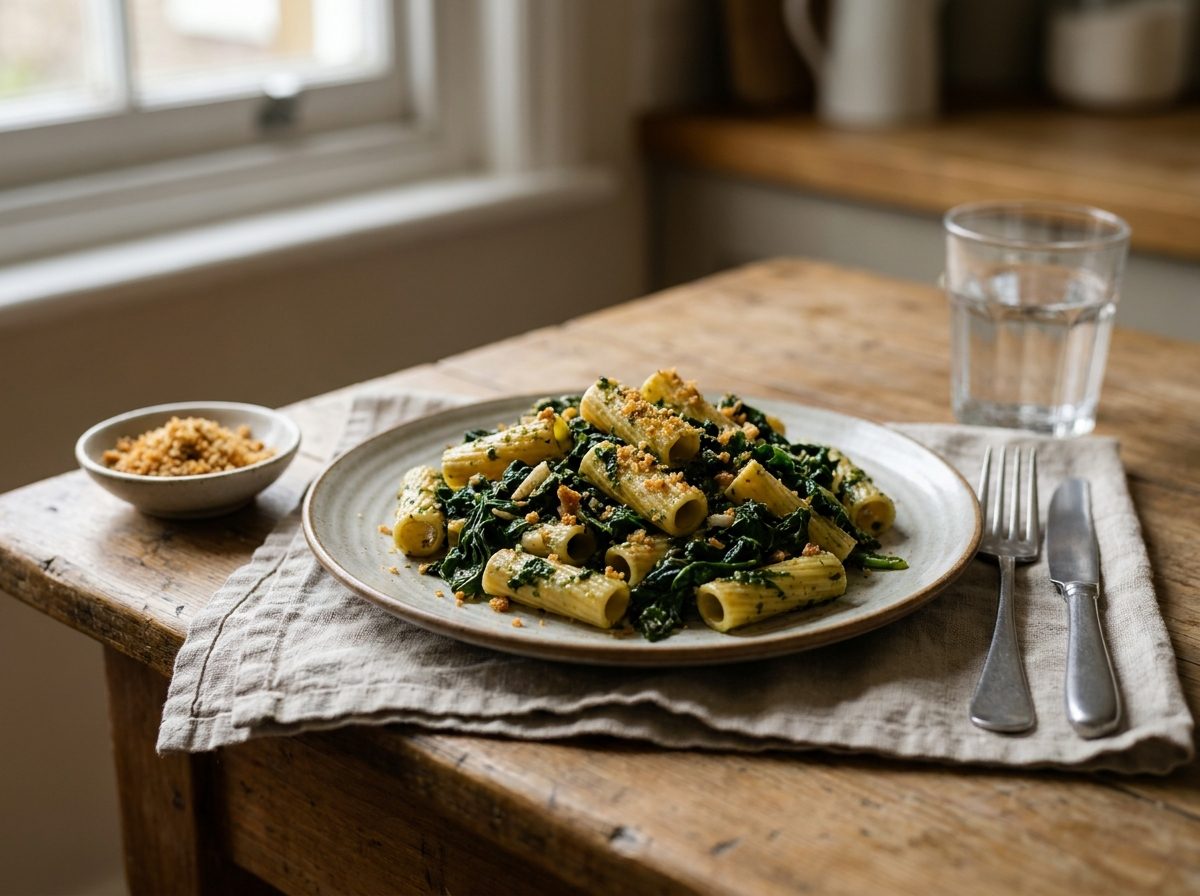
Off the heat, stir in the lemon juice and zest and a good grind of black pepper. Acid added earlier would have turned the leaves a dull khaki during the long cook; added at the end, it lifts the whole dish without dimming the colour. Serve in warmed bowls, scattered with the rye crumbs and a final thread of raw olive oil.