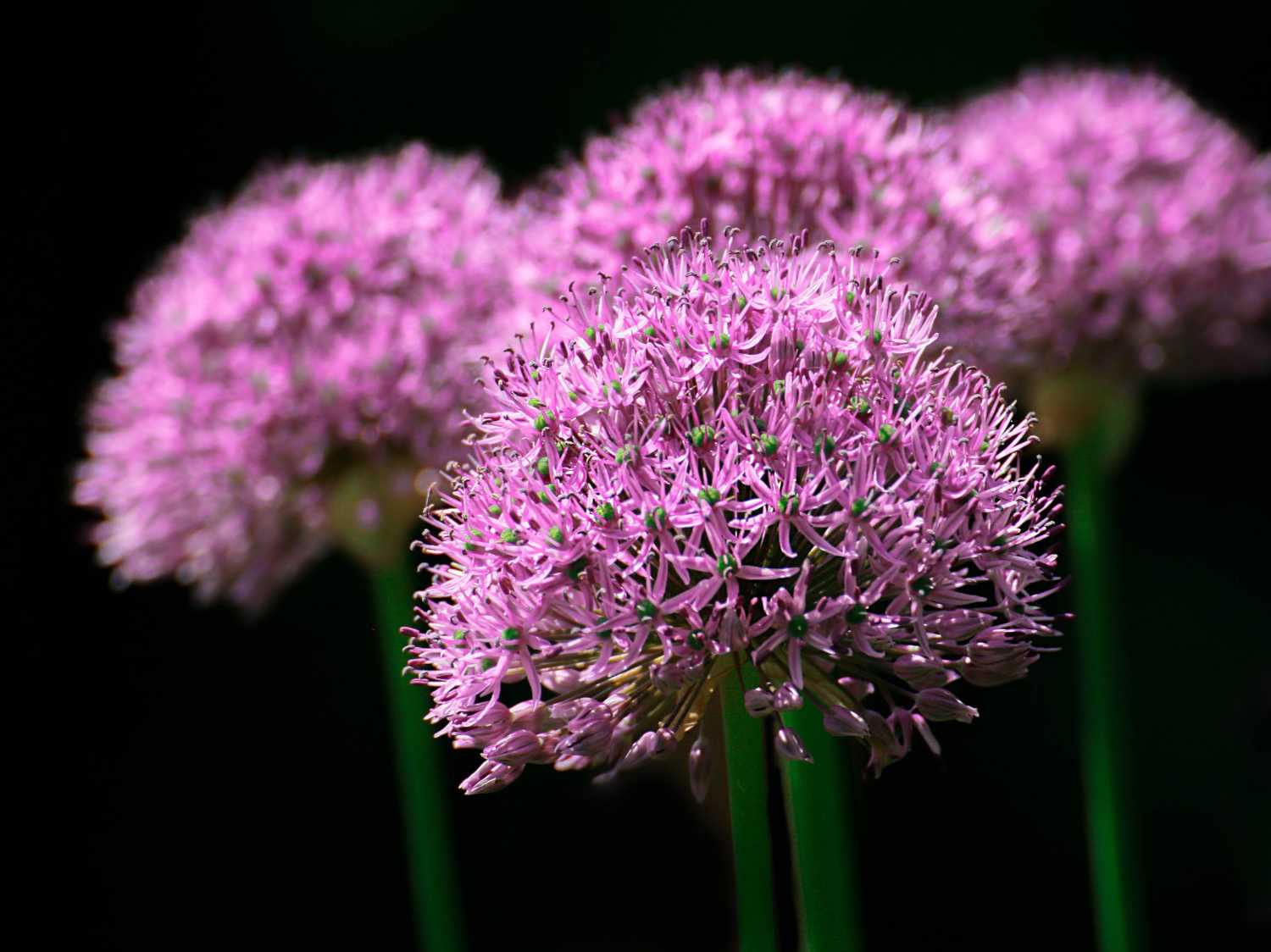
Star-studded spheres in mauve, violet, pink or yellow ride on tall stems, from compact 16-inch kinds to giants like Allium giganteum flowering over 5 feet up. These ornamental onions suit gravel gardens and the most modern plantings; give them full sun and free-draining soil, each bulb set two or three times as deep as it is tall.
They’re not the first plants we usually think of when filling in a flower bed, pot arrangement or garden box, but decorative onion is as appealing as it is easy!
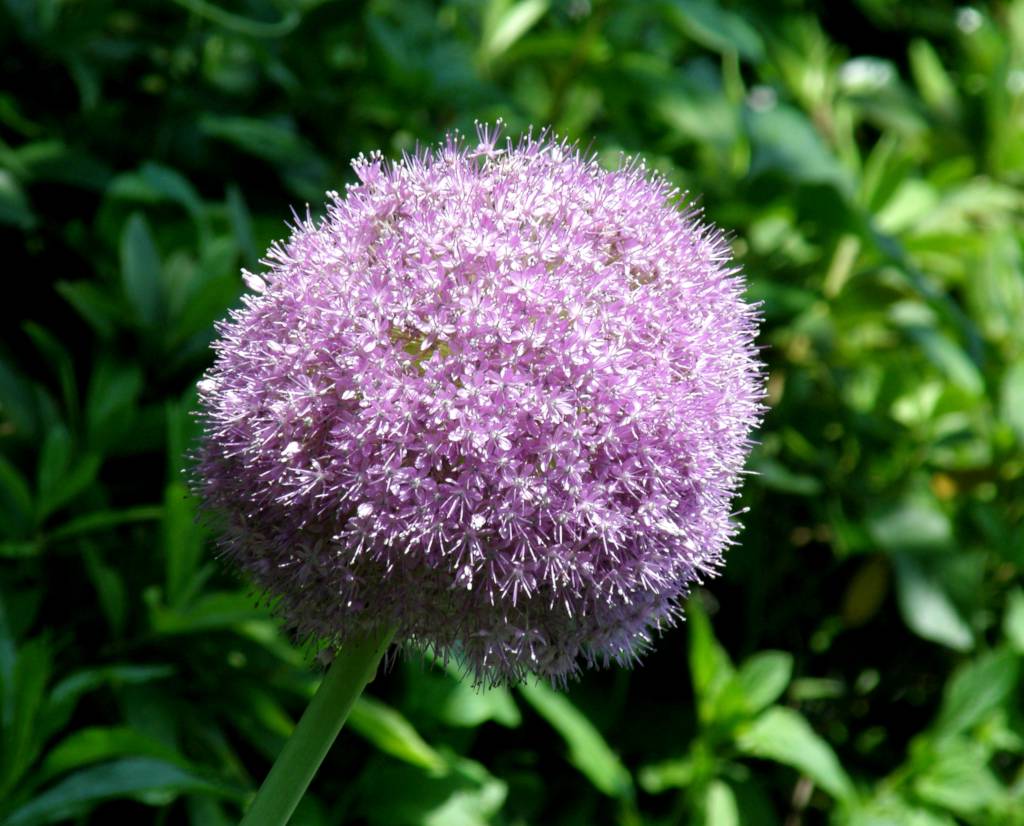
Depending on the variety, they uphold star-studded sphere-shaped umbels or flat-shaped ones, and come in any of the following tints: mauve, blue, violet, purple, pink, white or yellow (moly allium).
Their tall stem gives them an unusual graphical bearing that is perfectly suited to the most modern designer compositions, for instance in gravel gardens.
Their size also depends on the variety. The smallest ones are around 16 inches (40 cm) high, and are better if your garden is often wind-swept, but larger ones like Allium giganteum are true giants that send their bloom over 5 feet (1.5 meters) high!
The alliums named in this article differ mainly in when they open and how tall they stand. Use the table to pick one, or to combine several and spread the display.
| Allium | Distinctive feature | Blooming season |
|---|---|---|
| Persian onion (Allium hollandicum) | The earliest of the ornamental onions to open | Late spring, ahead of the others |
| Allium senescens | The last of the group to flower, closing the season | Early autumn |
| Allium giganteum | A true giant, carrying its bloom over 5 feet (1.5 m) high | Late spring to early autumn, depending on variety |
| Moly allium | The yellow-flowered one among mauve, blue, violet, purple, pink and white | Late spring to early autumn, depending on variety |
| Smallest varieties, around 16 inches (40 cm) | Better where the garden is often wind-swept | Late spring to early autumn, depending on variety |
Mixing species is the simplest way to rotate the pom-poms over the whole summer.
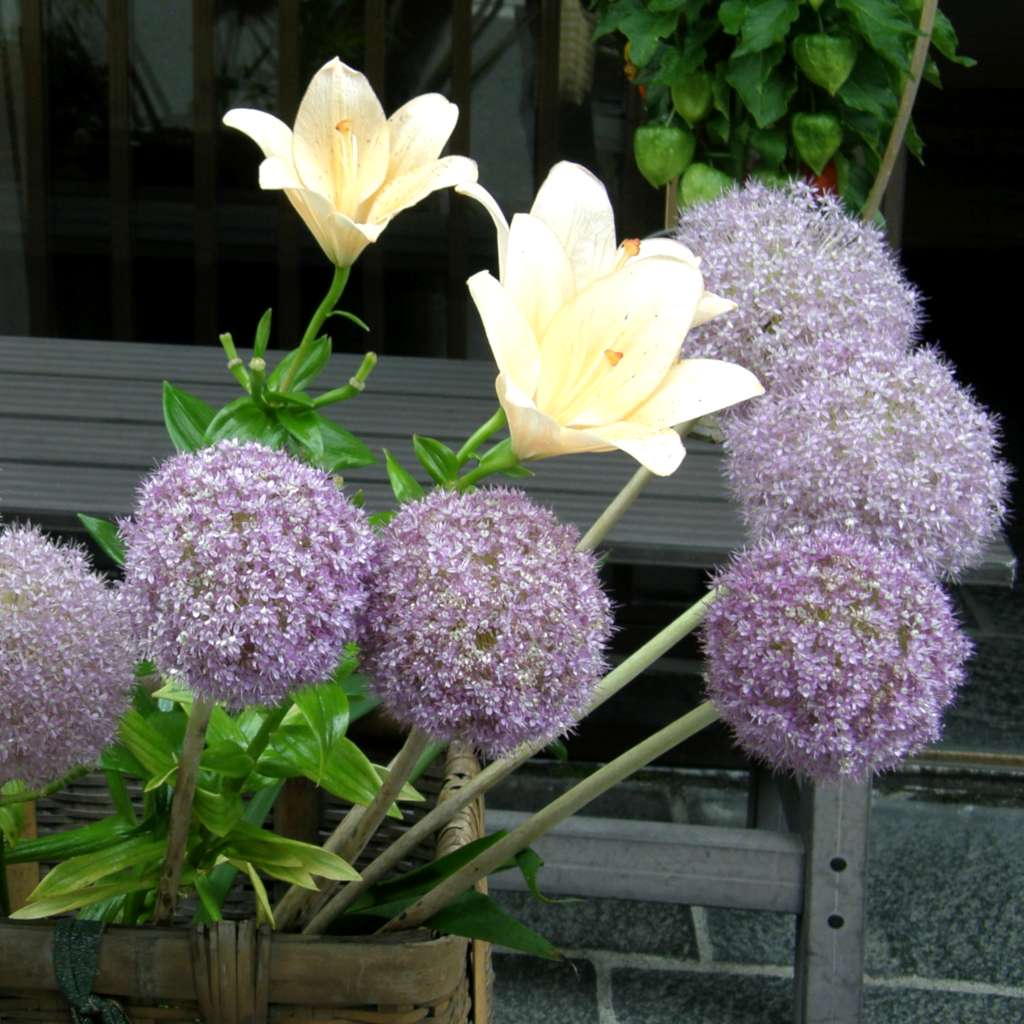
The planting of allium bulbs is in fall, from September to November. They tolerate all sorts of soil, as long as it is well drained. Plant them in the sun, with the bulb about two or three times as deep as it is tall. Group them together to create a canopy of colored spheres hovering over the garden, or pair them with rose trees, larkspur, lavender, grasses or iris… Quizzically-shaped parrot tulip will be great companions, too.
You can also grow them in pots, which is a good option if your garden soil is too heavy. Settle them in a blend of ¾ soil mix and ¼ sand, with a thick drainage layer: like all bulbous plants, they hate sitting moisture.
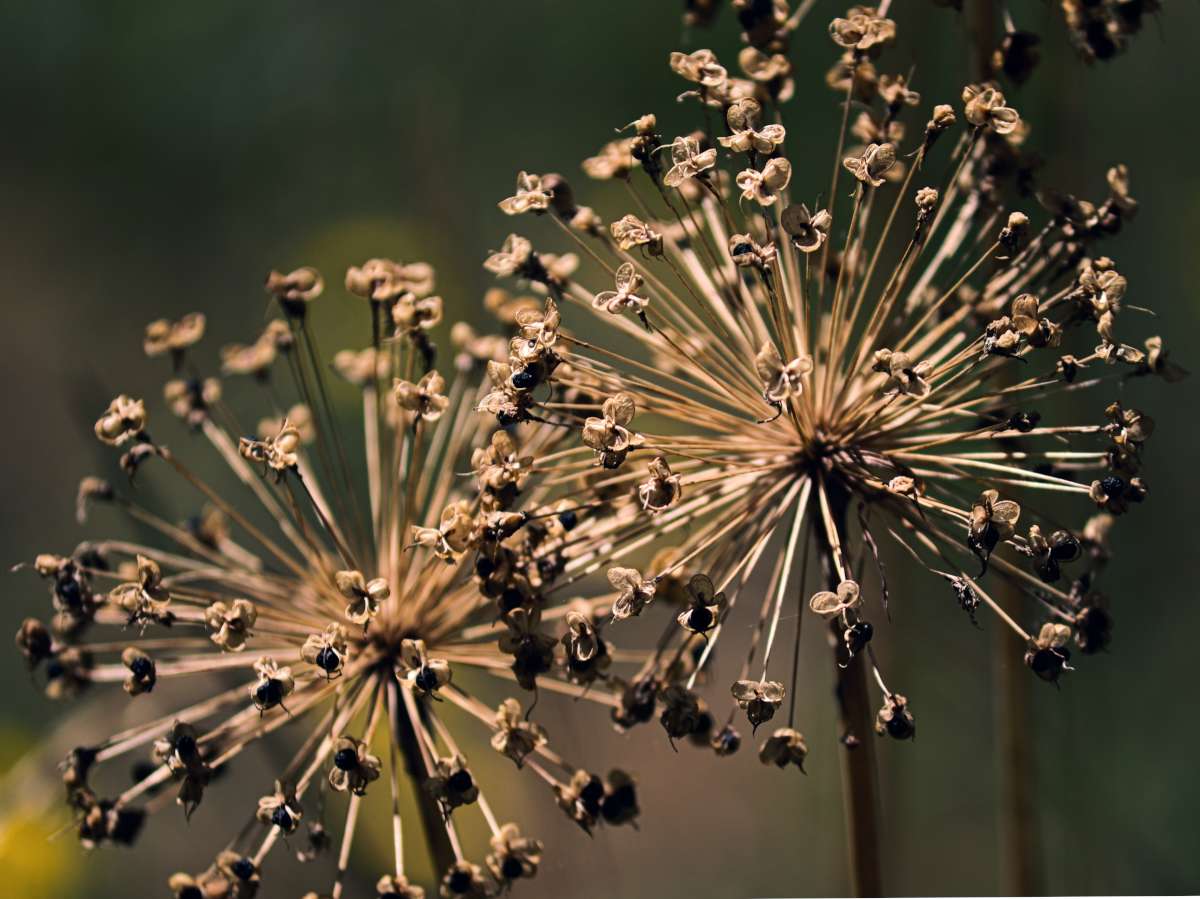
Blooming is from May to September depending on the variety and lasts more or less three weeks. The earliest bloomers are Persian onion (Allium hollandicum), whereas Allium senescens blooms last in September. Mixing species will rotate the blooming over the entire summer.
Also, take note that these stupendous flowers are edible! Feel free to sprinkle the star-shaped flowers in your dishes and mixed salads!
→ Nice to know: these are great for dried flower bouquets, too
Laure Hamann