Five easy rows of radish, lettuce and cherry tomato, edged with cosmos and French marigold, turn a corner of the garden into a living laboratory where children watch ladybirds, hedgehogs and slugs at work. Give them sturdy tools sized to their hands and let them set their own rhythm, and they gain patience, curiosity and autonomy.
When nothing inspiring is on TV (and even if there is!), invite your kids to discover nature’s mysteries, simply by growing a few easy veggies!
Teach them to learn patience and excite their curiosity as they gain insights on biodiversity!

A vegetable patch is more than just a way to produce vegetables, it’s also a amazing living laboratory for all kinds of fun experiments: growing plants from sowing to harvest, influence of seasons, observing local flora and fauna, impact of the weather…
Your children will discover how important biodiversity is, learning about ladybugs, hedgehogs, birds, slugs… And they’ll also exercise the values that lead to success: curiosity, patience, autonomy, perseverance.
Additionally, observing nature will stimulate their desire to learn more and to protect their environment. It might even trigger a calling that will lead to their future job!
For children to stick to the project, bring out your best team-leading skills. Together with the children, map out the future mini-garden. On checkered paper, draw each vegetable where it is to grow: they can color them out. Read out sowing and harvest dates on seed packets.
Start easy in year one, with only five vegetables (radish, cherry tomato, carrot, etc. For the second year, double that number, or, alternately, add five types of beneficial flowers such as cosmos, French marigold, honesty, violet, snapdragon…
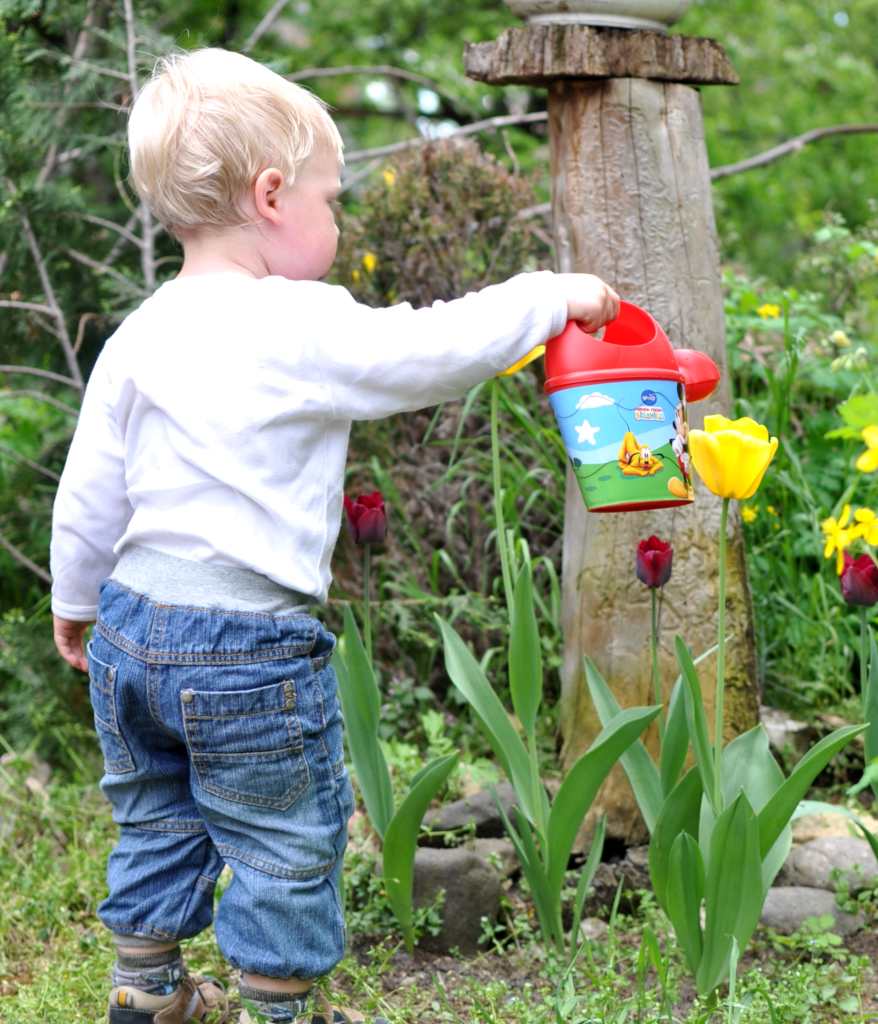
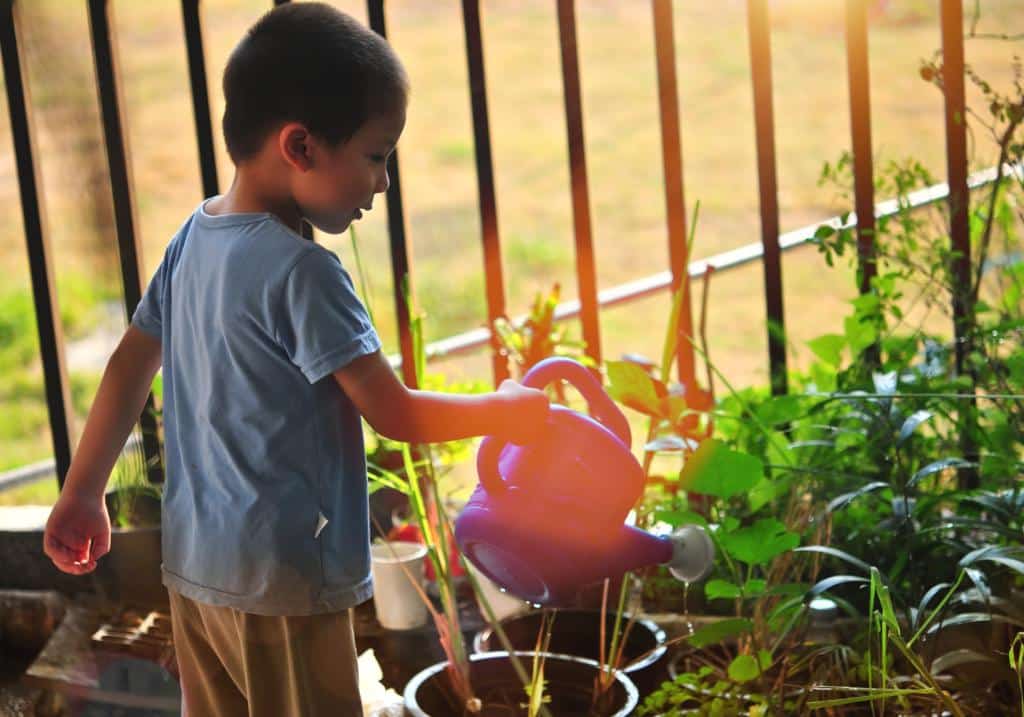
For each activity to feel fun, offer them a size-adjusted set of sturdy gardening tools. A beginner’s set would include a small watering can with shower dispenser, a tiny spade, a hand hoe and a planter. The kit may be added to as needs arise. Since children will follow your lead and look up to you, teach them to use the tools and clean them up immediately after use. Remember not to nag or hustle, though: let them follow their own rhythm and they’ll grow to be autonomous.
If you haven’t much space, set up a square foot bed about as large as a sandbox to create a small raised garden, which you can fill with soil mix. They can plant their flowers and mini-vegetables inside.
The article suggests starting with a handful of simple vegetables; these widely sold varieties are the ones most likely to reward a child quickly. All are ordinary seed-rack or garden-centre names in the UK and the US.
| Variety | Ready to pick | Why it suits children |
|---|---|---|
| Roughly eight to ten weeks | Small crisp hearts cut whole in one go | |
| Midsummer to autumn | Tall climber up a wigwam, scarlet flowers | |
| About twelve weeks | Sweet blunt roots, happy in a raised bed | |
| Midsummer onwards | Sweet fruit eaten straight off the truss | |
| Midsummer onwards | Very sweet, heavy trusses over a long season |
Veggie Sowing Harvest
Pink radish April to Sept May to Oct
Lettuce mid-April to Sept mid-May to Oct
Bean March to June May to Oct
Tomato April to May July to Sept
Pea April to May June to July
Carrot March to July May to Nov
Potato April to May June to July
Squash April to June Sept to Oct
Onion March to May July to August
Corn April to May August to Sept
Sow a short row of radish every two or three weeks rather than the whole packet at once, so there is always something for children to pull.
Pierrick the organic gardener