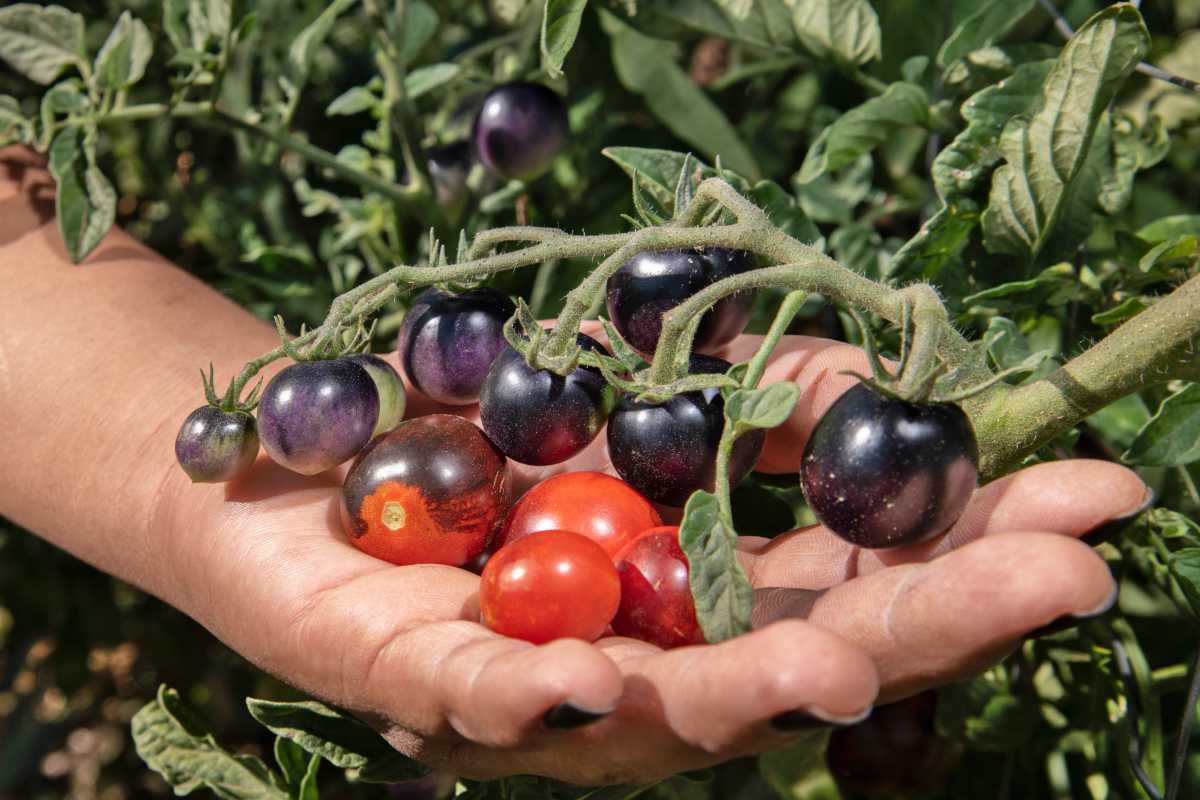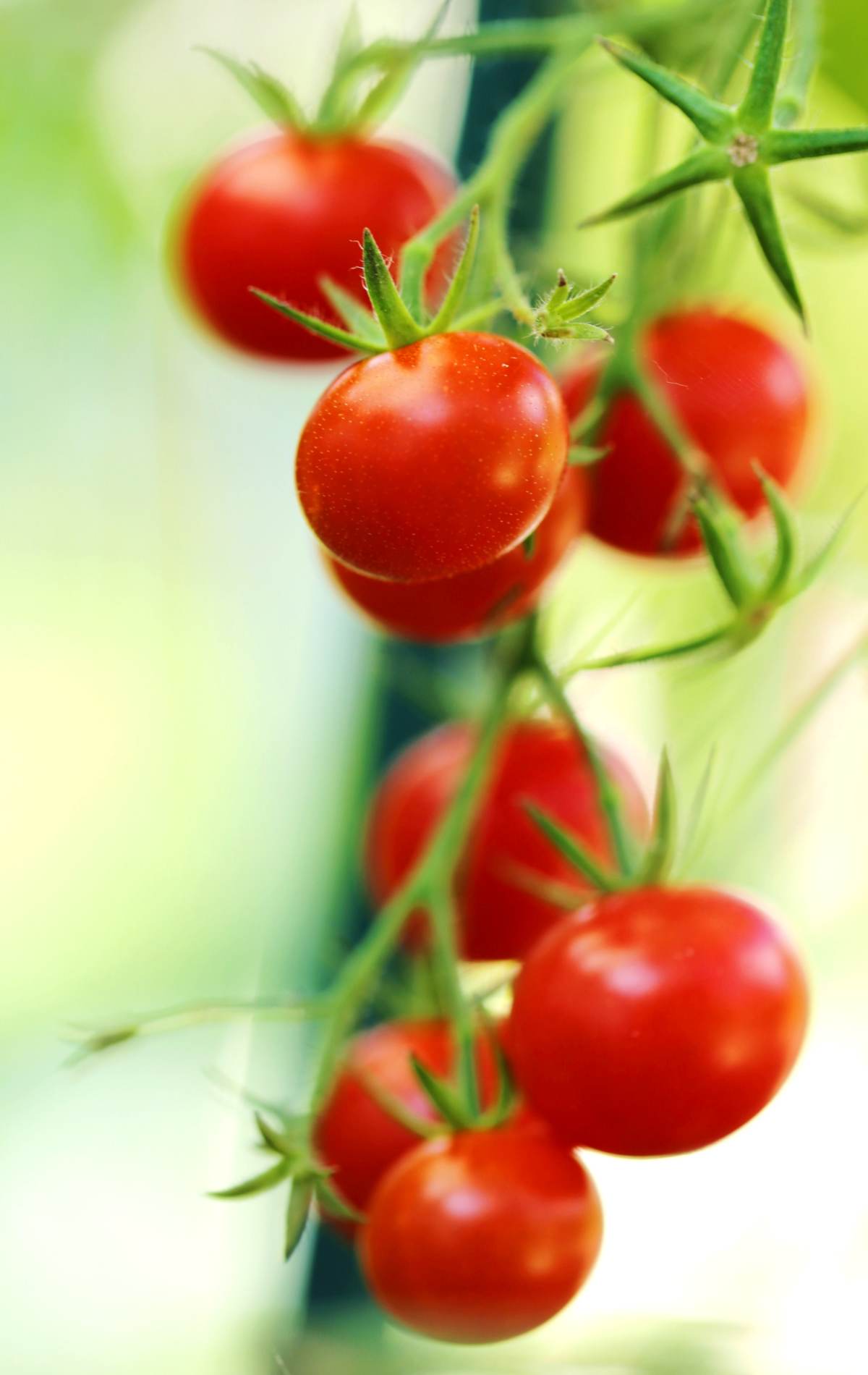
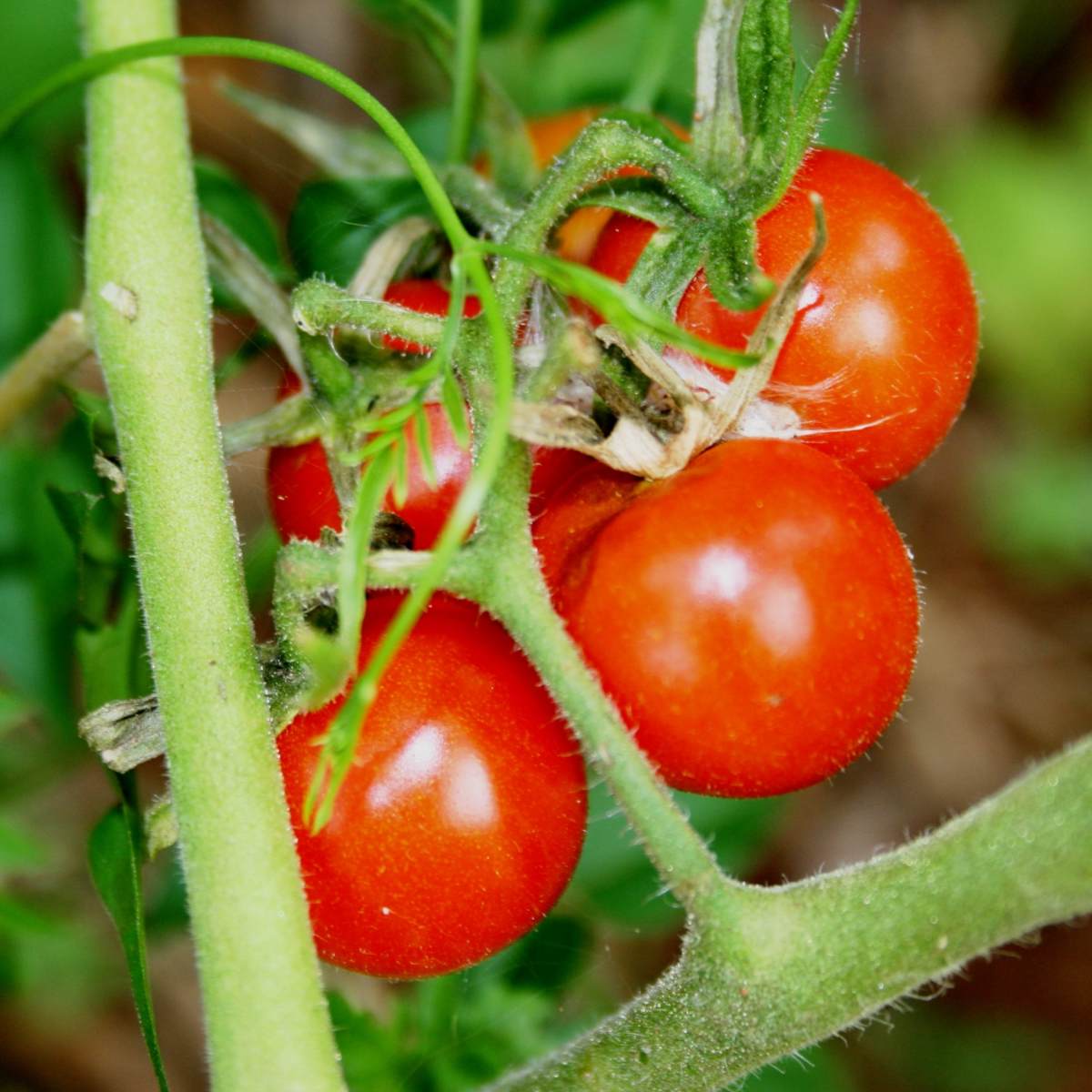
Reaching 30 to 55 inches with the fruit left to ripen and colour on the plant, cherry tomato (Lycopersicon esculentum) is one of the most commonly grown vegetables in the world. Decorative on a balcony and even repellent to the cabbage white butterfly, it needs only full sun, light rich soil and minimal care to crop abundantly.
| Name | Lycopersicon esculentum, cherry tomato |
|---|---|
| Family | Solanaceae or nightshade |
| Type | vegetable |
| Height | 30 to 55 inches (80 to 140 cm) |
| Exposure | full sun |
| Soil | light, rich enough |
| Harvest | summer, let it ripen on the plant |
From sowing to harvest, each maintenance step is important to produce beautiful cherry tomatoes.
Cherry tomato stems grow tall and bend under trusses of fruit, so drive a stake in at planting time and tie the main stem loosely as it climbs.
Water cherry tomatoes at the base, never over the leaves.
Irregular watering makes the thin skins of cherry tomatoes split, so aim to keep the soil evenly moist rather than letting it dry out then soaking it.
On a balcony, give each plant a deep pot with drainage holes, because a cramped root ball dries out within hours in full sun.
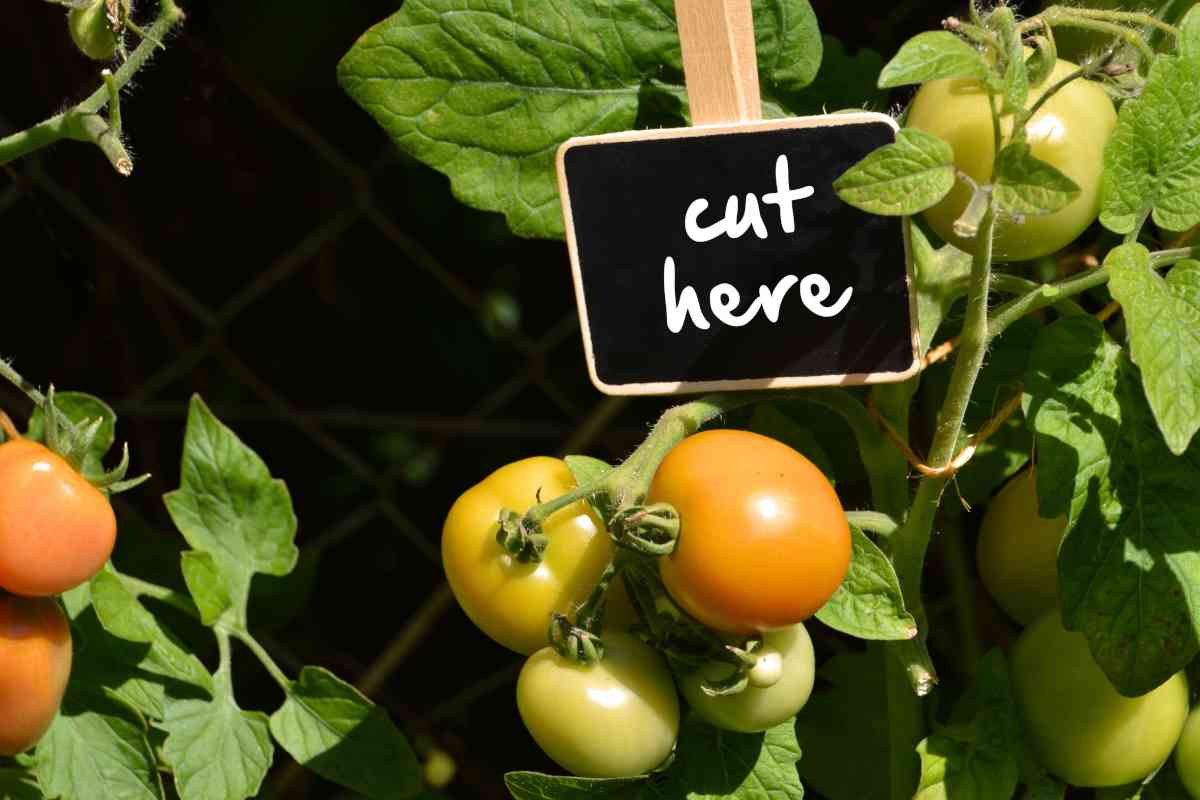
It is important that the fruits be exposed to sunlight.
Keep enough leaves above each truss to shade the fruit, because bare cherry tomatoes can scald in full sun.
Each stage of the season has its own moment and its own task. Here is how sowing, planting, pruning and picking follow one another on a cherry tomato plant.
| Stage | When | What it involves |
|---|---|---|
| Sowing from seed | Late winter to early spring | Slower, but very easy, and the fruits have a uniquely delicious taste |
| Planting nursery-pot plants | Spring to early summer | A sun-bathed spot sheltered from wind, plants spaced around 30 inches (80 cm) apart |
| Feeding | Through the growing season | Vegetable patch or tomato fertilizer once or twice a month |
| Pruning | As the plant grows, then at full height | Remove suckers, then prune the head off leaving 5 groups of leaves |
| Harvesting | Summer, 4 to 5 months after sowing | Pick only when the fruits are well coloured |
Late fruits that refuse to colour need not be wasted: they make a firm and delicious green tomato jam.
Easy to grow and only requiring minimal care, tomatoes are one of the most commonly grown vegetables in the world.
In the vegetable patch or in the garden, but also on a balcony or a terrace, this plant has the added advantage of being very decorative, and pest repellent, too (particularly against the cabbage white butterfly).
Tie the main stem loosely to a stake or cane as it lengthens, because a plant carrying trusses at 55 inches will bend or snap in wind.
Water at the base of the plant rather than over the leaves, since damp foliage is what lets blight take hold.
On a balcony, give each plant its own deep pot with drainage holes and check the compost daily in hot weather.
Avoid the bed where tomatoes, potatoes, peppers or aubergines last grew, as these nightshade relatives share soil-borne diseases.
Leave the fruit unwashed until you are ready to eat it.
Keep the bowl out of direct sunlight on the worktop, since sun both softens the flesh and pushes the fruit past its best.
Go through the bowl regularly and take out any split or bruised cherry tomatoes, because one that turns mouldy will spoil the fruits touching it.
A glut can be halved and slow-roasted or frozen whole, as freezing ruins the texture but not the flavour for sauces.
Avoid planting cherry tomatoes where tomatoes or potatoes grew the previous time, since both share the same soil-borne diseases.
Bin or burn blight-spotted leaves, never compost them.
A fertilizing mulch such as cocoa hulls will complement your tomato plants perfectly!