Tatsoi forms a low, almost perfectly flat rosette of dark, spoon-shaped leaves that presses itself against the soil like a green rose window. It is one of the most useful salad crops for the colder half of the year, cropping happily through autumn frosts when lettuce has long given up. The glossy, slightly succulent leaves have a mild, mustardy-sweet flavour that intensifies rather than suffers after a hard night.
Growing conditions
Give tatsoi the brightest spot you have from September through to March — short winter days are weak, and shaded plants stretch and thin. In late spring and summer the reverse applies: dappled shade or the shadow of taller crops slows bolting and keeps the leaves tender.
It wants a fertile, moisture-retentive soil that never dries out, yet drains freely enough to avoid winter waterlogging. A pH of 6.5–7.0 suits it best and also helps suppress clubroot; lime acidic soils the autumn before sowing. Dig in well-rotted compost or manure before sowing, as hungry plants bolt faster.
Tatsoi is one of the hardiest oriental greens, shrugging off −5 °C unprotected and surviving colder spells under a cloche or in an unheated polytunnel. In mild maritime regions it will stand outdoors all winter; in continental climates with prolonged deep frost, grow it under cover.
How to plant Tatsoi
The two reliable sowing windows are late summer to early autumn (mid-July to mid-September) and late winter to early spring under cover. Sowings made at the height of summer, when days are long, usually run to flower before they bulk up.
Spacing: 20–25 cm apart each way for full rosettes; 5–10 cm if you intend to cut repeatedly as baby leaf.
Depth: Sow seed 1 cm deep. Set out transplants with the growing point level with the soil surface — burying the crown causes rot.
Soil preparation: Rake to a fine, firm tilth and work in a balanced organic fertiliser or garden compost a fortnight beforehand.
Watering in: Water the drill before sowing in warm weather rather than after, then keep the surface damp until the seedlings appear in 4–7 days.
Propagation: Always from seed. Leave one or two plants to flower in spring and collect the dried pods — but isolate them, as they cross with any other Brassica rapa nearby.
Tatsoi growing in a naturalistic garden border
Care through the seasons
Spring: Overwintered plants put on a flush of sweet growth in March — harvest it promptly, because lengthening days will push them into flower. Sow fresh batches from late February under cloches, and feed young plants with a dilute liquid seaweed or nettle feed every fortnight.
Summer: Heat and long days are the enemy. Sow in light shade, keep the soil consistently moist with a deep soak twice weekly rather than daily sprinkles, and harvest as baby leaf at 25–30 days before bolting sets in. Cover with insect-proof mesh to exclude flea beetle and cabbage white butterflies.
Autumn: This is tatsoi’s season. Make successional sowings every two to three weeks until mid-September, thin promptly, and mulch between rows with leaf mould to keep soil warm and splash-free. Clear fallen or yellowing outer leaves to deny slugs a daytime refuge.
Winter: Growth slows to a near standstill below about 5 °C but the rosettes hold in good condition for weeks, ready to cut. Drape horticultural fleece over hoops before the first severe frost and harvest at midday once the leaves have thawed.
Best varieties to grow
Named selections are few, but each brings something distinct to the salad bowl.
‘Rosette’ — the classic dark green, tightly flattened type; the hardiest and the best choice for autumn and winter cutting.
‘Yukina Savoy’ — a taller, semi-upright relative with crinkled, blistered leaves, easier to wash and excellent lightly stir-fried.
‘Red Cloud’ — purple-flushed leaves with green undersides, slightly slower growing but striking in a mixed salad.
‘Koji’ — a vigorous F1 tatsoi–komatsuna cross with larger, smoother leaves and notably good bolting resistance for spring sowings.
Pests, diseases and common problems
Flea beetle: Peppering of tiny round holes in young leaves, worst in warm, dry spells. Cover seedlings with fine insect mesh from the day of sowing and keep the soil damp, as beetles dislike humid, cool conditions.
Slugs and snails: The ground-hugging rosette is a perfect shelter; damage appears as ragged holes and slime on the undersides. Water in nematodes in autumn, clear debris, and patrol with a torch on damp, mild evenings.
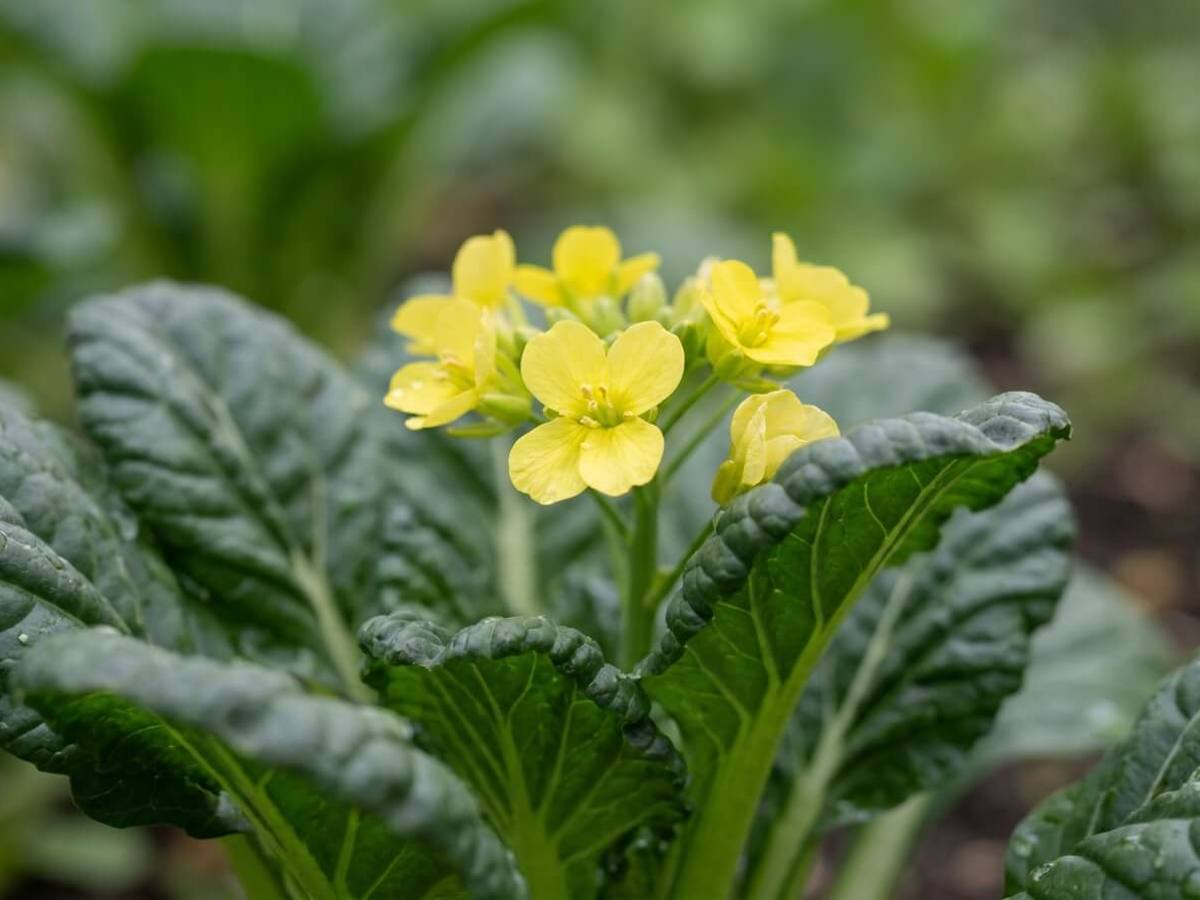
Bolting: The rosette elongates and sends up a flower spike, turning leaves bitter. Caused by long days, heat or root check — sow after midsummer, thin early and never let plants dry out; the flower buds are still sweet eaten like sprouting broccoli.
Downy mildew: Yellow blotches above with greyish fuzz beneath, common in crowded winter tunnels. Improve ventilation, space plants properly and water the soil rather than the foliage.