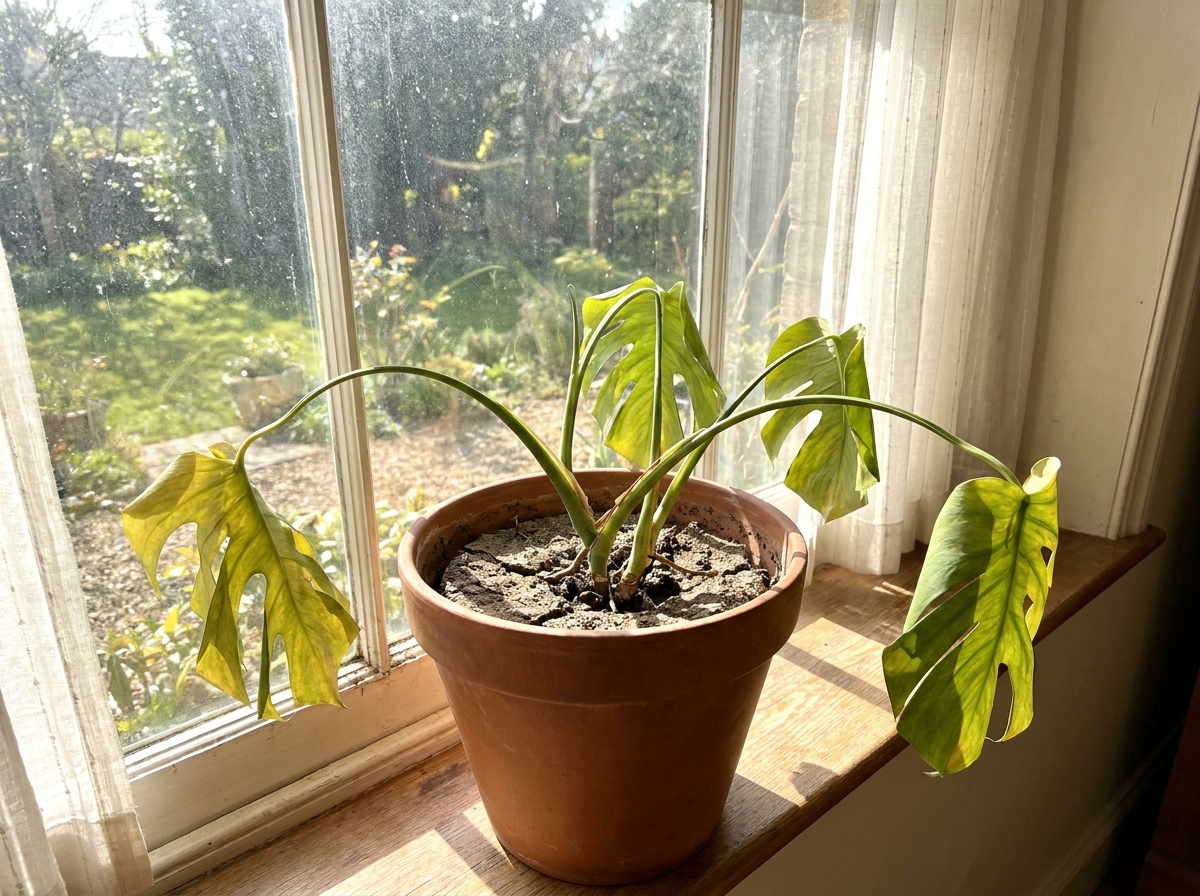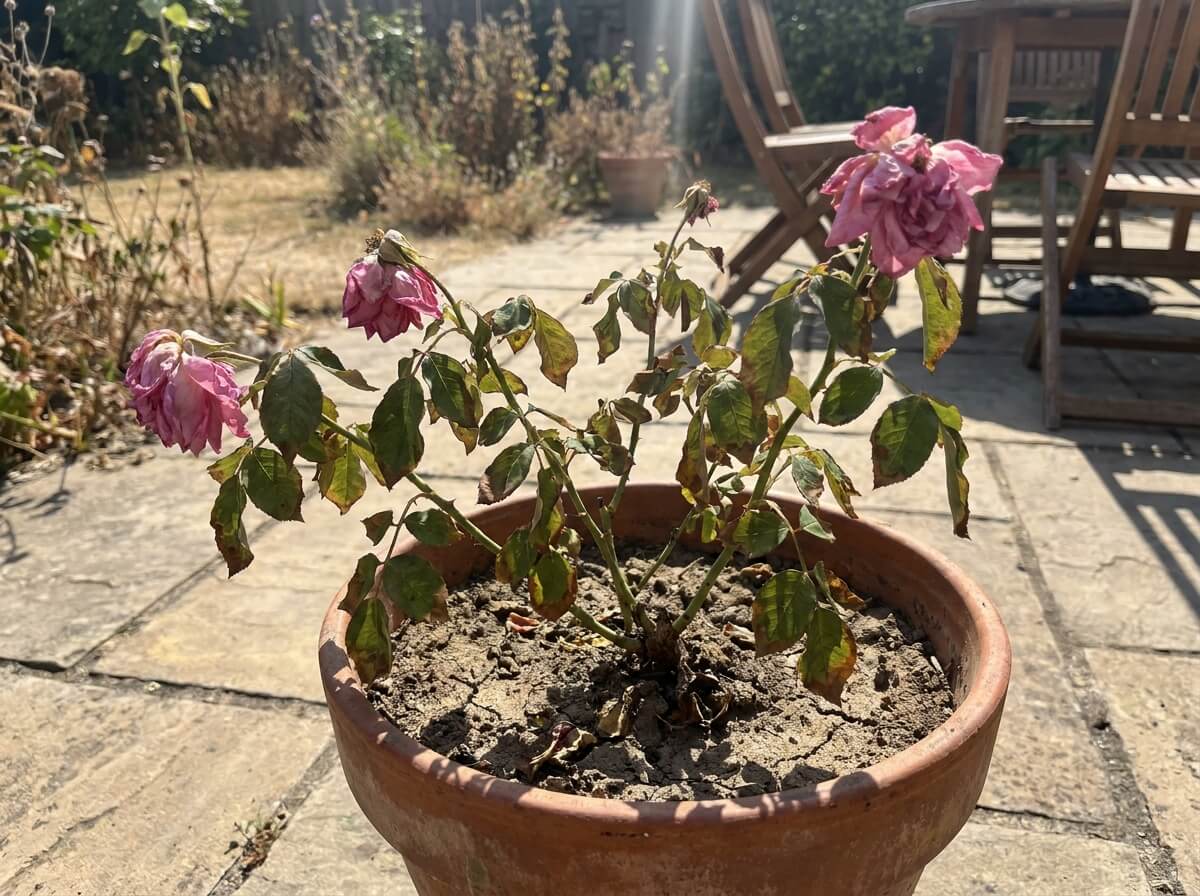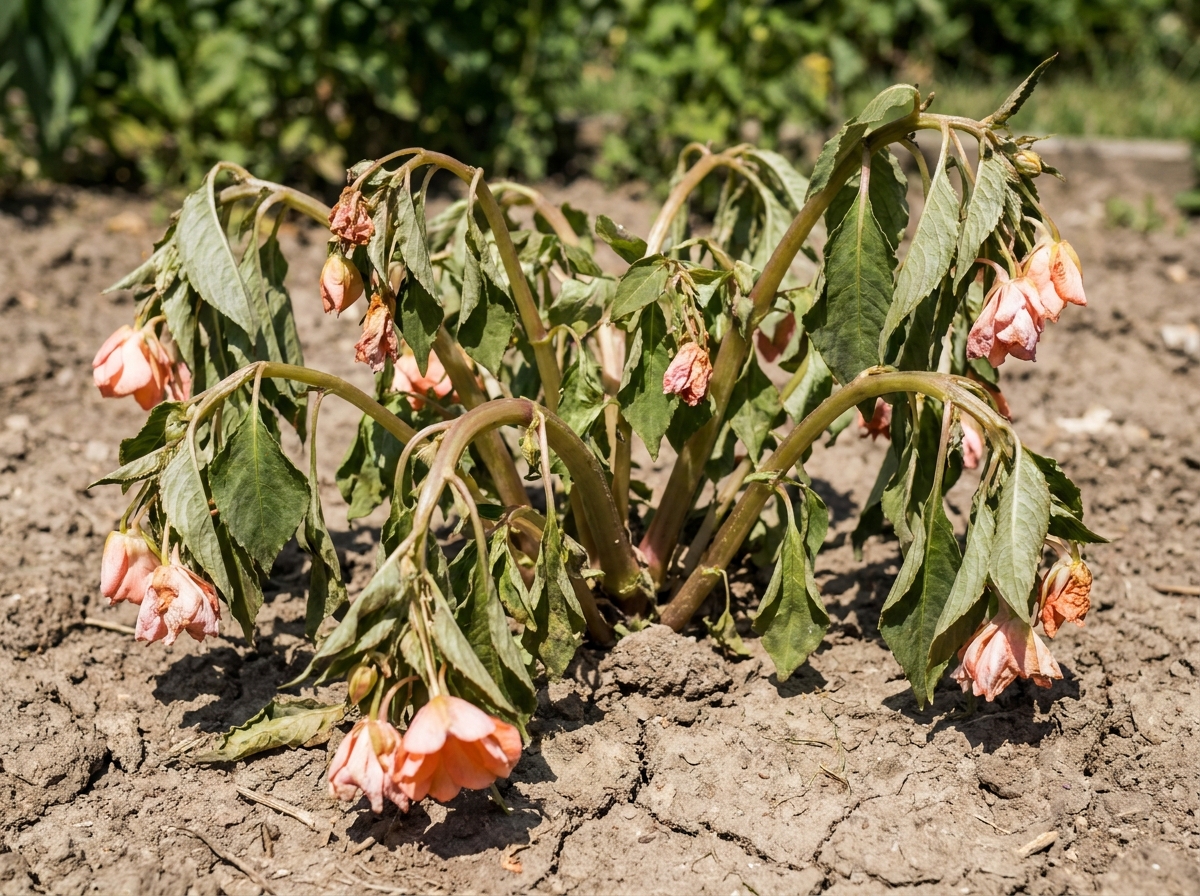
SunPatiens wilting in summer heat is one of the most exasperating sights in the garden — because these plants are specifically bred to cope with it. But, this scenario often feels not quite right. The collapse is almost always rectifiable. It’s usually fixable within a couple of hours. But only if you diagnose the correct cause first. Diagnosis is non-negotiable.
Reaching for the watering can without checking? That’s the blunder. It turns a temporary wilt into a dead plant. Period.
The paradox. SunPatiens can wilt when the soil’s both too dry and too wet. When the compost dries out entirely, the plant powers down to conserve moisture. But waterlogged roots suffocate and stop functioning — they physically can’t transport water upward. So leaves droop identically to drought stress. Both appear identical from above. This is where most gardeners go bang on wrong.
The thing is, there’s a third cause that receives precious little focus. In dark-coloured plastic or metal containers sitting in full sun, soil temperature often surges beyond 38°C (100°F) by early afternoon.
At that temperature, root cell function declines swiftly. The plant wilts not from lack of water, but because its roots have effectively entered thermal shutdown. This whole situation is a bit dodgy, actually.
Stick your finger 5cm into the soil — if it feels blisteringly hot to the touch, that’s your answer. No guessing.
A single wilt episode on an otherwise healthy plant causes no permanent harm. SunPatiens rebound astonishingly quickly. Most recover full turgidity within 2 to 4 hours. Once the underlying cause is sorted.
The smell of wet soil. The slight squeaking of plump stems returning to shape. That’s practically instantaneous when the issue is sorted.
But repeat wilting’s another kettle of fish entirely. Wilt daily for a fortnight? You’ll see yellowing leaves, checked new growth. Flower drop will occur. The plant diverts all energy into survival. It halts blooming completely. And if the root zone stays waterlogged, crown rot follows. That’s not recoverable. A plant that smells subtly of decay at the base is already a goner. Your Potted Houseplant Is Drying Out Too Fast This Summer — Here’s Why
First, diagnose before you act. This is proper gardening. Push your finger 5cm into the soil.
Dry and crumbly? Water deeply — never a splash, always a full 20-minute soak at the base until water cascades generously from the drainage holes. Sorted.
Wet and dense? Cease watering at once. Move the pot to shade. And allow proper drainage.
For heat-stressed containers, the solution’s swift and specific:
Yes, moving a large planted container’s a bit fiddly. Do it anyway. The difference between morning-only sun and all-day full exposure means a plant that thrives or a plant that doesn’t. Worth it.
For in-ground SunPatiens, the RHS recommends watering deeply twice weekly. Never water lightly every day. Deep watering encourages roots to burrow deep into cooler soil. This does wonders for heat resilience. But shallow daily watering keeps roots near the surface where heat damage’s most severe.
But wilting is the headline. The details, though, tell the complete picture. Yellowing leaves on the lower stem with wilting above often signify root rot.
That’s urgent.
According to University of Maryland Extension, impatiens-family plants, including SunPatiens, are among the most receptive annuals to timely intervention. Catching these signals early yields significant dividends. Pay attention.
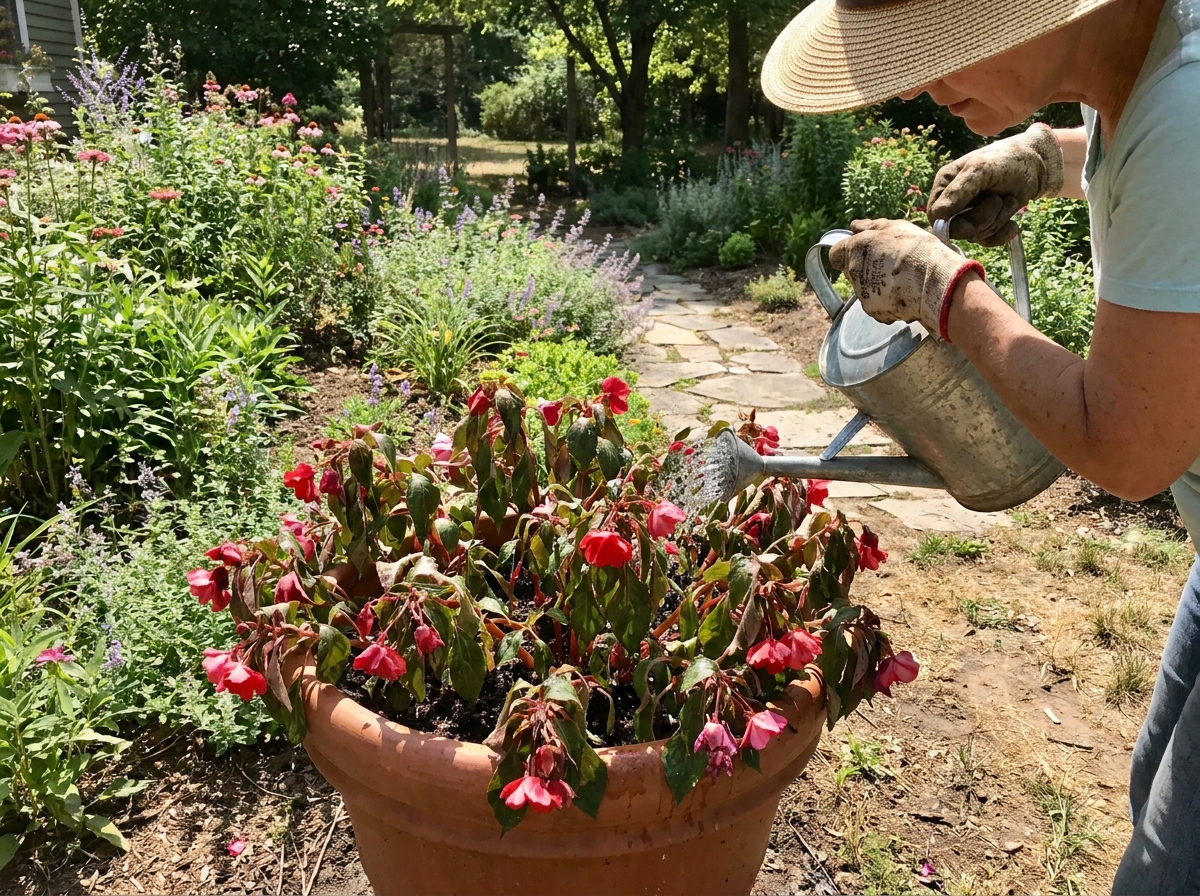
Smart tip: Prioritise diagnosis of soil moisture before watering a wilting SunPatiens. Wet roots wilt just like dry ones. Remember that.
If the cause’s addressed swiftly, most SunPatiens recover full stem turgidity within 2 to 4 hours. Flowers may take another 24 hours to revive entirely. Still, it’s a fast turnaround.
Pull off dead or mushy stems without delay. They invite rot and deplete energy needed for recovery. Healthy but wilted stems? Leave them. They will recover once the root cause is sorted.
Yes, if caught before crown rot sets in. Extract from the pot. Shake off wet compost. Let roots aerate for 30 minutes. Replant in a fresh, properly draining mix.
Skip watering for 48 hours.
SunPatiens cope with full sun, yes. But they flourish optimally with morning sun and afternoon shade during heatwaves. Unlike standard impatiens, they won’t languish in full sun. Still, extreme afternoon heat in containers? That’s often a bit much.