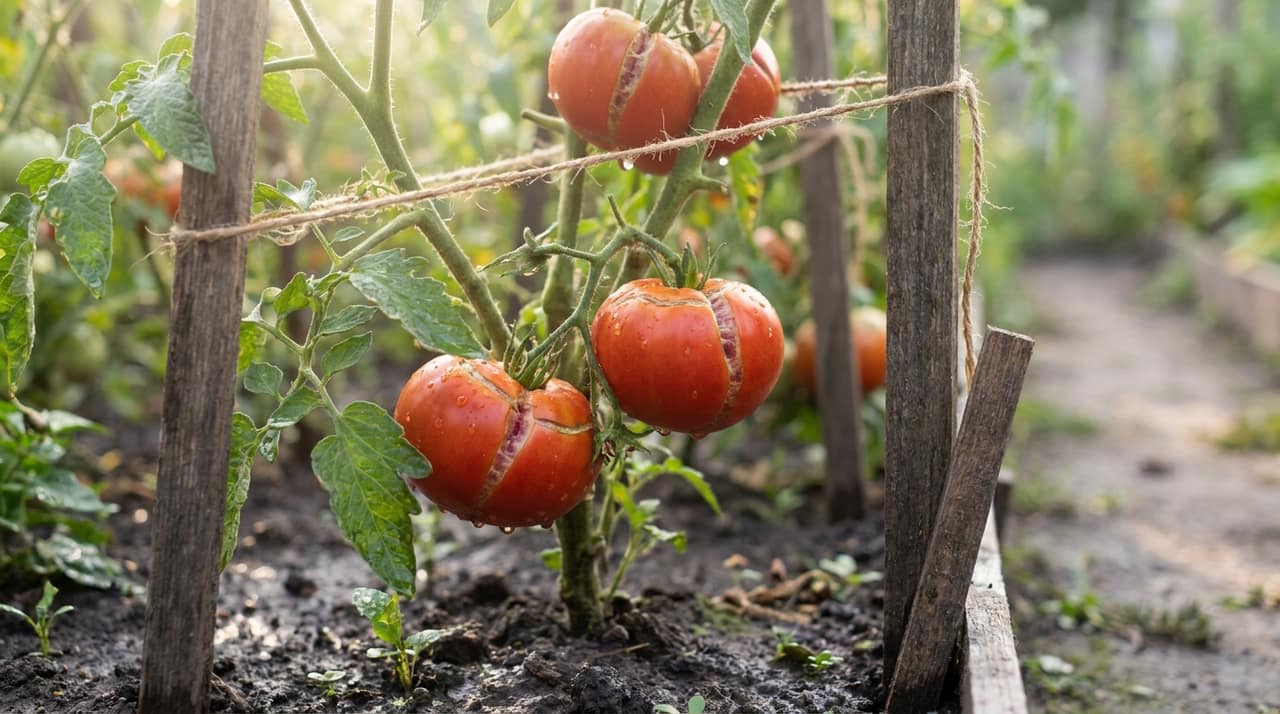
Midsummer’s unpredictable downpours and erratic watering routines are triggering a cascade of split tomatoes across both UK and US gardens. When soil moisture swings wildly from bone-dry to waterlogged, tomato skin cracks from the inside out. The good news? This isn’t inevitable. With the right irrigation strategy and varietal selection, you can salvage your crop and plan for next season.
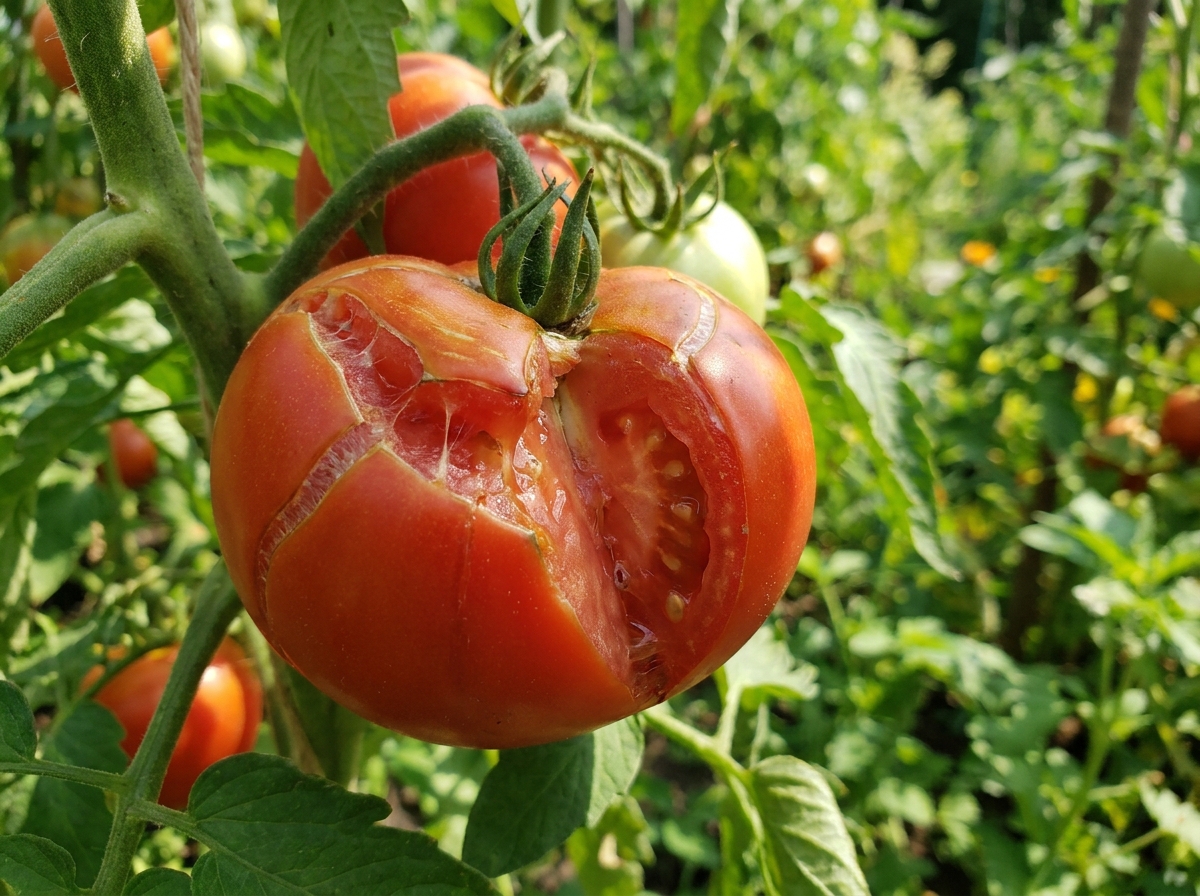
Mid-summer heat waves followed by sudden storms create the perfect storm for tomato fruit failure. Inconsistent watering stretches and shrinks the skin faster than the interior flesh can keep pace, causing longitudinal cracks radiating from the stem. UK gardeners battling dry spells interrupted by downpours, and American growers in drought-prone zones, are witnessing unprecedented splitting rates this month.
Tomato skin is thinner and less elastic than the flesh beneath. When roots absorb a sudden influx of water after days of drought stress, internal pressure increases rapidly. The skin, already toughened by sun exposure and dehydration, cannot stretch without tearing. A single heavy rain or overenthusiastic watering after a dry period can crack 30 to 40 percent of an exposed fruit.
Certain varieties split more readily than others. Beefsteaks and heirlooms like ‘Brandywine’ and ‘Mortgage Lifter’ are notoriously prone to cracking, whilst determinate cherry tomatoes resist splitting far better. Understanding your variety’s vulnerabilities is half the battle.
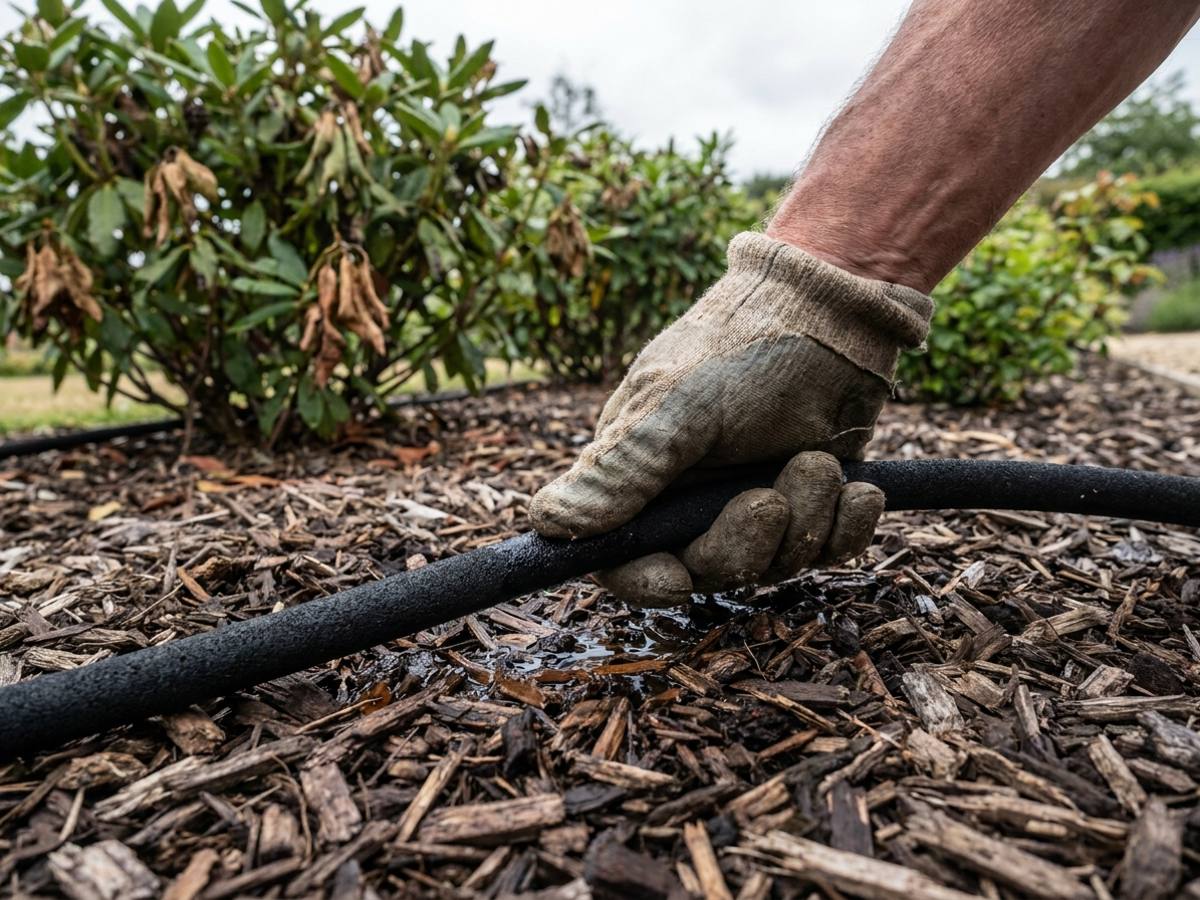
Implement these strategies immediately to protect remaining fruit.
The article singles out the varieties that crack readily and those that shrug off a sudden downpour. Use it to decide what to keep and what to sow for the seasons ahead.
| Variety | Splitting risk | Recommended for |
|---|---|---|
| ‘Brandywine’ | High – notoriously prone to cracking | Avoid where watering is erratic |
| ‘Mortgage Lifter’ | High – beefsteak heirloom, cracks easily | Avoid where watering is erratic |
| ‘Sungold’ | Low – splitting-resistant cherry | Next season’s planting, UK and US |
| ‘Black Cherry’ | Low – far more resilient than beefsteaks | Gardeners wanting dependable small fruit |
| ‘Tigerella’ | Low – listed as splitting-resistant | UK gardens |
| ‘Moneymaker’ | Low – reliable for UK growers | UK gardens |
| ‘Mountain Magic’ | Low – listed as splitting-resistant | US gardens |
| ‘Early Girl’ | Low – favoured by American growers | US gardens |
The broad pattern is simple: the larger the fruit, the thinner the margin for a sudden swing in soil moisture.
Watch your plants closely through late summer and early autumn as temperatures moderate. Many cracked fruits are still salvageable if caught early, though large splits will invite fungal disease. Plan your autumn crop now: seek out splitting-resistant varieties like ‘Sungold’, ‘Mountain Magic’, and ‘Tigerella’ for next season’s planting.