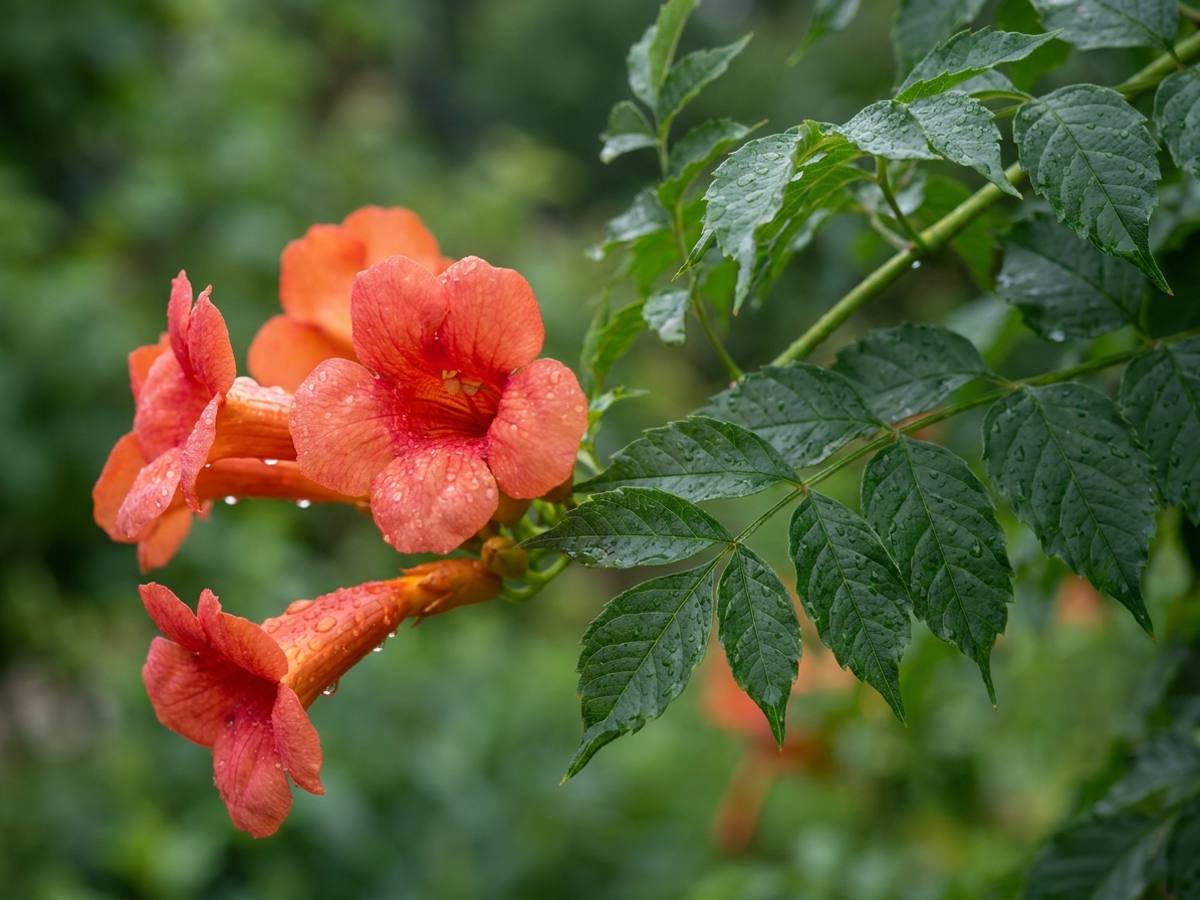
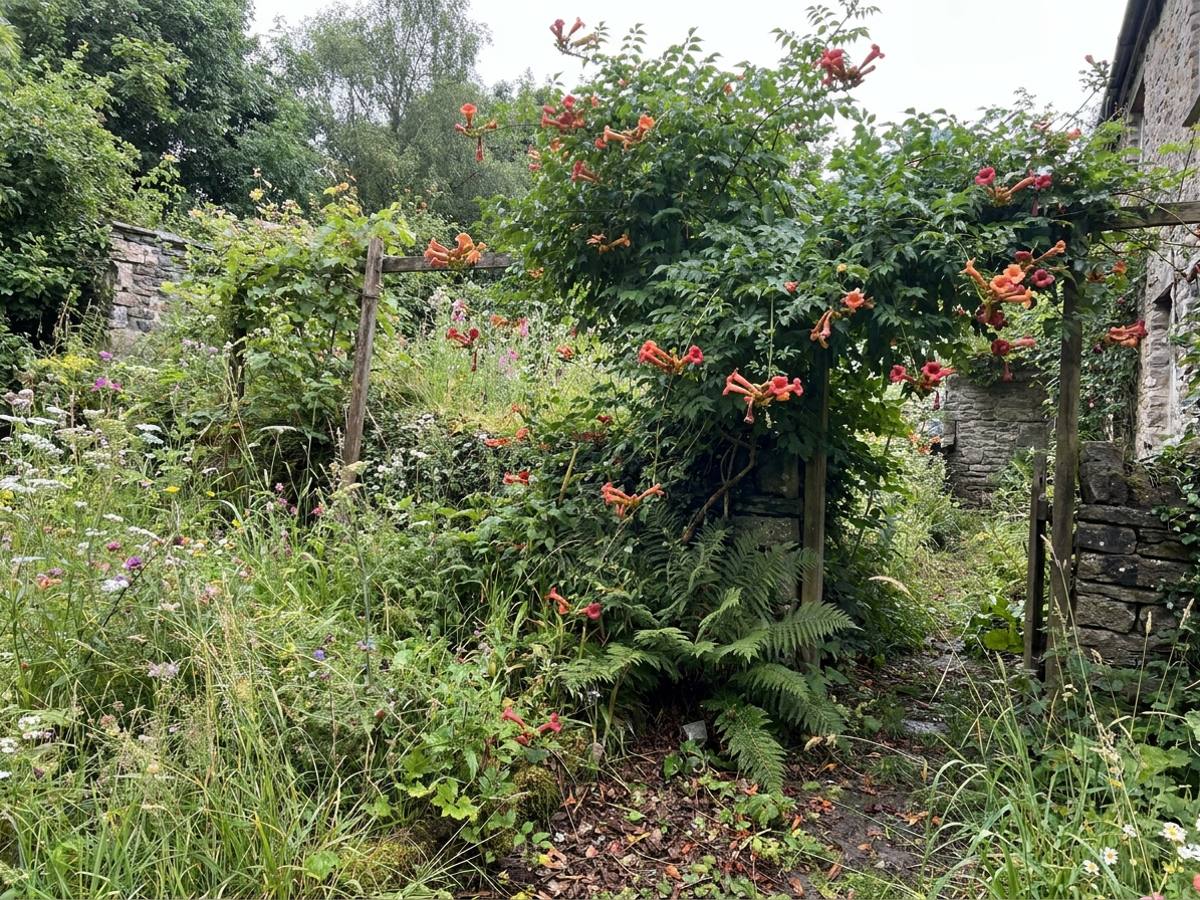
Campsis radicans, commonly called trumpet vine, is a vigorous climbing plant prised for its stunning funnel-shaped orange-red flowers that attract hummingbirds and butterflies throughout summer. Its glossy pinnate foliage provides excellent screening and colour on walls, pergolas, and archways in warm gardens. This deciduous climber is notably self-clinging, using aerial rootlets to adhere firmly to most surfaces without need for ties or supports.
Growing conditions
Trumpet vine thrives in full sun, which encourages the most prolific flowering and helps ripen growth before winter. In cooler regions, afternoon shade protects foliage from scorching, whilst still delivering the warmth needed for abundant blooms.
Any well-drained soil suits this adaptable climber; it tolerates sandy, loamy, and clay soils alike, though it prefers moderate fertility and good drainage to prevent waterlogging. It is fairly indifferent to pH, growing in neutral to slightly acidic conditions.
Trumpet vine is hardy to around −10 °C, making it suitable for most UK gardens, though it performs best in warmer southern and central regions. In cooler northern areas, plant against a south-facing wall and mulch the base for winter protection.
How to plant Campsis
Plant bare-root specimens in autumn or early spring; container-grown plants can be set out any time the soil is workable. Autumn planting gives roots time to establish before the growing season.
Space plants 2–3 metres apart if establishing a screen, as mature specimens can spread considerably.
Set the crown level with the soil surface; do not bury the base, as this invites rot.
Enrich planting holes with compost or aged manure to boost initial growth and vigour.
Water thoroughly after planting and maintain consistent moisture during the first growing season.
Propagate from softwood cuttings in summer or root suckers in autumn; both root readily in a sandy compost.
Self-clinging growth gives screening and colour on walls
The trumpet vine year at a glance
Trumpet vine asks for different things at different points in the year, from tying in and feeding to cutting back and insulating the base. This table sets out the priority jobs season by season so you can see what is due next.
The trumpet vine year at a glance
Season
Priority jobs
Pruning
Protection
Early spring to late spring
Feed with a balanced fertiliser or well-rotted compost; tie in new shoots horizontally
Cut back dead or winter-damaged stems to healthy wood
None needed
Early summer to late summer
Water regularly during dry spells and deadhead spent flowers
Thin congested growth to improve air circulation
None needed
Early autumn to late autumn
Leave flowers to fade if you want seedpods for propagation
Cut back untidy growth after the first hard frost
Mulch the base with 5–7 cm of compost or bark chippings
Early winter to late winter
Little to do while the plant is dormant
None
Fleece over the rootstock in severe winters, especially for young plants
Keep to this rhythm and the plant largely looks after itself once established.
Care through the seasons
Spring: As new growth emerges, feed with a balanced fertiliser or apply a layer of well-rotted compost around the base. Tie in vigorous new shoots to your chosen support structure, spreading them horizontally to encourage flowering. Remove any dead or winter-damaged stems by cutting back to healthy wood.
Summer: Water regularly during dry spells, especially whilst flowering; drought stress can reduce bloom abundance. Monitor and thin congested growth to improve air circulation and prevent powdery mildew. Deadhead spent flowers to encourage a longer flowering season and secondary flushes of blooms.
Autumn: Allow flowers to fade naturally if you wish to enjoy seedpods, which can be collected for propagation. Cut back untidy growth after the first hard frost to tidy the plant and prevent wind damage. Mulch around the base with 5–7 cm of compost or bark chippings for winter insulation in colder regions.
Winter: The plant is fully deciduous and requires little care whilst dormant. In severe winters, additional fleece protection on the rootstock can prevent damage, particularly for young plants.
Best varieties to grow
Several cultivars offer refined colour choices and improved characteristics for garden settings.
Campsis radicans ‘Flamenco’ — Compact selection with deep orange-red flowers and more restrained growth than the species; ideal for smaller gardens.
Campsis radicans ‘Crimson Trumpet’ — Rich deep red blooms on a vigorous plant, flowering reliably from mid-summer onwards.
Campsis radicans ‘Yellow Trumpet’ — Pale golden-yellow flowers that stand out against dark foliage; a striking alternative to orange varieties.
Campsis × tagliabuana ‘Madame Galen’ — A hybrid with coral-red flowers and excellent hardiness; often outperforms C. radicans in cooler climates, with RHS Award of Garden Merit.
Pests, diseases and common problems
Powdery mildew: A white coating on leaves and stems, particularly in humid, poorly ventilated spots. Improve air flow by thinning congested growth and spray affected areas with a sulphur-based fungicide or a neem oil solution on a cool evening.
Red spider mite: Yellowing and speckling of leaves, often with fine webbing underneath, worse in hot, dry conditions. Increase humidity by misting foliage early in the morning and prune heavily infested shoots; insecticidal soap is an effective organic control.
Lack of flowers: A mature plant that produces leaves but few blooms usually suffers from insufficient light or excessive nitrogen feeding, which favours leaf growth. Move the plant to a sunnier position if possible, reduce fertiliser applications, and prune to horizontal growth to encourage fruiting buds.
Poor establishment: Young plants may grow slowly or fail to thrive if planted in waterlogged ground or disturbed excessively during their first season. Ensure excellent drainage, add grit to heavy clay, and leave the plant undisturbed for 12–18 months before expecting vigorous growth.