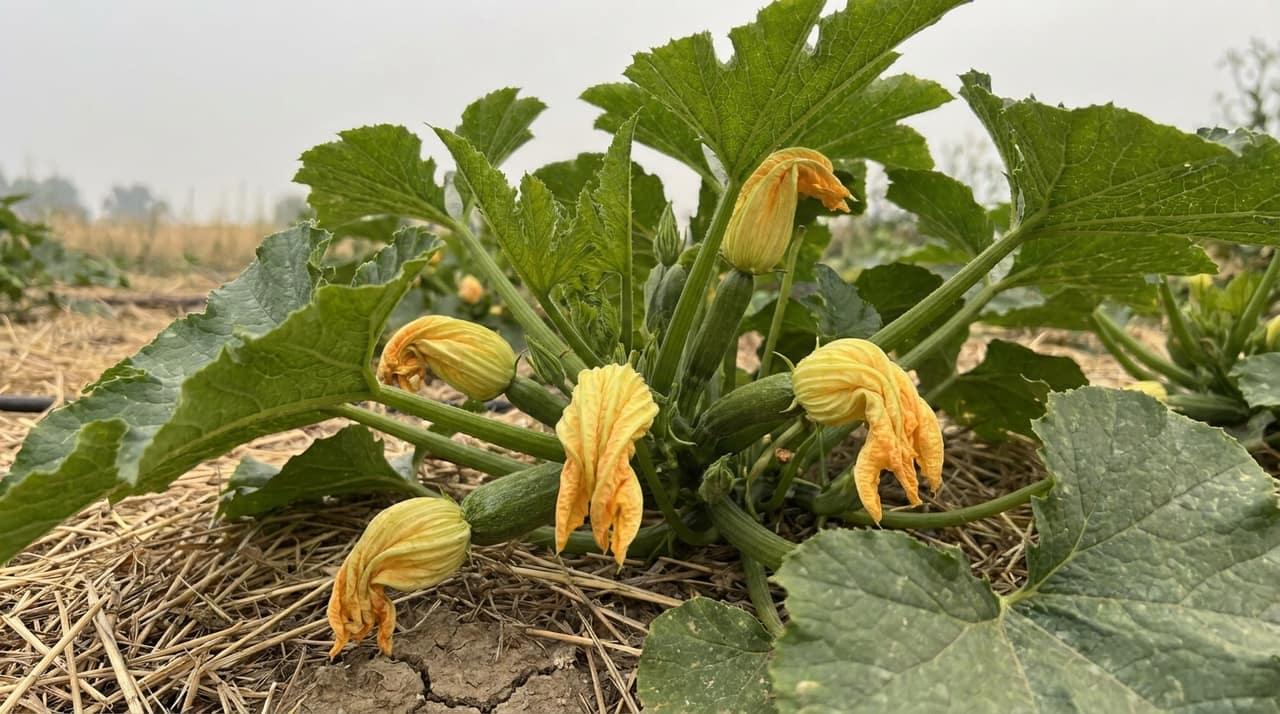
Your courgette plants are shutting down mid-summer, and it’s not a disease. Across the UK and US, midsummer heat waves are triggering a stress response that halts flowering entirely, leaving gardeners with leafy plants and zero fruit. The good news: this is reversible. Simple changes to watering and timing can restart production within weeks.
Right now, as midsummer temperatures climb into the high 20s across southern England and push toward 35°C in parts of the US, courgette plants face a critical survival threshold. The plants aren’t dead or diseased, they’re protecting themselves. When soil and air temperatures exceed optimal growing conditions, courgettes redirect energy away from flowering and fruit production to maintain their root and leaf systems.
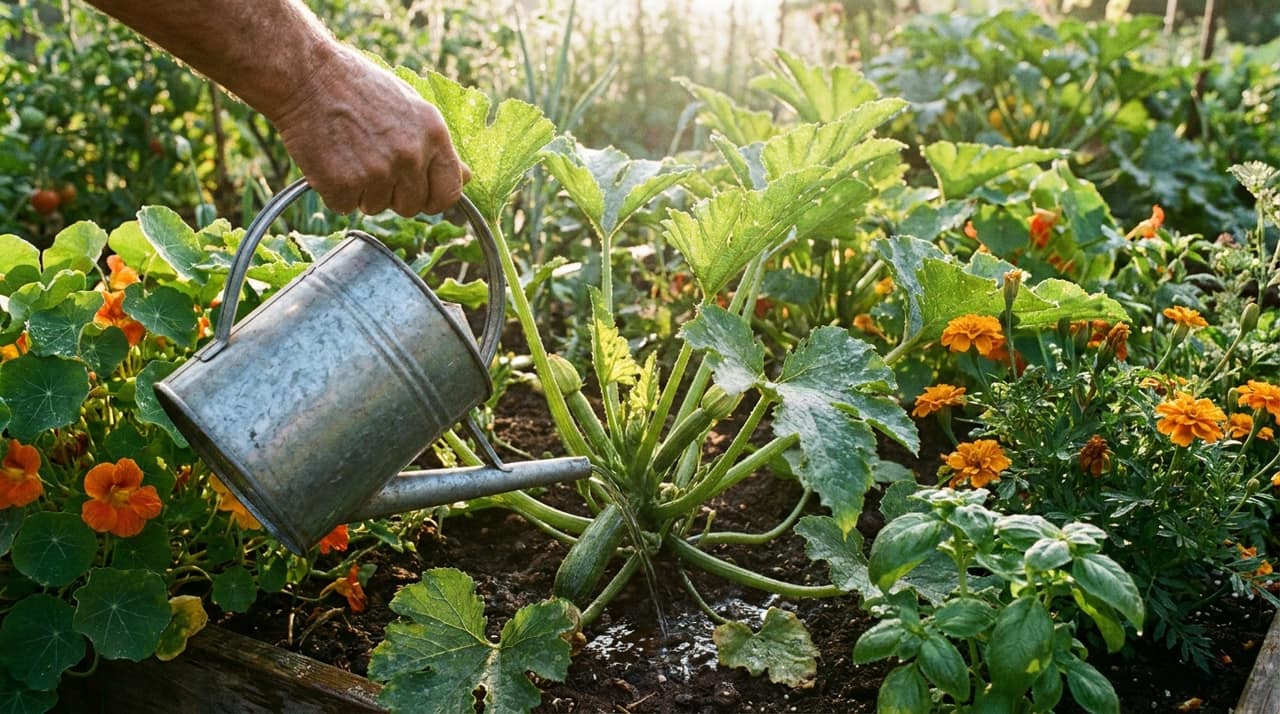
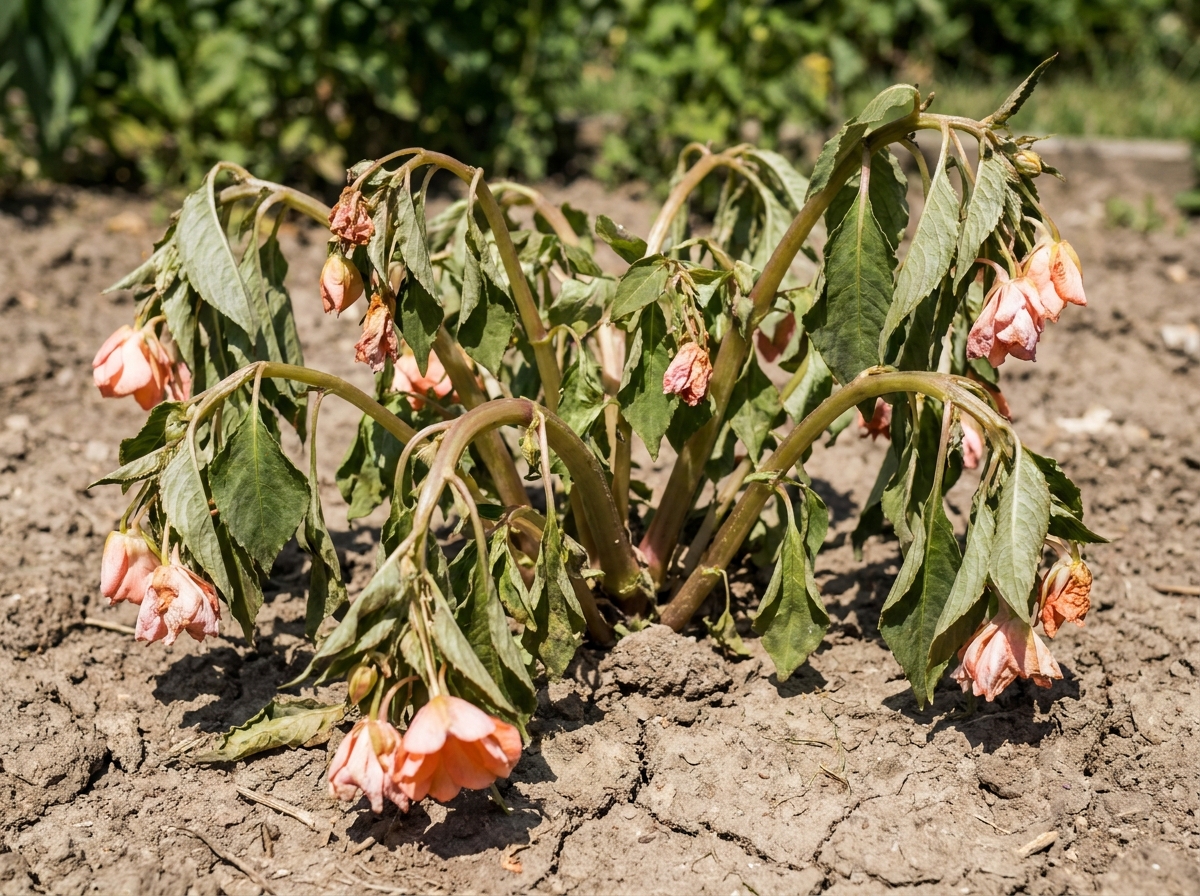
Courgettes are thirsty plants, and when temperatures spike, soil moisture evaporates faster than roots can absorb it. This creates a water-stress signal that tells the plant to drop flowers and young fruit as an energy-saving measure. The plant essentially says: “I can’t support reproduction right now, so I’ll focus on survival.” In extreme heat, even well-watered courgettes may pause flowering for 2-3 weeks whilst conditions stabilise.
Additionally, pollen viability decreases significantly above 27°C. Even if flowers do appear, they may be infertile or fail to set fruit because the pollen itself becomes damaged. This double blow, water stress combined with heat-damaged pollen, explains why some gardeners see flowers that simply don’t develop into courgettes.
Courgettes react to heat in stages, and each stage calls for a different response. The figures below are the ones the plant itself responds to.
| Temperature | What happens | What to do |
|---|---|---|
| Above 25°C | Soil dries faster than the roots can keep up | Water deeply twice weekly, 5cm per session, straight onto the soil base |
| Above 27°C | Pollen viability falls; flowers may be infertile or fail to set | Keep moisture even and wait for cooler conditions to restore fruit set |
| Above 28°C (UK) | Sustained stress; shade becomes worth the trouble | Rig shade cloth, otherwise rarely needed in Britain |
| Above 30°C | Canopy overheats and flowering stops altogether | 30-40 per cent shade cloth for the afternoon; some gardeners water daily |
Read the thermometer rather than the calendar: the plant responds to temperature, not to the date.
Recovery begins with addressing the root cause, water stress, and creating microclimates where possible:
Watch for new flower buds appearing on fresh growth within 10-14 days of implementing these changes. As midsummer temperatures peak and late summer brings marginal cooling, courgettes typically resume normal flowering. Many gardeners experience a second, more abundant harvest in early autumn and mid-autumn as day length shortens and heat stress diminishes. Stay patient through midsummer, keep plants consistently hydrated, and your courgette plants will reward you with renewed productivity.