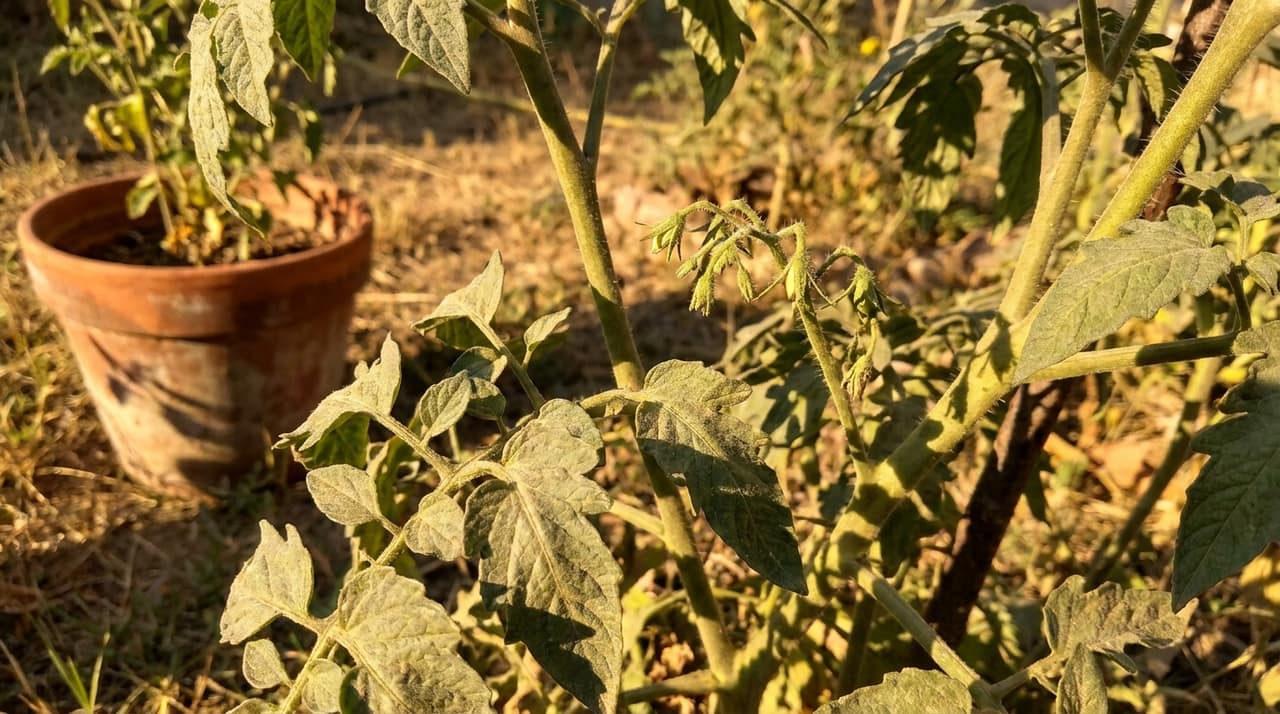
When midsummer heat peaks and tomato plants begin to wilt, most gardeners panic and water more. I did the opposite. By removing flowers and cutting back irrigation for three weeks, I triggered a dramatic late summer harvest that shattered my previous yields. Here’s why deliberately stressing your tomatoes now could transform your autumn crop.
Right now, across both the UK and US, tomato plants are in crisis mode. Summer temperatures are climbing, soil moisture is evaporating faster than roots can absorb it, and many gardeners are exhausted from daily watering routines. The instinct is logical: more water equals more growth. But there’s a hidden cost to this approach.
Tomatoes planted in mid-spring or late spring are now in their heavy flowering phase, setting fruit that won’t mature until late summer or early autumn. In peak heat, the plant faces a brutal choice between supporting existing fruit and investing energy in new flowers. Most plants default to growth mode, squandering resources on blooms that will never ripen before the first frost.
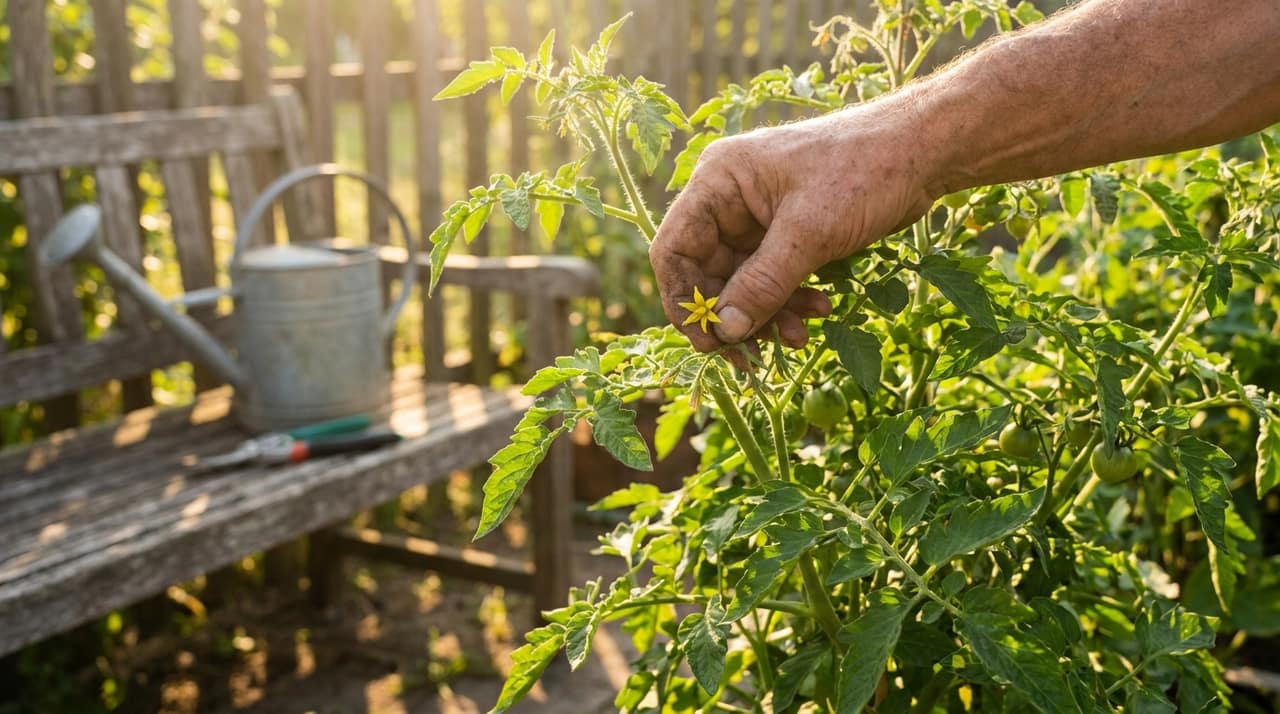
Strategic stress forces the plant to consolidate its efforts. When you remove flower clusters and slightly reduce watering during the hottest weeks of midsummer, you’re essentially saying to the plant: “Stop trying to expand. Finish what you’ve started.” This isn’t neglect; it’s deliberate pruning aligned with the plant’s biology.
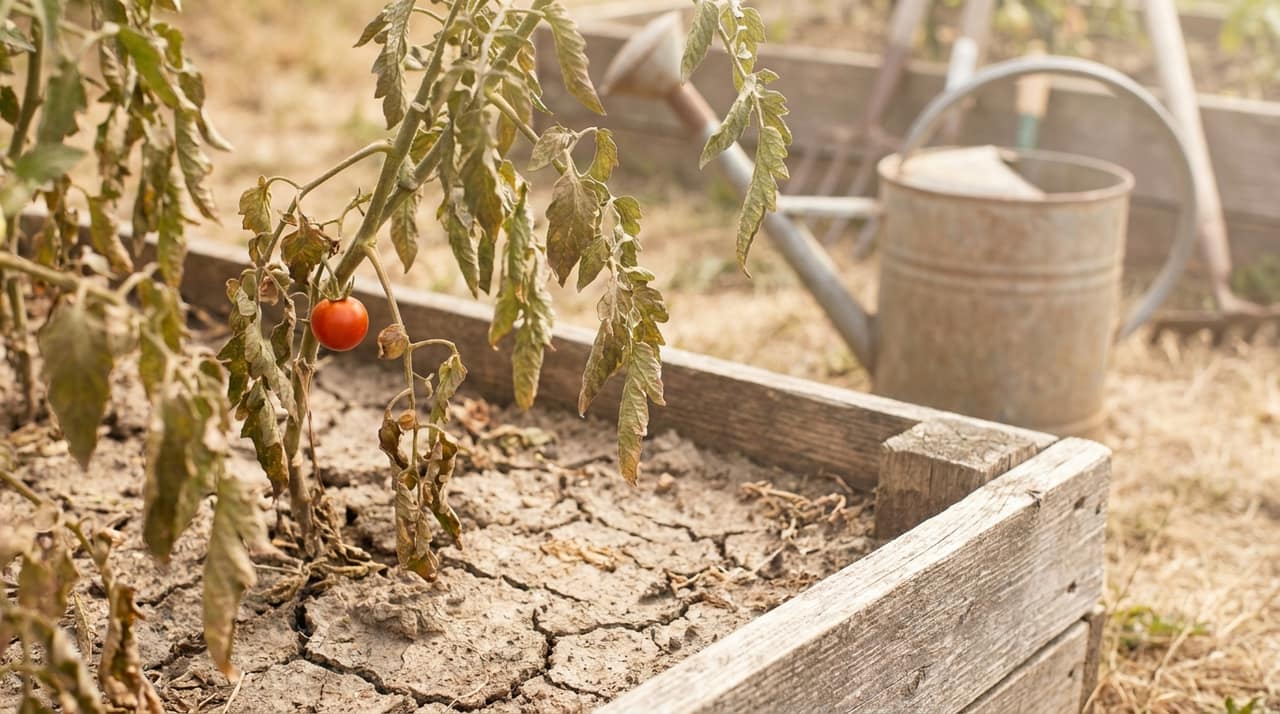
The science is straightforward. Moderate drought stress triggers the plant’s survival instinct, which paradoxically strengthens both fruit flavour and yield in the following weeks. Sugars concentrate in developing tomatoes. Root systems deepen and strengthen. Once late summer arrives and temperatures moderate slightly, the plant rebounds with vigour, channelling all energy into ripening existing fruit rather than chasing new flowers in impossible heat.
Each of the four moves does a different job, and each has its own trigger point. Read the table before you pick up the secateurs or the watering can.
| Action | When to do it | What it achieves |
|---|---|---|
| Remove all flower clusters | From midsummer, especially on indeterminate varieties | Stops the plant setting blooms that cannot ripen in time |
| Cut watering by one or two days a week | Through the hottest weeks of midsummer | Soil dries slightly between waterings without dramatic wilting |
| Prune the lowest leaves | Once plants carry four or five fruit-bearing trusses | Better air circulation and less disease pressure in humid conditions |
| Swap nitrogen feeds for potassium | For the whole stress period, from midsummer | Supports fruit development instead of leaf growth |
Applied together, these four adjustments push the plant from expansion into finishing mode.
Here’s the practical framework that worked for me:
By late summer, you should see dramatic ripening acceleration as the plant’s metabolism shifts entirely toward fruit maturation. Monitor for any signs of serious stress, yellowing beyond the lowest leaves, or wilting that doesn’t recover overnight; adjust watering if needed. The payoff arrives in early autumn when your harvests outpace every other tomato grower in your neighbourhood, delivering ripe fruit well into autumn when others are left with green shoulders and wasted potential.