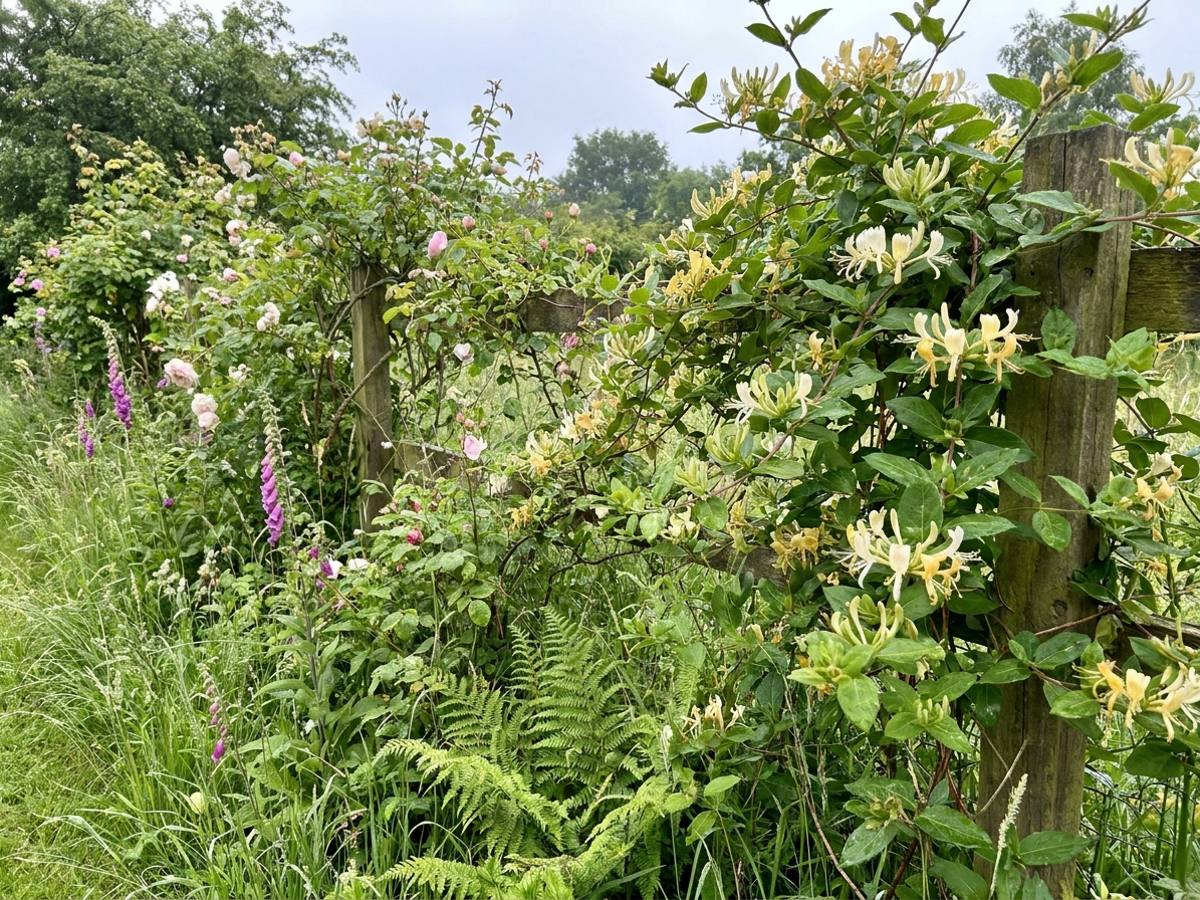
Lonicera japonica, commonly known as Japanese honeysuckle, is a vigorous evergreen climbing plant celebrated for its fragrant, creamy-white and soft yellow flowers that appear throughout the growing season. This twining climber is prized for covering walls, fences, pergolas and arbours with dense, attractive foliage, and its sweet-scented blooms attract pollinators and wildlife to the garden. It is robust, fast-growing, and relatively undemanding, making it an excellent choice for gardeners seeking quick coverage and year-round interest.
Growing conditions
Japanese honeysuckle thrives in full sun to partial shade, though it flowers most prolifically and densely in bright conditions. A position with at least four hours of direct sunlight daily will encourage abundant blooms and vigorous growth.
This climber is remarkably unfussy about soil type and will flourish in most well-drained gardens, including clay, sandy, and chalk soils. It prefers soil that is neither waterlogged nor severely drought-prone; neutral to slightly acidic conditions are ideal, though it tolerates a wide pH range.
Japanese honeysuckle is fully hardy throughout the UK and most of Europe, withstanding temperatures down to −15 °C without protective measures. In colder regions, it may lose some foliage in hard winters but will regenerate vigorously in spring.
How to plant Lonicera japonica
Plant in autumn or early spring when the ground is workable and moisture-retentive. Spring planting gives young plants the growing season ahead to establish strong root systems before winter.
Space plants 1.5–2.5 m apart along a wall or support structure, as they spread rapidly once established
Plant with the root ball at or just below soil level — never bury the crown, which can cause rot
Dig a hole twice the width of the root ball and work in well-rotted compost or leaf mould to improve drainage and nutrition
Water thoroughly after planting and maintain consistent moisture for the first growing season to help establishment
Propagate from softwood cuttings in late spring or semi-hardwood cuttings in late summer, rooting them in a mixture of peat-free compost and perlite
Dense twining growth quickly clothes walls and pergolas
Which Japanese honeysuckle cultivar to choose
Named cultivars of Lonicera japonica differ far more in foliage and vigour than in flower shape. This table sets out what each one is grown for, so you can match a plant to the space you have before reading on.
Which Japanese honeysuckle cultivar to choose
Cultivar
Foliage
Flowers
Vigour and best use
‘Halliana’
Semi-evergreen, dense
Highly fragrant white and pale yellow
Vigorous; the most floriferous and the usual garden choice
‘Aureoreticulata’
Yellow-veined green leaves
Secondary; grown for leaf colour
Slower and more restrained; containers and small spaces
‘Flexuosa’
Evergreen, densely packed
Abundant and pink-tinged through summer
Vigorous; highly ornamental cover for walls and pergolas
‘Variegata’
Cream-margined leaves
Standard fragrant flowers
Semi-evergreen; lightens shaded corners
The two most vigorous forms, ‘Halliana’ and ‘Flexuosa’, need the most room and the firmest annual pruning.
Care through the seasons
Spring: Begin feeding with a balanced, slow-release fertiliser in April once new growth appears. Train and tie in young stems to your chosen support, and remove any dead or damaged growth from winter. Prune out any wayward stems that have strayed from your preferred coverage area.
Summer: Keep the plant well watered during dry spells, particularly in the first two years after planting; established plants are drought-tolerant but flower better with adequate moisture. Tie in any vigorous new growth to guide it along supports. Remove flowering stems selectively to encourage bushiness if the plant is becoming leggy.
Autumn: Allow the plant to set seed for wildlife benefit, or deadhead spent flowers to encourage continued blooming into October. Cut back overgrown stems in late September to tidy the plant and prevent it from smothering nearby plants. Mulch around the base with 5 cm of leaf mould or compost to insulate the roots.
Winter: Established Japanese honeysuckle is evergreen and requires little care during winter months. In very severe weather, protect young plants with horticultural fleece if frost is prolonged below −10 °C.
Best varieties to grow
Several named cultivars offer enhanced ornamental qualities or improved vigour compared with the species.
Lonicera japonica ‘Halliana’ — A vigorous semi-evergreen form with highly fragrant white and pale yellow flowers; the most commonly grown cultivar in gardens and considered the most floriferous.
Lonicera japonica ‘Aureoreticulata’ — Grown primarily for its distinctive yellow-veined green foliage rather than flowers; slower-growing and more restrained than the species, ideal for containers or small spaces.
Lonicera japonica ‘Flexuosa’ — A vigorous evergreen form with densely packed foliage and abundant pink-tinged flowers; highly ornamental and floriferous throughout summer.
Lonicera japonica ‘Variegata’ — Features cream-margined leaves that brighten shaded corners and reduce the plant’s visual weight; semi-evergreen with standard fragrant flowers.
Pests, diseases and common problems
Powdery mildew: White powdery coating on leaves, particularly in dry summers; improve air circulation through pruning and avoid overhead watering. Apply sulphur dust or a bicarbonate-of-soda spray (1 tablespoon per litre of water with a few drops of washing-up liquid) fortnightly until resolved.
Honeysuckle sawfly: Larvae skeletonise leaves, leaving only the vein structure; spray with insecticidal soap in May and June when young larvae are feeding. Remove and destroy heavily infested shoots.
Scale insects: Small, hard-bodied pests that cling to stems and suck sap, causing yellowing foliage. Spray with horticultural oil in late winter whilst the plant is dormant, or use insecticidal soap on new growth in late spring.
Excessive vegetative growth with few flowers: Usually caused by too much nitrogen or deep shade; reduce nitrogen fertiliser and ensure the plant receives at least four hours of direct sun daily. Avoid feeding with high-nitrogen lawn fertilisers.
Chlorosis (yellowing leaves with green veins): Often indicates iron deficiency in alkaline soils; apply a chelated iron product to the foliage and roots, or acidify the soil gradually with sulphur chips over the autumn and winter months.
🌿 Nature & Garden Newsletter
Gardening tips, recipes & seasonal advice, twice a week.