Your tomato plants are wilting despite daily watering, and you’re panicking about harvest. Stop blaming the tap. In midsummer, when temperatures peak and fruiting accelerates, soil compaction and poor drainage are far more likely culprits than underwatering. Here’s how to diagnose the real problem and save your crop before late summer.
Mid-summer heat intensifies fruit production, demanding more water and nutrients from stressed root systems. Yet many gardeners, both in the UK and across the US, are facing the paradox of soggy, waterlogged soil paired with drooping foliage. This happens because compacted earth, created during spring planting or heavy rainfall, prevents water and oxygen from reaching roots where they’re needed most.
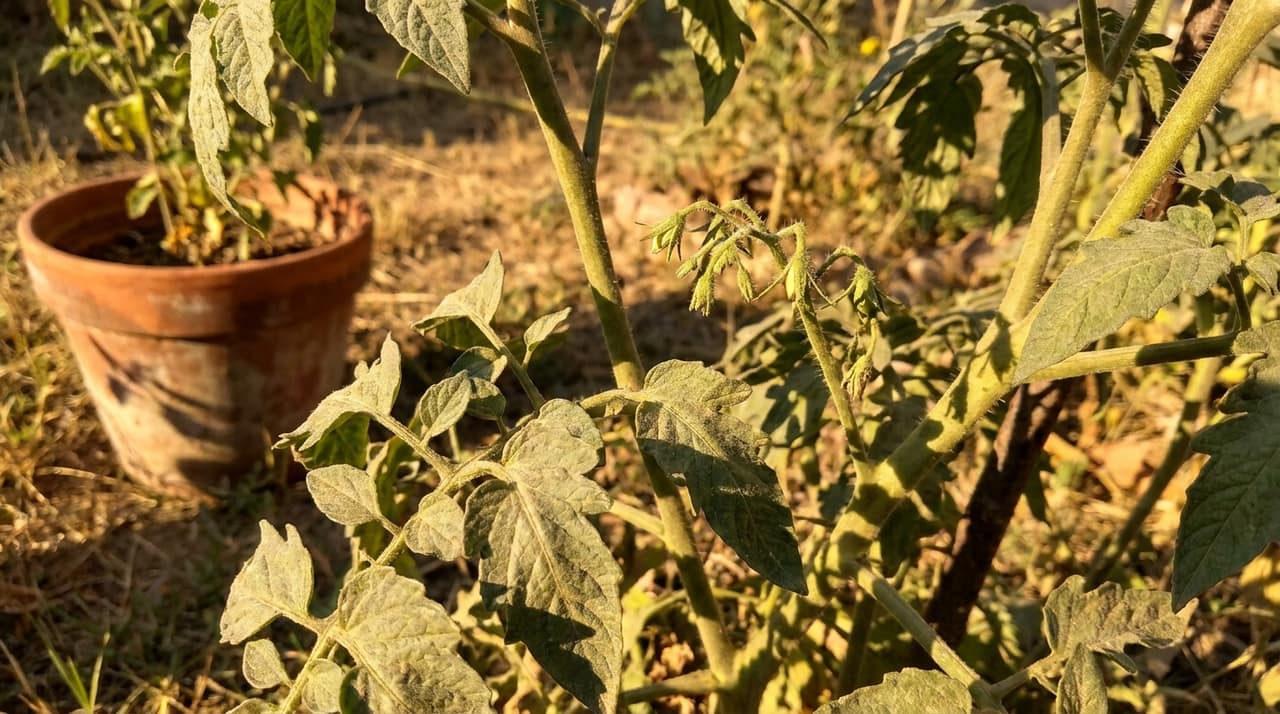
Midsummer’s combination of high temperatures, increased transpiration, and root stress creates the perfect storm for mysterious wilting.
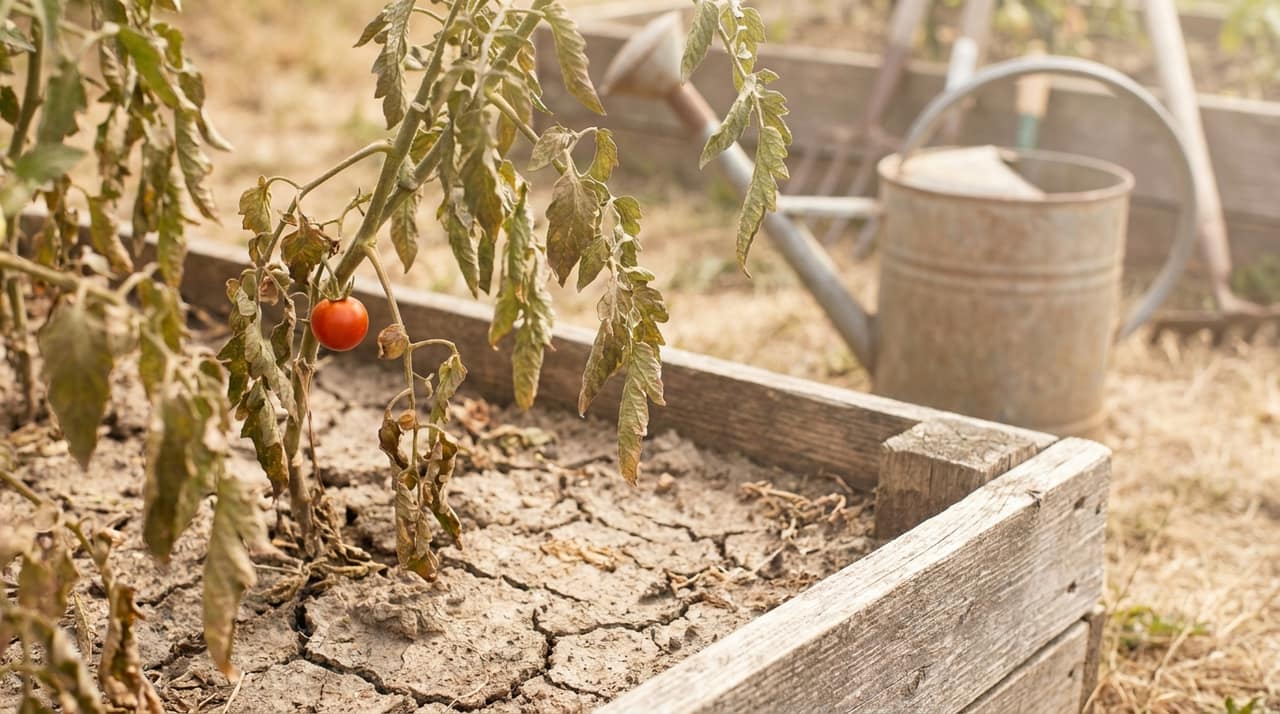
Compacted soil is invisible to the naked eye but devastating to tomato roots. When earth becomes dense and airless, even saturated conditions suffocate roots, triggering wilting identical to drought stress. The confusion starts here: gardeners water more in response, worsening root rot and fungal diseases. Poor drainage also pools water around the base, encouraging pathogens like Phytophthora infestans, which thrives in warm, wet conditions.
If your soil feels hard underfoot or water sits on the surface without soaking in within a few minutes, compaction is your diagnosis. Dig a small test hole 15 centimetres deep near an affected plant; you’ll often find a tight, airless layer where roots should be spreading freely.
Wilting caused by compaction and poor drainage responds to four different interventions, and they do not all work at the same speed. Use this table to decide what to do first and what can wait until the bed is empty.
| Fix | What it does | When to act | How fast it works |
|---|---|---|---|
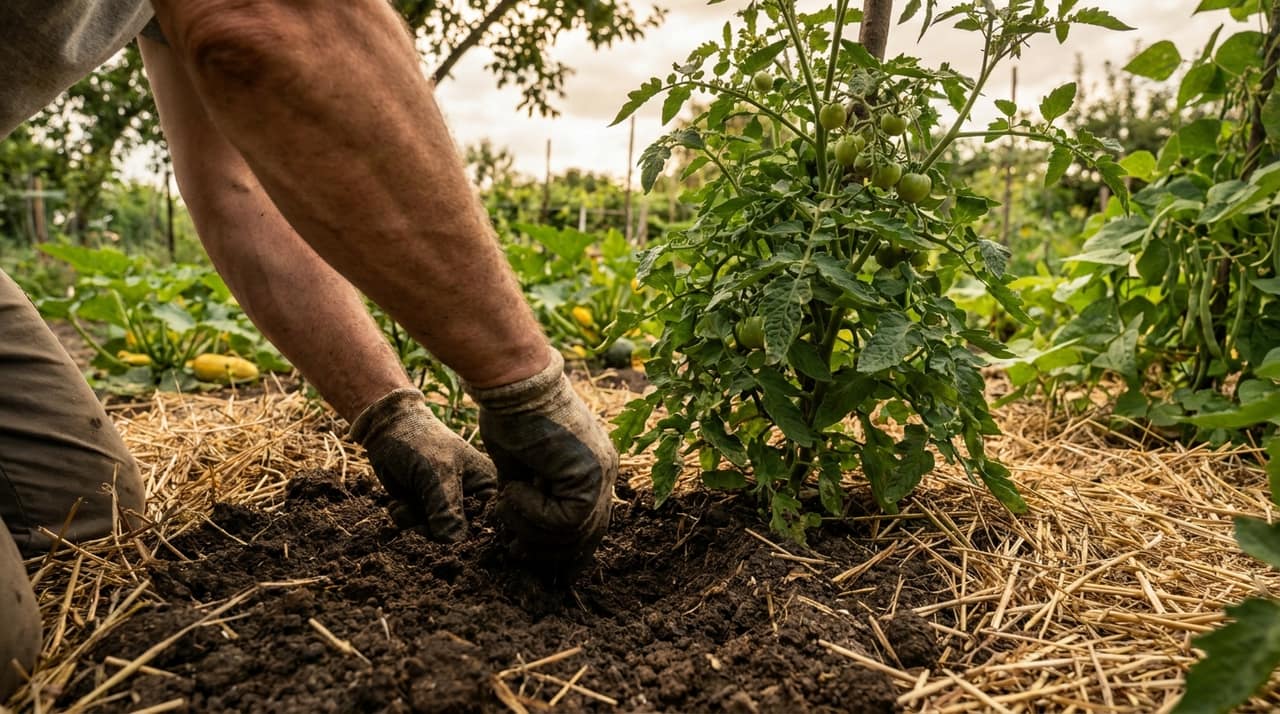
| Mulch, 5 cm of well-rotted compost or straw | Regulates soil temperature and stops a crust forming | Midsummer, around the base but clear of the stem | Gradual, as the mulch breaks down |
| Aerate with a garden fork | Loosens compacted layers so water and oxygen reach the roots | Midsummer, 10-15 cm away from the stem | Days to weeks |
| Deep, infrequent watering | Encourages deeper rooting and reduces surface crusting | Midsummer, once or twice weekly instead of daily | Two to three weeks, as roots regenerate |
| Remove lower leaves and thin foliage | Improves air circulation and cuts fungal pressure | Midsummer, while heat is at its peak | Immediate relief for the remaining roots |
| Amend the bed with 7-10 cm of peat-free compost | Rebuilds structure so compaction does not return | Ahead of next season’s planting | Next season only; prevention, not rescue |
Mulching and aeration are the two to start with, because compaction is easier to prevent than repair.
Act now to recover your harvest before late summer decline sets in.
Over the next three weeks, watch for new green growth and firmer stems as your soil structure recovers. Late summer should bring visible improvement. For next season, amend your tomato beds with 7-10 centimetres of peat-free compost and avoid walking on growing areas after rain; compaction is easier to prevent than repair.