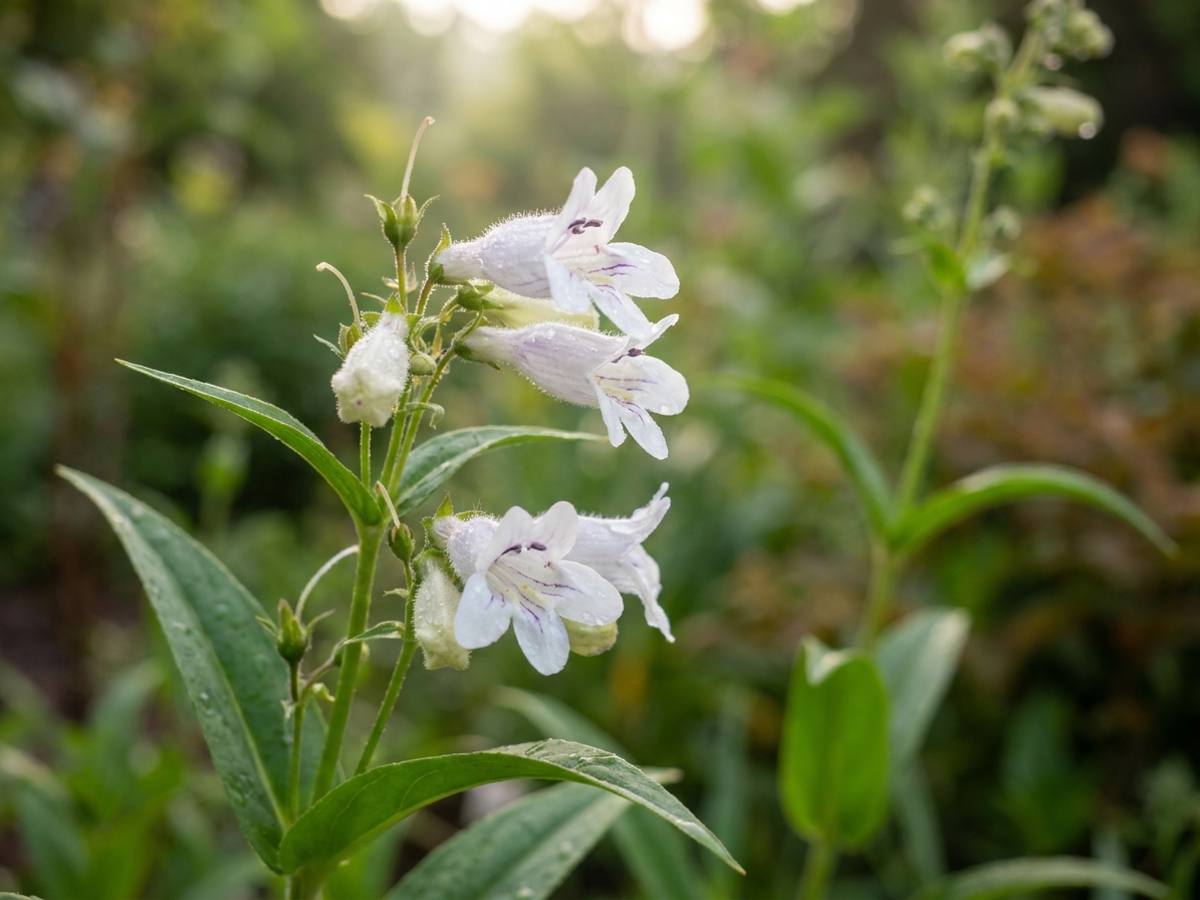
Penstemon digitalis, commonly known as foxglove beardtongue, is a tall, elegant North American native that produces spires of pale pink or white tubular flowers from early summer. These stately plants reach 60–100 cm and are prized in cottage gardens, borders, and wildflower schemes for their long flowering season and bee-friendly blooms. Their vertical habit and delicate flower spikes add drama to any planting scheme without requiring fussy maintenance.
Growing conditions
Penstemon digitalis thrives in full sun but tolerates partial shade, particularly in warmer regions where afternoon shade prevents flower fade. Aim for a minimum of six hours of direct sunlight daily for sturdy growth and prolific flowering.
This species prefers well-drained soil of moderate fertility; overly rich, heavy clay will encourage lush foliage at the expense of flowers and may promote rot. Sandy loam or chalky soils suit it perfectly, and it tolerates slightly alkaline to neutral pH without complaint.
A fully hardy perennial, it succeeds across the UK and northern Europe, thriving in USDA zones 3–9. In exposed gardens, wind can lodge taller stems, so choose a sheltered site or stake plants early if necessary.
How to plant Penstemon
Plant in autumn (September to November) or spring (March to May) when soil is moist and workable. Autumn planting allows roots to establish over winter, producing vigorous growth by spring.
Space plants 30–45 cm apart to allow air circulation and account for mature spread without crowding neighbours.
Plant at the same depth as the root ball; do not bury the crown, as this invites rot in winter.
Prepare planting holes with added grit or horticultural sand if your soil is clay-heavy to ensure good drainage.
Water thoroughly after planting and keep soil evenly moist for the first four weeks whilst roots establish.
Propagate from seed sown in spring on a cold frame, or divide established clumps in autumn or early spring.
Penstemon digitalis growing in a naturalistic garden border
Care through the seasons
Spring: Cut back last year’s dead stems to ground level once new growth appears in late March or April. Apply a balanced feed in mid-April and deadhead any winter-damaged flower spikes to promote bushier branching.
Summer:Water regularly during dry spells, particularly in the first season; established plants are moderately drought-tolerant once rooted. Pinch out the growing tips of young plants in early summer to encourage branching and a fuller habit, and deadhead spent flowers weekly to extend the flowering season into August.
Autumn: Allow some seed heads to mature if you wish to collect seed; otherwise, cut the plant back by half in late September to prevent wind lodging. Divide overcrowded clumps in early autumn to rejuvenate vigour, and apply a light mulch of compost around the crown to insulate against harsh winters.
Winter: The plant dies back to a basal rosette and requires no special protection in most UK gardens. Avoid disturbing plants during hard frosts, as ice around the crown can damage dormant buds.
Best varieties to grow
Several cultivars offer colour variation and refined habit; all share the species’ hardiness and garden value.
‘Husker Red’ — Deep purple-tinged foliage and pale pink flowers make this an outstanding foliage plant with a compact habit, reaching just 60 cm.
‘DigitalWhite’ — Pure white flowers on 80 cm stems, ideal for white gardens and evening displays, receiving an RHS Award of Garden Merit.
‘Edigitalred’ — Dusky foliage tinged burgundy and deep pink flowers for dramatic contrast in contemporary schemes.
Penstemon digitalis var. albiflorus — The albino natural variant with pristine white blooms on slightly shorter stems (70–80 cm).
Pests, diseases and common problems
Powdery mildew: Grey-white coating on foliage, worsened by humid, crowded conditions. Improve air circulation by spacing plants wider, avoid overhead watering, and spray with sulphur or potassium bicarbonate at the first sign.
Root rot: Sudden wilting and blackened stems indicate waterlogging in cold, wet winters. Prevent by planting in well-drained soil and avoiding a heavy mulch pressing against the crown; destroy affected plants if rot is extensive.
Slugs and snails: Young growth may be grazed in spring; handpick or set beer traps near the base. Copper tape around plant supports also deters molluscs without harming wildlife.
Stem lodging: Tall varieties collapse in exposed gardens or after heavy rain. Support with twiggy sticks inserted early, or pinch tips in early summer to shorten and thicken stems naturally.
🌿 Nature & Garden Newsletter
Gardening tips, recipes & seasonal advice, twice a week.