Growing Lysimachia punctata: care tips and garden uses
0
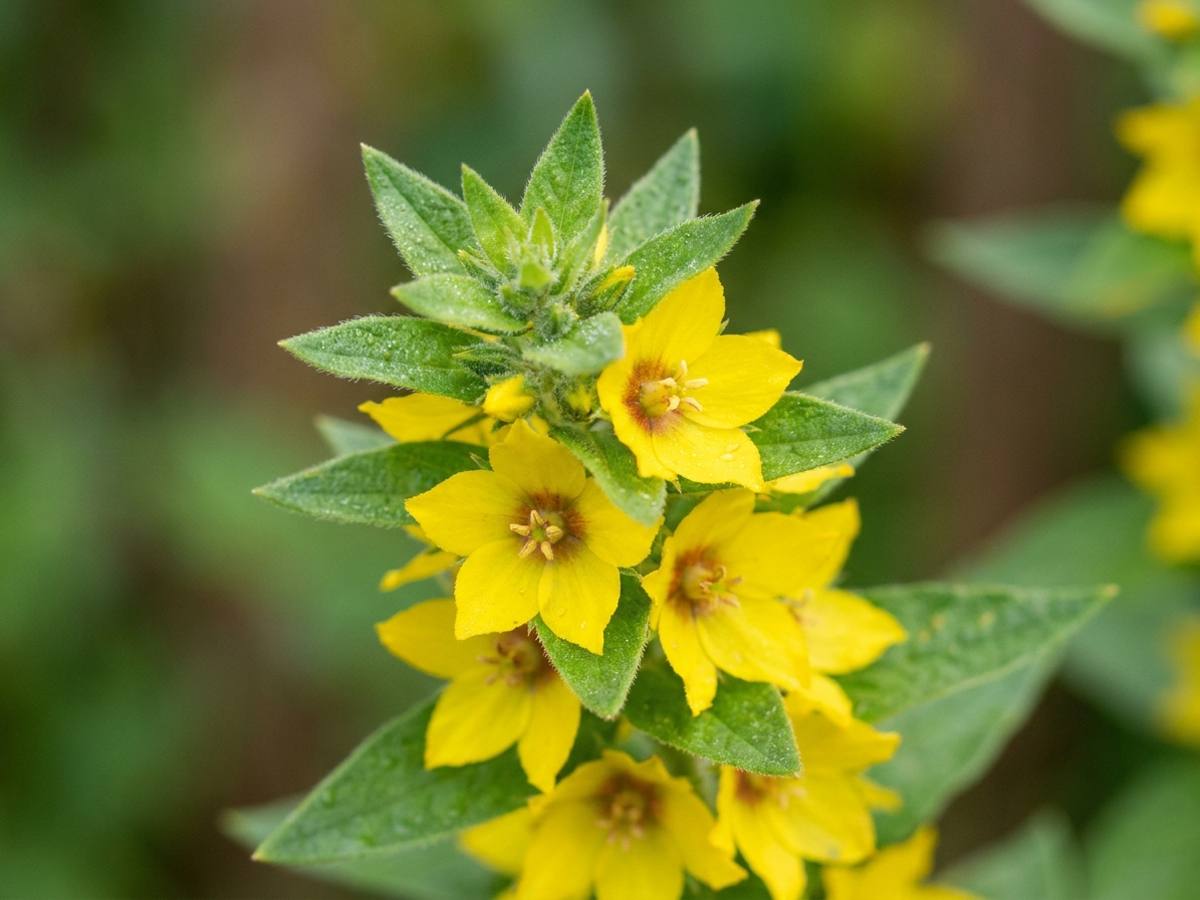
Dotted loosestrife is one of those cheerfully unstoppable perennials that fills a difficult border with whorls of buttercup-yellow, cup-shaped flowers from midsummer onwards. Stiff, upright stems clothed in whorled leaves rise to knee or waist height, needing no staking and asking very little in return. Its one distinctive trait is also its greatest caution: it spreads steadily by underground rhizomes, making it superb ground cover for damp, awkward corners and a menace in a small, tidy border.
Growing conditions
Dotted loosestrife flowers most freely in full sun, but it is one of the few reliable yellow-flowered perennials for partial shade. In deep shade it still makes handsome foliage, though the flower spikes thin out and stems may lean towards the light. Shelter is unnecessary — the stems are stiff enough to shrug off summer storms.
Moisture matters far more than soil type. Heavy clay, damp loam and the margins of ponds and ditches all suit it, and it tolerates a wide pH range from mildly acidic to distinctly alkaline. On thin, sandy or chalky soils it will survive but stay shorter, with leaves that scorch and brown at the edges by August.
It is thoroughly hardy across the whole of Britain and Ireland, northern Europe and the colder parts of North America. In hot, dry continental climates, plant it on the shaded side of a wall or beside a water feature to prevent midsummer collapse.
How to plant Lysimachia
Plant in autumn or early spring, when the soil is naturally moist and the roots can establish before flowering begins. Container-grown plants can go in at any point in the growing season provided you water diligently.
Spacing: set plants 45–60 cm apart; the rhizomes knit together within one or two seasons to form continuous cover.
Depth: position the crown level with the surrounding soil — burying it deeper encourages rot in wet winters.
Soil preparation: fork in a bucketful of garden compost or leaf mould per square metre to hold moisture; no fertiliser is needed at planting.
Watering in: soak thoroughly after planting and keep the root zone damp for the first six to eight weeks.
Containing it: sink a 30 cm deep rhizome barrier, or plant into a bottomless bucket, if it neighbours delicate perennials.
Propagation: lift and split clumps in autumn or early spring — any piece of rhizome with a bud will root, and cuttings taken in June also strike easily.
Lysimachia punctata growing in a naturalistic garden border
Care through the seasons
Spring: new purple-flushed shoots appear from March and grow quickly. Mulch around, rather than over, the emerging crowns and remove any wandering shoots that have strayed beyond their allotted space. Feeding is rarely necessary; on very poor soil a light dressing of general-purpose organic fertiliser is plenty.
Summer: water generously in dry spells, as drought stress causes lower leaves to yellow and drop. Deadhead spent spikes to keep the display neat and reduce self-seeding, and cut the whole plant back by half after flowering if stems look tired. This is also the season to police the edges of the clump with a spade.
Autumn: stems yellow and collapse after the first hard frosts, so cut them to ground level any time from October to February. Autumn is the ideal moment to divide congested clumps — every three or four years keeps them vigorous and flowering well. Apply a thin mulch of compost afterwards on light soils.
Winter: the plant disappears entirely below ground and needs no protection whatsoever, even in prolonged frost. Mark the position with a label so you do not dig into dormant rhizomes.
Best varieties to grow
The variegated selections are far better behaved and more ornamental than the plain species.
‘Alexander’ — the best-known form, with grey-green leaves broadly edged in cream and flushed pink in spring; holds an RHS Award of Garden Merit and spreads more slowly than the species.
‘Golden Alexander’ — similar in habit but with bright golden-yellow leaf margins that intensify the effect of the flowers; best in light shade to avoid scorch.
‘Ivy Maclean’ — creamy-white variegation with strong rose-pink young growth, reaching a modest 50–60 cm.
‘Variegata’ — an older, taller white-margined form, useful for lighting up shady boundaries and hedge bases.
Pests, diseases and common problems
Invasive spread: rhizomes travel 20–30 cm a year and regrow from fragments. Contain with a buried barrier, edge the clump annually with a spade, and never tip prunings or excavated roots into hedgerows or waterways.
Powdery mildew: white bloom on leaves in dry, still summers. Improve air flow by thinning stems, water the roots rather than the foliage, and cut affected growth back hard to encourage clean regrowth.
Slugs and snails: young spring shoots can be shredded overnight in damp gardens. Use wildlife-safe ferric phosphate pellets, beer traps or evening hand-picking during the first month of growth.
Leaf scorch and lower-leaf yellowing: almost always drought or root competition. Mulch, water deeply once a week in hot weather, and move plants away from thirsty tree roots.
Reversion in variegated forms: plain green shoots grow faster and will take over. Trace them to their base and remove them completely as soon as you spot them.
🌿 Nature & Garden Newsletter
Gardening tips, recipes & seasonal advice, twice a week.