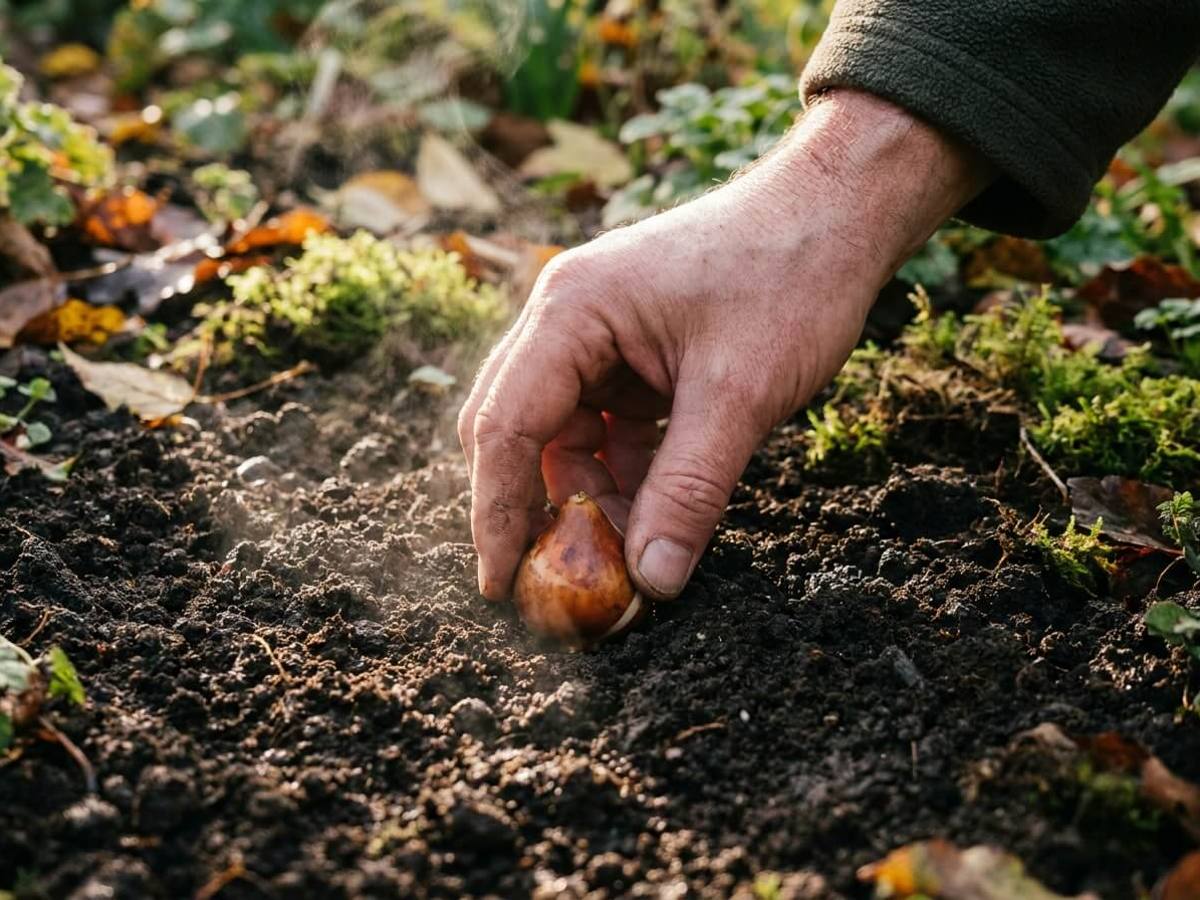
Garden centres are pushing expensive autumn bulb fertilisers hard, but here’s the truth: your spring bloomers don’t need them. In September, when you’re planting tulips, daffodils and crocuses, soil nutrients and natural biological processes are already working in your favour. Save your money and focus on what actually matters for healthy, vibrant spring flowers.
As summer fades and soil temperatures drop below 15 °C, gardeners across the UK and US begin the satisfying work of planting spring bulbs. The cooler weather triggers dormancy in bulbs, allowing them to develop the root systems they need before winter frost locks the ground solid. Bulb catalogues arrive, garden centres fill their shelves with colourful packets, and marketing messages about specialist fertilisers become impossible to ignore.
Autumn bulb fertilisers are a textbook example of a product solving a problem that doesn’t exist. Most garden soils contain sufficient phosphorus and potassium, the nutrients bulbs actually need for flower development. Manufacturers have created a convenient narrative: buy our bulb food now, enjoy better blooms later. It sounds logical. It sells well. It’s largely unnecessary.
Bulbs are living storage organs packed with everything they need to flower. A freshly dug tulip bulb contains all the energy required to push through spring soil, grow leaves, and produce a flower. Your job is simply to provide decent drainage and a reasonable planting depth. Expensive fertiliser additives rarely improve on nature’s design, especially in September when soil biology is still active and breaking down organic matter into usable nutrients.
Focus your effort on these evidence-based practices instead:
Once your bulbs are planted, winter will handle most of the work. The cold period triggers chilling requirements essential for flowering. Check drainage after heavy rain to ensure water isn’t pooling, and watch for signs of pest damage such as irregular holes or nibbled shoots emerging in early spring. By late winter, you’ll see the first green shoots pushing through the soil, proof that your bulbs are exactly where they need to be without a drop of expensive fertiliser.