Tulipa clusiana: varieties, planting and garden uses
0
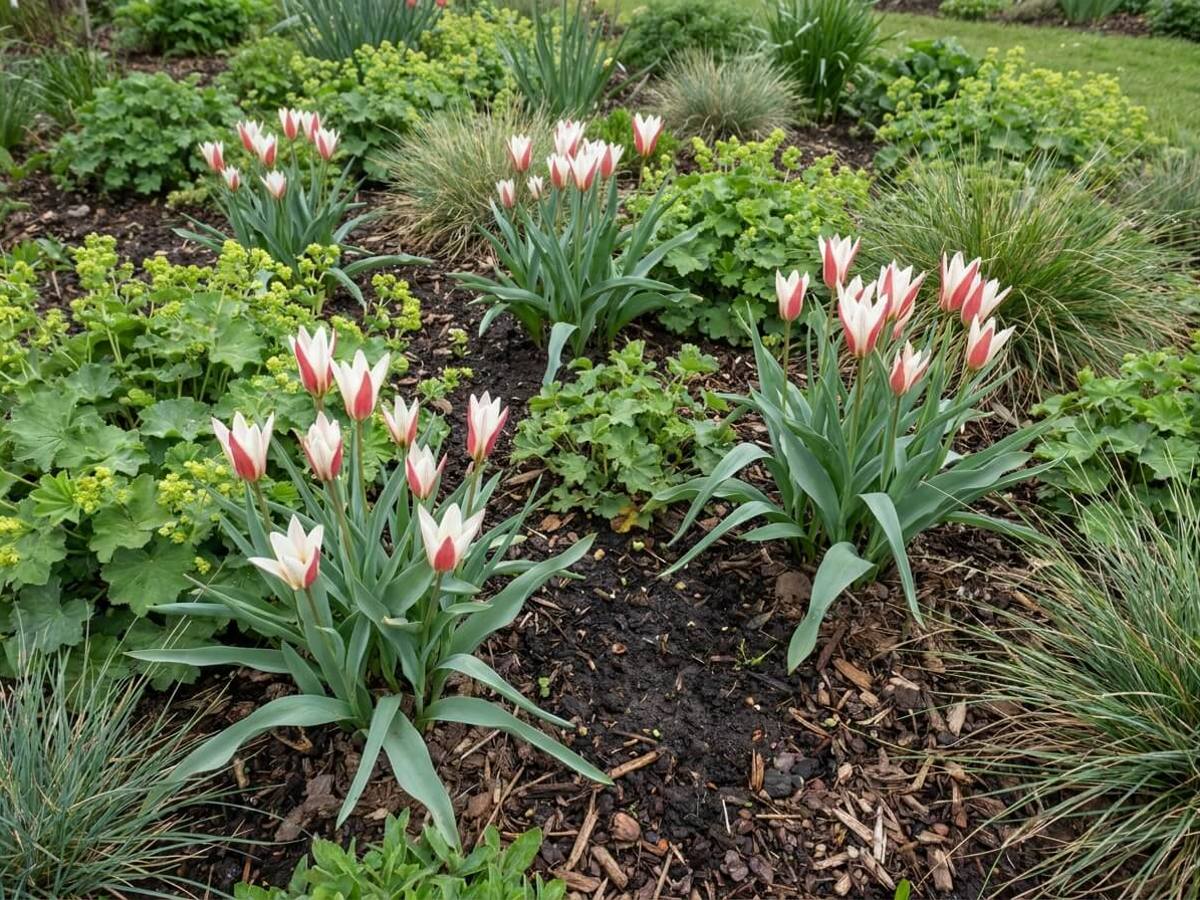
Slender, elegant and remarkably tough, Tulipa clusiana is the species tulip to grow if you want something that returns year after year rather than fading after a single season. Its narrow buds are held on wiry stems, striped raspberry-pink or crimson on the outside and opening on sunny days into flat white or butter-yellow stars. Few bulbs look so refined in a gravel garden, rock garden or sunny border edge, and fewer still naturalise so willingly in dry soil.
Growing conditions
Give lady tulip the sunniest, most open spot you have. It needs direct light to open its flowers — on dull days and after dusk the blooms stay furled into narrow candles, which is part of its charm but frustrating in shade. A south- or west-facing aspect at the foot of a warm wall suits it perfectly.
Drainage matters more than fertility. Sandy, stony or chalky soils are ideal, and a pH from neutral to distinctly alkaline is well tolerated. On heavy clay the bulbs rot in summer, so either work in generous grit and coarse sand or grow them in raised beds, troughs and deep pots instead.
The species originates in regions with cold winters and hot, bone-dry summers, which explains its needs precisely. Gardeners in mild, damp maritime climates should mimic that summer bake; those in continental or Mediterranean climates will find it one of the easiest tulips to perennialise.
How to plant Tulipa
Plant the dry bulbs in autumn, ideally from late October to late November once soil temperatures have dropped, as cool ground reduces the risk of tulip fire taking hold. Bulbs need a sustained cold period below about 9 °C to flower properly.
Spacing: set bulbs 8–10 cm apart in generous groups of fifteen or more — scattered singles look lost, and clumps read better from a distance.
Depth: plant deeply, 15 cm to the base of the bulb, or even 20 cm in light sand; depth encourages perennial behaviour and discourages the bulbs from splitting into non-flowering offsets.
Soil preparation: fork a spadeful of horticultural grit into the base of each planting hole on any soil that stays damp, and avoid fresh manure entirely.
Watering in: autumn rainfall is normally sufficient; water only if the soil is dust-dry at planting, then leave well alone.
Propagation: lift established clumps in mid-summer when fully dormant, detach the small offsets and droppers, and replant immediately at full depth — seed is possible but takes four to six years to flower.
Tulipa clusiana growing in a naturalistic garden border
Care through the seasons
Spring: Narrow grey-green leaves push through early and the flowers follow in late March and April. A light dressing of a high-potash feed such as sulphate of potash as the buds colour helps build next season’s bulb. Remove faded flowers to stop seed forming, but never cut the foliage.
Summer: Let the leaves yellow and wither naturally over six weeks or so — this is when the bulb recharges. Withhold water completely once flowering ends; a dry summer rest is the single biggest factor in getting flowers again the following spring. Avoid planting thirsty summer bedding directly over dormant bulbs.
Autumn: Clear away any remaining debris and top-dress congested colonies with grit and a little bonemeal. This is also the moment to lift, divide and replant clumps that have become crowded and flower-shy, usually after four or five seasons. Pot-grown bulbs benefit from fresh gritty compost each autumn.
Winter: The bulbs are completely dormant below ground and need no protection outdoors. Containers should be moved to a sheltered spot where they will not become waterlogged by winter rain.
Best varieties to grow
A handful of selections and botanical varieties are widely available, all keeping the species’ slim, two-tone elegance.
Tulipa clusiana var. chrysantha — golden-yellow inside, flushed rose-red or bronze outside; vigorous and among the best for naturalising.
Tulipa clusiana ‘Cynthia’ — soft chartreuse-yellow petals edged and backed in coral-red, holder of the RHS Award of Garden Merit.
Tulipa clusiana ‘Lady Jane’ — white interior with a broad rose-pink outer stripe, opening to a wide star; also an AGM winner.
Tulipa clusiana ‘Peppermintstick’ — the classic white-and-crimson candystick form, very slender in bud and excellent in gravel.
Tulipa clusiana ‘Tinka’ — yellow with a deep red reverse, slightly later and taller, good for extending the display.
Pests, diseases and common problems
Tulip fire (Botrytis tulipae): scorched brown spots on leaves and distorted, withered shoots in damp springs. Species tulips are less susceptible than hybrids, but dig up and destroy affected bulbs, and do not replant tulips on that ground for at least three years.
Bulb rot and blindness: bulbs turn soft or produce leaves without flowers, almost always caused by summer wet or shallow planting. Improve drainage with grit, plant at 15 cm, and keep the site dry from June onwards.
Squirrels, voles and mice: freshly planted bulbs excavated in autumn. Lay chicken wire over the planting area until the ground freezes, or plant into wire baskets sunk at full depth.
Slugs and snails: ragged holes in emerging foliage and petals in mild, wet springs. Clear hiding places, water in nematodes, or patrol at dusk after rain.
🌿 Nature & Garden Newsletter
Gardening tips, recipes & seasonal advice, twice a week.