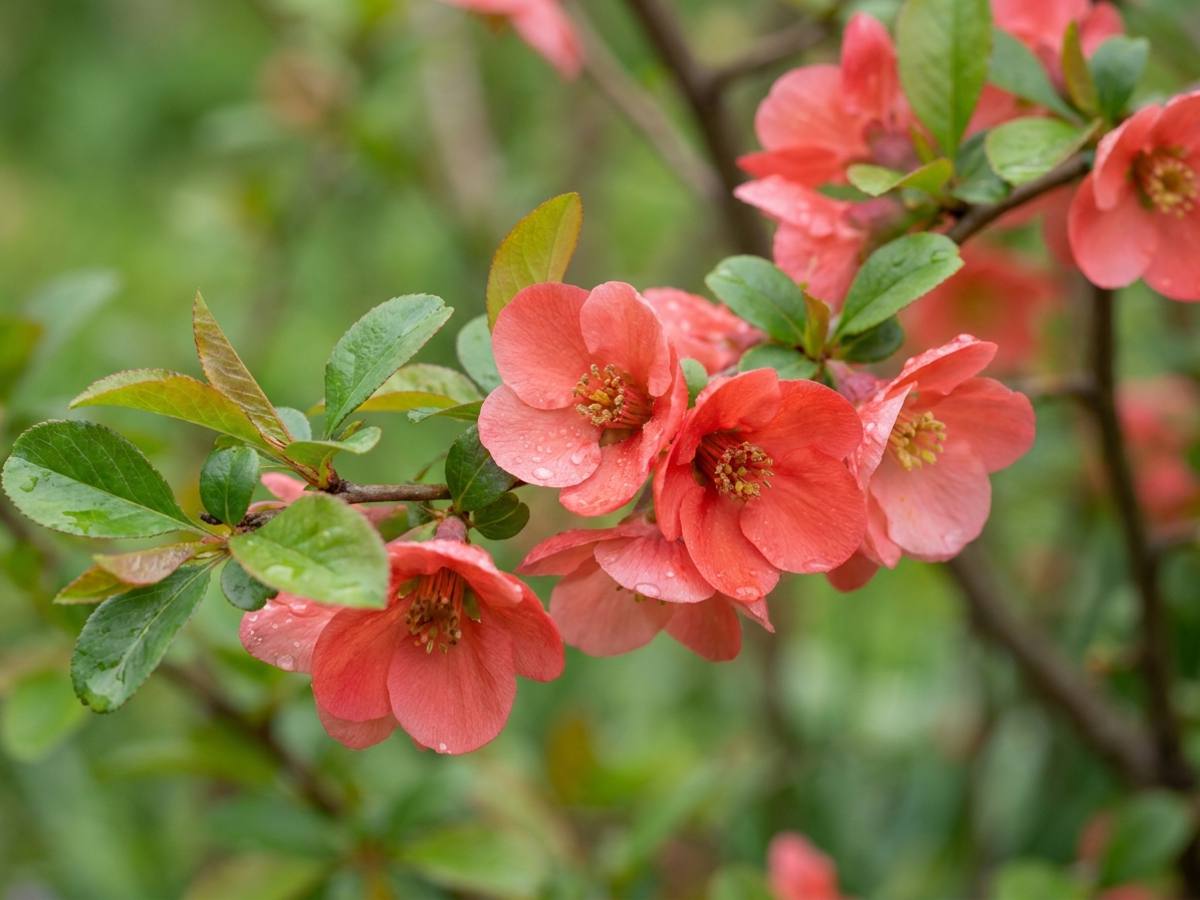
Flowering quince is one of the earliest shrubs to break into bloom, studding its bare, thorny branches with waxy scarlet, coral or white flowers from late winter onwards. It earns its keep as an informal hedge, a wall-trained specimen or a spiny intruder-proof boundary, and follows its display with aromatic yellow-green fruits that make superb jelly. Its most distinctive trait is that the flowers appear directly on old wood, before the leaves — a startling splash of colour when little else is stirring.
Growing conditions
Flowering quince gives its heaviest bloom in full sun, but it is remarkably tolerant of partial shade and will flower respectably even on a north- or east-facing wall. Expect roughly a third fewer flowers in shade, and slightly laxer growth. Shelter from harsh, drying winds helps protect the early blossom from browning.
Almost any reasonably drained garden soil suits it, from heavy clay to sandy loam. It copes well with alkaline conditions, though on very thin chalk the leaves may yellow with lime-induced chlorosis. A neutral to slightly acidic pH of 6.0–7.0 gives the best leaf colour and vigour.
This is a genuinely tough shrub, hardy well below −20 °C and unfazed by urban pollution or coastal exposure. In mild regions the flowers can open as early as January; in colder gardens they simply wait until March, which often means a longer, less weather-battered display.
How to plant Chaenomeles
Autumn is the ideal planting season, from October to November, while the soil is still warm and roots can establish before the spring flush. Container-grown plants can go in at any time the ground is neither frozen nor waterlogged.
Space plants 1.2–1.5 m apart for an informal hedge, or 2 m apart as free-standing specimens so branches can arch naturally.
Plant at the same depth as in the pot, keeping the graft union or crown level with the soil surface — burying it encourages suckering.
Fork over a generous area and work in garden compost or well-rotted manure; on heavy clay, add coarse grit to the backfill.
Water in thoroughly with 10 litres per plant, then mulch to 5 cm depth, keeping mulch clear of the stems.
Propagate from semi-ripe cuttings in July, from rooted suckers lifted in autumn, or by layering a low branch into the soil in spring.
Chaenomeles speciosa growing in a naturalistic garden border
Care through the seasons
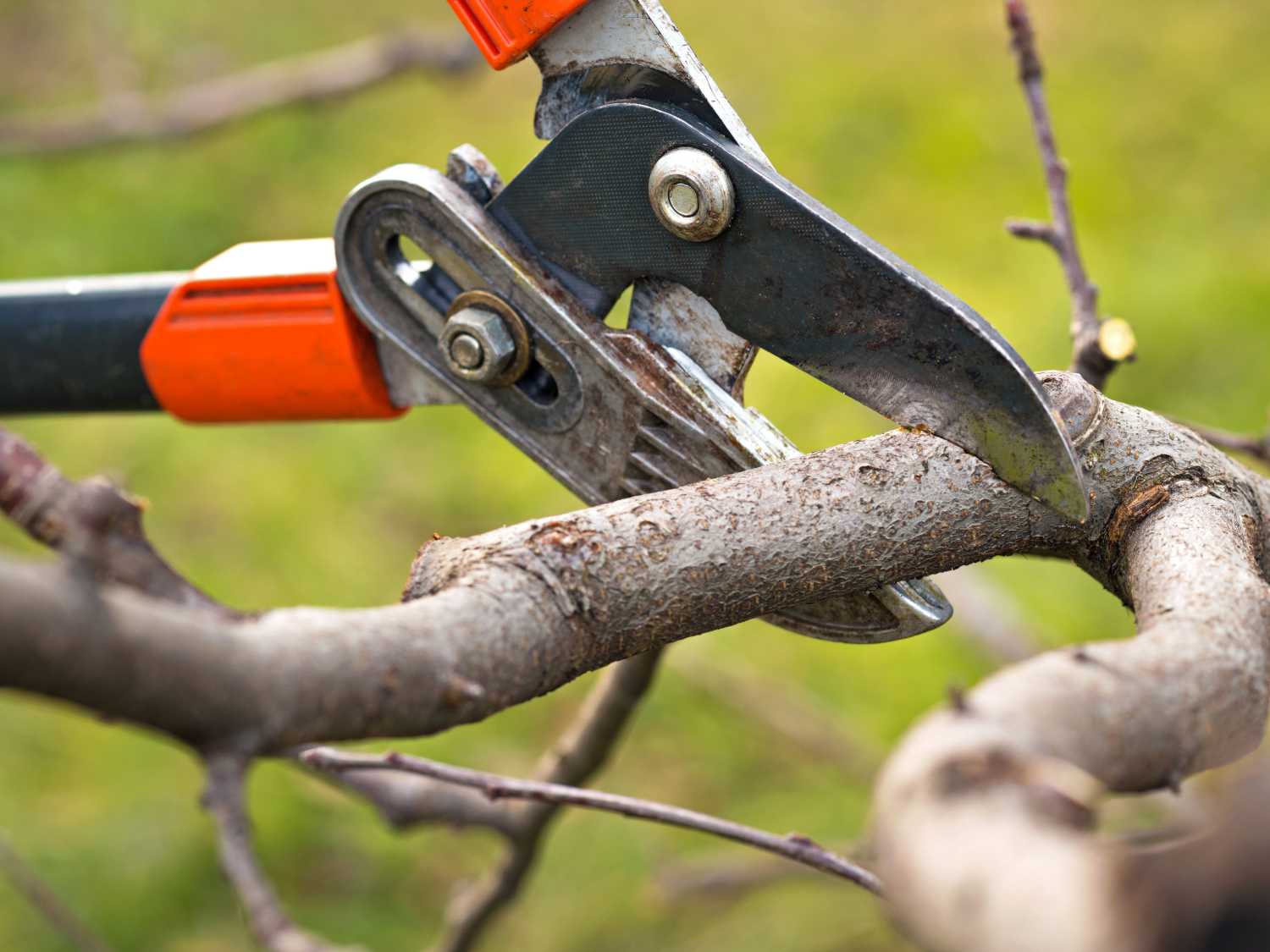
Spring: Enjoy the blossom, then prune immediately after flowering finishes, shortening flowered shoots to two or three buds to build up flowering spurs. Apply a balanced general fertiliser or a handful of bone meal around the base, and top up the mulch. Remove any suckers appearing away from the main clump by pulling rather than cutting.
Summer: Established plants are notably drought-tolerant, but water new plants weekly through dry spells for their first two summers. Wall-trained specimens need a light summer tidy in July, shortening long whippy shoots to five leaves. Watch for suckers spreading into borders and remove them promptly.
Autumn: Harvest the fruits once they turn from green to yellow and become fragrant, usually October, for jelly or to scent a bowl indoors. Avoid hard pruning now, as you will cut away next spring’s flower buds. Mulch new plantings and this is the best moment to lift and replant rooted suckers.
Winter: The bare, spiny framework is fully hardy and needs no protection whatsoever. Cut a few budded branches in January to force into flower in a vase indoors.
Best varieties to grow
There is far more choice than the familiar brick-red japonica of old cottage gardens.
‘Moerloosei’ — apple-blossom flowers of white flushed pink, holder of the RHS Award of Garden Merit and arguably the loveliest of all.
‘Nivalis’ — pure white, generously borne on a vigorous upright bush; excellent against dark brickwork.
‘Geisha Girl’ — semi-double apricot-peach blooms on a compact, well-behaved plant around 1.2 m tall.
‘Simonii’ — deep blood-red semi-double flowers on a low, spreading shrub, ideal for the front of a border or a bank.
Pests, diseases and common problems
Aphids: Clusters on soft new shoot tips cause puckered, distorted leaves. Blast them off with a jet of water and encourage ladybirds and hoverflies rather than spraying.
Quince leaf blight (Diplocarpon mespili): Dark brown spots merging into blotches, followed by premature leaf fall in wet summers. Rake up and bin fallen leaves, thin congested branches to improve airflow, and avoid overhead watering.
Fireblight: Shoots blacken and wilt with a shepherd’s-crook tip, as though scorched. Cut back to 30 cm below visible damage into healthy wood, disinfecting secateurs between cuts, and burn the prunings.
Chlorosis: Yellow leaves with green veins on very chalky soil. Mulch with ericaceous compost or leaf mould and apply a chelated iron feed in spring.
🌿 Nature & Garden Newsletter
Gardening tips, recipes & seasonal advice, twice a week.