Edgeworthia chrysantha: expert tips for growing this fragrant shrub
0
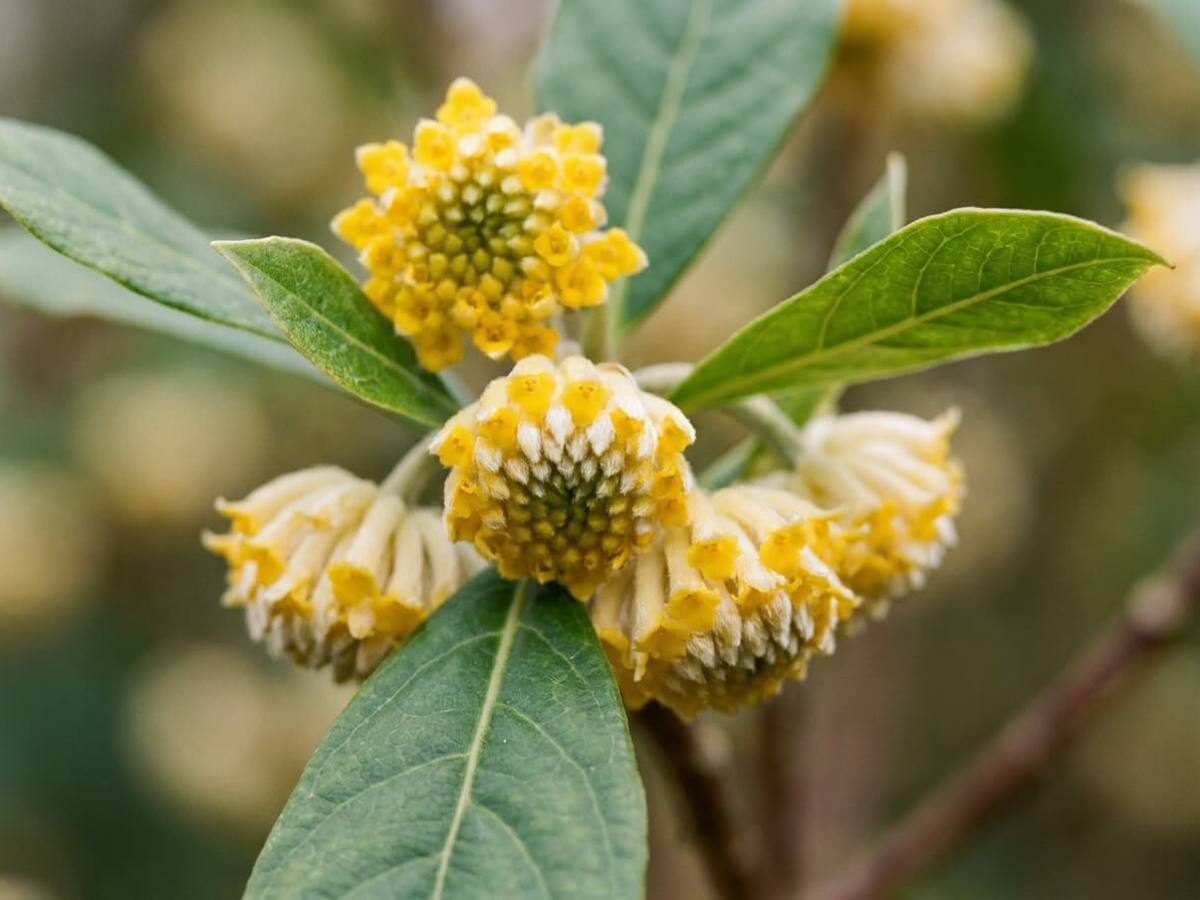
Few shrubs earn their place in a winter garden quite as convincingly as Edgeworthia chrysantha, the paperbush. Its bare, chocolate-brown stems carry drooping silvery buds all winter, which open in late winter into domed clusters of tubular yellow flowers with an extraordinary scent of daphne, honey and cloves. The branches fork obsessively into threes, giving the whole plant a sculptural, almost architectural outline long before the leaves appear.
Growing conditions
Paperbush is happiest in dappled or light shade, much as it grows in Chinese woodland margins. In cool maritime climates it tolerates full sun provided the roots never dry out, but in hot summer regions afternoon shade keeps the foliage from scorching. Shelter matters more than anything: a position out of cold, drying easterly winds protects both the winter buds and the open flowers.
Give it a deep, fertile, humus-rich soil that holds moisture yet drains freely — leaf mould, composted bark or garden compost worked into the planting area pays dividends. It resents waterlogging and heavy, sticky clay, where root rot is almost inevitable. A neutral to slightly acid pH suits it best; shallow chalk soils usually cause yellowing and stunted growth.
Expect reliable results in zones 7–9, where mature plants shrug off brief dips to around −10 °C. In colder gardens, grow it against a sheltered west- or south-facing wall, or choose a large container that can be moved to an unheated porch for the coldest weeks.
How to plant Edgeworthia
Spring is the safest planting season, giving the shrub a full growing year to establish before its first winter. Autumn planting works in mild areas, but young plants are far more vulnerable to cold, wet soil than established ones.
Allow at least 1.5–2 m between plants, or from a path or neighbouring shrub — the wide, layered, horizontal habit is the whole point and should not be crowded.
Plant so the top of the rootball sits level with the surrounding soil; burying the stem base encourages rot in this family.
Fork a generous barrowload of leaf mould or well-rotted compost into the planting area, and add grit if drainage is at all doubtful.
Water in thoroughly, then mulch 5–7 cm deep with bark or leaf mould, keeping the mulch clear of the stems.
Propagate from semi-ripe cuttings in midsummer with bottom heat, or by layering a low branch in spring and severing it the following autumn.
Edgeworthia chrysantha growing in a naturalistic garden border
Care through the seasons
Spring: As the flowers fade and the silvery-backed leaves unfurl, apply a balanced slow-release feed or a mulch of garden compost. This is the only safe window for pruning — remove dead or crossing wood immediately after flowering and no later. Deadheading is unnecessary and risks damaging the emerging shoots.
Summer: Water deeply during dry spells; paperbush has fleshy, surface-running roots that suffer quickly in drought and will shed leaves dramatically. Avoid hoeing or digging within the canopy, as the roots dislike disturbance. Keep the mulch topped up to conserve moisture and keep the root zone cool.
Autumn: The leaves turn soft butter-yellow before falling, revealing the silvery buds already in place. Do not cut back — the entire winter display depends on wood produced earlier in the year. Refresh the mulch and, in colder gardens, pile extra leaf mould over the root zone.
Winter: The naked stems and nodding grey buds are an asset in themselves, with flowers opening from February onwards. Fleece the plant if temperatures threaten to fall below about −10 °C, particularly while flowers are open.
Best varieties to grow
A handful of named selections extend the colour range beyond the usual creamy yellow.
‘Grandiflora’ — the most widely grown form, with notably larger flowerheads and a powerful fragrance; holds the RHS Award of Garden Merit.
‘Red Dragon’ — sometimes sold as ‘Akebono’, with flowers flushed burnt orange to brick red, best appreciated at close range.
‘Nanjing Gold’ — vigorous and free-flowering, with deep golden-yellow blooms and good foliage substance.
‘Snow Cream’ — a more compact selection with pale, creamy-white flowerheads, useful in smaller gardens.
Pests, diseases and common problems
Root rot and dieback: Whole branches wilt and collapse, usually after a wet winter in heavy soil. Improve drainage by planting on a raised mound of free-draining compost and grit, and never site paperbush where water stands.
Frost and wind damage: Browned, limp flowers or scorched young shoots follow hard frost or cold wind. Move planting positions into shelter and drape horticultural fleece over the shrub when sharp frost is forecast during flowering.
Leaf scorch and chlorosis: Yellowing leaves with crisp brown margins point to drought, excessive sun or alkaline soil. Mulch generously, water deeply during dry spells and feed with a chelated iron tonic on limy ground.
🌿 Nature & Garden Newsletter
Gardening tips, recipes & seasonal advice, twice a week.