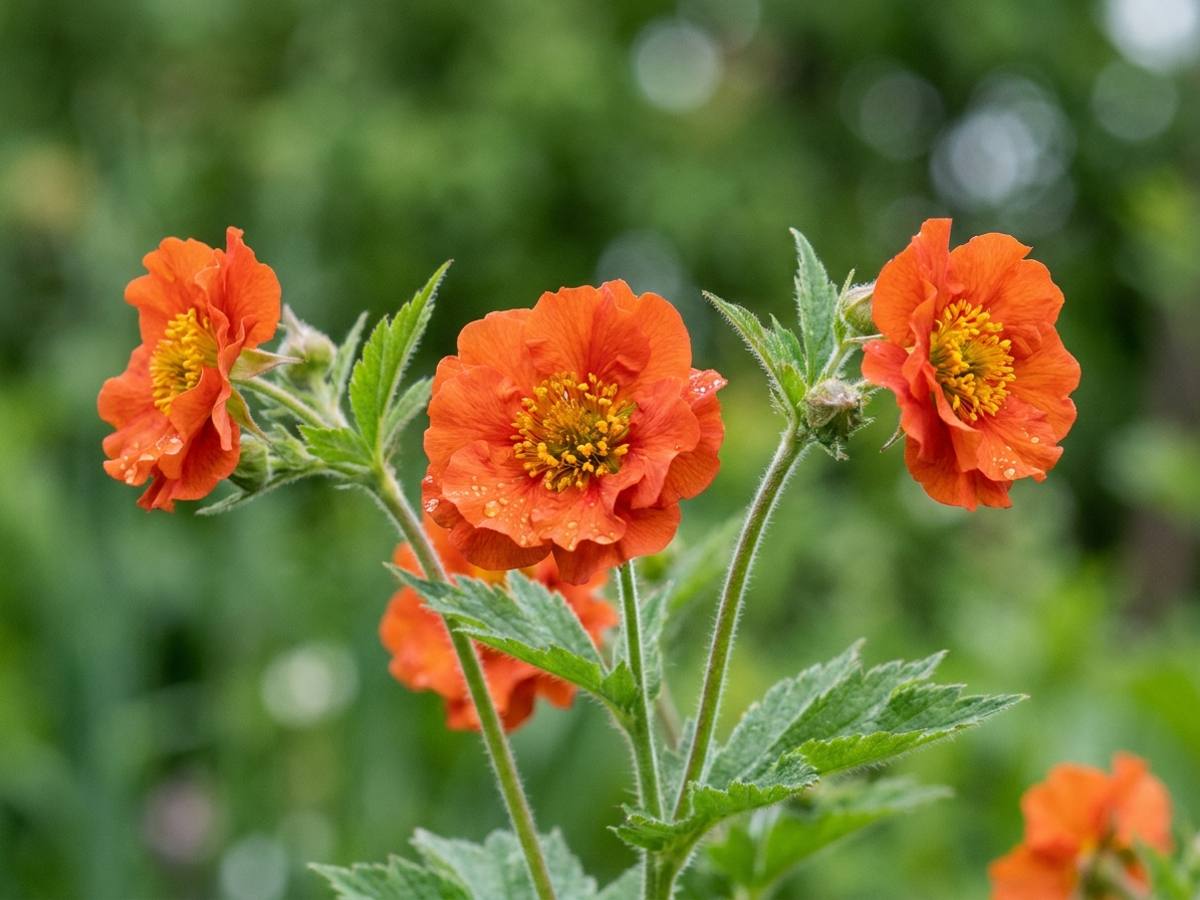
Geum coccineum is a compact, hard-working perennial that scatters vivid scarlet-orange saucers above neat rosettes of scalloped, apple-green foliage. It flowers early and generously, filling the awkward gap between the last tulips and the first summer perennials, and often repeats into autumn if deadheaded. Unlike many of its showier hybrid cousins, this species is genuinely tough, semi-evergreen and happy in the damp, heavy soils that defeat other front-of-border plants.
Give Geum coccineum full sun for the densest flowering and sturdiest stems. In hot, dry summer regions such as southern Europe or the American South, light afternoon shade prevents the foliage scorching and prolongs the display. Deep shade produces floppy growth and very few blooms.
The ideal soil is a fertile, humus-rich loam that stays reliably moist yet never waterlogged in winter. This species originates from mountain meadows and streamsides in the Balkans and Asia Minor, so it copes with heavier clay far better than most alpines. It is unfussy about pH, thriving on neutral to slightly alkaline ground including chalk, provided drainage is reasonable.
Hardy to around −20 °C, it needs no winter protection in Britain, Ireland or most of continental Europe. Winter wet on cold, sticky soils is the only real killer — raise the planting position slightly or add grit if your borders puddle.
Plant in early autumn or in spring, once the soil has warmed. Autumn planting lets roots establish before the first flowering flush; spring suits gardens with cold, wet winters.

This is a plant that asks for very little, but the little it asks for falls at particular moments of the year. The table below sets out what each season needs and what neglecting it costs you.
| Season | Main jobs | Why it matters |
|---|---|---|
| Early spring | Clear tatty overwintered leaves, feed or mulch around the crown, begin deadheading | Deadheading from the first faded flowers triggers a longer succession of blooms |
| Summer | Water deeply once a week in dry spells, cut spent stems to the base, shear over in midsummer | A moisture-loving plant that sulks and browns off in drought; shearing brings a fresh flush |
| Early autumn | Tidy rather than cut hard back; lift and divide congested clumps; mulch lightly with leaf mould | Congested clumps flower poorly once the centre goes woody |
| Winter | Leave the crown undisturbed and keep heavy mulch off the rosette | Mulch sitting on the rosette encourages rot in wet winters |
Two of these jobs — weekly deadheading and division every third autumn — do most of the work of keeping a clump flowering.
This is a plant that asks for very little, but the little it asks for falls at particular moments of the year. The table below sets out what each season needs and what neglecting it costs you.
Two of these jobs — weekly deadheading and division every third autumn — do most of the work of keeping a clump flowering.
Spring: Clear away any tatty overwintered leaves as new rosettes push through in March. Apply a general-purpose organic fertiliser or a 5 cm mulch of compost around, not over, the crown. Start deadheading as soon as the first flowers fade to trigger a longer succession.
Summer: Water deeply once a week in dry spells — this is a moisture-loving plant that sulks and browns off in drought. Continue snipping spent stems right back to the base rather than merely nipping the flower head. A hard shear-over in July often provokes a fresh flush of foliage and a scattering of late blooms.
Autumn: Tidy rather than cut hard back, as the rosettes remain semi-evergreen and photosynthesise through mild spells. Early autumn is the best moment to lift and divide congested clumps, which flower poorly once the centre goes woody. Mulch lightly with leaf mould on free-draining soils.
Winter: Foliage flattens and may brown at the edges but the crown is entirely hardy. Avoid heavy mulch sitting on the rosette, which encourages rot in wet winters.
Several excellent named forms have been selected from this species or its close hybrids.