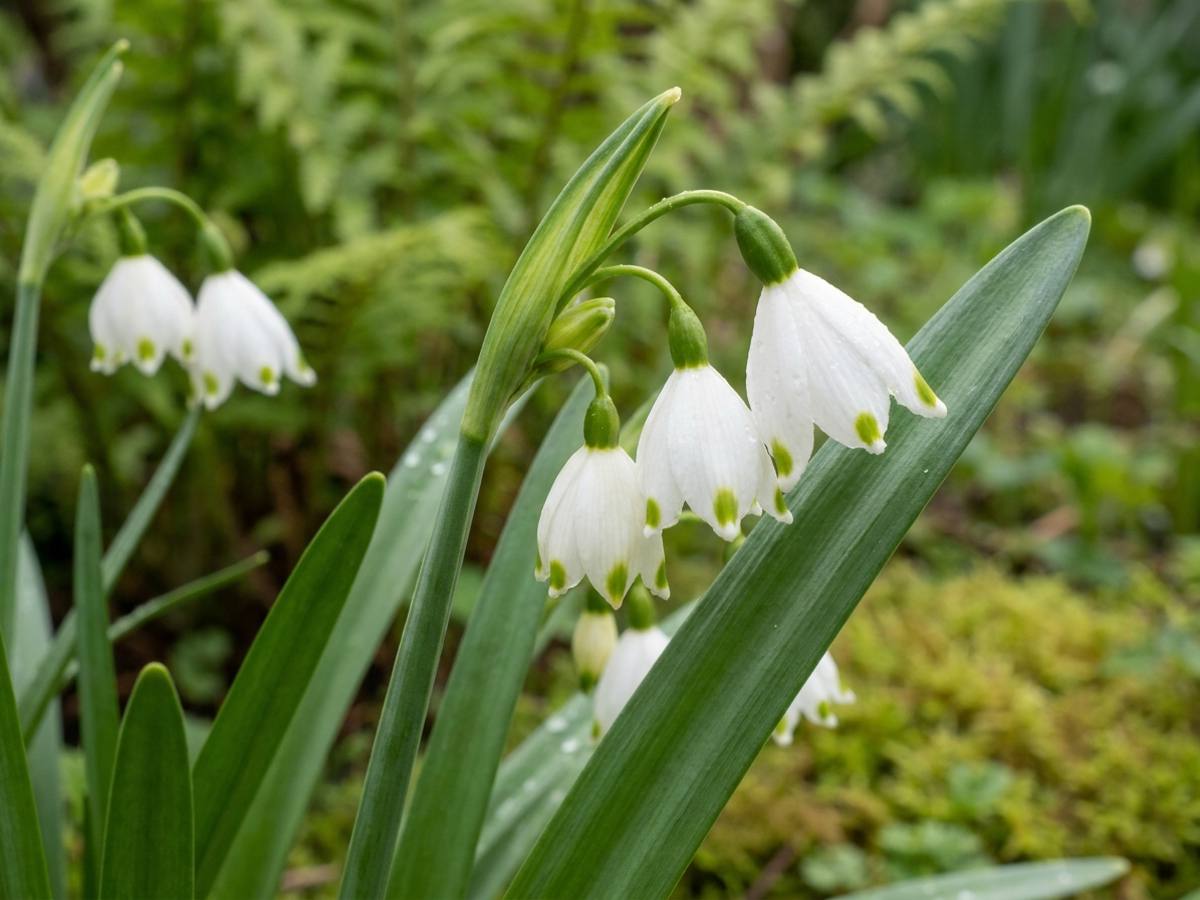
Often mistaken for an oversized snowdrop, Leucojum aestivum carries clusters of nodding white bells, each petal neatly tipped with a green dot, on stems reaching knee height. It is one of the very best bulbs for damp ground, thriving in the sort of heavy, moisture-retentive soil where most bulbs sulk and rot. Despite the name “summer snowflake”, it actually flowers in mid to late spring, bridging the gap between the last daffodils and the first alliums.
Growing conditions
Summer snowflake is refreshingly adaptable about light. It flowers most freely in full sun or dappled shade, and copes well beneath deciduous trees and shrubs, which are still bare when the bulbs are in growth. Deep, permanent shade under conifers or evergreen hedging will thin the clumps and reduce flowering over time.
Soil is where this bulb really differs from its relatives. It wants moisture-retentive, fertile ground and positively enjoys heavy clay, pond margins and ditch sides that stay wet through winter and spring. A neutral to slightly acidic pH is ideal, though it grows perfectly well on chalk provided the soil holds moisture; only sharp, sandy, drought-prone sites disappoint.
Native to damp meadows and riverbanks from Europe to western Asia, it is fully hardy across the British Isles and much of northern Europe. In hotter, drier regions such as the Mediterranean or the southern United States, plant on the shaded, cooler side of a wall and irrigate through spring.
How to plant Leucojum
Plant dry bulbs in early autumn, from September to October, so they establish roots before winter. Better still, buy potted bulbs or freshly lifted clumps “in the green” in late spring — Leucojum bulbs deteriorate quickly once dried, and green plants establish far more reliably.
Space bulbs 10–15 cm apart in groups of at least ten; scattered singles look thin and lost, whereas generous drifts read properly from a distance.
Set bulbs 8–10 cm deep, nose upwards; deeper planting, to 12 cm, helps on light soils that dry out in summer.
Fork a bucketful of leaf mould or well-rotted garden compost into each square metre before planting to boost moisture retention.
Water in thoroughly after planting, even in autumn, to settle soil around the bulbs and break their dormancy.
Propagate by lifting and splitting congested clumps immediately after flowering, replanting the offsets at once without letting the roots dry out.
Leucojum aestivum growing in a naturalistic garden border
Care through the seasons
Spring: Strap-shaped leaves push up from late winter, followed by the flower stems in April. Apply a light scattering of general-purpose organic fertiliser or a mulch of compost as growth begins, particularly on poor soils. Deadhead spent flowers if you do not want self-sown seedlings, but always leave the foliage to die back naturally.
Summer: Leaves yellow and collapse by early July, after which the plant is dormant and needs no attention. Resist the urge to tidy green foliage away — it is feeding next year’s flowers. In a prolonged drought, a soaking in late spring while leaves are still green pays dividends the following season.
Autumn: Clear away the last of the collapsed foliage and mark clump positions before you forget them. Autumn is the moment to plant new bulbs and to top-dress established drifts with leaf mould, which mimics the leaf litter of their native riverside habitat. Divide only if clumps have become so crowded that flowering has declined.
Winter: Bulbs are completely hardy and need no protection, even in exposed gardens or in standing water. Foliage tips often appear in January and shrug off frost and snow without damage.
Best varieties to grow
Named selections are few, but the differences in size and vigour are worth seeking out.
Leucojum aestivum ‘Gravetye Giant’ — the finest form, holding larger bells on stems up to 75 cm; it carries the RHS Award of Garden Merit.
Leucojum aestivum subsp. pulchellum — a slighter, earlier-flowering plant at around 35 cm, useful at the front of a border.
Leucojum aestivum ‘Hertfordshire Giant’ — a robust, tall selection with plenty of flowers per stem, though less widely available.
Leucojum vernum (spring snowflake) — a close relative, shorter at 15–20 cm and flowering in February and March, ideal for shady woodland corners.
Pests, diseases and common problems
Slugs and snails: Damp planting sites suit them, and they rasp holes in the young flower bells. Encourage frogs and ground beetles, and collect the culprits by torchlight on mild damp evenings.
Narcissus bulb fly: Grubs hollow out the bulb, so foliage emerges thin, distorted or not at all. Firm the soil over the neck of the bulb as leaves die back in early summer to deny the females an entry point, and discard any soft bulbs you unearth.
Grey mould (Botrytis): Fuzzy grey patches appear on leaves and buds in cold, wet, still weather. Remove affected material promptly and thin overcrowded clumps to improve air movement.
Blindness (leaves but no flowers): Usually caused by dried-out bulbs bought too late, deep shade, or foliage removed too early. Feed after flowering, move plants into brighter light and be patient — dry-planted bulbs often take two seasons to bloom.
🌿 Nature & Garden Newsletter
Gardening tips, recipes & seasonal advice, twice a week.