Mauve allium pompoms, a haze of gypsophila, a clipped square of boxwood: roses are at their best with company at their feet. Whether climbing a pergola, standing alone in the lawn or covering ground in a bed, they only need their colours and volumes staged with care to give truly harmonious ensembles.
Choose your pick!
Climbing along a pergola, standing proudly alone like a king in the lawn, or covering the ground in a flower bed, roses are the VIPs of any garden.
But, very often, these stars are lonely and live a life aloof from that of other plants, since we don’t often think of pairing them with other species.
Alas, what a shame! It is time to correct this slight, since staging colors and volumes is truly the best way to highlight their beauty.
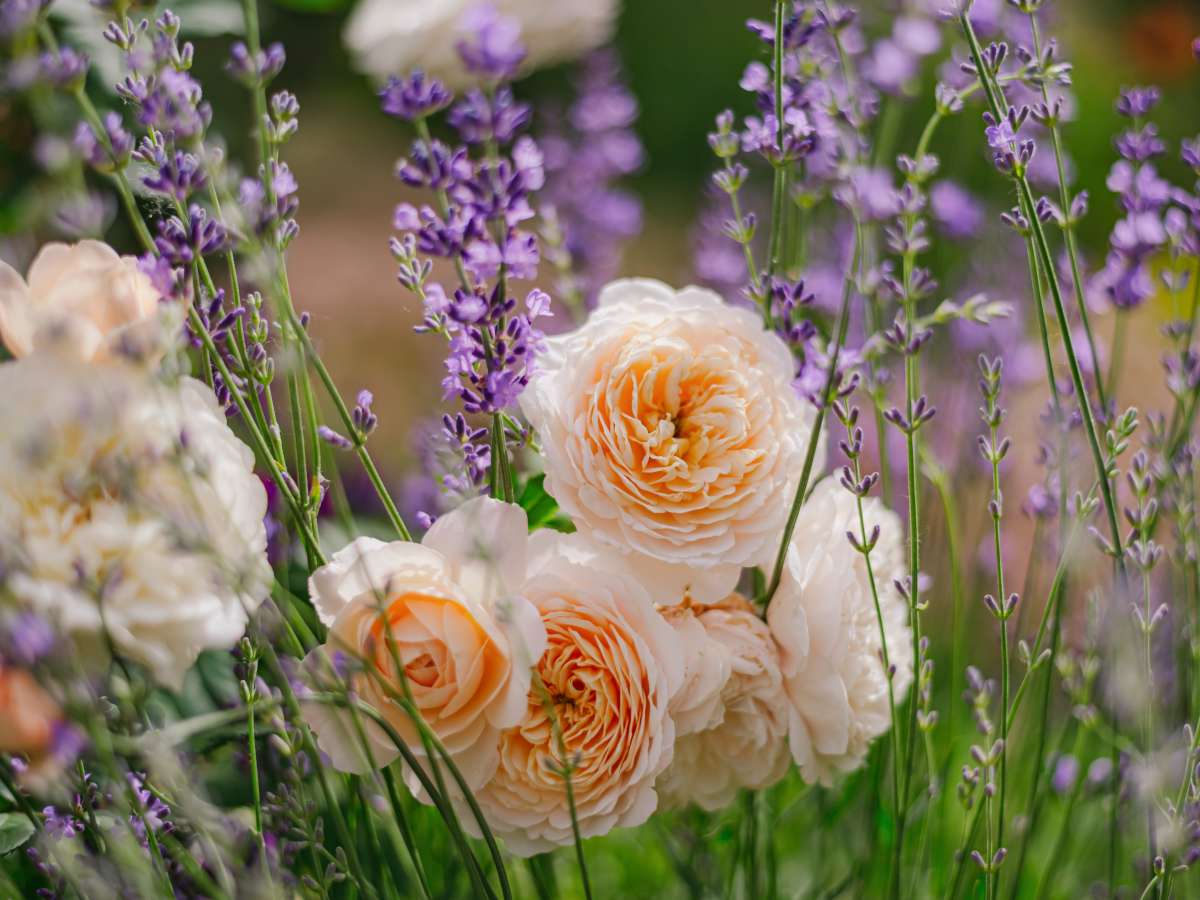
Ground-covering and shrub roses seem to make their debut every year when accompanied by light-blooming plants: lavender, gypsophila, beeblossoms, Russian sage, perennial geraniums, bellflowers… And also with the tiny flowers of herbs and spices such as rosemary, thyme or sage. Each will add a graceful touch and harmoniously fit into empty spots. Choose according the color of your roses: pair blue flowers to pink roses, white flowers to yellow roses… Romance guaranteed!
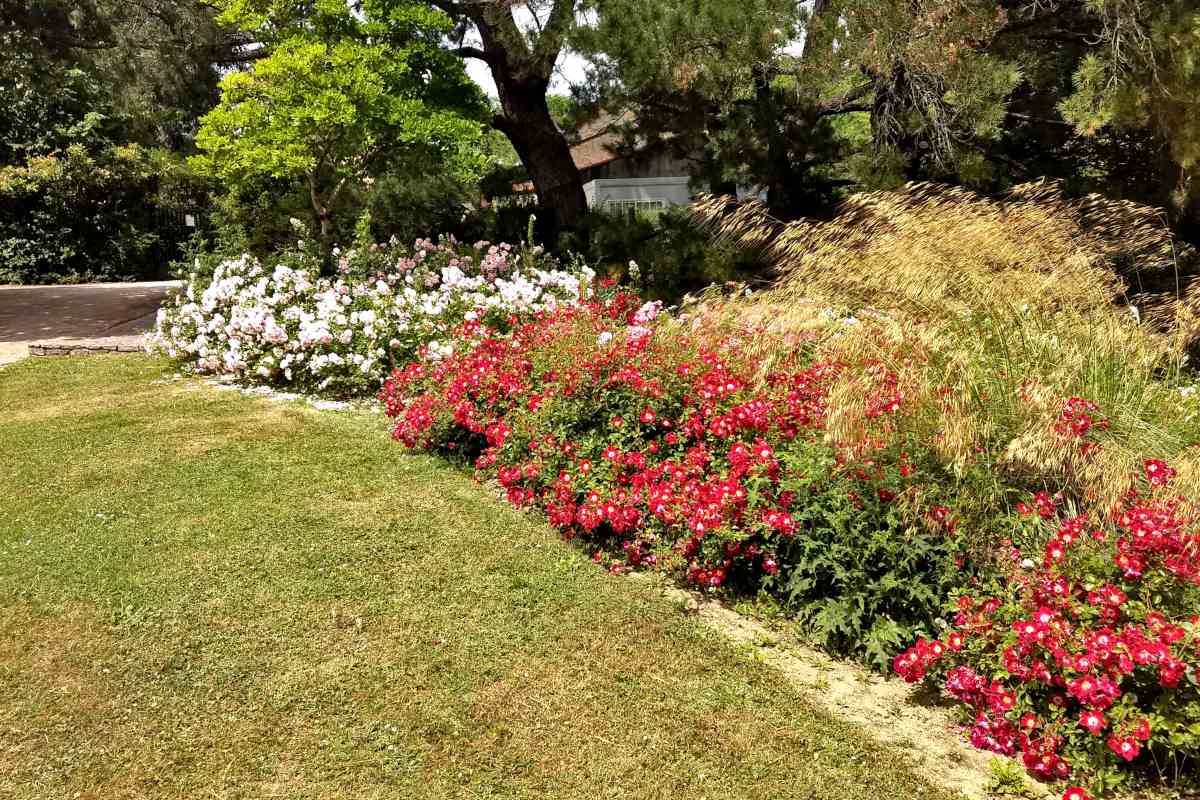
Don’t forget boxwood and wild privet: their evergreen leafage and varied shapes will bring life to your flower beds all year long, and having them as a backdrop to the rose trees will give you a very “castle-like” atmosphere! You can set up the stage for a magnificent bush rose tree, planting around it a square of trimmed low-lying boxwood shrubs.
If you’re looking to create a more modern and graphical impact, choose from a range of grasses and add color with spring bulbs (tulips, narcissus) and ornamental onion which has mauve pompoms that perfectly play ball with the pink roses.
Climbing and rambler roses can also benefit from the supporting presence of a clematis, or also from the prairie-fresh touch of sweet peas or oceanblue morning glory.
The right partner depends on the type of rose and the effect you are after. This table gathers the pairings described above, from airy perennials to evergreen structure.
| Companion plant | Best with | What it brings |
|---|---|---|
| Lavender, gypsophila, beeblossoms, Russian sage, perennial geraniums, bellflowers | Ground-covering and shrub roses | Light bloom that fills empty spots gracefully |
| Rosemary, thyme, sage | Shrub roses in sunny beds | Tiny flowers of herbs and spices |
| Boxwood and wild privet | Bush rose trees and flower beds | Evergreen leafage and a castle-like backdrop all year |
| Grasses | Rose beds needing structure | A modern, graphical impact |
| Spring bulbs: tulips, narcissus, ornamental onion | Pink roses especially | Mauve pompoms and early colour |
| Clematis, sweet peas, oceanblue morning glory | Climbing and rambler roses | Supporting presence and a prairie-fresh touch |
Match the colour as well as the habit, and the pairing does the rest.
If you’re a fan of English roses, with their large very fragrant blossoms, choose from the marvels of creator David Austin. Try the “William Shakespeare 2000” which has sumptuous crimson red double flowers that slide to deep purple. Or the “Evelyn” variety, one of the most fragrant, which blooms in peachy hues. “The Generous Gardener” is another of his double-flowered rose trees where each rose opens up to reveal countless stamens. As many options to prepare a season full of magnificent bouquets!
Laure Hamann