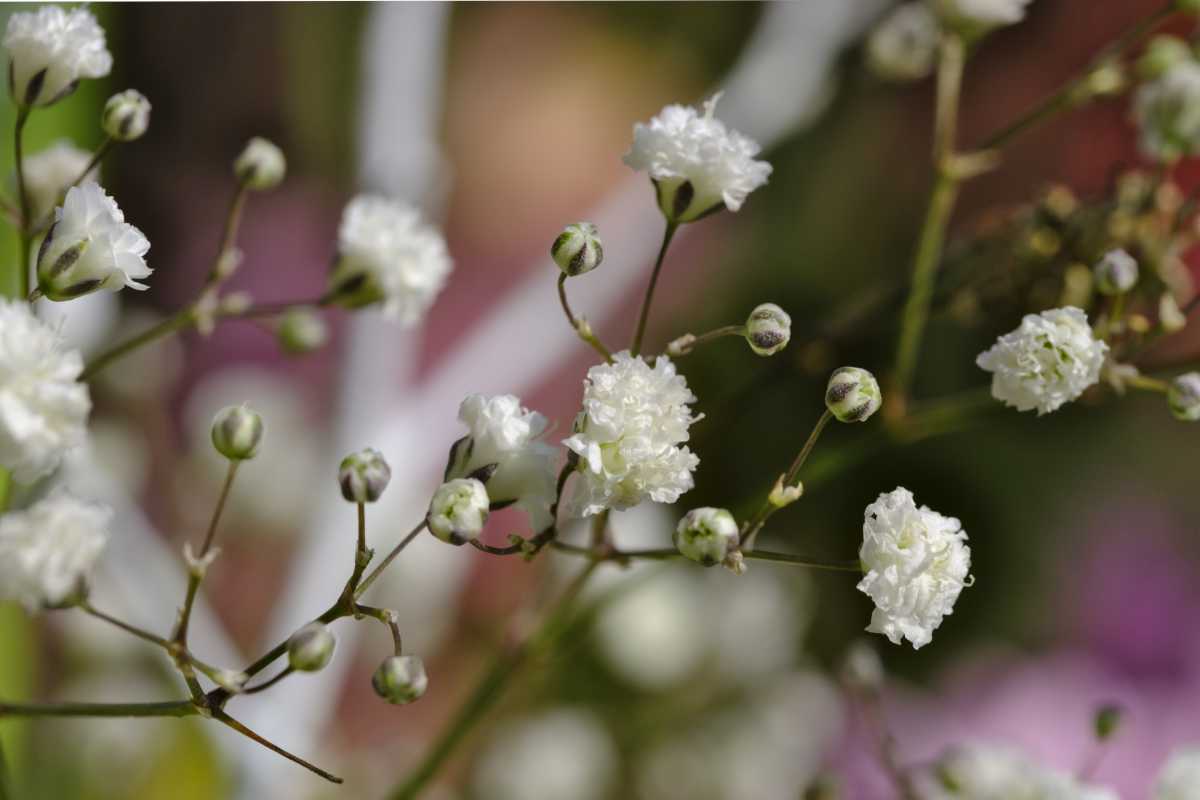
Tiny white flowers gather into a cloud above grassy, ground-covering growth: that is gypsophila, or baby’s breath (Gypsophila paniculata), the flower florists reach for when composing bouquets. Its Greek name means friend of chalk, and given full sun and soil that drains freely it will flower from early summer right through to early autumn.
| Name | Gypsophila |
|---|---|
| Family | Caryophyllaceae |
| Type | perennial |
| Height | 8 to 40 inches (20 to 100 cm) |
| Exposure | full sun |
| Soil | ordinary, chalky, well drained |
| Flowering | early summer to early autumn |
Caring for it from planting to pruning is easy and its ornamental impact is guaranteed.
When purchased in nursery pots, better plant your gypsophila in fall, but all the way to the next summer is possible as long as it doesn’t freeze.
If planted in spring or summer, gypsophila must be watered more regularly during the 1st year than if it had been planted in fall.
Sowing gypsophila
Spring and summer is the usual season for sowing, ideally in a broad pan, with a transfer to small nursery pots shortly after sprouting, so that the seedling may grow until it can be transferred into place.
Gypsophila asks for very little, but each job has its own moment. Here is when to plant, sow, water and tidy it.
| Task | When | What to do | Why it matters |
|---|---|---|---|
| Planting from nursery pots | Early to mid-autumn, and on through to the following summer if there is no frost | Set plants straight out into a sunny, free-draining spot | Autumn planting needs the least follow-up care |
| Planting in the warm months | Spring to summer | Plant as normal, then keep up the watering can | Needs more regular watering through the first year |
| Sowing | Spring and summer | Sow in a broad pan, prick out into small nursery pots after sprouting | Seedlings grow on until they are strong enough to plant out |
| Watering | After planting, above all in summer | Water regularly while the plant settles in | Establishment depends on it, though drainage must stay good |
| Deadheading | Through flowering, early summer to early autumn | Remove wilted flowers to push out more blooms | Optional: the flowers are so numerous it soon turns tedious |
| Shaping | Autumn | Balance out the overall shape | Keeps the bearing dense and tight |
Full sun and well-drained ground do most of the work; the rest is a few minutes here and there.
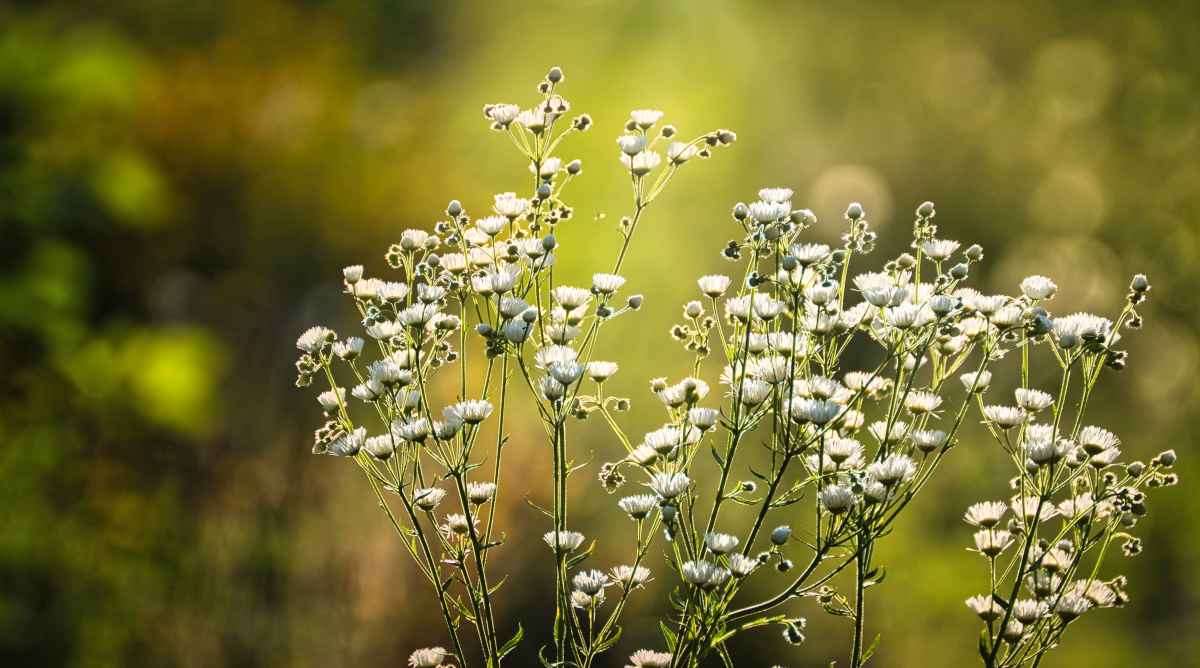
It is always possible to remove wilted flowers regularly (deadheading) in order to increase blooming, but there are so many that this work quickly becomes tedious.
More reasonable is to simply balance out the shape in fall, so that the bearing stays dense and tight.

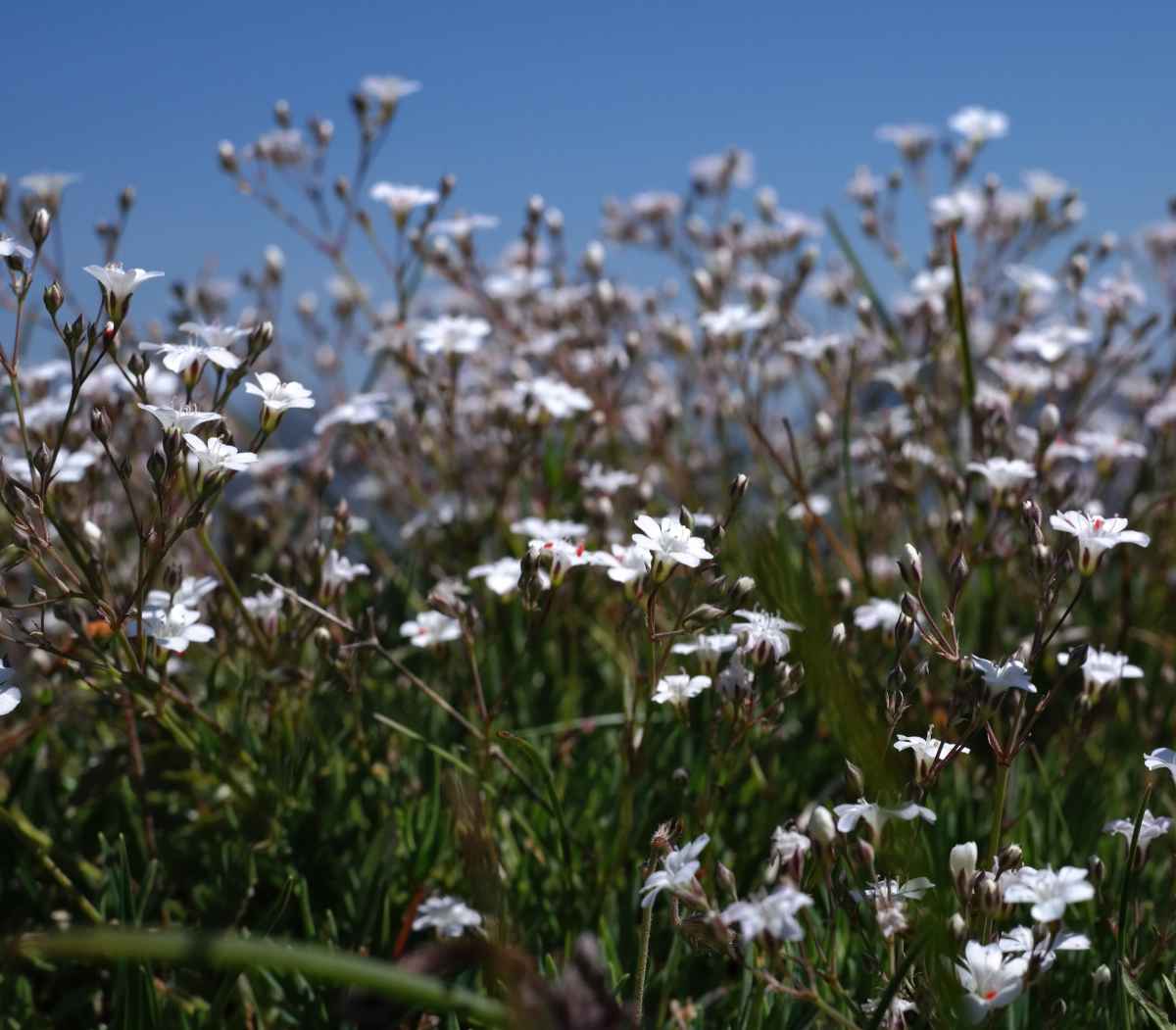
This grassy perennial also makes for ground cover or shrubby plants, and you’ll be thrilled with its very cute tiny white flowers.
Among the many different species, you’ll find beautiful ones like sprawling gypsophila. Another produces a typical tiny cloud of white flowers: Gypsophila paniculata, the baby’s breath.
The name of the plant comes from ancient Greek, gypsos and philos which means the friend of chalk. No need to add that this plant loves chalky or limestone soil…
Gypsophila is plant that is beloved by florists, who like to use it when they are composing bouquets.
Take care to provide for enough space upon planting, because this plant can spread quickly and gobble up space.