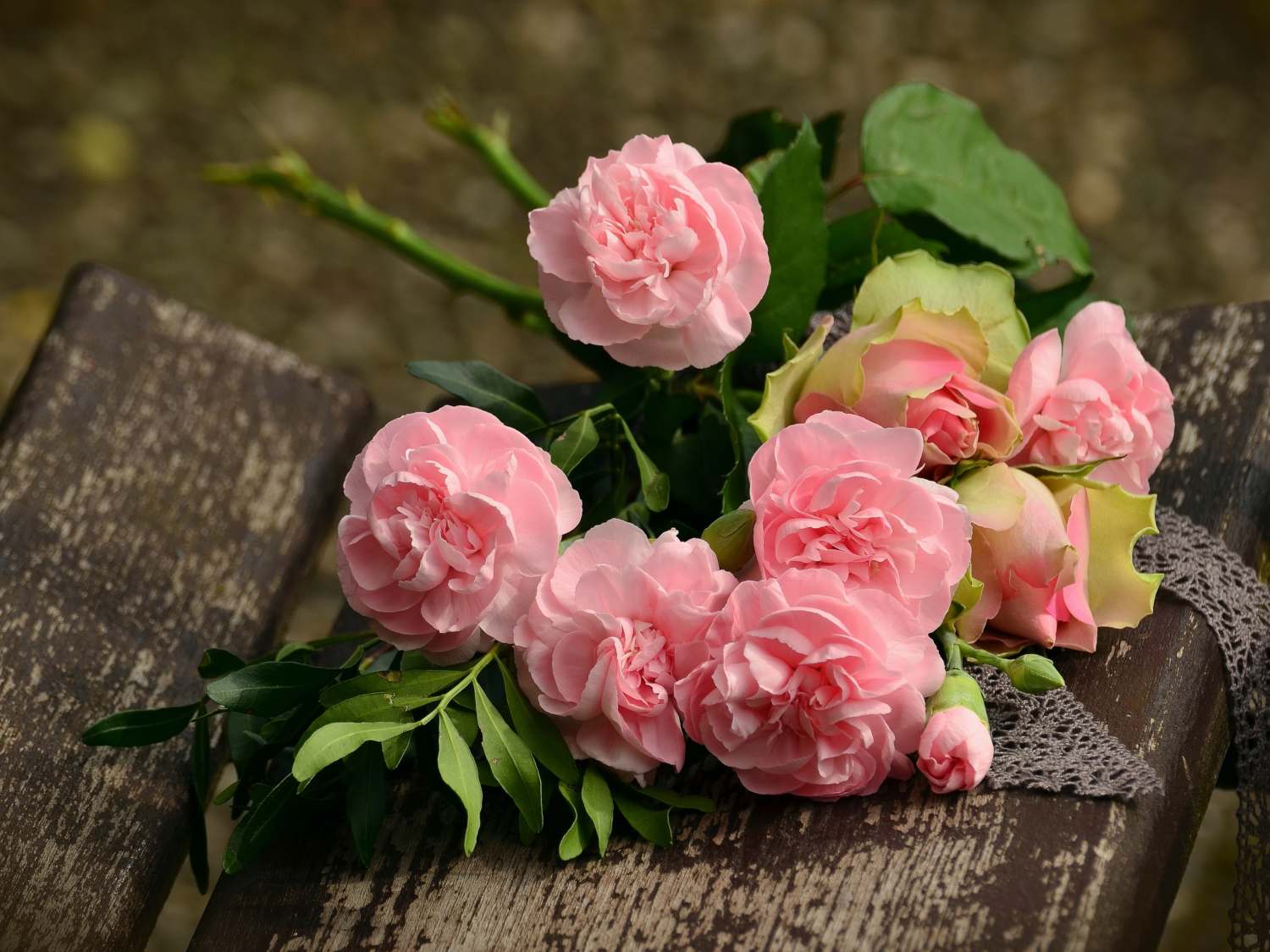
Roses are stunning garden flowers that you can also pick to enjoy their beauty and fragrance indoors.They make for beautiful bouquets and elegantly sit in their vase, naturally scenting the whole space. However, the queen of flowers requires some good practices once cut, to enjoy her beauty over time. Here’s the rundown on how to make the most of your cut rose flower.
→ Earlier in spring: tulip bouquet
There are many bush rose varieties whose flowers can be picked. Some lend themselves better to this use, including:
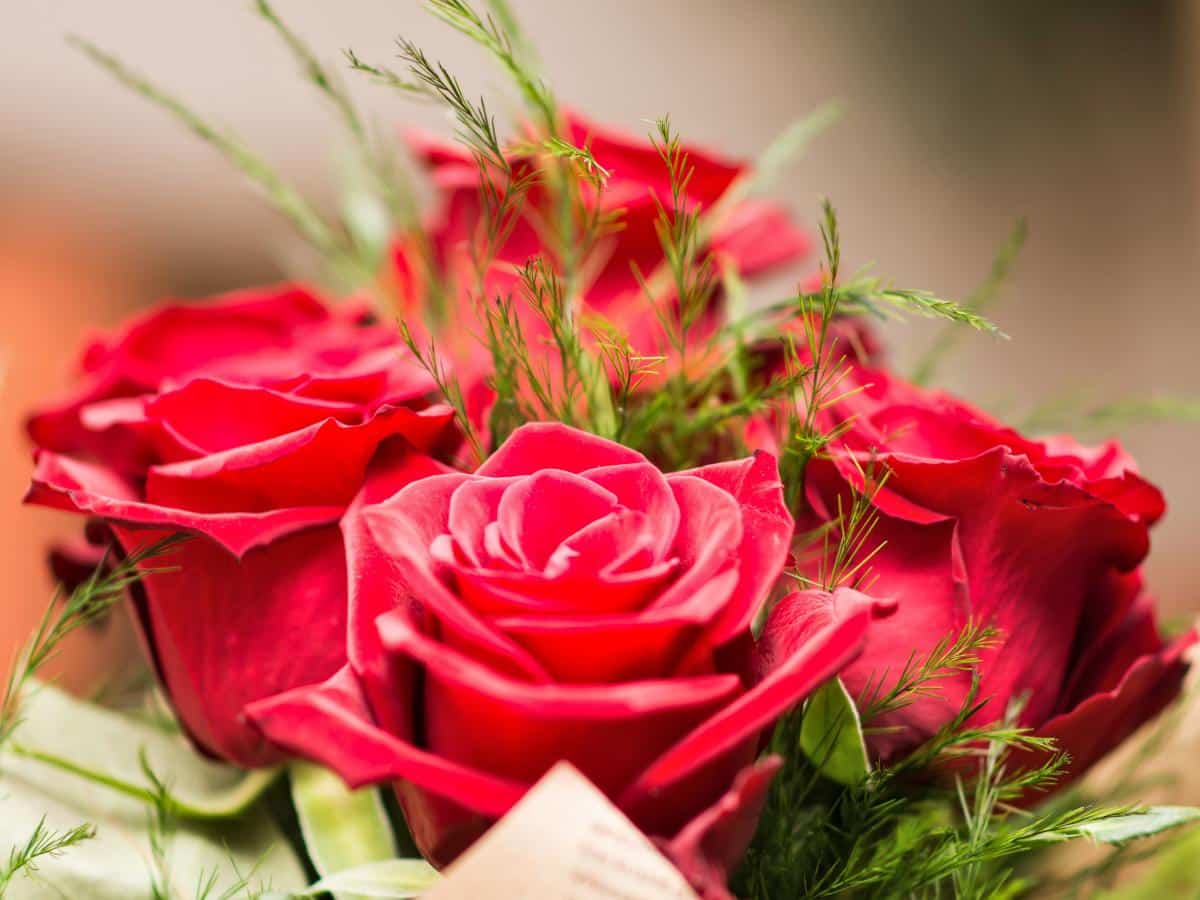
Note: Tea hybrids, otherwise known as large-flowered roses, generally last longer than old varieties.
Each of the roses recommended for picking brings something different to the vase — colour, scent or sheer staying power. Use this table to decide which to plant, or which to reach for with the secateurs.
| Variety | Flower colour | Scent | Why cut it |
|---|---|---|---|
| ‘Royal William’ | Velvety red | Strong | Emblematic, individual petals for a classic red bouquet |
| ‘Just Joey’ | Apricot | Not stated | Buds unfold beautifully, ideal in a terracotta vase |
| ‘Elina’ | Creamy yellow | Not stated | A hybrid bred for cutting, with long single stems |
| ‘Julia’s Rose’ | Coral | Not stated | Surprising colour, made for floral decoration |
| ‘Gertrude Jekyll’ | Dark pink | Old rose scent | Perfumes a whole room from the vase |
| ‘Golden Celebration’ and ‘Golden Fashion’ | Rich yellow | Not stated | Particularly long-lasting in water |
| ‘Rambling Rector’ | Not stated | Not stated | An old climber whose flowers hold for a long time once cut |
As a rule of thumb, tea hybrids — the large-flowered roses — outlast the old varieties in the vase.

Note: Roses that last the longest are those cut right when flower petals have just started to unfurl.
Cut back to just above an outward-facing bud sitting on a leaf with five leaflets, so the bush pushes out a strong replacement shoot.
Plunge each stem into a bucket of water straight away.
On a rosebush planted less than a year ago, take only short stems, because removing too much foliage slows a root system that is still establishing.
Once cut, the rose needs suitable exposure and plenty of hydration. To start with, avoid placing the vase near a window that gets too much sun. Direct light is too harsh for cut flowers. Indeed, full sunlight damages the colors of the cut rose, and degrades its petals. Similarly, avoid placing the vase near a heat source, which is just as devastating.
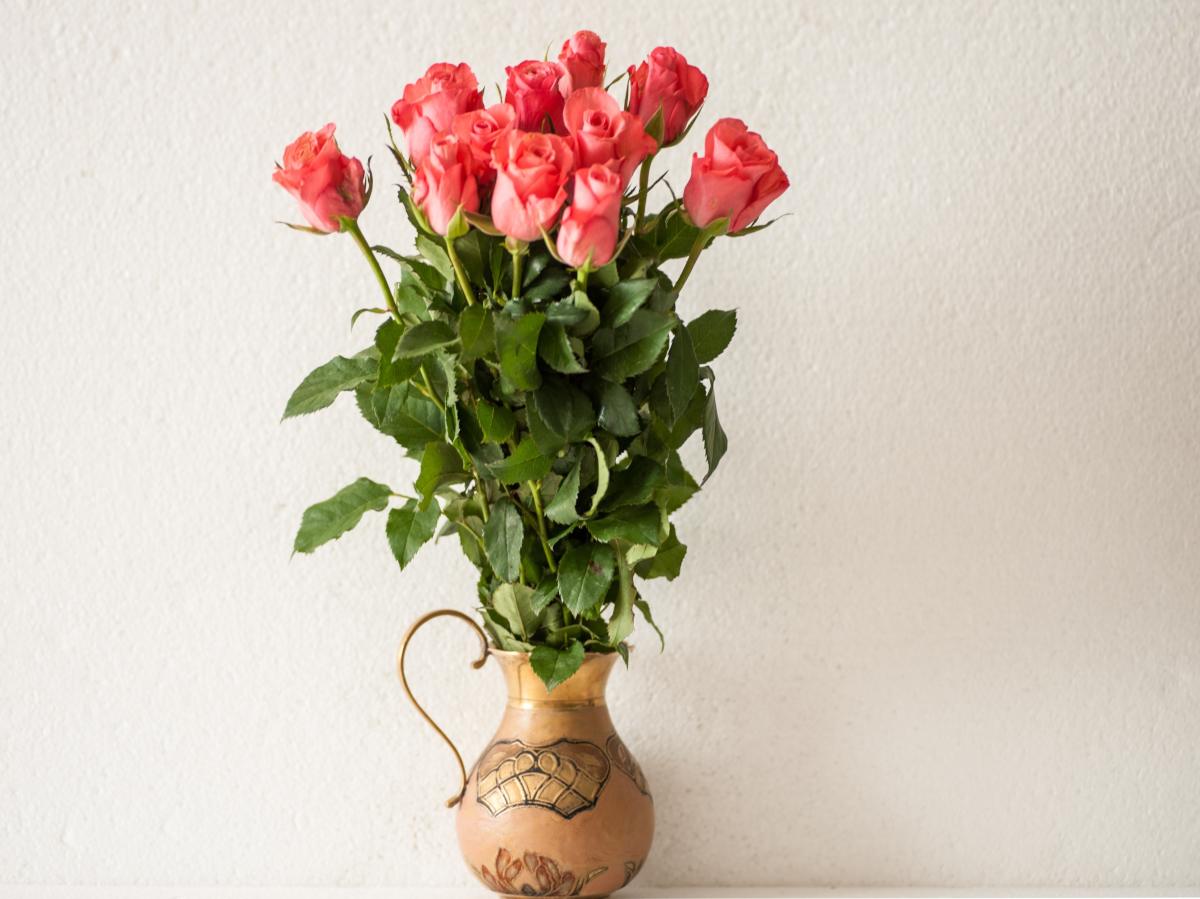
Hydration is another key point to keep your cut roses for a long time. They need clean and abundant water. So, make sure the vase is clean and fill it generously. The water should reach, at least, halfway up the stems of your roses.
Remember to change the vase’s water regularly. Ideally, renew it every day. This way, wilted flowers and leaves won’t be able to alter the water. Otherwise, decaying plant waste risks rotting the bouquet.
Also, it’s a good idea to regularly trim the stem of your cut roses, and remove the lowest leaves. In this way, the flower is better oxygenated and better hydrated.
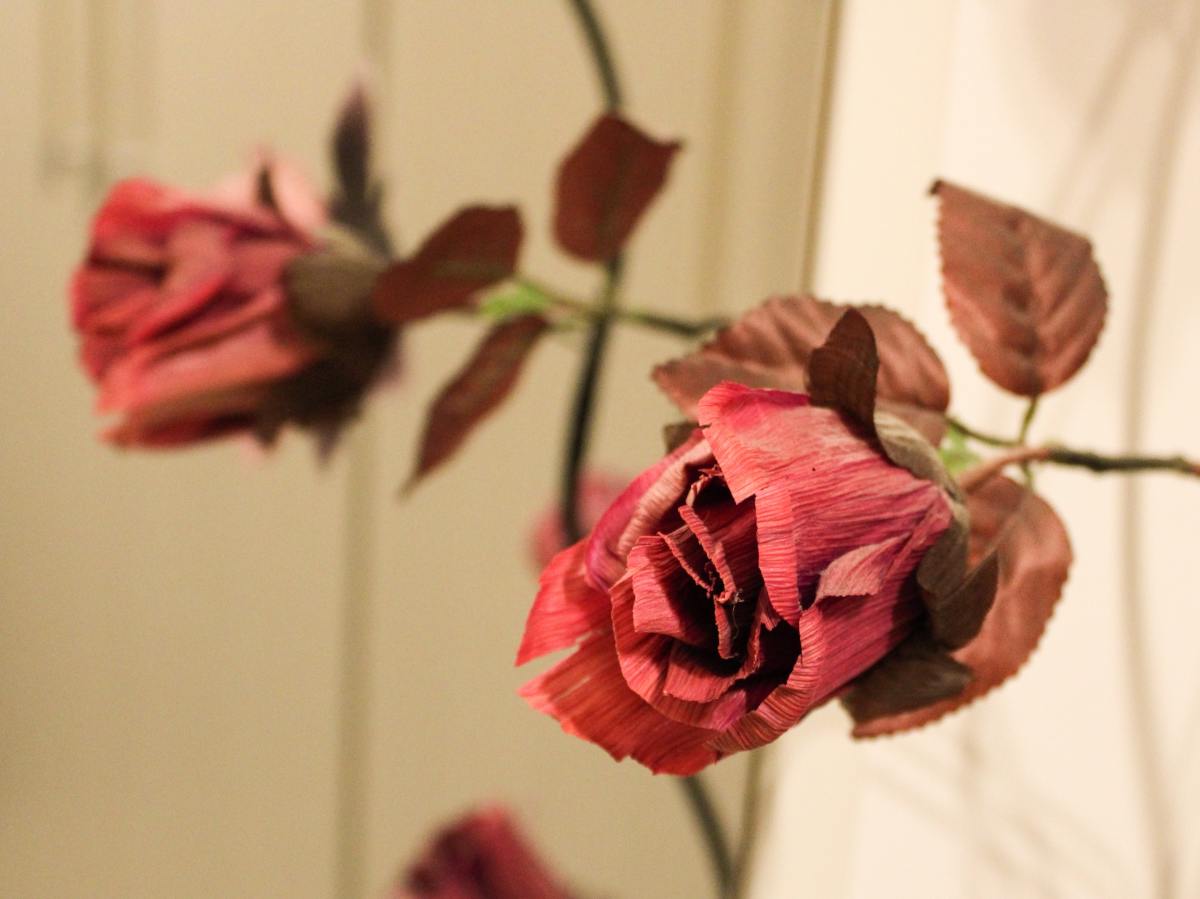
Despite our best efforts, cut roses always end up wilting. However, to indefinitely enjoy your bouquets, it’s possible to dry them. The process is straightforward and very enjoyable:
All that’s left is to store your dried rose and create your decoration.
Hang the roses upside down in small bunches so the stems dry straight rather than drooping.
Strip the leaves off before hanging, as they shrivel unattractively and trap moisture against the stem.
Dry them in the dark: light bleaches the petals.
Choose blooms that are still half open, because fully opened roses shed their petals as they dry.