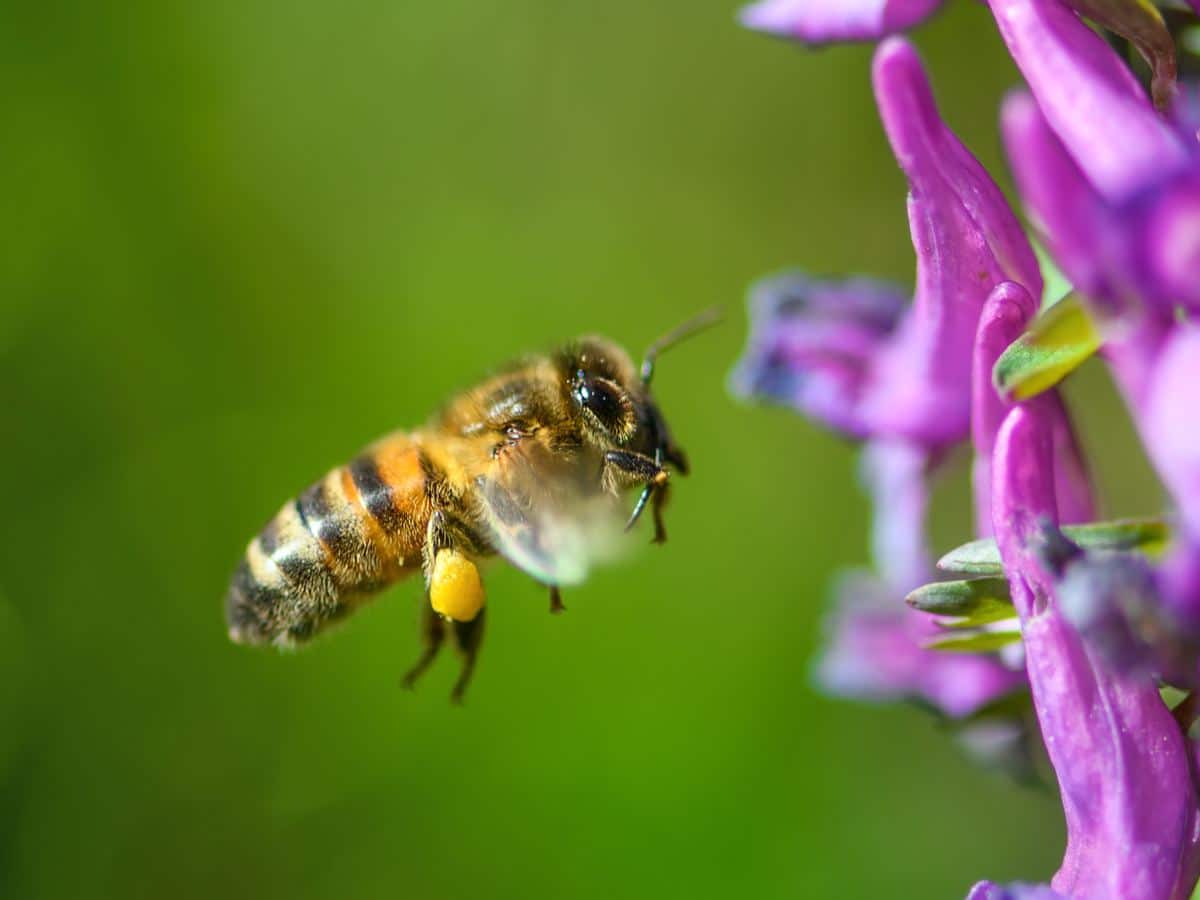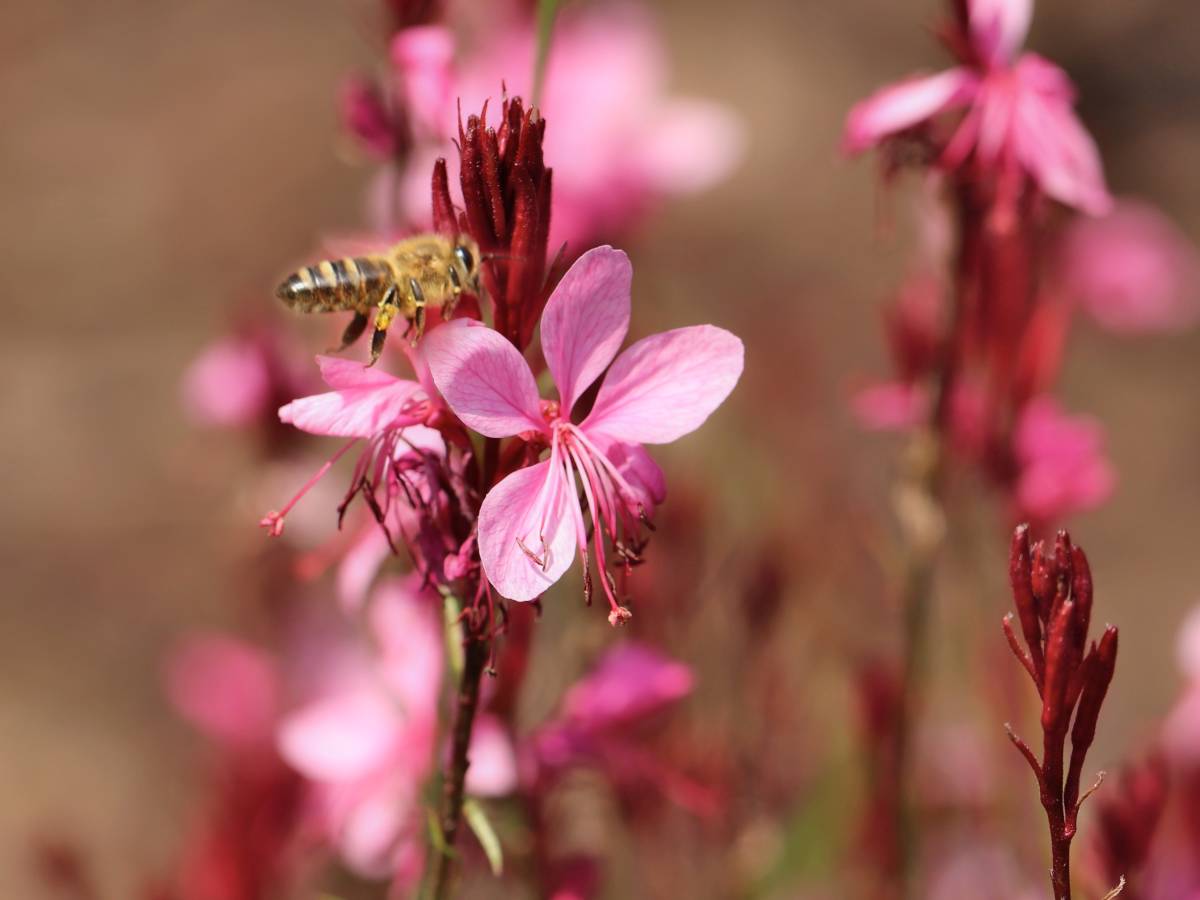
Slender stems carry a haze of small white and pink flowers from late spring to early autumn, renewing themselves all season: this is beeblossom (Gaura lindheimeri), a perennial bees work hard for its rich, sweet nectar. Give it full sun and well-drained soil, and it flowers two seasons long with almost no care.
| Name | Gaura lindheimeri |
|---|---|
| Family | Onagraceae (Willowherb) |
| Type | perennial |
| Exposure | full sun, part sun |
| Height | 26 to 32 inches (0.6 to 0.8 meters) |
| Soil | well-drained |
| Foliage | deciduous |
| Flowering | end spring → early fall |
It gifts us beautiful and durable blooming, two seasons long!
Plant in spring or fall, in a spot well-sheltered from wind.
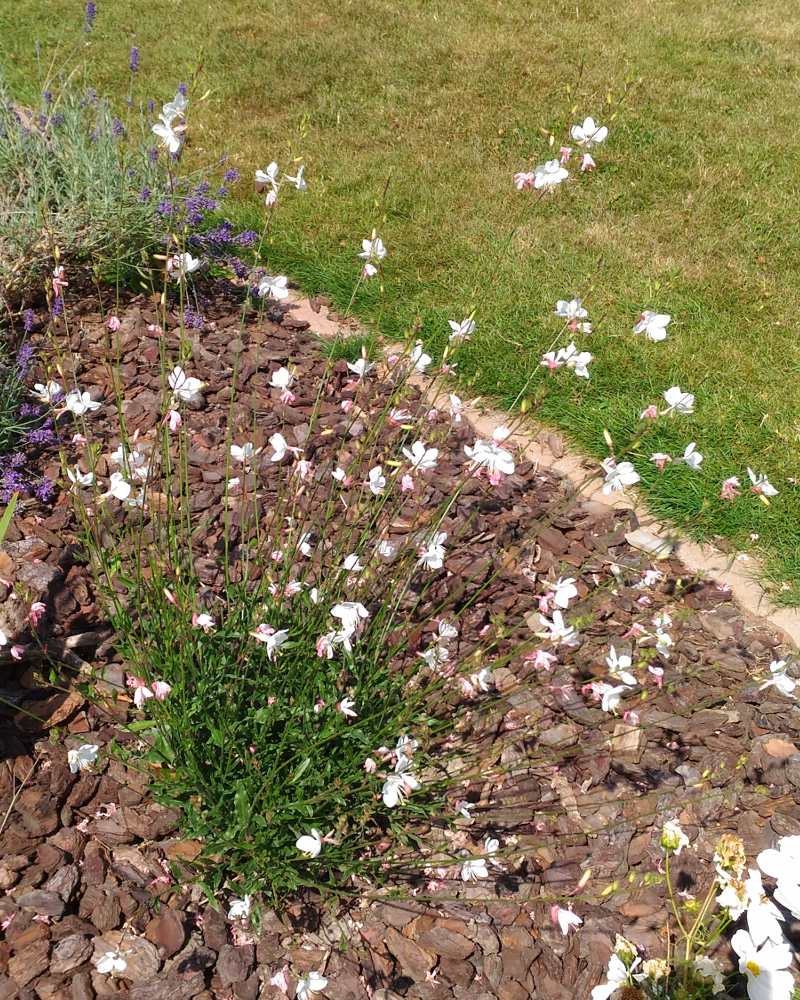
Take into consideration that you must space each plant at least 20 inches (50 cm) from the next, to give your gaura the space it needs to develop well.
Propagate through cuttings in spring and at the end of summer or through crown division in fall.
Note that crown division isn’t very easy because root are a type of taproot. The clump must be really large before you can split it.
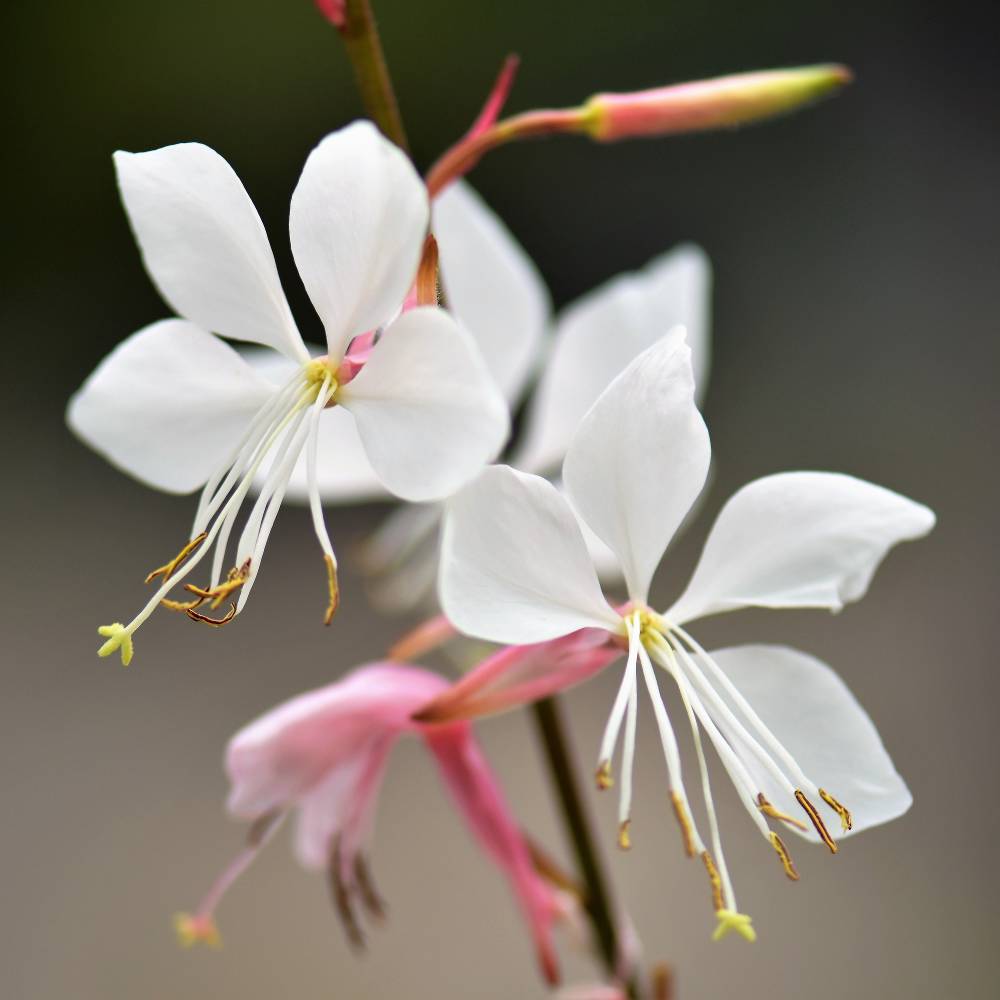
You can definitely grow gaura in a container to decorate a terrace or balcony.
Pots that are deeper than they are wide are better, unless they’re already 1 foot (30 cm) deep to begin with.
Named forms of Gaura lindheimeri differ mainly in flower colour and in how tall and airy the clump grows, which decides whether it belongs at the front of a border or in a pot. The selection below covers the types most commonly offered by garden centres and seed catalogues.
| Variety | Flower colour | Height | Best use |
|---|---|---|---|
| Sparkle White | White, pink flush | 50 cm (20 in) | Bedding from seed |
| Siskiyou Pink | Deep rose pink | 75 cm (30 in) | Mixed sunny border |
| Crimson Butterflies | Deep pink, red foliage | 45 cm (18 in) | Containers, edging |
| The Bride | Pure white | 80 cm (32 in) | White and pastel schemes |
| Whirling Butterflies | White, pink buds | 90 cm (36 in) | Airy border drifts |
| Rosyjane | White, pink edge | 70 cm (28 in) | Front of border, pots |
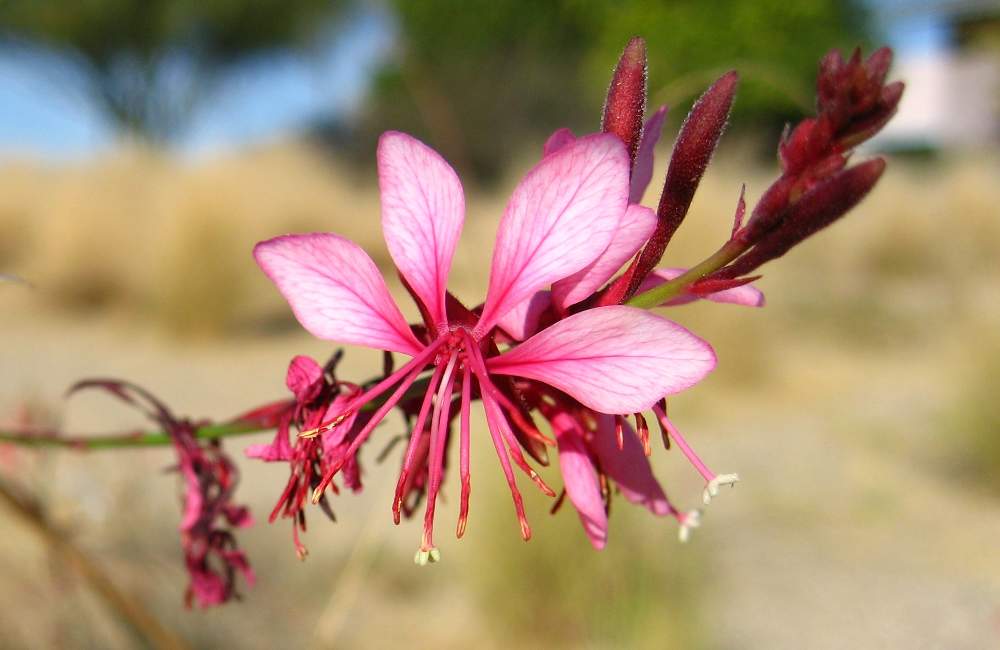
Once it has settled in well, you won’t need to do much at all.
Eliminate wilted flowers regularly, cutting off the entire stem.
At the end of winter or in fall, cut back all the flower stems before the vegetation phase returns.
Gaura is a plant that needs lots of water to truly thrive.
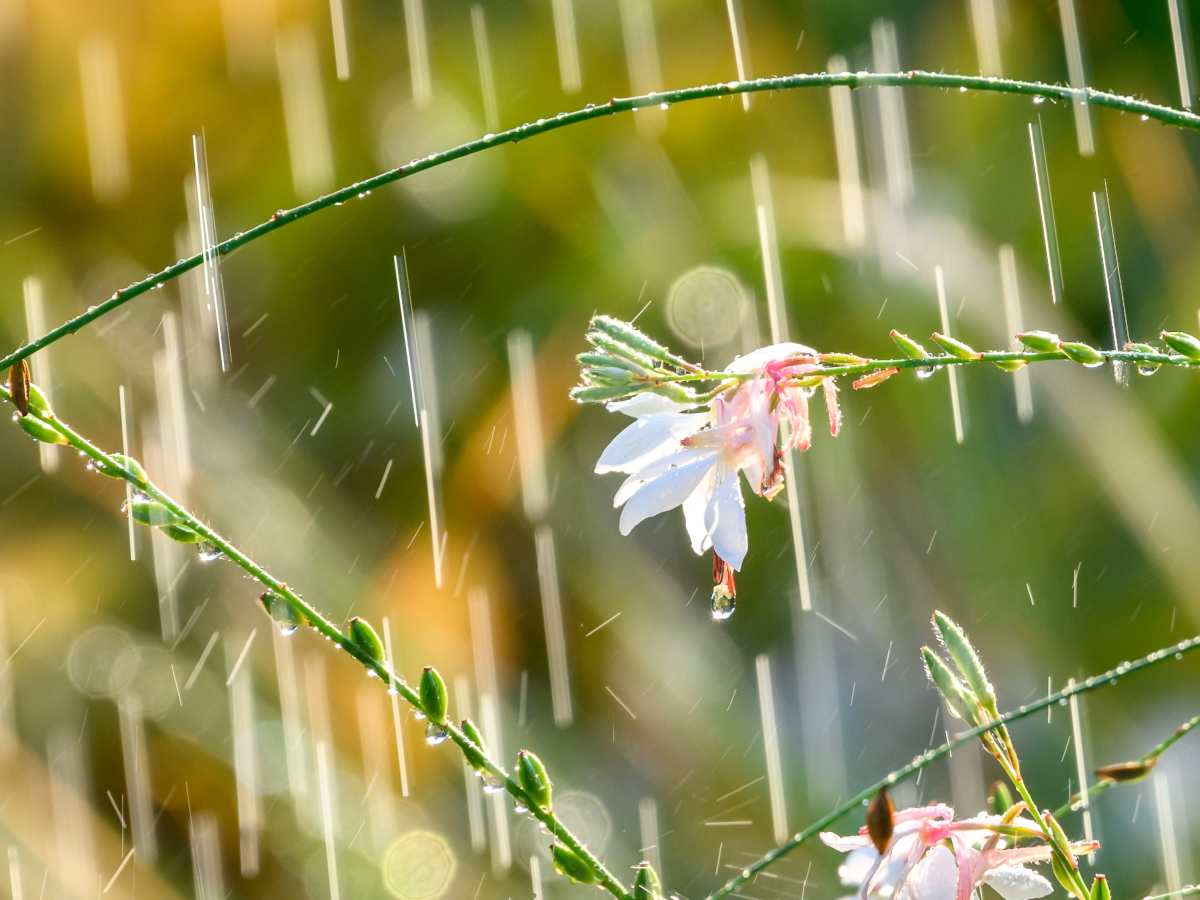
If stems start drying out, it means your beeblossom needs more water.
As is the case for most flower plants, beeblossom will grow much better and have longer-lasting blooms if you feed it well.
Adding nutrients to the soil around it will boost blooming from spring to fall.
Gaura asks for very little once settled in, but a handful of well-timed gestures keep the blooming going from spring to fall. Here is what to do, and when.
| Task | When | What to do | Why |
|---|---|---|---|
| Deadheading | Throughout flowering | Remove wilted flowers, cutting off the entire stem | Multiplies the blooming |
| Cutting back | End of winter or in fall | Cut back all the flower stems | Clears the clump before growth restarts |
| Watering in the garden | Only if it doesn’t rain | Water early morning or evening | Reduces evaporation |
| Watering in a pot | As soon as the surface is dry | Water often, especially in case of heat | Pots dry out fast and stems then dry out |
| Feeding | Spring, then several times over the season | Flower plant or tomato fertilizer, added when watering | Boosts blooming from spring to fall |
| Mulching | After planting | Light mulch of cocoa hulls, flax or pine bark | Controls evaporation and locks weeds out |
Keep to this rhythm and the clump will flower two seasons long with almost no other attention.
A very cute perennial with abundant blooming that constantly renews itself from spring to fall, Gaura is relatively easy to grow.
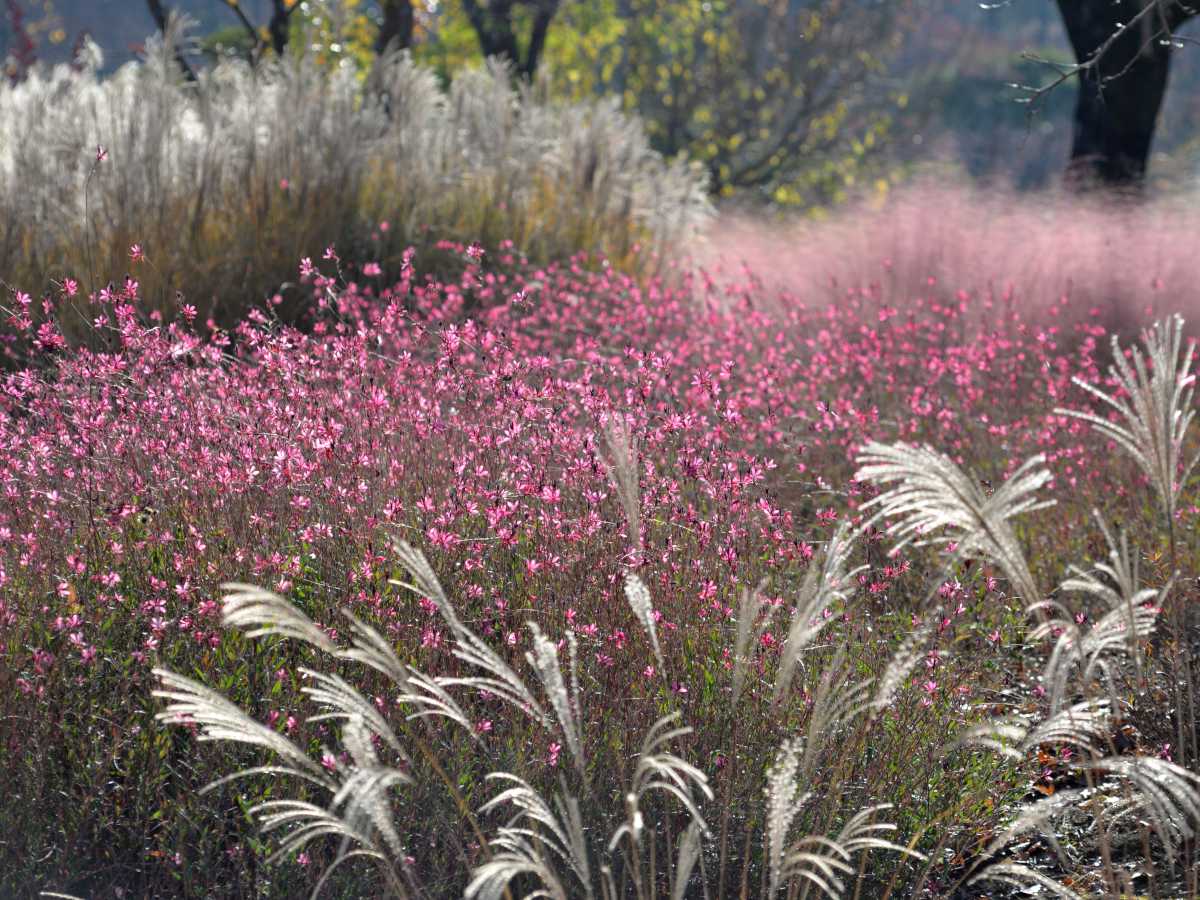
You can set it up in a flower bed or in a pot. In the picture above/right, it covers a swath between patches of Miscanthus and Muhlenbergia.
Particularly melliferous, beeblossom offers magnificent flowers in white and pink tones that will provide joy and light to your garden.
Mulch derived from cocoa hulls or pine bark mulch (shown above in the planting section) is perfect when paired with this plant, and it will hinder weed growth, too.