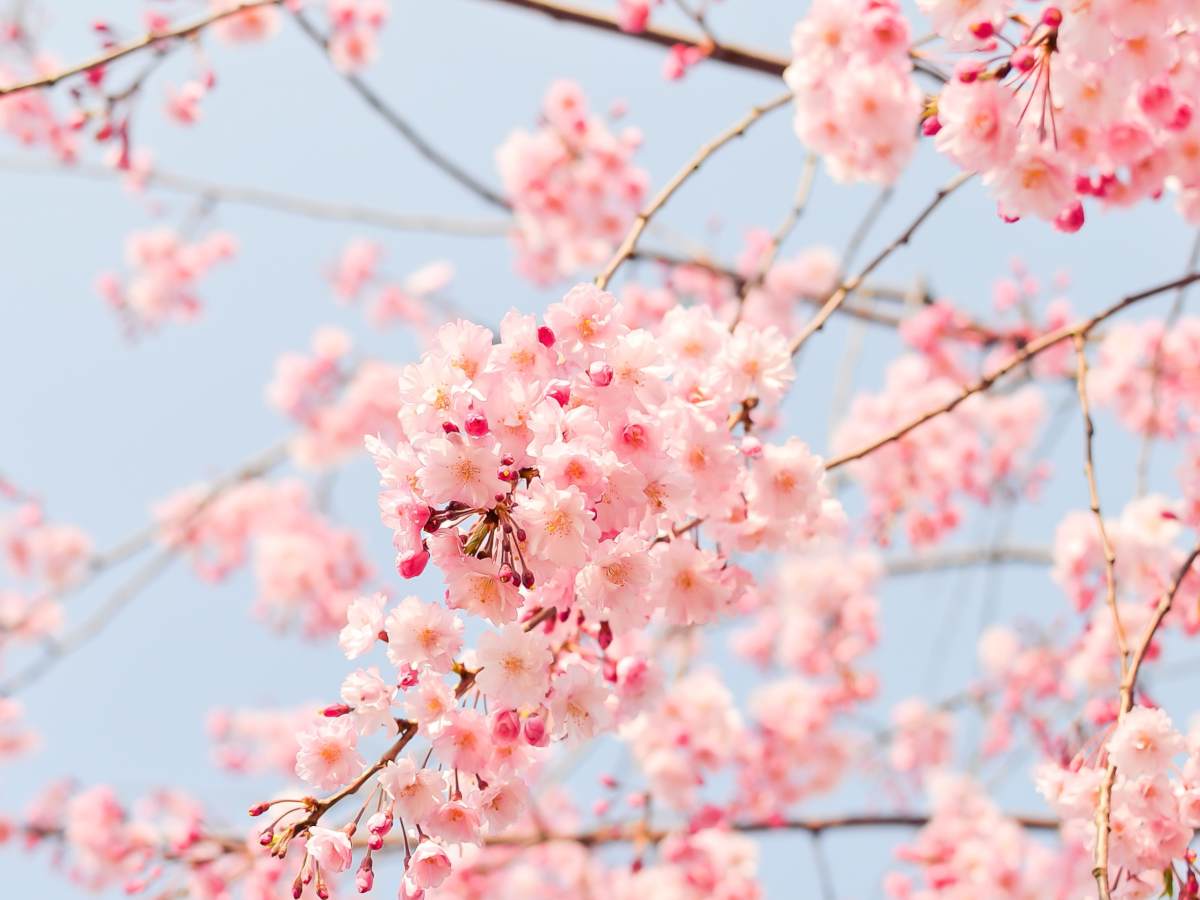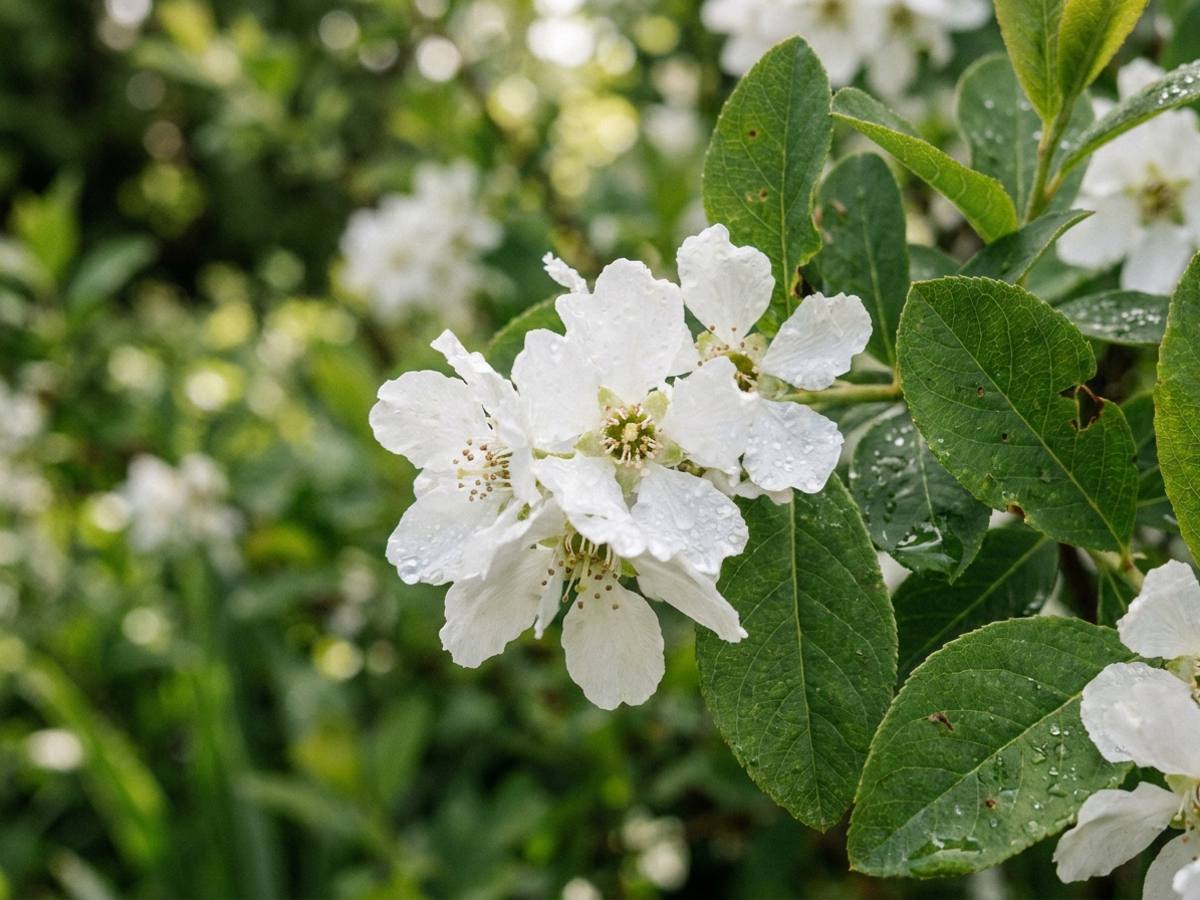
Few spring shrubs stop visitors in their tracks quite like the pearlbush, whose arching stems are strung with round, pearl-like buds that pop open into pure white, five-petalled flowers. Exochorda racemosa forms a graceful, fountain-shaped deciduous shrub that works beautifully as a specimen on a lawn or woven into a mixed border. Its most distinctive trait is that fleeting fortnight in mid-spring when the whole plant appears frosted with snow — an effect no other hardy shrub quite matches.
Pearlbush flowers most generously in full sun, where the wood ripens properly and buds form along the whole length of each stem. It tolerates light dappled shade, but plants grown under trees tend to become sparse and flower thinly. Shelter from strong, drying winds helps protect the delicate blossom during its short season.
Give it a fertile, moisture-retentive but free-draining soil — loam or improved sandy loam is ideal. It performs poorly in waterlogged clay, so lighten heavy ground with grit and organic matter before planting. Neutral to slightly acidic soil suits it best; on thin, chalky sites the leaves often turn yellow with lime-induced chlorosis.
This is a genuinely tough shrub from northern China, unfazed by hard British and northern European winters and reliably hardy across USDA zones 4–8. In mild coastal gardens it may flower a fortnight early, whilst in colder inland areas late frosts occasionally scorch open blooms.
Autumn is the ideal planting season, giving roots time to settle before the spring flush. Container-grown plants can also go in during spring, provided you water attentively through the first summer.
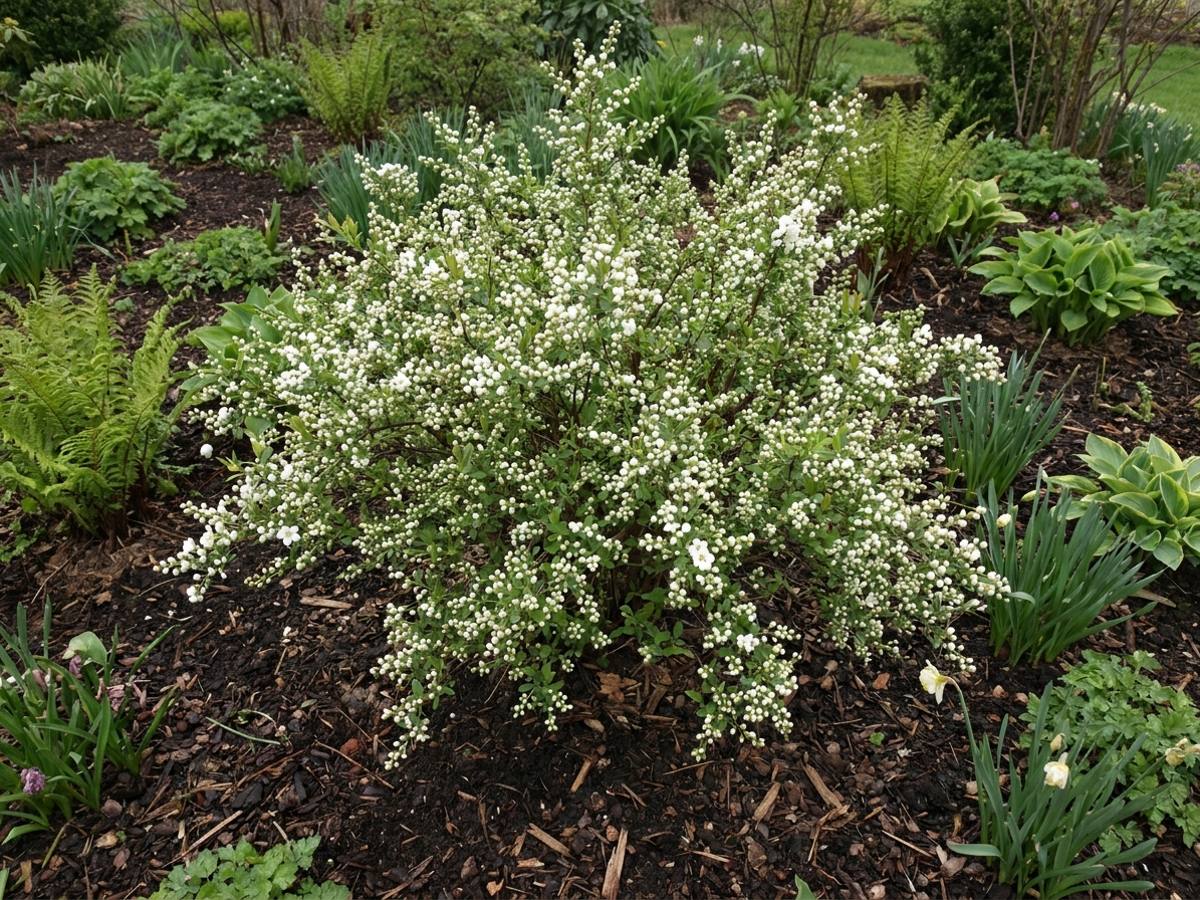
Pearlbush asks for very little, but the few jobs it does need are tied tightly to the season. This table shows what to do when, and what to leave alone.
| Season | Main job | Feeding and watering | Watch out for |
|---|---|---|---|
| Early to mid-spring | Feed as the buds swell, then prune as soon as flowering ends in late spring | General-purpose organic fertiliser, or blood, fish and bone at the base | Pruning late removes the wood that carries next spring’s flowers |
| Summer | Mulch lighter soils with compost to conserve moisture | Water young plants deeply once a week in dry spells | Stop feeding after midsummer, as soft late growth may not ripen |
| Autumn | Plant new shrubs, transplant young ones or peg down layers | Top up the mulch after leaf fall | Do not tidy the leaves away before they turn butter-yellow |
| Winter | Check that wind has not loosened recently planted specimens, and firm them back | Nothing needed | No winter protection is required in the open ground |
In short, the only date that really matters is pruning immediately after the flowers fade.
Spring: Scatter a general-purpose organic fertiliser or blood, fish and bone around the base as buds swell in March. Once flowering finishes in late May, prune immediately — this shrub blooms on the previous year’s wood, so later cutting removes next spring’s display. Shorten flowered shoots by roughly a third and take out one or two of the oldest stems at ground level.
Summer: Water young plants deeply once a week in dry spells; established specimens cope well with short droughts thanks to deep roots. Avoid feeding after midsummer, as soft late growth may not ripen in time for winter. A summer mulch of compost helps conserve moisture on lighter soils.
Autumn: The foliage turns soft butter-yellow before falling, so leave it to colour rather than tidying early. This is the best moment to plant new shrubs, transplant young ones, or peg down layers. Top up mulch after leaf fall to protect roots and feed the soil.
Winter: Fully dormant and completely hardy, pearlbush needs no protection in the open ground. Simply check that autumn winds have not loosened the rootball of recently planted specimens, and firm them back if necessary.
The species is lovely, but several selections and closely related hybrids offer better shape, size or flower quality.