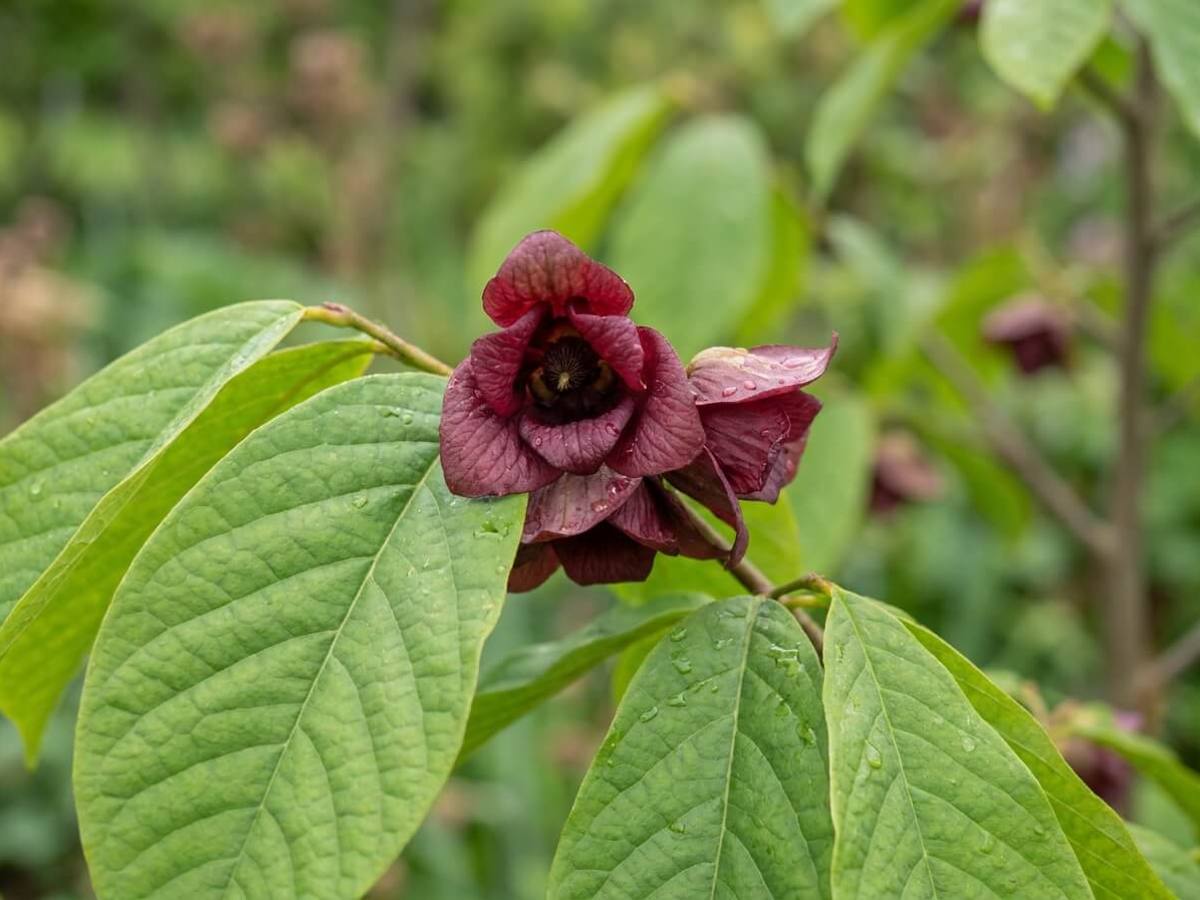
Asimina triloba, the pawpaw, is a handsome small tree with huge drooping leaves that give a distinctly tropical air to a temperate garden, turning clear butter-yellow in autumn. It carries curious maroon, bell-shaped flowers in spring, followed by the largest edible fruit native to North America — custard-textured and tasting of banana, mango and vanilla. It is the only hardy member of an otherwise tropical family, which makes it one of the most intriguing fruit trees a gardener can grow.
Growing conditions
Mature pawpaws fruit best in full sun, ideally with six hours or more of direct light. Young plants, however, are adapted to the shaded woodland floor and resent full exposure until their third season. Shelter from wind matters too: the leaves can reach 30 cm long and tatter badly in an exposed site.
Give it deep, fertile, humus-rich soil that stays moist but never waterlogged — pawpaw grows naturally on river terraces and bottomland. The ideal pH is 5.5 to 7.0; thin chalky soils cause stubborn iron chlorosis and should be avoided or replaced with a large, enriched planting area. The tree forms a brittle taproot, so loose, stone-free ground pays dividends.
Pawpaw is reliably hardy in winter but needs summer heat to ripen fruit, roughly 150–170 frost-free days. In cooler maritime regions such as Britain and Ireland, plant against a warm south- or west-facing wall, or in the warmest sheltered pocket of the garden.
How to plant Asimina
Plant container-grown trees in spring, once the soil has warmed and growth is beginning. Autumn planting is riskier because the root system is slow to re-establish in cold, wet soil.
Spacing: allow 4–5 m between trees — close enough for insects to carry pollen between them, far enough to avoid crowding.
Depth: set the tree at exactly the depth it grew in its pot; the graft union, if present, must stay well clear of the soil.
Soil preparation: fork a generous barrowload of well-rotted leaf mould or garden compost into a planting area at least a metre across.
Watering in: soak thoroughly after planting and keep the root zone damp all through the first two summers; drought stress kills more young pawpaws than cold does.
Propagation: sow fresh seed that has never been allowed to dry, after 100–120 days of cold moist stratification at 0–4 °C; named cultivars must be chip-budded or whip-and-tongue grafted, as cuttings almost never root.
Asimina triloba growing in a naturalistic garden border
Care through the seasons
Spring: Feed in March or early April with a balanced organic fertiliser or a top-dressing of compost. The maroon flowers appear before the leaves — hand-pollinate with a soft brush, moving pollen from a tree whose anthers are shedding brown, crumbly pollen onto the glossy green stigmas of a different tree. Pawpaws are largely self-incompatible, so two unrelated clones are essential.
Summer: Water deeply in dry spells, especially while fruit is swelling in July and August. Mulch 7–10 cm deep with bark or leaf mould, keeping it off the trunk. Thin heavy clusters to two or three fruits so branches do not snap under the weight.
Autumn: Fruit ripens from mid-September into October, when it softens, yellows slightly and detaches with a gentle tug. Remove unwanted root suckers at this point, and top up the mulch before the ground cools. Little pruning is needed beyond taking out dead, crossing or damaged wood.
Winter: The tree is fully dormant and needs no protection in all but the coldest gardens, though young trunks benefit from a loose guard against rabbits, deer bark-stripping and winter sunscald.
Best varieties to grow
Choose two different named cultivars for cross-pollination, favouring early-ripening selections in cooler climates.
‘Sunflower’ — a reliable, large-fruited Kansas selection with yellow flesh and few seeds, reputedly partially self-fertile but far better with a partner.
‘Shenandoah’ — a Peterson selection with mild, creamy, custard-like flesh; an excellent introduction for those new to pawpaw flavour.
‘Susquehanna’ — very large fruit with thick skin, firm flesh and few seeds, ripening a little later than most.
‘Prima 1216’ — early ripening and productive, the usual recommendation for short or cool growing seasons in northern Europe.
Pests, diseases and common problems
Poor or no fruit set: almost always a pollination failure rather than disease. Plant two genetically distinct trees within 10 m and hand-pollinate by brush in April and May for a dependable crop.
Phyllosticta leaf and fruit spot: black blotches on leaves and corky patches on fruit skins, worse in humid summers. It is cosmetic; rake up and compost fallen leaves, and improve air movement by thinning congested growth.
Pawpaw peduncle borer: a tiny caterpillar tunnels into the flower stalk, causing buds to blacken and drop. Pick off and destroy affected flowers; damage is rarely severe enough to warrant anything more.
🌿 Nature & Garden Newsletter
Gardening tips, recipes & seasonal advice, twice a week.