
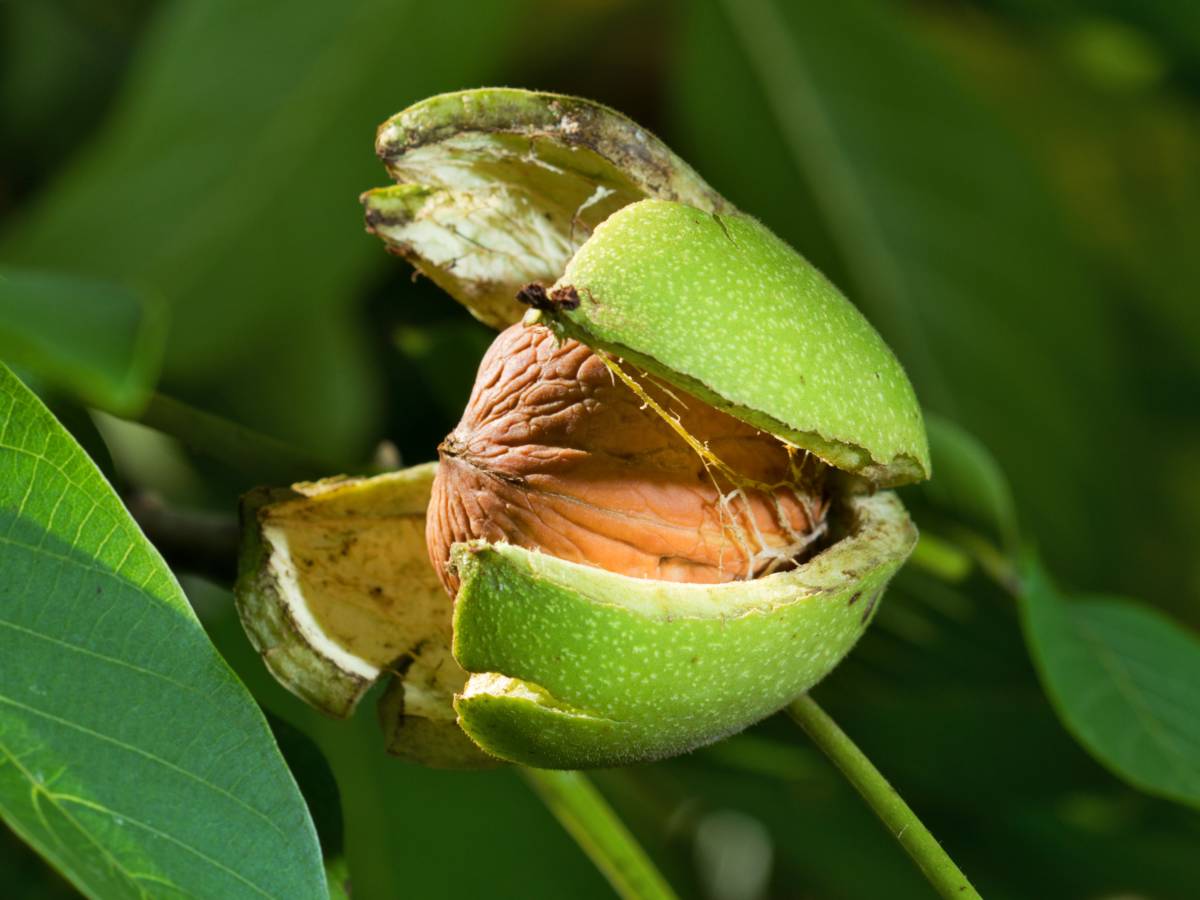
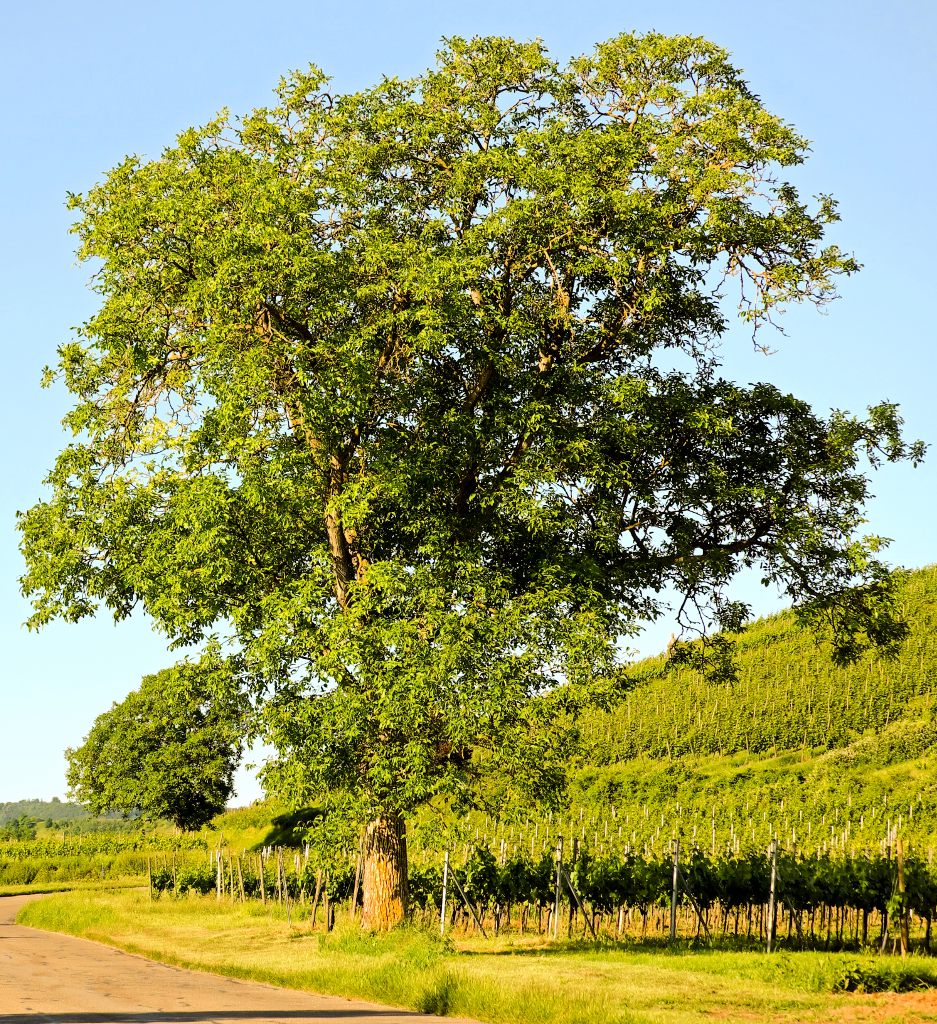
Catkins dangle before the leaves unfurl on a tree that climbs to 85 feet and spreads just as wide. Grown for nuts eaten fresh or dried, and for the oil pressed from them, the walnut (Juglans regia) asks for full sun and a wide open space — and repays that room with harvests and deep summer shade.
| Name | Juglans regia |
|---|---|
| Family | Juglandaceae |
| Type | fruit tree |
| Height | 50-85 feet (15-25 meters) |
| Climate | temperate or warm |
| Exposure | full sun |
| Soil | deep, ordinary, well-drained |
| Foliage | deciduous |
| Flowering | end of spring |
| Harvest | early to mid-fall |
Growing and caring for it from planting to pruning will increase your harvest and speed the growth of your walnut tree.
If the most proper timing is to be chosen, plant your walnut tree in fall to speed root development up before the winter frost spells.
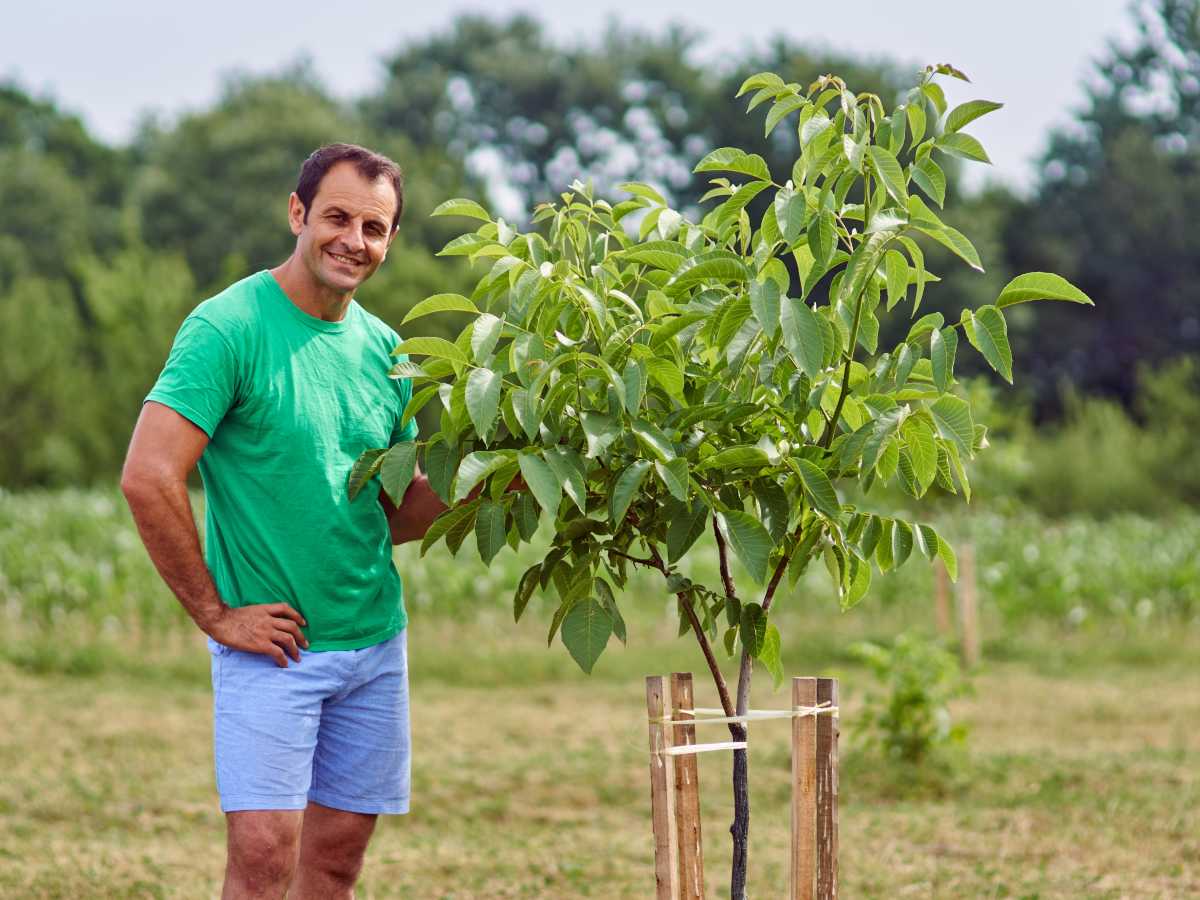
It can also be planted in spring though, when purchased in a container, or also in summer as long as periods of sweltering heat are avoided.
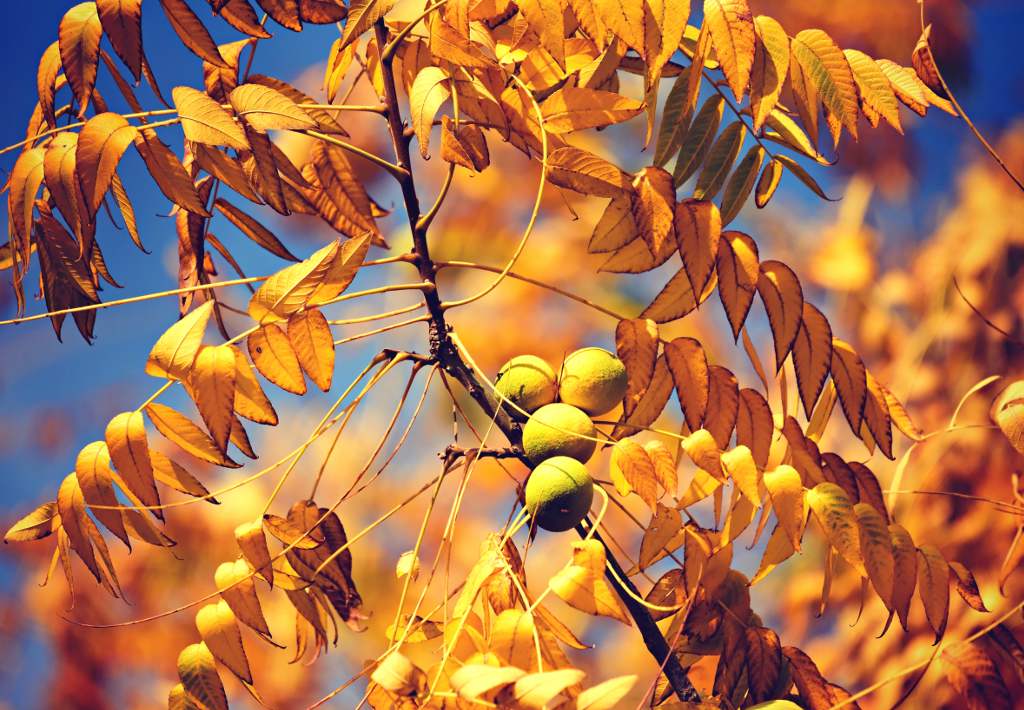
The walnut tree hates being pruned. Each branch removed opens a door to infection and to a great many diseases such as fungus and rot.
This particular practice must thus be reduced to the utmost, because it can damage the tree and alter the upcoming harvests.
If you do need to prune because the tree is growing too large, perform the pruning during the month of September.
Protect the wound with pruning paste or pine tar.
Walnuts are harvested as early as September and sometimes until November depending on where it’s planted.
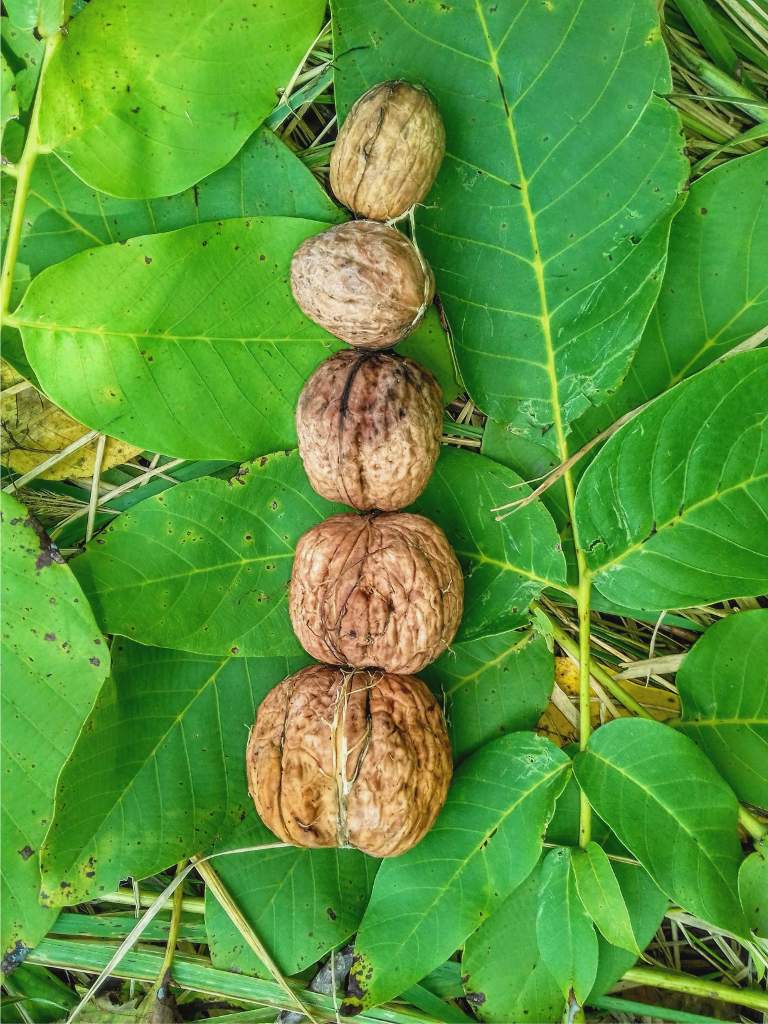
Once they’ve been harvested, the fresh walnuts can be nibbled within at most a couple weeks.
Another option is to dry them off in the sun after having pried the husk away. This prepares them for long-term storage, easily up to 1 or 2 years.
The article describes several ways of taking the crop in and of keeping it afterwards. The choice depends on whether you want walnuts to nibble straight away or nuts that will last.
| Method | Signal or condition | How long they keep |
|---|---|---|
| Pick just before natural fall | Husk has just started splitting apart | Fresh nuts, a couple of weeks at most |
| Let them drop to the ground | Walnuts falling on their own | Maturity guaranteed, eat fresh |
| Dry in the sun, husk removed | One layer thick, turned over often | Easily 1 or 2 years |
| Dry indoors | When the sun is hiding away | Long-term storage, in a dry, well-aerated room |
Whichever way you gather them, the husk itself has no culinary use.
Among these later-flowering types, ‘Broadview’ and ‘Buccaneer’ are the ones to seek out in gardens farther north, as their delayed bloom helps the crop escape the late spring frost spells that would otherwise cost you both flowers and nuts.
The walnut tree is, all in all, a very elegant tree, well balanced, and for which the blooming will color your garden at the beginning of spring.
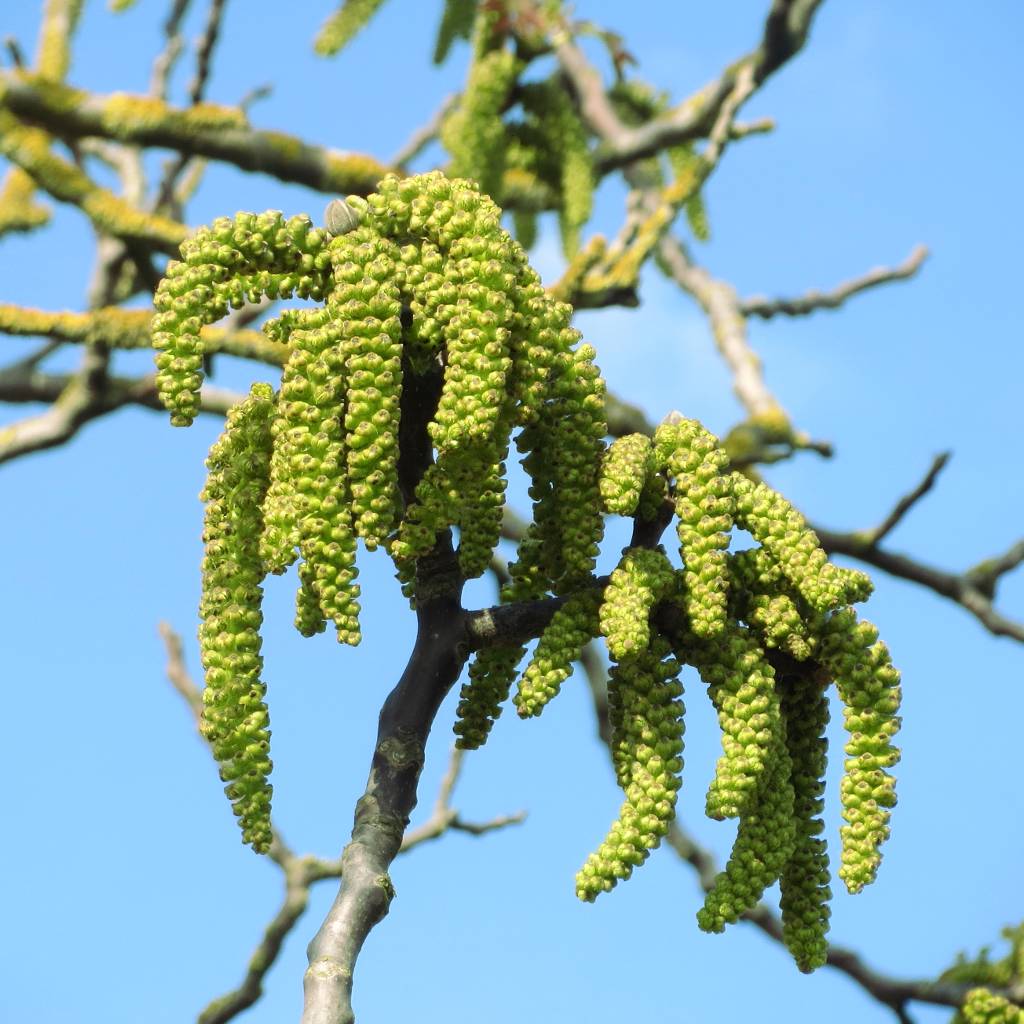
Thanks to its cute catkin flowers that often appear before the leaves unfurl, you’ll take full advantage of its very decorative properties.
There are some varieties that do flower a bit later which are recommended in locations located farther North, to avoid losing the crop and blooming to late spring frost spells.
The walnut husk is the outer, coarse shell that surrounds the walnut itself. It doesn’t have any culinary value, but it is used as a pigment when producing oil-based paint colors.
Freshly picked walnut as well as dried walnut is used for cooking, and oil can be extracted from it, too.
As mentioned above, the impressive size a walnut tree can reach makes it virtually mandatory to plant it in a wide open space.
This fact, however, will make it a great shaded spot for you to relax even in the midst of the hottest summer days!
Vital info is missing: how fast does it grow?
In the first 3 years, in the next 3 years and so on.
That’s a good point, but it is rather difficult to give even a rule of thumb to answer this. For example, when conditions are idea – more than 3 feet of rich soil, full sun, no weeds, and little wind, the black walnut species can grow up to 4 feet (120 cm) every year!
In year 1, expect growth of about 2 feet (60 cm), and a two-year old sapling would be 3 to 4 feet (up to 120 cm). Depending on conditions, growth is usually from 2 to 4 feet every year until it reaches it adult height, usually at around 20-30 years of age.
In reality, growth is rarely that rapid, especially for the fruit-bearing walnut (or common walnut).
Thank you for sharing this information