Sweetfern: the gardener’s complete guide to growing and care
0
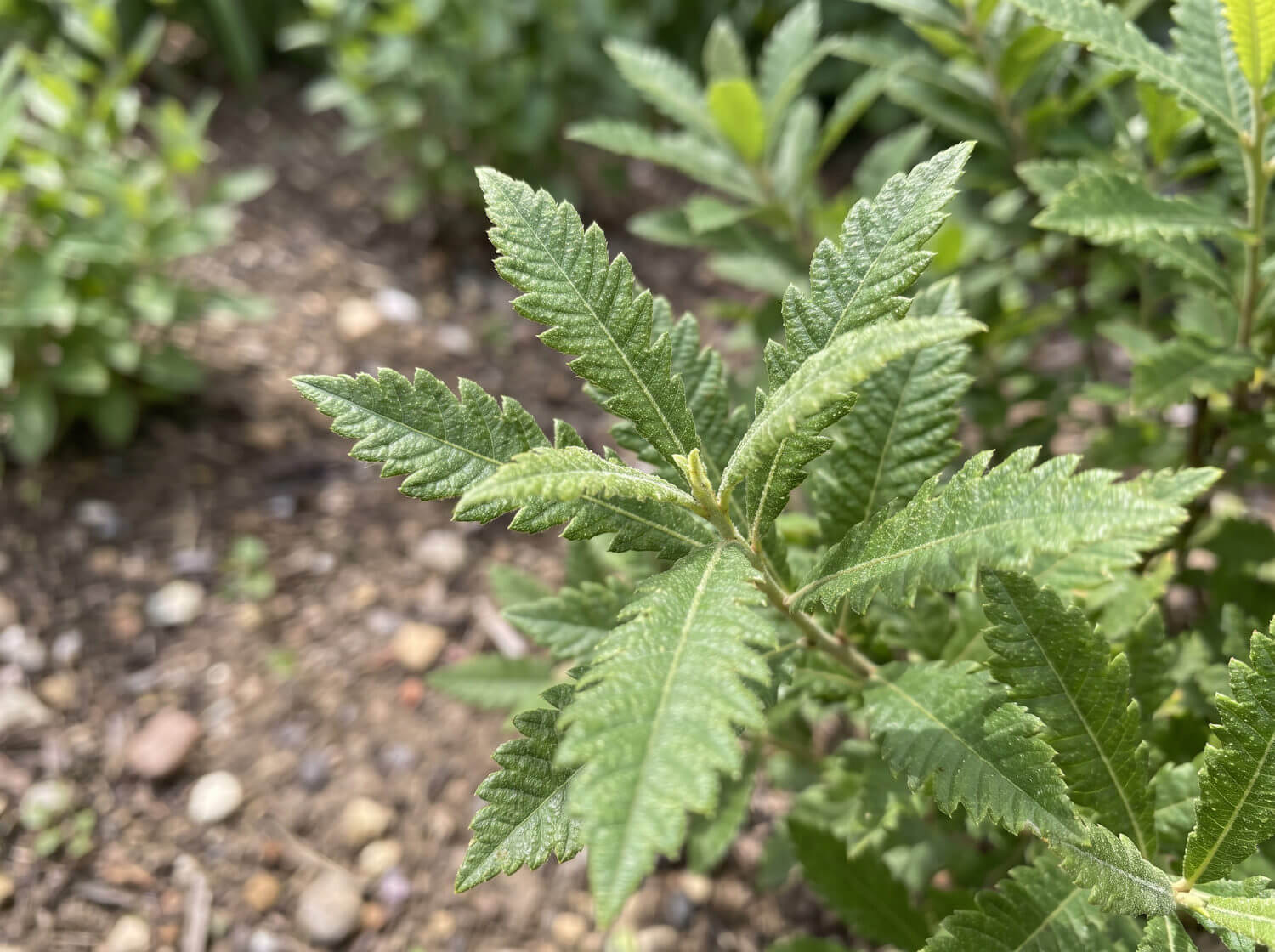
Sweet fern is not a fern at all, but a low, suckering deciduous shrub whose narrow, deeply lobed leaves release a warm, resinous, bayberry-like scent at the slightest brush. It forms soft, waist-high colonies that knit together poor sandy banks where little else will root, and it turns a quiet russet-bronze in autumn. For gardeners with thin, acidic, hungry soil, it is one of the most obliging shrubs in cultivation.
Growing conditions
Give sweet fern the sunniest, most exposed spot you have. It tolerates light dappled shade beneath pines or birches, but colonies grown in shade become sparse, leggy and far less aromatic. Wind is no problem at all — this is a plant of open heath, roadside cuttings and coastal sand.
Soil matters more than anything else. Sweet fern demands acidic ground, ideally pH 4.5 to 6.0, and sharp drainage; sand, gravel, peaty sand and thin acidic loam all suit it. On chalk or limey clay the leaves yellow between the veins and the plant slowly starves, so do not attempt it on alkaline soil.
Cold is irrelevant to it — this is one of the hardiest shrubs you can grow, unfazed by prolonged frost. Heavy, wet winter soil is the real killer, so in high-rainfall regions plant on a slope, a bank or a raised bed of sandy grit.
How to plant Comptonia
Plant container-grown stock in spring, once the soil has warmed, so the roots have a full season to establish before winter wet arrives. Autumn planting is riskier on cold, poorly drained sites.
Spacing: set plants 1–1.5 m apart for groundcover; they will knit into a continuous colony within three to four seasons.
Depth: plant at exactly the same level as the pot compost — burying the crown invites rot in the brittle, shallow root system.
Soil preparation: do not enrich. Loosen compacted ground and fork in grit or coarse sand if needed; skip manure, fertiliser and mushroom compost entirely.
Watering in: soak thoroughly at planting, then water weekly through the first summer only. Established plants rarely need irrigation.
Propagation: lift rooted suckers in early spring, or take 7–10 cm root cuttings in late winter and lay them horizontally in gritty compost under cover.
Sweetfern growing in a naturalistic garden border
Care through the seasons
Spring: The reddish-brown catkins open in April and May, well before the shrub looks fully clothed. This is the moment to cut out dead or winter-damaged wood and, if a colony has grown ragged, to shear the whole clump back to 15–20 cm — it regenerates vigorously from the rhizomes. Top-dress with pine needles or composted bark rather than feeding.
Summer: Little is required beyond the occasional deep soak in prolonged drought during the first two years. Run a spade or a sharp edging iron around the colony in midsummer to sever stray rhizomes if it is creeping into a border. Brush the foliage as you pass — the oil is strongest in warm weather.
Autumn: Leaves turn a muted bronze-russet and often cling into early winter. Avoid cutting the plant back in autumn; the dormant top growth helps shelter the crown. Clear fallen deciduous leaves from the colony so the low shoots do not sit under a wet mat.
Winter: Entirely dormant and fully hardy, needing no protection whatsoever. The slender twigs and persistent bur-like fruits give quiet structure through the coldest months.
Best varieties to grow
Named cultivars are extremely scarce — almost all plants offered are the wild species, so choose on provenance and propagation method rather than cultivar name.
Comptonia peregrina (species) — the standard garden form, reliably aromatic, 60–120 cm tall and spreading; the only option most nurseries list.
Comptonia peregrina var. asplenifolia — a historic botanical variant name still used in the trade for narrow-leaved, finely cut forms; now generally treated as a synonym of the species.
Locally propagated, nodulated stock — plants raised from root cuttings with Frankia already present in the roots establish far faster than seed-raised plants from distant sources.
Myrica gale (bog myrtle) — not a cultivar but the obvious alternative where soil is acidic yet permanently wet, offering the same resinous scent in boggy ground.
Pests, diseases and common problems
Lime-induced chlorosis: yellow leaves with green veins, weak growth and dieback indicate alkaline soil or hard tap water. Move the plant to acidic ground, mulch with pine needles and irrigate with rainwater only.
Sweetfern blister rust (Cronartium comptoniae): orange spore pustules appear on leaf undersides in summer; the fungus is harmless to the shrub but damages two- and three-needled pines, which are its alternate hosts. Avoid planting sweet fern within 100 m of young jack, lodgepole or Scots pines, and remove affected leaves.
Transplant failure: wilting and collapse weeks after planting usually trace back to disturbed roots or waterlogging. Never attempt to move an established colony — propagate from suckers or root cuttings instead, and always plant into free-draining ground.
🌿 Nature & Garden Newsletter
Gardening tips, recipes & seasonal advice, twice a week.