Buttonbush: your complete guide to growing and caring for this native shrub
0
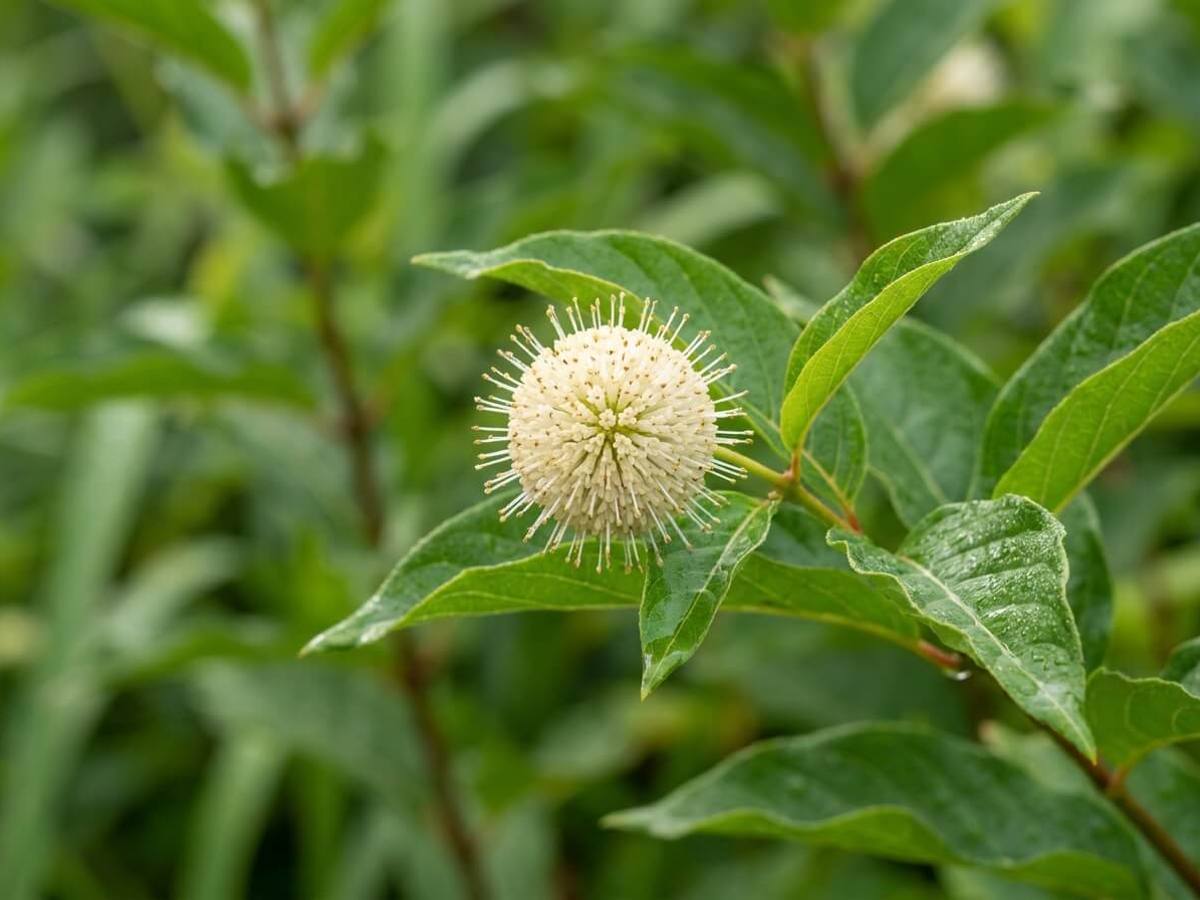
Buttonbush is one of those shrubs that stops visitors in their tracks in midsummer, when it covers itself in perfectly spherical, creamy-white flowerheads bristling with protruding styles — like small pincushions or miniature fireworks. It is a superb plant for damp ground, pond margins and rain gardens, where few other woody plants will thrive, and it hums with bees and butterflies for weeks. Its single most distinctive trait is its tolerance of standing water, which makes it the go-to shrub for the soggy corner nothing else will fill.
Growing conditions
Buttonbush flowers most freely in full sun, producing a denser, more compact framework and a far heavier crop of blooms. It copes happily with partial shade — four to five hours of direct light is enough — but plants in deeper shade become open, leggy and shy to flower. Shelter is not essential; the flexible stems shrug off wind.
Moisture matters far more than soil texture. Heavy clay, silt and seasonally flooded ground all suit it, and it will sit in up to 90 cm of standing water for extended periods without sulking. A pH of 5.5 to 7.5 is ideal, though it tolerates mildly alkaline conditions; sharply drained sandy soils are the one situation where it genuinely struggles.
Hardiness is excellent across the British Isles, northern Europe and most of North America. In hotter, drier regions, give it a north- or east-facing aspect and reliable irrigation, as drought stress shows quickly as scorched leaf margins.
How to plant Cephalanthus
Autumn and early spring are both good planting windows, with autumn preferred in milder areas so roots establish before the first summer. Avoid planting into frozen or waterlogged-and-frozen ground in midwinter.
Space plants 1.5–2 m apart for a loose informal group, or 1.2 m apart for a quicker screen or pond-edge thicket.
Plant so the top of the rootball sits level with the surrounding soil — never bury the stem base, even in wet ground.
Fork plenty of leaf mould or well-rotted compost into the planting area to boost moisture retention; there is no need to add grit or improve drainage.
Water in thoroughly, using 10–15 litres per plant, and keep the rootball damp throughout the first two growing seasons.
Propagate from softwood cuttings taken in June, which root in three to four weeks in a humid propagator, or simply peg a low stem into damp soil to layer it.
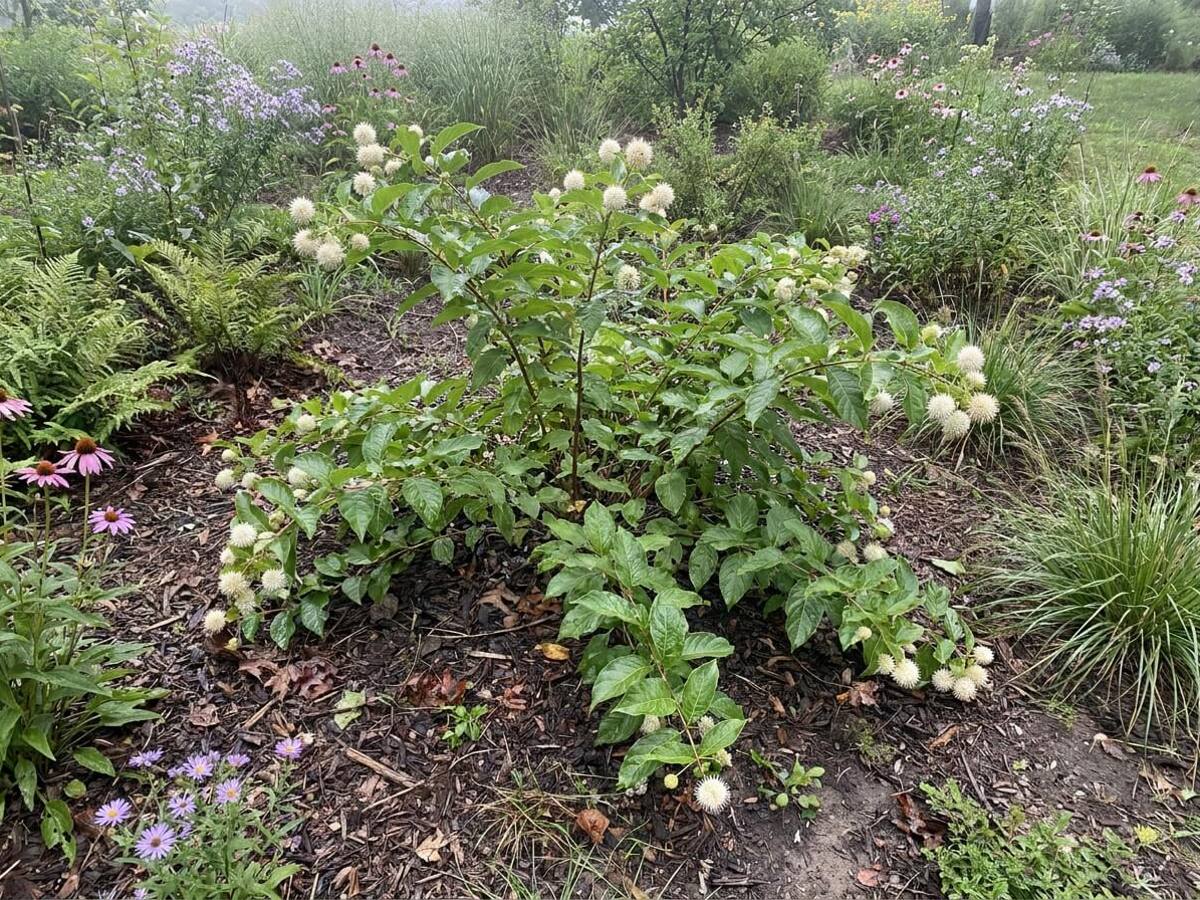
Cephalanthus occidentalis growing in a naturalistic garden border
Care through the seasons
Spring: Prune in late winter or very early spring, before growth begins — flowers appear on the current season’s wood, so even hard cutting back costs you nothing. Mulch generously with compost or composted bark to lock in moisture. Do not panic at bare stems in April or May; buttonbush is simply one of the last shrubs to break bud.
Summer: Water deeply during dry spells, especially on plants not sited near water, as drought causes premature leaf drop. The flowerheads open from July and are best left alone — deadheading removes the ornamental button-like seedheads that follow. Suckers appearing at the base can be pulled out in July if you want a tidier outline.
Autumn: Foliage turns a modest yellow before falling, and the spherical fruiting heads persist on bare stems. Leave them: they feed wildfowl and finches and look striking under frost. Autumn is the ideal time to plant, move young specimens or divide suckering clumps.
Winter: Fully dormant and completely hardy, needing no protection whatsoever. Container-grown plants are the one exception — wrap the pot to prevent the rootball freezing solid.
Best varieties to grow
Breeders have focused on reducing the species’ considerable size, which makes buttonbush far more usable in smaller gardens.
‘Sugar Shack’ — the most compact option at around 1–1.2 m, with glossy foliage and bright red fruiting heads that follow the flowers.
‘Fiber Optics’ — neat and rounded at 1.2–1.8 m, exceptionally free-flowering and good as an informal low hedge.
‘Sputnik’ — a vigorous selection reaching 2–3 m with notably large, long-styled flowerheads; excellent for naturalistic pond planting.
‘Magical Moonlight’ — upright to about 2 m, with abundant flowers and strong, well-furnished stems that resist flopping.
Pests, diseases and common problems
Leaf scorch and early defoliation: brown, crisping leaf margins in July and August almost always indicate drought rather than disease. Mulch deeply and water weekly in dry weather; recovery the following spring is reliable.
Powdery mildew: a white bloom on leaves in late summer, usually on crowded or shaded plants. Improve air movement by thinning a few stems in late winter and clear fallen leaves; no spraying is needed.
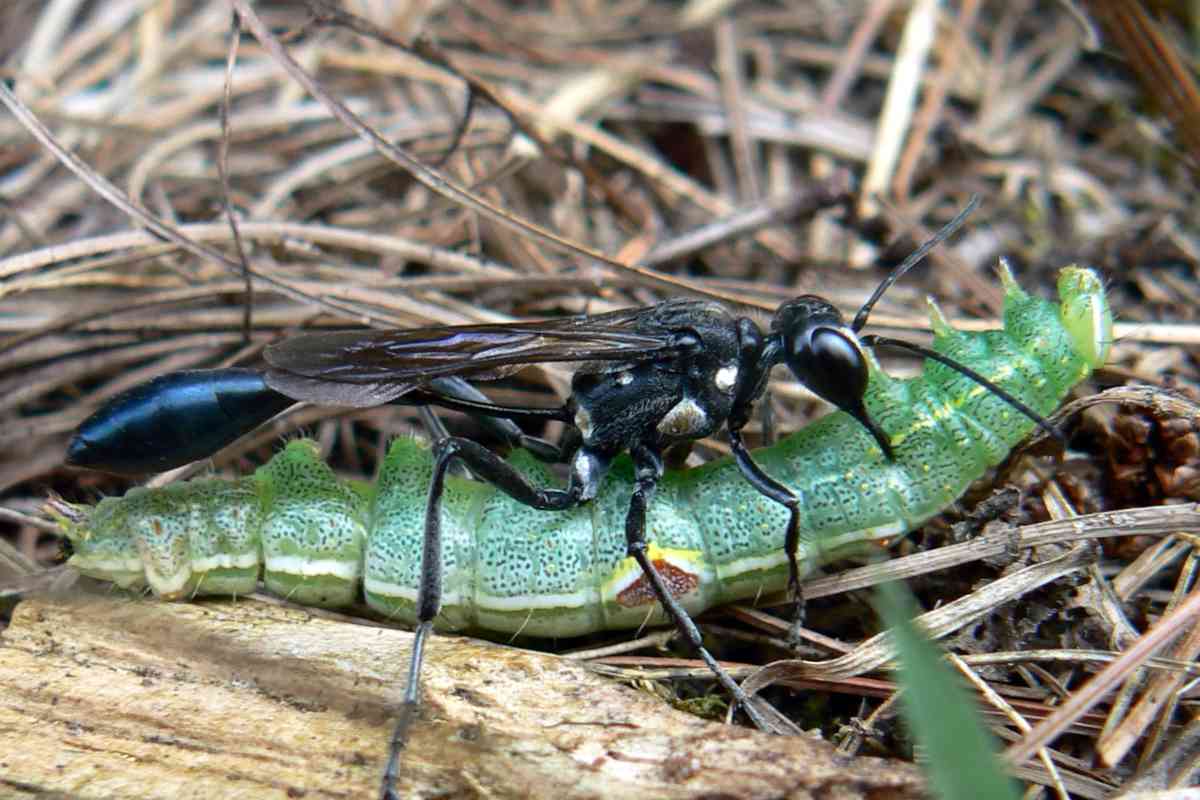
Sphinx moth caterpillars: large green caterpillars, including those of hydrangea and titan sphinx moths, occasionally strip shoots. Damage is cosmetic and short-lived — leave them be, as they are part of the plant’s considerable wildlife value.
🌿 Nature & Garden Newsletter
Gardening tips, recipes & seasonal advice, twice a week.