You looked at your basil yesterday and it seemed fine, right? Today, there’s a tall spike shooting up from the center, the leaves are getting smaller, and if you’ve already tasted one — yeah, it’s definitely gone bitter. Basil bolts in hot weather the moment it thinks its job is done, and June, for us in the Northern Hemisphere, is peak bolting season. But here’s the good news: five minutes with your fingers can stop it, reset that plant, and keep you in fresh leaves for months.
Basil’s an annual. Its whole job? Flower, set seed, die. And it’s been quietly watching the thermometer. Once temps push consistently above 25°C (77°F) and the days get long, something just clicks inside the plant. It stops thinking about leaves. It starts thinking about legacy. Gotta pass those genes on!
That central flower spike? It’s the plant’s big announcement: “I’m done here, folks.” It’s diverting all its energy away from foliage production now. Essential oils drop, and that characteristic sweet scent gets replaced by something sharper, almost medicinal. The leaves don’t just taste worse — they actually contain less of the volatile compounds (linalool, eugenol) that make basil worth growing in the first place. And UC Davis’s herb research has even shown that basil’s aromatic oil content peaks just before flowering and nosedives fast once that bolting process kicks in.
So, a few specific triggers you should definitely know about:
That last one surprises people, doesn’t it? Harvesting regularly? It’s actually one of the most effective bolting delays you’ve got. I’ll tell you what, I ignored my Genovese basil for about three weeks last July — just let it sit there looking pretty on the windowsill — and it punished me immediately. Never again.
Dangerous? Nah, not at all. But that window of good flavor? It closes faster than most gardeners expect, I’m telling you. Once the flower spike appears, you’ve got about 48–72 hours before that bitterness becomes noticeable in cooked dishes too — not just raw ones. So, act fast!
A fully flowered, seeded-out basil plant is, let’s face it, essentially spent. The leaves shrink, toughen, and they’ve lost their oils almost entirely. You can eat them, technically. But you really wouldn’t want to. Flavor? Gone. Full stop.
There’s one upside to letting it go fully to seed, I suppose: if you collect the dried seed heads before they shatter, you’ve got next year’s plants for free. I always keep a small paper envelope (a used W-2 form, to be precise) in the shed just for this. But that’s a deliberate choice, isn’t it? Not a consolation prize after accidentally missing the bolting window. You shouldn’t ever aim for this.
For container basil on patios or balconies, bolting often signals the end of that particular plant unless you intervene *fast*. If you’ve got basil in a pot, this is well worth reading, honestly: potted basil for terraces, balconies, decks and indoors covers the watering and positioning tricks that genuinely slow that bolt cycle down. It’s not a faff, I promise.
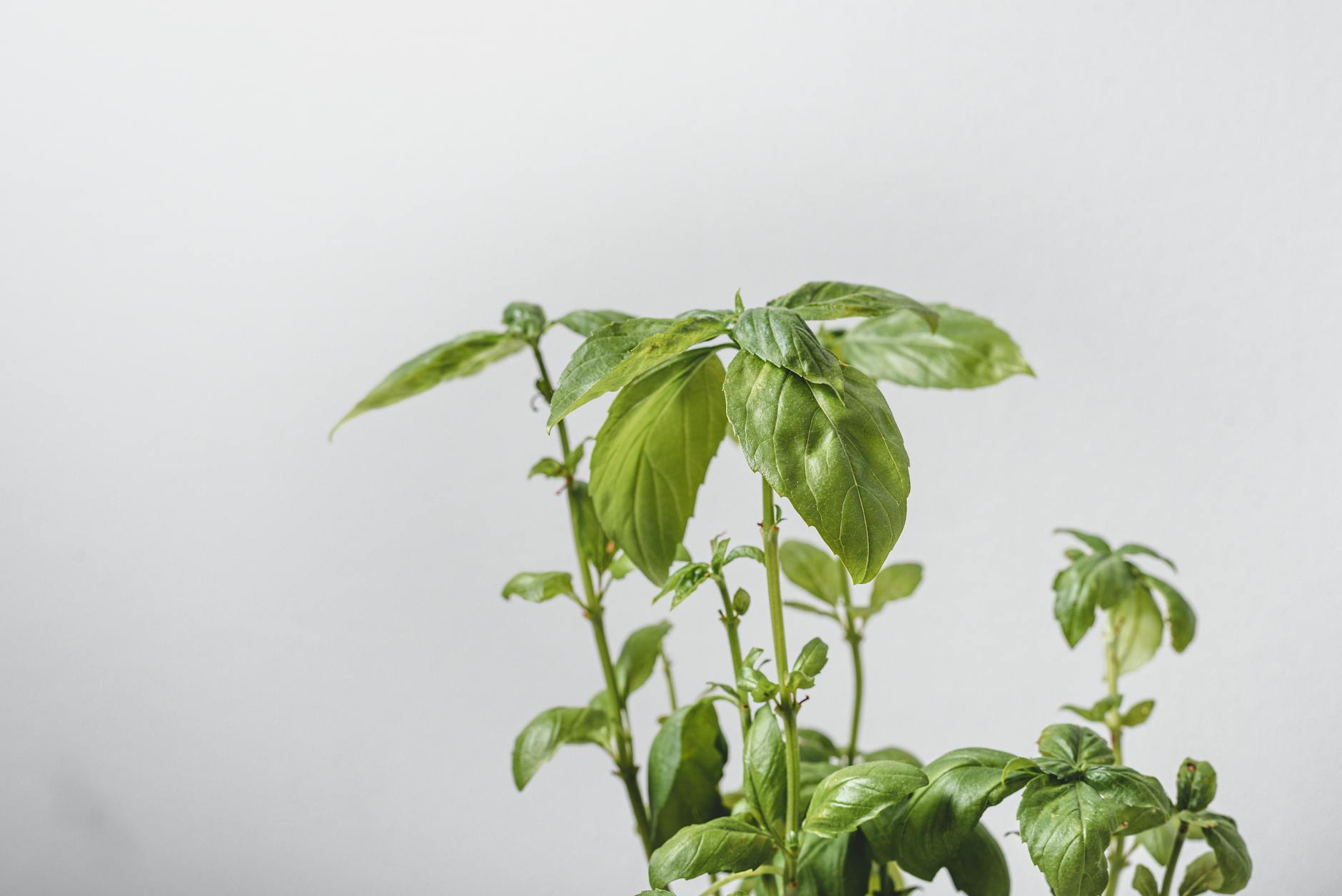
Go outside. Right now. Look at every basil plant you’ve got. If you see a central stem reaching upward with tiny leaves clustered at the tip — that’s the bolt spike. Period. Pinch it off with your fingers or snip it with scissors, right back to the nearest set of healthy large leaves. Don’t be precious about it. Take more than you think you should — actually, no — definitely take more than you think you should. Be brutal.
Here’s the specific move that most guides just skip over entirely: after you remove that central spike, you also gotta remove the tips of the two or three side branches nearest to it. This actually forces the plant to branch laterally instead of continuing its upward push. You’ll get a bushier plant with far more harvestable leaves within a week. Guaranteed.
Here’s a weird detail no one ever tells you: I once saved a badly bolted basil by harvesting the entire top third of the plant down to the woody stem, putting it in a glass of water on the kitchen counter, and treating what was left in the pot as a cutting base. Both halves survived, would you believe it? The cut stems rooted in 11 days. The pot resprouted from the leaf nodes within a fortnight. Accidental propagation is still propagation, after all. Who knew?
If you’re growing coriander alongside your basil — which many of us do, it’s a common combo — be warned: coriander bolts even faster than basil and it definitely needs the same pinching treatment right now. Don’t wait on that one either.
Bolting’s the dramatic one, sure, but it’s rarely the *only* thing going wrong. A basil plant under stress usually displays several symptoms at once, so it really pays to look at the whole picture.
Yellow lower leaves usually mean one of two things: overwatering or a nitrogen deficiency — honestly, they’re the two most common basil mistakes you’ll make in summer. If the lower leaves are yellowing while the plant is also bolting? Man, those roots are almost certainly unhappy. Check that drainage immediately. Like, right now.
Black spots on leaves in humid weather? That’s downy mildew, my friend.