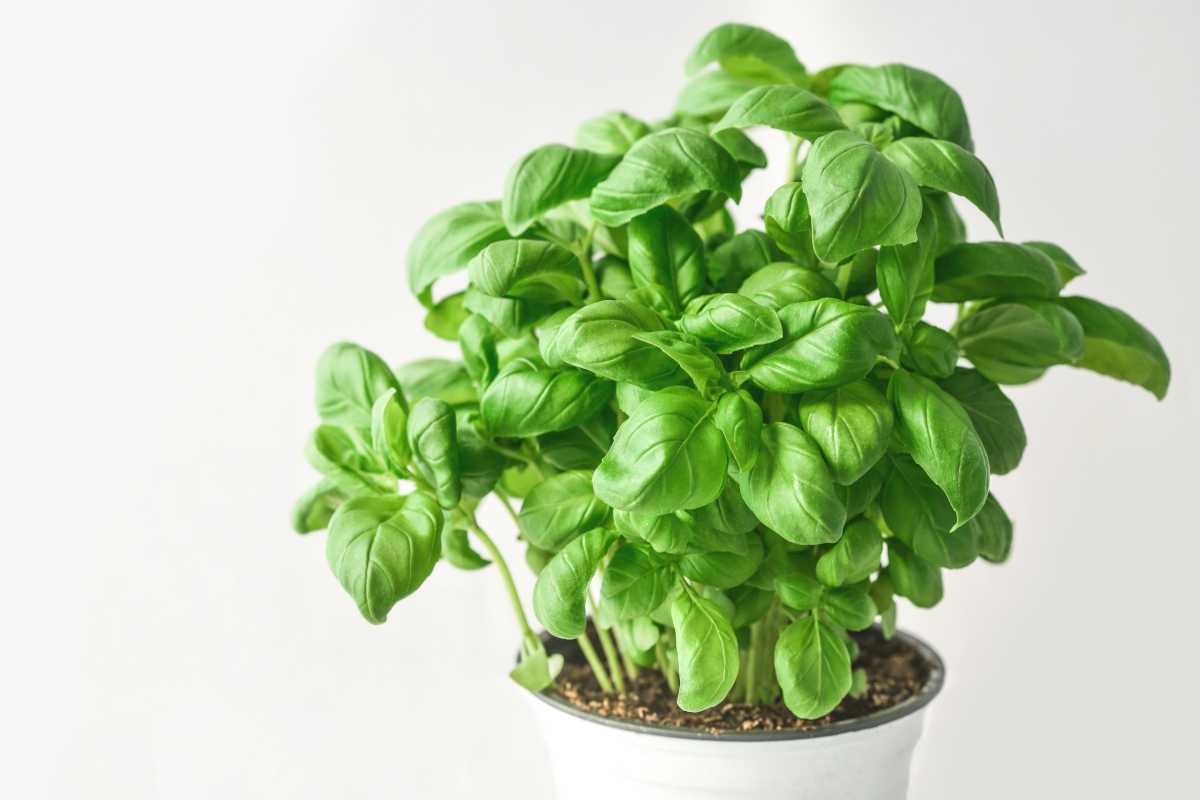
A low mound of aromatic leaves, 8 to 16 inches tall, basil (Ocimum basilicum) travelled from India to the Mediterranean to become a staple of dishes, salads and sauces. Grown in a pot indoors or on a balcony, it gives fresh harvests from the windowsill, provided the spot is sunny without scorching and the soil stays consistently moist.
| Name | Ocimum basilicum |
|---|---|
| Family | Lamiaceae |
| Type | herbs and spices |
| Height | 8 to 16 inches (20 to 40 cm) |
| Exposure | full sun |
| Soil | light, well-drained |
| Harvest | late spring to mid-autumn |
Forget about purchasing freeze-dried or packaged basil, go for fresh harvests straight from the windowsill to discover the true taste of basil.
If you’ve purchased your basil in a container, it’s preferable to re-pot it quickly because it grows fast.
You can also leave it in its original pot for a while for easy picking indoors or on a balcony.
What is best, though, for growing potted basil, is to repot immediately after purchasing in a larger pot. You can also pair it with other herbs in a summer planter.
This plant is perfectly suited to indoor growing, or on a balcony, in pots or garden boxes.
Take care to water regularly so that the soil mix never dries up.
Sow seeds directly in the final pot, starting in mid-spring in Southern regions and in late spring for other regions.
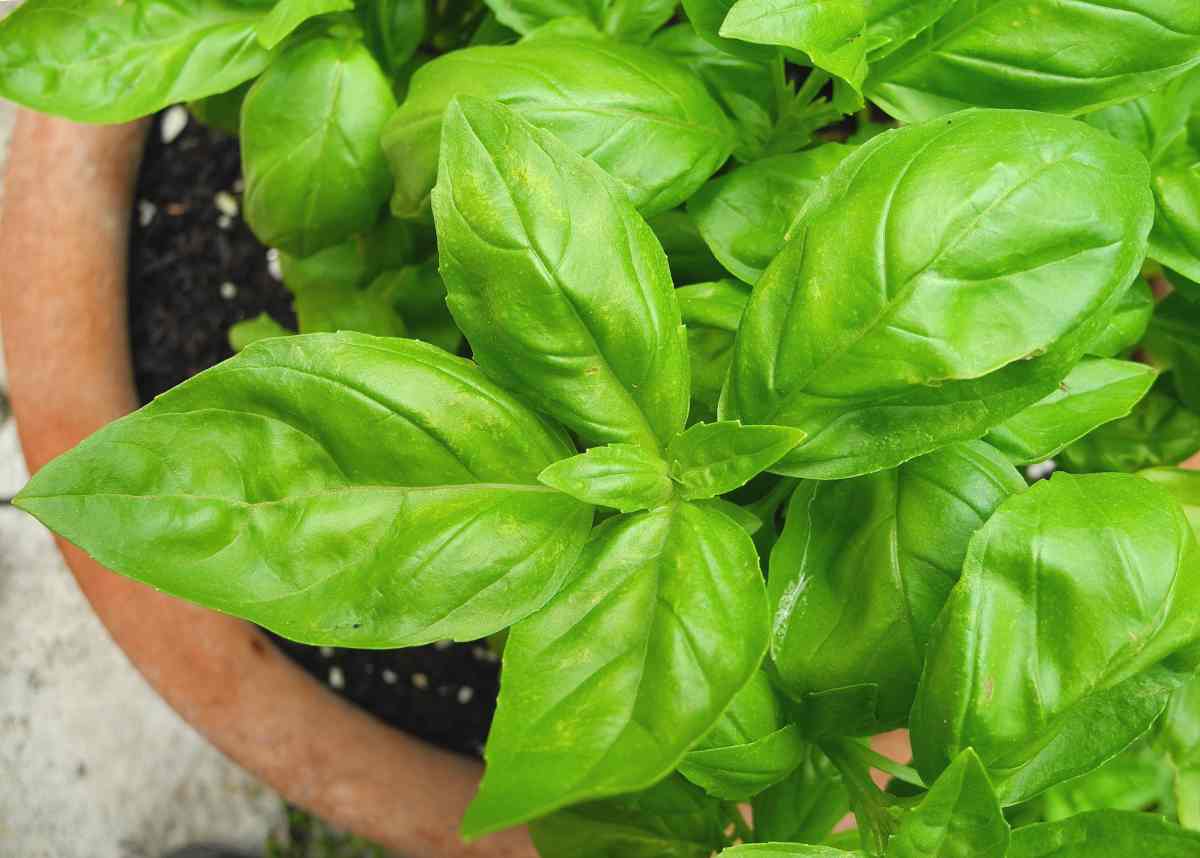
You can harvest basil leaves all spring and summer long.
Select larger leaves, and snip the entire stem off, so that new shoots can appear.
It is very easy to grow your basil inside your house, on a balcony or terrace.
There isn’t any “better” season to grow basil indoors, even though it is more difficult get lush growth in winter. That’s when herb growing kits come in handy, especially those with supplemental lighting.
Usually it is added to summer meals. It is mostly grown from mid-spring to early autumn-mid-autumn, both indoors and outdoors.
Choose a sunny, well-lit space like a windowsill for instance.
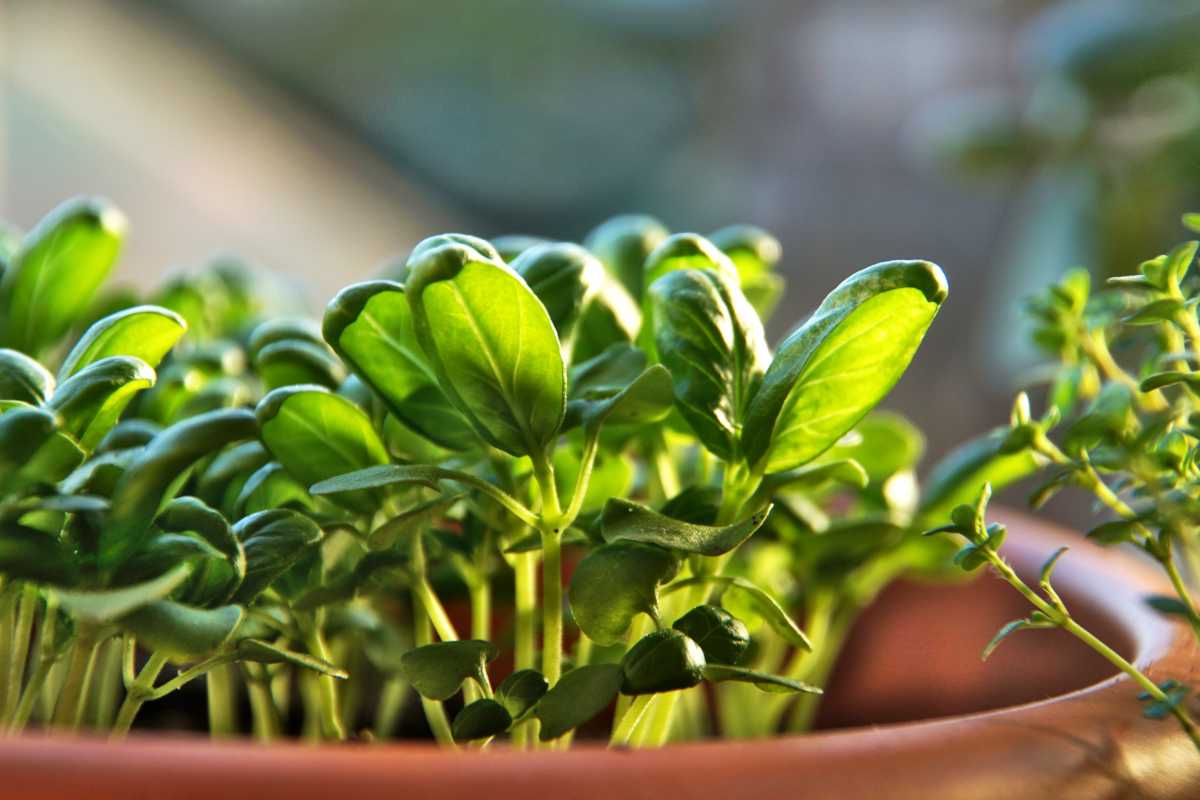
Potted basil does great with other herbs and plants, too. As long as its neighbors don’t overshadow it, that is. Good companion plants for potted basil include chives, oregano, parsley, for instance.
Basil in pots follows a simple rhythm, from sowing in spring to the last pickings in autumn. Here is what to do, when, and the one point that matters for each task.
| Task | When | Where | Key point |
|---|---|---|---|
| Sowing | mid-spring in southern regions, May elsewhere | Directly in the final pot | Cover the seeds with a thin layer of soil mix |
| Watering | Whole growing season | Indoors, balcony or terrace | A fine drizzle, so the soil mix never dries up |
| Feeding | late spring to late summer | In the pot | Use a special herb fertilizer |
| Harvesting | All spring and summer, late spring to mid-autumn | Straight from the windowsill | Snip the whole stem, leave one leafy stem on the plant |
| Winter growing | Winter months | Indoors, well-lit spot | Growth is thinner; a kit with supplemental lighting helps |
Keep to this rhythm and a single pot will supply leaves from spring right through to mid-autumn.
Not every basil suits a windowsill or a balcony pot: some make broad, floppy leaves that need room, while the small-leaved bush types stay tight and tidy. The table below compares the varieties most often found on seed racks and garden-centre benches.
| Variety | Leaf | Flavour | Habit | Best for |
|---|---|---|---|---|
| Italian Large Leaf | Very large, soft green | Sweet, less spicy | Medium to tall | Salads, layering in sandwiches |
| Lettuce Leaf | Huge, crinkled green | Mild, sweet | Tall, needs a deep pot | Wrapping, big leaf harvests |
| Everleaf Emerald Towers | Mid-green, Genovese type | Sweet, classic | Tall, columnar | Slow to flower, long picking |
| Dark Opal | Deep purple-black | Sweet with a clove note | Medium, bushy | Colour in planters, vinegars |
| Sweet Thai | Small green, purple flowers | Aniseed, spicy | Medium, upright | Stir-fries and curries |
| Purple Ruffles | Purple, deeply frilled | Sweet, mild | Medium, bushy | Ornamental balcony pots |
| Greek | Tiny, dense green | Peppery, intense | Dwarf, neat dome | Small pots and windowsills |
| Spicy Globe | Tiny green, very dense | Spicy, pungent | Dwarf, ball-shaped | Edging a planter, table pots |
| Genovese | Large, glossy green | Classic sweet, clove-like | Medium, upright | Pesto, the all-round pot basil |
| Napoletano | Large, puckered green | Sweet, aromatic | Medium, spreading | Salads and sauces |
| Minette | Very small green | Sweet, mild | Dwarf, compact mound | Indoor pots, herb kits |
| Red Rubin | Broad, dark purple | Sweet, slightly spicy | Medium, upright | Decorative pots, salads |
| Siam Queen | Narrow green, purple stems | Aniseed, liquorice | Medium, upright | Thai and Vietnamese cooking |
| Cinnamon | Small green, dark stems | Warm, cinnamon-scented | Medium, upright | Fruit dishes, teas, scented pots |
| Nufar | Large green, Genovese type | Sweet, classic | Medium to tall, vigorous | Fusarium-resistant pot crop |
Native to India, basil spread to the Mediterranean region where it became a typical ingredient in most types of dishes, salads and sauces, owing to its unique taste.
Growing it is rather easy as long as basic rules are followed.
Read also on herbs and spices:
Basil can be frozen and its taste will virtually stay as delicious, even after several weeks.