Your parsley looked fine last week, didn’t it? Now the lower leaves are going yellow and you’re wondering what you’ve done wrong. Here’s the honest answer: it’s almost certainly not a disease, not a pest, and definitely not bad luck. It’s one of three very fixable causes — and once you know which one, you’ll have it sorted today.
The most common culprit? Waterlogged roots. Parsley just hates sitting in wet soil. That wild downpour last Tuesday — a good 30mm of it — combined with enthusiastic watering? Classic problem. Next up: nitrogen depletion, particularly in pots. And then there’s natural leaf aging. Parsley’s biennial, so older, basal leaves will yellow and die back as the plant shoves energy upwards. Check the soil first. If it’s soggy, that’s your answer. Full stop.
Yellow leaves from aging or a little nutrient deficiency? Totally manageable. Just remove those yellowed leaves, and your plant’ll bounce back fast. But root rot from overwatering? That’s genuinely serious. Left alone, it’ll travel right up the stem within 11 days. A parsley with a soft, brown-smelling base? It’s almost certainly lost. Total goner. Act now, not about three weeks in August.
One weird thing I’ve noticed: parsley grown in terracotta pots yellows far less in summer than in plastic. The clay breathes, you know? I switched mine two years ago — actually, no — it was about three summers ago, I think, and haven’t lost a single plant since. You should really check out our guide on growing herbs in pots on terraces and balconies too — the drainage advice applies equally here.
If the yellowing’s accompanied by tiny webbing on stems, that’s spider mites. Way more likely in dry, hot conditions. White powdery patches mean you’ve got fungal issues, usually from rubbish air circulation. And if your parsley suddenly bolts (shoots up a tall flower stalk)? Well, the plant’s just ending its cycle then — that’s totally normal in year two, it’s not fixable, and honestly, it’s a signal to just start fresh. The RHS parsley growing guide confirms most plants sown in spring won’t make it past their second summer without bolting anyway.
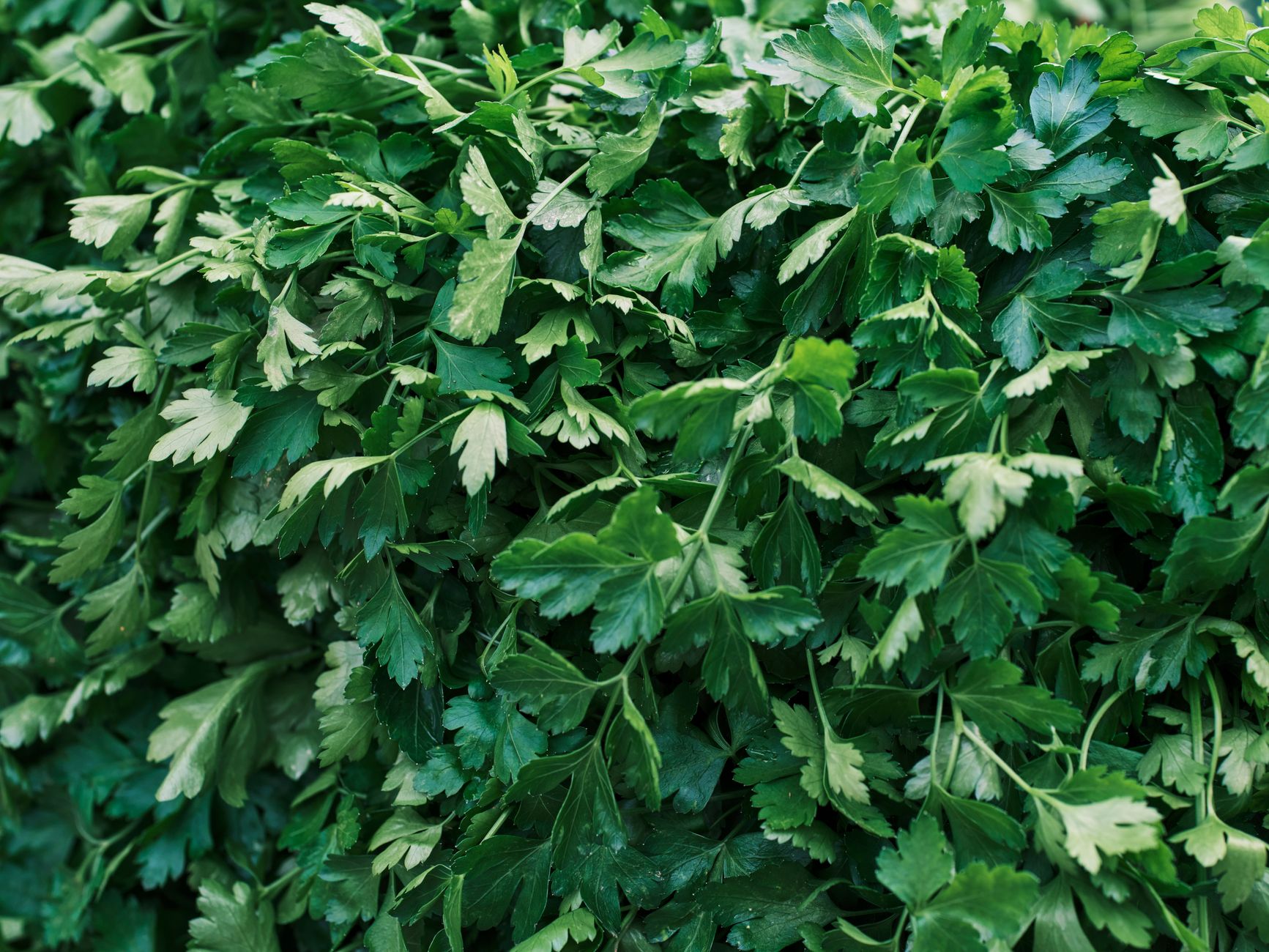
They’re not toxic, no, but honestly, they taste bitter and papery. Just strip ’em off and use the healthy green stuff instead.
Water when the top inch of soil feels dry. That’s usually every 2–3 days in a pot, a bit less in the ground. Consistency matters way more than frequency.
It means the plant’s in its second year and just finishing its life cycle. So, sow fresh seed now for a new autumn crop. Parsley you’ve sown in June? It’s ready to harvest by September.
Similar symptoms, but completely different causes. Coriander bolts and collapses due to heat, but parsley’s yellowing is mostly a water and nutrition issue. Want to know more? Check out why your coriander keeps dying in summer.