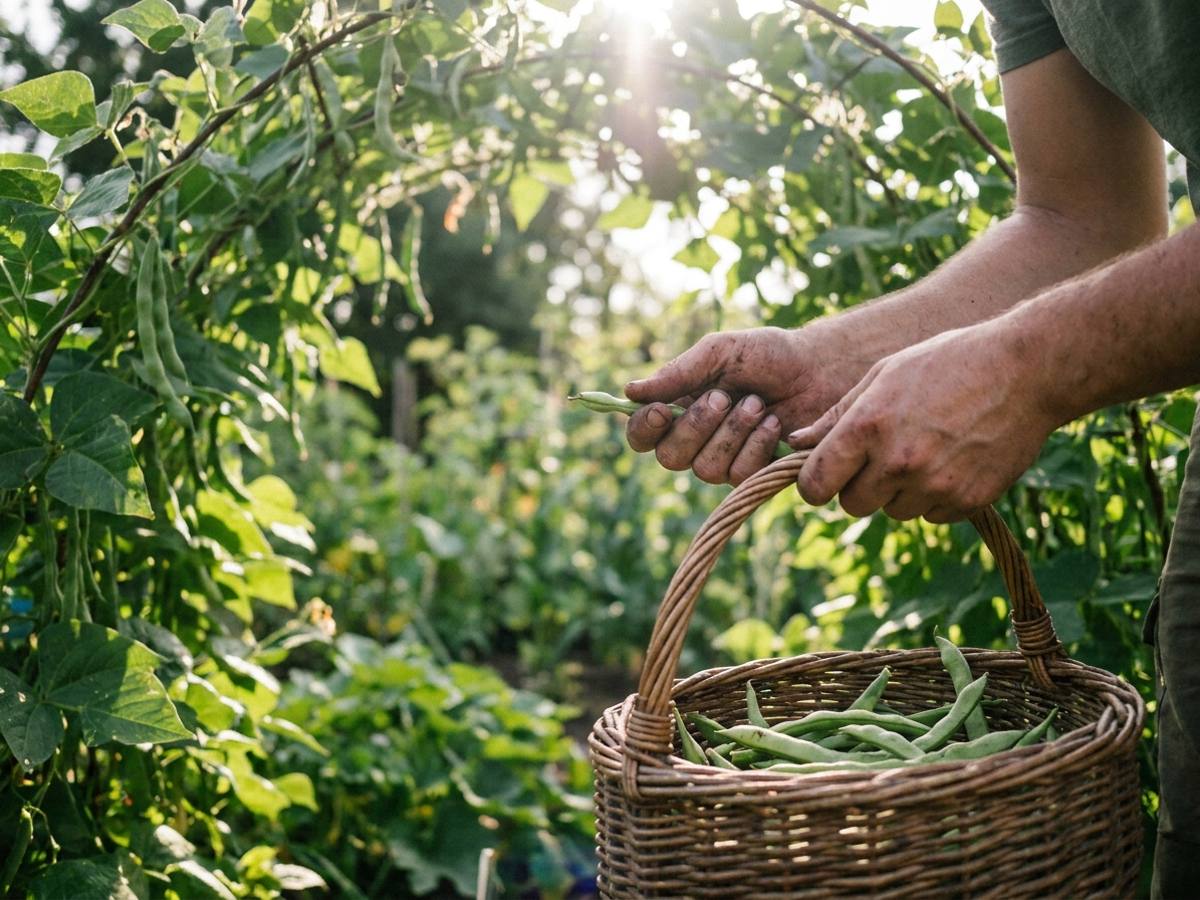
Runner beans reach their prime in late summer, and you have less than 48 hours to pick them at peak tenderness before they turn stringy and tough. Miss this narrow window, and you’ll harvest beans that disappoint on the plate. Late summer is the critical month when most UK and US gardeners’ crops are exploding with pods, making daily harvests essential. Know exactly when to pick, and you’ll enjoy buttery, melt-in-mouth beans all season long.
Late summer sits at the heart of runner bean season across both the UK and North America. Your plants are flowering prolifically, pods are developing thick and fast, and the warm temperatures are pushing growth at pace. In late summer, gardens from Somerset to Seattle hang heavy with young beans waiting to be picked.
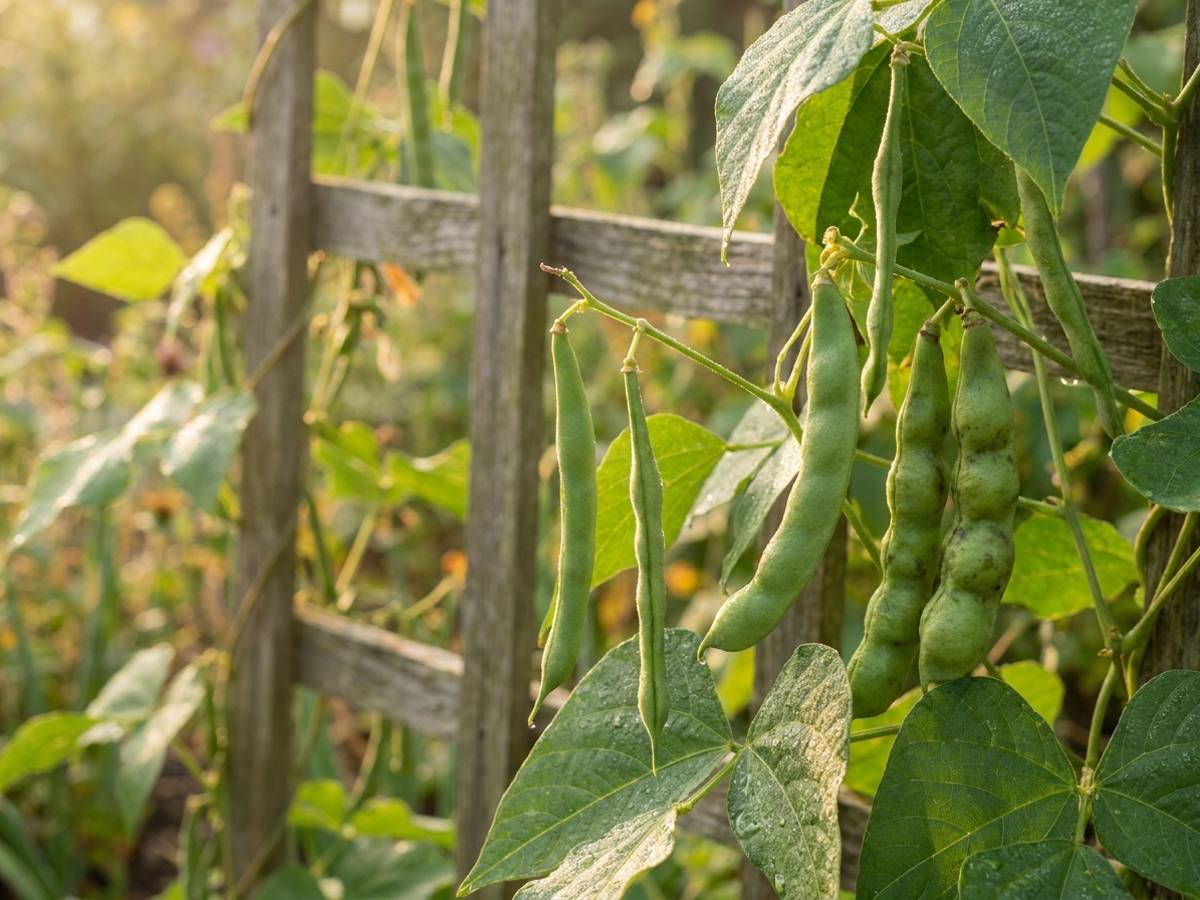
Runner beans belong to a small group of vegetables where timing changes everything about quality. Unlike tomatoes or courgettes, runner beans don’t improve with age. The moment a pod reaches around 20 centimetres in length and still snaps cleanly in your fingers, it contains tender seeds and a soft, edible pod wall. Wait just two days longer, and the pod wall thickens as the seeds inside mature and swell. Strings develop along the seams, the texture becomes woody, and cooking won’t soften them.
This isn’t about leaving beans on the vine too long before picking them. It’s about the speed at which the pod itself ages. A warm, sunny late summer accelerates this process dramatically compared to cooler springs or autumns. Gardeners who check their plants every single day report the best eating quality. Those who harvest weekly often find themselves with disappointing batches.
Runner bean quality is decided over a couple of days rather than a couple of weeks. Use this table to read a pod at a glance before you snap it off.
| Pod stage | What you see | Eating quality | What to do |
|---|---|---|---|
| Ready now | Around 20 cm, snaps cleanly in your fingers | Tender seeds, soft edible pod wall | Pick it the same day |
| Two days later | Pod wall thickened, seeds swelling inside | Strings along the seams, woody texture | Cooking won’t soften it, so pick earlier next time |
| Small and immature | Shorter than a hand’s length | Perfectly edible | Take it anyway, to keep the plant flowering |
| Plant tiring, late summer into early autumn | Flowers dropping without setting, pods staying small | Diminishing | Accept the end of the productive window |
Reading the pod rather than the calendar is what keeps every picking tender.
Make these actions part of your daily garden routine from now through early autumn:
As late summer moves into early autumn, monitor whether your plants are tiring. Regular harvesting pushes beans to keep flowering, but eventually even vigorous plants run out of energy. Watch for flowers dropping without setting pods, or pods developing but staying small. This signals your plant is reaching the end of its productive window. In the UK, most runner beans finish by mid-autumn, whilst US gardeners in cooler zones may see production stop by early autumn.