Home » Health » Lavender: traditional uses, infusions and everyday preparations
Lavender: traditional uses, infusions and everyday preparations
·
0
Lavender is the plant most people already have within reach — a hedge in the front garden, a pot on the balcony, a jar of dried flowers in the cupboard. This page sets out what the flowers actually contain, what herbalists and naturopaths credit them with, and how to turn them into an infusion, a compress, a sleep pouch or a pinch of seasoning tonight.
Early summer to midsummer, as the first flowers open
Taste
Floral, camphor-edged, faintly bitter; very intense
What it is credited with
Herbalists have long treated lavender as a calming plant, used in the evening to wind down a restless mind.
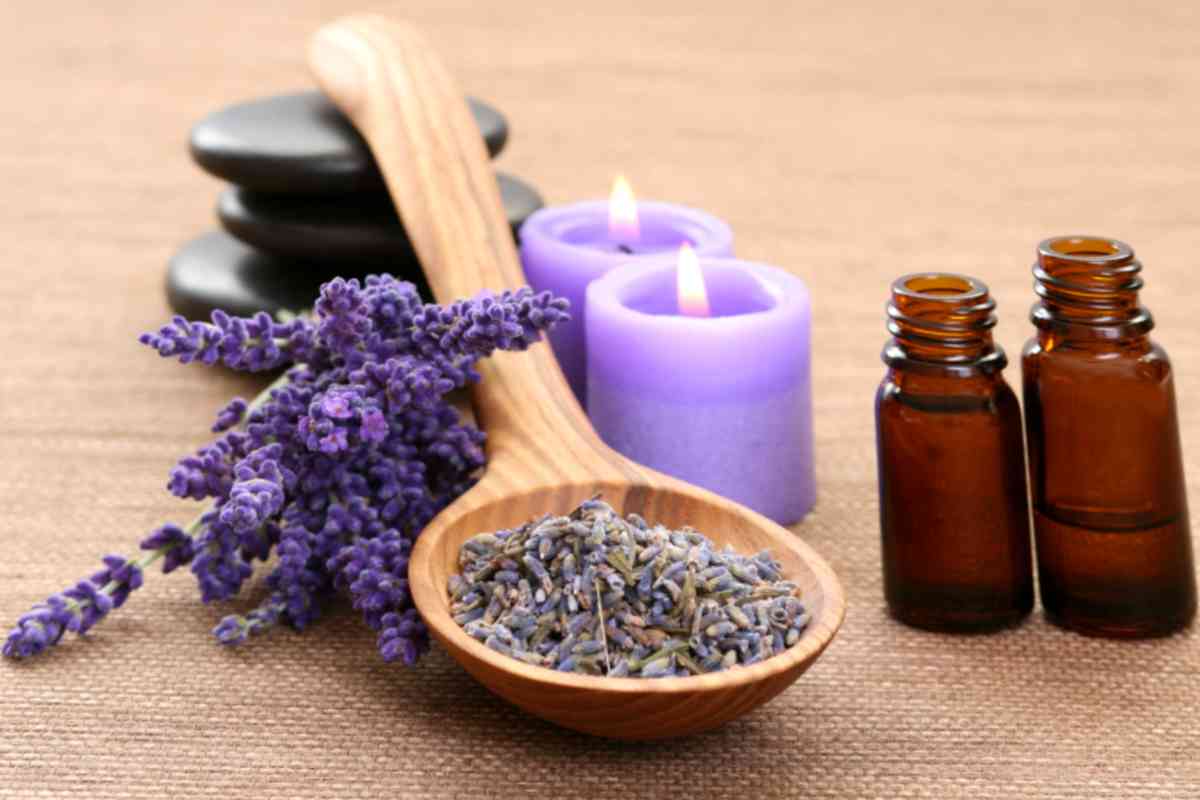
Aromatherapy practitioners diffuse the essential oil for its reputation for easing nervous tension and encouraging sleep when nights are light and broken.
Traditional use credits the flowers with antispasmodic qualities, which is why they turn up in old remedies for a tight chest, a blocked nose or a nagging cough.
In folk herbalism, an infusion of lavender was drunk for heavy digestion, bloating and a sluggish appetite.
Naturopathy credits the infusion with a mild diuretic action, and the plant has a long-standing reputation for settling an upset gut.
Lavender was traditionally reached for when a headache or a wave of dizziness set in — a compress on the forehead, or simply the scent of crushed flowers.
Compresses soaked in lavender water have a reputation as an antiseptic wash, used on itchy skin, minor grazes and superficial burns.
Household tradition uses lavender as an insect repellent: against clothes moths and mites in linen, and, diluted behind the ears, against head lice.
Gardeners plant it beside roses to deter aphids, and near paths to persuade ant hills to move on.
How to use it
The evening infusion
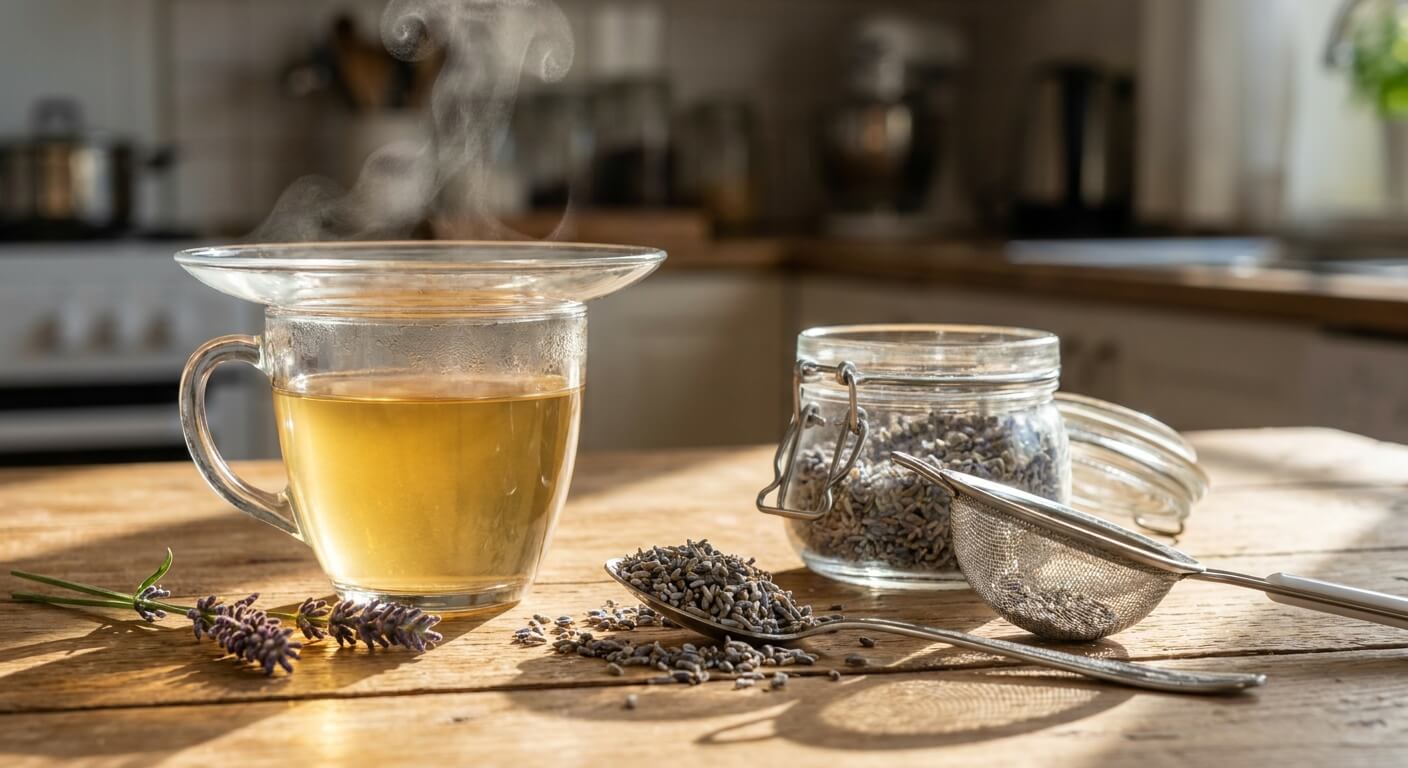
Use roughly a teaspoon of dried flowering tops per cup, or about 30 g of dried flowers to a litre of water for a jug.
Pour water that has just come off the boil, cover the cup, and leave to steep 5 to 10 minutes. Covering it keeps the aromatic oils in the cup rather than in the kitchen.
Strain well. Drink one cup after the evening meal, or an hour before bed.
Taste: floral and slightly bitter, with a camphor note. Start with half the quantity if you find it soapy, and soften it with honey, a slice of lemon or a little mint.
Traditional practice keeps herbal infusions to a two- or three-week stretch, then takes a break of a week or so.
The compress
Make a strong infusion — double the flowers, steeped 15 minutes — and let it cool completely.
Soak a clean cloth, wring it lightly, and lay it on the skin for 10 minutes. Repeat two or three times a day.
For a headache, the same cool compress across the forehead and temples is the classic gesture.
Make it fresh each day; a floral infusion left on the worktop spoils quickly.
The essential oil
Diffusion: a few drops in a water diffuser, run for 20 to 30 minutes in the bedroom before you go up, not all night.
On skin: always diluted in a carrier oil such as sweet almond or sunflower — never neat, never on broken skin.
Steam inhalation for a stuffy nose: one or two drops in a bowl of hot water, head covered with a towel, eyes closed, five minutes.
Never swallow essential oil.
The sleep pouch and the wand
Fill a small cotton bag with dried flowers and slip it under the pillow or inside the pillowcase.
Squeeze it now and then to refresh the scent; replace the flowers once the perfume fades.
If you would rather not sew, weave a lavender wand from fresh stems and ribbon and hang it in the wardrobe.
In the kitchen
A pinch of dried flowers, no more, in shortbread dough, custard, honey syrup or ice cream.
Infuse the flowers in warm cream or milk, then strain before using — the flavour transfers, the woody bits do not.
Lavender also sits well in a savoury herb mix with thyme, rosemary and savory, on lamb or roast vegetables.
Forms of lavender and what each is used for
Form
Preparation
Traditionally used for
Infusion
1 tsp dried flowers per cup, covered, 5–10 min
Winding down in the evening, heavy digestion
Compress
Strong infusion, cooled, on a clean cloth
Itchy skin, minor grazes, superficial burns, headaches
Essential oil, diffused
A few drops in a diffuser, 20–30 min
Calming the atmosphere of a bedroom
Essential oil, diluted
Drops in a carrier oil, or in steam
Tight chest and blocked nose, massage, lice repelling
Dried flowers, dry use
Pouch, wand, sachet in linen
Restful sleep, deterring moths and mites
Culinary pinch
Infused in cream, or in dough
Flavouring pastries, creams, syrups, ice cream
Frequently Asked Questions
The one thing to remember: a covered cup of lavender flowers, steeped ten minutes and drunk after supper, is the simplest and safest way to use this plant.
A teaspoon of dried flowers per covered cup, steeped ten minutes
How much lavender goes into one cup?
About a teaspoon of dried flowering tops per cup, or roughly 30 g of dried flowers to a litre if you are making a jug. Cover it while it steeps so the aromatic oils stay in the water. If the taste feels soapy, halve the quantity next time.
Can I use the essential oil instead of the flowers?
For scenting a room or for a diluted massage oil, yes. For anything you drink, no — essential oils are never swallowed. Diffuse for twenty to thirty minutes rather than all night, and always dilute in a carrier oil before it touches skin.
Does the lavender pouch under the pillow actually do anything?
It is one of the oldest household uses of the plant, credited in tradition with encouraging a restful night. Squeeze the bag to refresh the scent and change the flowers once the perfume fades. A woven lavender wand in the wardrobe does the same job and also keeps moths off the linen.
When should I pick my own lavender?
Early summer to midsummer, on a dry morning, just as the first flowers on each spike open. Hang small bunches upside down in a dark airy room, then store the rubbed flowers in a sealed jar away from light.
Who should leave lavender alone?
Pregnant and breastfeeding women should avoid the essential oil and check before drinking the infusion regularly. Babies and young children should not be exposed to the oil at all. Anyone on sedatives, sleeping tablets or antidepressants should ask a doctor or pharmacist first.
This information is provided for general interest and reflects the traditional use of plants. It is not a substitute for medical advice. If you are on medication, pregnant, or in any doubt, ask a healthcare professional.
Written by Gaspard Lorthiois | Loves helping out, especially when it comes to growing things. Worked in herbal medicine, runs a farm, and dabbles in tech. Master's degree and engineer.