Home » Health » Caraway seeds: traditional digestive uses, and how to use them
Caraway seeds: traditional digestive uses, and how to use them
·
0
Caraway is a biennial umbellifer in the same family as dill, aniseed and fennel, and its crescent-shaped seeds are the part everyone wants. Warm, sweetly sharp, slightly bitter, they season cabbage, bread and cheese, and they steep into a quick after-dinner infusion. Here is which part to use, in what form, and what should make you pause.
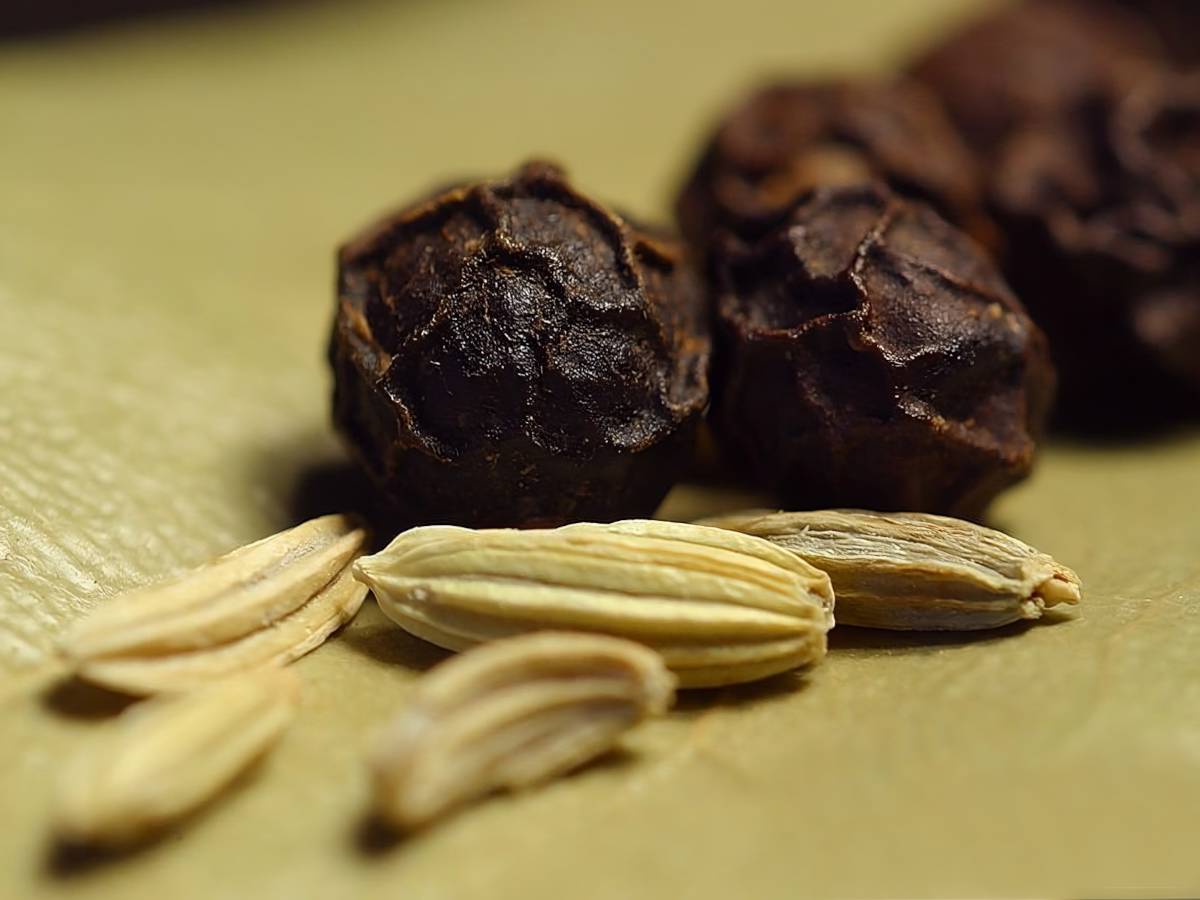
The ribbed, crescent-shaped seed is the part herbalists use
Caraway at a glance
Caraway at a glance
Item
Detail
Botanical name
Carum carvi
Family
Apiaceae (umbellifers)
Part used
Ripe seeds mainly; young leaves and roots are edible too
Forms of use
Whole or crushed seed, infusion, culinary seasoning, tincture, essential oil (bought, professional use)
Harvest season
Leaves in spring of the first year; seeds from midsummer to late summer in the second year
Taste
Warm and sweetish, aniseed-like, with a sharp edge and a slight bitterness at the finish
Plant size
25 to 60 cm (10 to 24 in), white flowers in umbels
Not to be confused with
Cumin — often used as a name for caraway, but a different species with a much heavier, muskier aroma.
Carom / ajowan (Trachyspermum ammi, once Carum copticum) — from the Middle East to southern Asia, thyme-scented, used in curries, chutneys and drinks.
Ajmud (Carum roxburghianum) — another Indian kitchen seed, used much the same way in marinades and curries.
Caraway itself is told apart by its finely divided, linear-lobed leaves and its arched, ridged seed.
What it is credited with
Herbalists traditionally class caraway seed as a carminative, taken after a heavy plate to ease the feeling of a bloated, gassy stomach.
Naturopathy credits the seed with an antispasmodic reputation on the smooth muscle of the gut, which is why it is offered after meals rather than before.
European folk practice used it as a bitter-aromatic appetiser, chewed or infused to wake up appetite and saliva flow before eating.
It has a long reputation as a digestive companion to heavy foods — hence its place in cabbage dishes, sauerkraut, goose, pork and rye bread across Germany and northern and eastern Europe.
Traditional herbals list it among the warming seeds said to support bile and gastric secretion, in the same bracket as fennel, dill and aniseed.
Nursing traditions in several countries placed caraway among the galactagogue seeds, credited with encouraging milk flow — a traditional use only, and one to discuss with a midwife or healthcare professional first.
Old herbals also treated it as an emmenagogue, a plant said to stir circulation in the pelvic area. This is precisely why it is kept off the list in pregnancy.
How to use it
The after-dinner infusion
Crush about a teaspoon of seeds per cup — a mortar and pestle or the flat of a knife is enough. Crushing releases the aromatic oil; whole seeds give a thin, disappointing brew.
Pour freshly boiled water over them, cover the cup, and leave to steep 8 to 10 minutes. Covering matters: the aroma is volatile and escapes with the steam.
Strain and sip slowly, after the meal rather than with it.
One to three cups across a day is the usual household habit, taken for a few days at a time rather than continuously.
The blended seed tea
Caraway pairs naturally with fennel seed, aniseed, chamomile flower and peppermint leaf.
Mix equal parts of two or three of them in a jar, then use a teaspoon of the blend per cup, steeped the same way.
Peppermint sharpens it, chamomile softens it, fennel makes it noticeably sweeter.
Chewed straight
A pinch of seeds chewed slowly after eating is the oldest and simplest form — no kit required.
It freshens the breath at the same time, which is half the reason the habit survived.
In the kitchen
Toast the seeds briefly in a dry pan before use: it rounds off the bitterness and deepens the aroma.
Classic partners: cabbage, sauerkraut, red beet, carrot, potato, mushrooms, goulash, sausage, goose, duck, lamb and pork.
It flavours rye and pumpernickel bread, Munster-type cheeses, harissa, and spirits such as kummel, aquavit, schnapps, gin and brennivin.
Young leaves, snipped small, go into soups, salads, stews, tomato dishes and hotpots.
The first-year roots can be cooked and eaten like a root vegetable, much as you would a small parsnip.
Toasted seeds season cabbage, rye bread and roast meats
A note on essential oil
True caraway essential oil is steam-distilled, not home-made. Crushing seeds and steeping them in water gives an infusion, not an oil.
Essential oils are extremely concentrated. Internal use belongs with a qualified practitioner, never as a self-service remedy.
The classic after-meal carminative cup in European home herbalism
Chewed seed
A pinch chewed slowly, straight from the jar
Traditional end-of-meal habit, also used to freshen breath
Culinary seasoning
Toasted whole or lightly crushed, added to the dish
Credited with making rich, cabbage-heavy or fatty dishes sit more easily
Tincture / fluid extract
Bought ready-made, taken in water
A concentrated form used in herbalist practice; follow the label
Essential oil
Steam-distilled commercially, heavily diluted
Aromatic use; internal use only under professional guidance
Frequently Asked Questions
The one thing to remember: crush a teaspoon of caraway seed, cover it with boiling water for ten minutes, and drink it after the meal rather than before.
Is caraway the same thing as cumin?
No. Caraway is regularly called “cumin” or “field cumin” in older books and in several languages, but they are two distinct species. Caraway is sweeter and more aniseed-like; cumin is heavier and muskier. Swapping one for the other will noticeably change a dish.
Which part of the plant do I actually use?
The ripe seed, above all — it carries the aroma and it is the part herbal tradition works with. Young leaves can be snipped into soups and salads, and first-year roots can be cooked like a root vegetable. Leaves and roots are food, not remedies.
When is the best moment to drink a caraway infusion?
After eating, not with the meal. Home herbalism treats it as an after-dinner cup, sipped slowly while it is still warm. One to three cups spread over the day, for a few days at a stretch, is the usual pattern.
Can I give caraway tea to a baby with colic or an upset stomach?
No, not on your own initiative. Older herbals did give diluted seed teas to infants, but a baby’s digestive upset should be looked at by a doctor, midwife or health visitor. Caraway essential oil should never go anywhere near an infant.
Should I buy the seeds whole or ground?
Whole, every time. Caraway’s flavour sits in a volatile oil that escapes fast once the seed is broken, so ground caraway goes flat within a few weeks. Keep whole seeds in a sealed jar in a dark cupboard and crush what you need as you go.
Images: Pixabay: Hans Braxmeier, Holger Langmaier, PDPhotos
This information is provided for general interest and reflects the traditional use of plants. It is not a substitute for medical advice. If you are on medication, pregnant, or in any doubt, ask a healthcare professional.
Written by Gaspard Lorthiois | Loves helping out, especially when it comes to growing things. Worked in herbal medicine, runs a farm, and dabbles in tech. Master's degree and engineer.