Home » Health » Parsley: how to use it, in the kitchen and in herbal tradition
Parsley: how to use it, in the kitchen and in herbal tradition
·
0
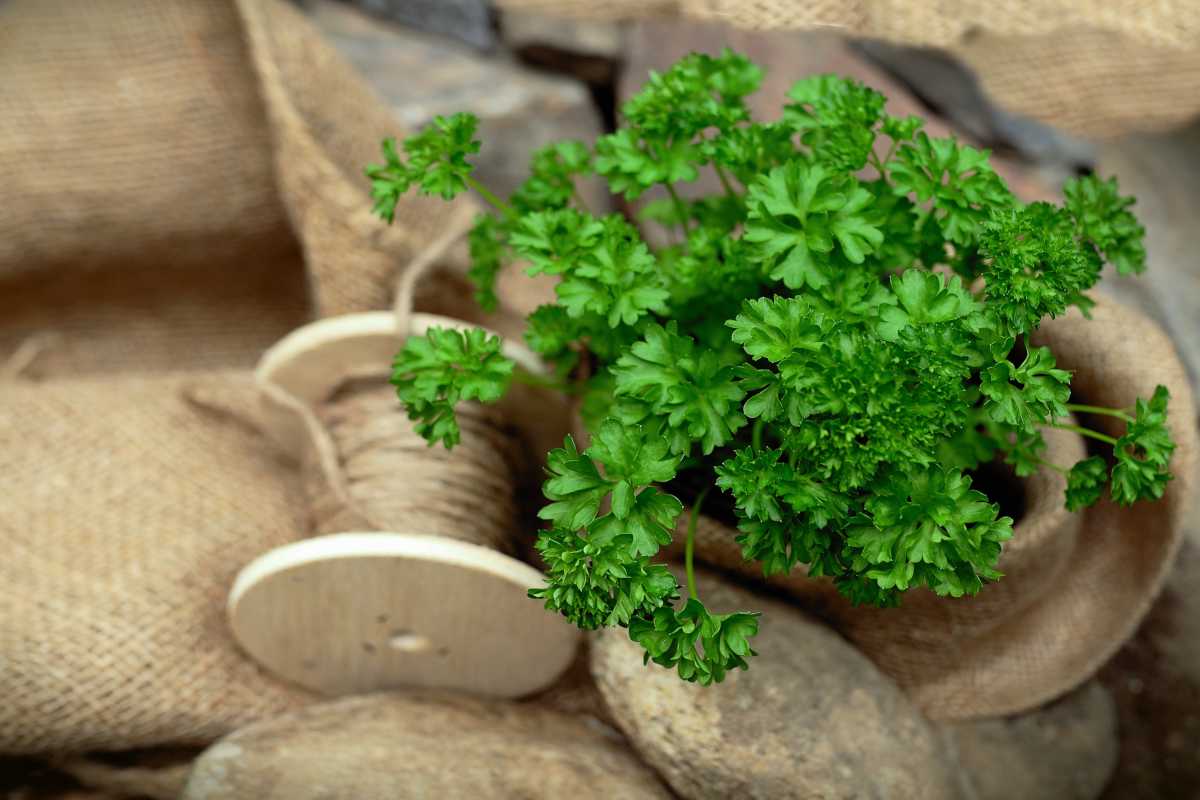
Parsley is the herb most likely to be sitting in your fridge right now, and the one most often reduced to a garnish. Flat-leaved or curly, it is a genuine leafy green with a bright, peppery, faintly aniseed taste — and a long history in kitchen herbalism. Here is which part to use, in what form, and what should make you go carefully.
Parsley at a glance
Item
Detail
Botanical name
Petroselinum crispum
Family
Apiaceae
Parts used
Fresh leaves and stems, roots, dried seeds
Forms of use
Raw in food, infusion, decoction, crushed leaf compress
Harvest season
Leaves from late spring to late autumn, and through mild winters; seeds in late summer of the second year
Taste
Green and peppery, slightly bitter; curly milder, flat-leaved more pungent
What it is credited with
Herbalists have long classed parsley as a diuretic plant, taken as a leaf or root decoction to encourage urinary flow.
Traditional kitchen herbalism uses it as an appetite-opener, served before or alongside a meal.
Naturopathy credits the fresh leaves with supporting digestion, and they are traditionally chewed or infused for the heavy, bloated feeling after a rich plate.
Old European herbals give parsley a reputation as a plant of the liver, spleen and gut, used to “clear” a sluggish digestive tract in spring.
Chewing a raw sprig is a folk remedy for garlic and onion breath — probably the most reliably useful thing on this list.
In traditional women’s herbalism, parsley infusions were taken around difficult or painful periods. This is exactly the use that makes it unsuitable in pregnancy.
Applied externally, crushed leaves have a country reputation for soothing insect bites, minor skin irritation, sprains and bruises.
Because of its iron and vitamin C content, it has traditionally been added generously to the plates of people recovering their strength.
How to use it
Raw, and in quantity
The simplest form: chop a large handful of leaves and stems into a salad, a grain bowl or a yoghurt sauce.
Tabbouleh style — parsley as the main ingredient rather than the decoration, with lemon, olive oil and a little bulgur.
Stir it in at the end of cooking. Heat flattens the aroma and the vitamin C goes with it.
Chew a single fresh sprig, slowly, after a garlicky meal.
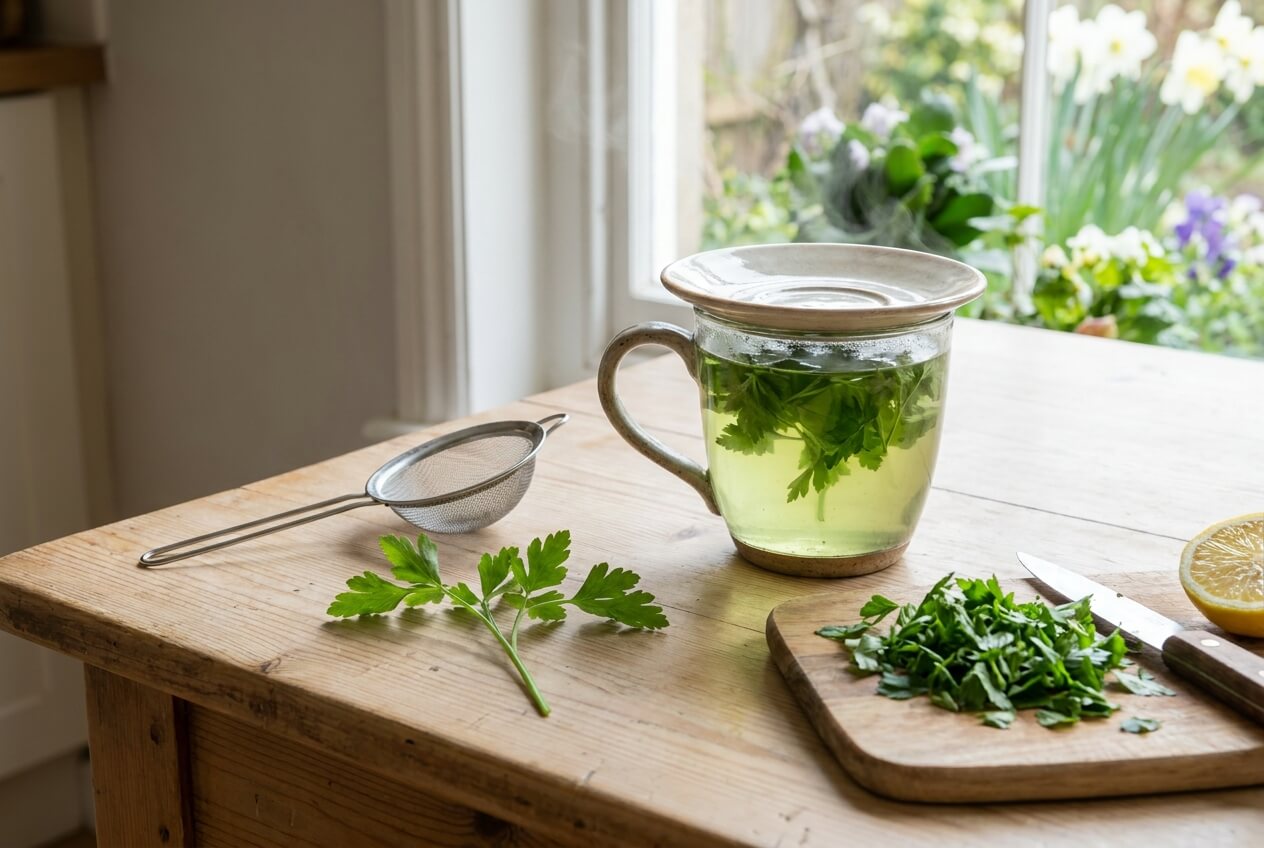
Infusion (leaves)
A small handful of chopped fresh leaves per large mug of just-boiled water.
Cover and leave 8 to 10 minutes, then strain.
Traditionally taken after a heavy meal, one mug, not as an all-day drink.
Taste: grassy and clean. A slice of lemon or a leaf of mint lifts it.
Decoction (leaves, stems or root)
The traditional diuretic form: a generous handful of leaves and stems — or a scrubbed, sliced root — per litre of cold water.
Bring to the boil, simmer 10 minutes, leave to stand off the heat for another 10, strain.
Drunk over the course of the same day, warm or cool. Do not keep it to the next day.
Kept to short spells of a few days in traditional practice, never as a continuous habit.
Crushed-leaf compress
Bruise a small bunch of fresh leaves in a mortar, or simply crush them between clean fingers.
Lay them on the spot, hold with a cloth for 10 to 15 minutes.
Use on unbroken skin only, and rinse afterwards.
Seeds
Harvested from second-year plants in late summer, dried fully, kept whole in a jar.
Crush them just before use, in bread dough, on roast vegetables, in a vegetable broth.
Much stronger than the leaf — use a pinch, not a spoonful.
Which form of parsley for what
Form
Preparation
Traditionally used for
Fresh raw leaves
Chopped generously into cold dishes, or a sprig chewed
Everyday nourishment, fresh breath, appetite
Leaf infusion
Handful per mug, covered, 8–10 minutes
Comfort after a heavy meal
Decoction of leaf, stem or root
Handful per litre, simmered 10 minutes, drunk within the day
The classic herbalists’ diuretic preparation
Crushed-leaf compress
Leaves bruised and held on the skin 10–15 minutes
Insect bites, bruises, minor skin irritation
Dried seeds
A pinch, crushed, in cooking
Condiment with a warm, bitter note
Frequently Asked Questions
The one thing to remember: eat parsley raw, chopped by the handful and added at the very end of cooking — that is where the flavour and the vitamin C are.
Leaf infusion: a small handful per mug, covered 8–10 minutes
Flat-leaved or curly — does it matter?
For flavour, yes. Flat-leaved parsley is more pungent and stands up better to hot dishes, while curly is milder and crunchier in salads. Traditional herbal use makes no real distinction between them, and both carry the same cautions.
How much parsley is too much?
Culinary amounts, even generous ones like a tabbouleh, are simply food. Concentrated preparations are different: high doses have been associated with kidney irritation and heart rhythm disturbances. Herbalists keep infusions and decoctions to short spells rather than a daily habit.
Can I use parsley if I take blood thinners?
Be careful. Parsley leaves are rich in vitamin K, which counteracts anticoagulant drugs. Don’t abruptly change how much you eat, and don’t take parsley infusions or decoctions without clearing it with the person who prescribed your medication.
What is the best way to keep it fresh?
Stand the stems in a jar with a little water, cover the leaves loosely with a bag and keep it in the fridge. A perforated bag in the vegetable drawer also works. For longer storage, freeze chopped parsley in ice-cube trays rather than drying it.
Can you eat the stems and the seeds?
Yes to both. The stems are more strongly flavoured than the leaves and are excellent in broths and decoctions. The dried seeds, gathered in late summer from second-year plants, make a warm, bitter condiment — use a pinch, as they are far more potent than the leaf.
This information is provided for general interest and reflects the traditional use of plants. It is not a substitute for medical advice. If you are on medication, pregnant, or in any doubt, ask a healthcare professional.
Written by Gaspard Lorthiois | Loves helping out, especially when it comes to growing things. Worked in herbal medicine, runs a farm, and dabbles in tech. Master's degree and engineer.