Layering lavender, a great way to propagate lavender
·
0
Scrape shallow shavings from the grey-brown bark of a long lavender branch and a thin green layer of cambium appears; bury that stretch of stem and it will root. Layering lavender (Lavandula) rejuvenates an old woody bush, but the branch must be pinned down firmly: any movement destroys the young roots, while a secure one becomes a vigorous new plant.
Success rate – around 50% Difficulty – average Time – 2-3 years Yield – 3 to 4 plants per mother plant
Layering lavender will help you learn more about how versatile nature is. Growing a new plant from a live branch buried in the ground is a gratifying endeavor!
In those spots where the branches will be layered under soil, it helps to prepare the soil beforehand.
In clay soil that is heavy, work to lighten the soil. Simply mix in mulch or sand under the surface.
Break it up to a depth of about half a foot (10-15 cm).
Weed and remove twigs and rocks.
Steps to layer lavender
On longer branches that have already fallen over, do the following:
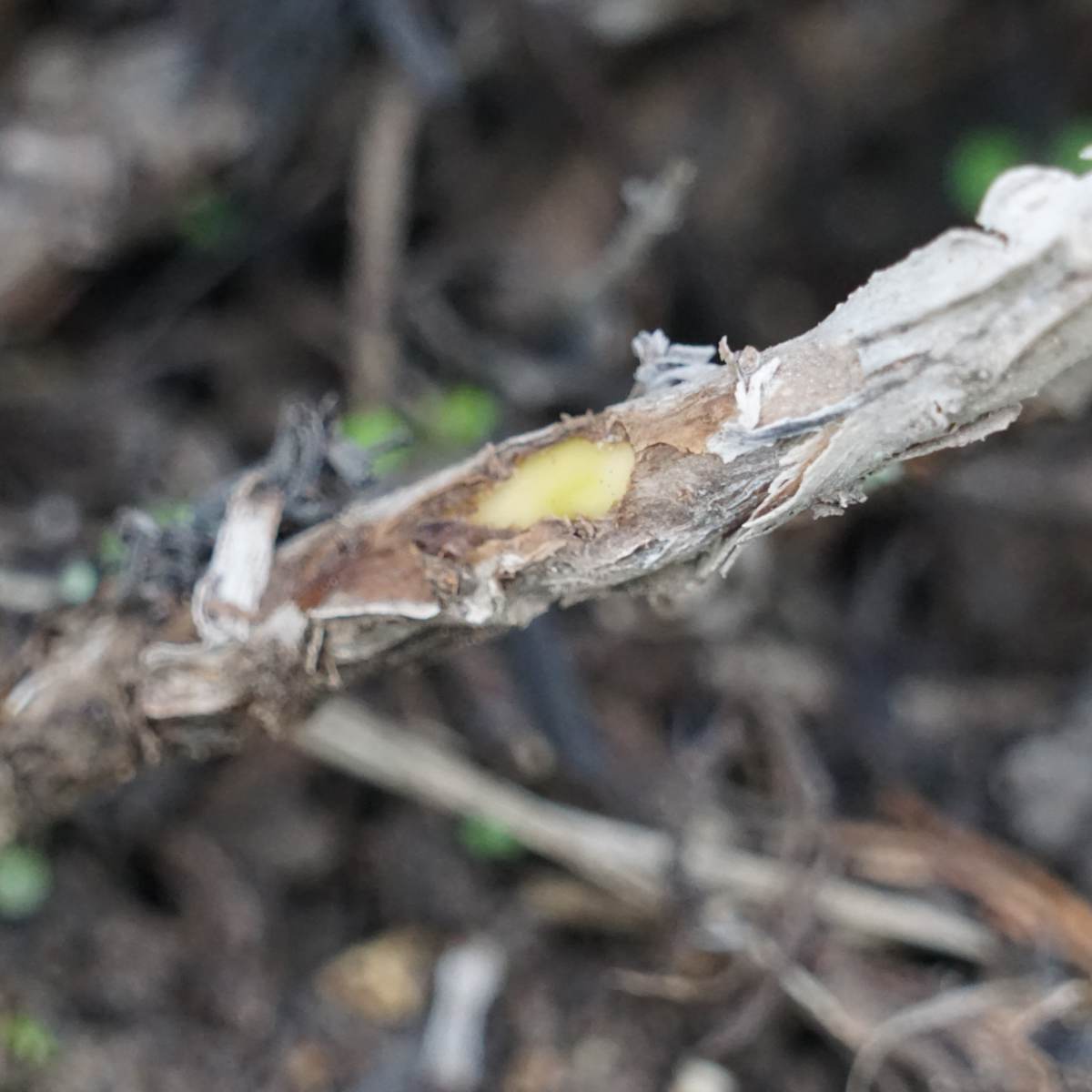
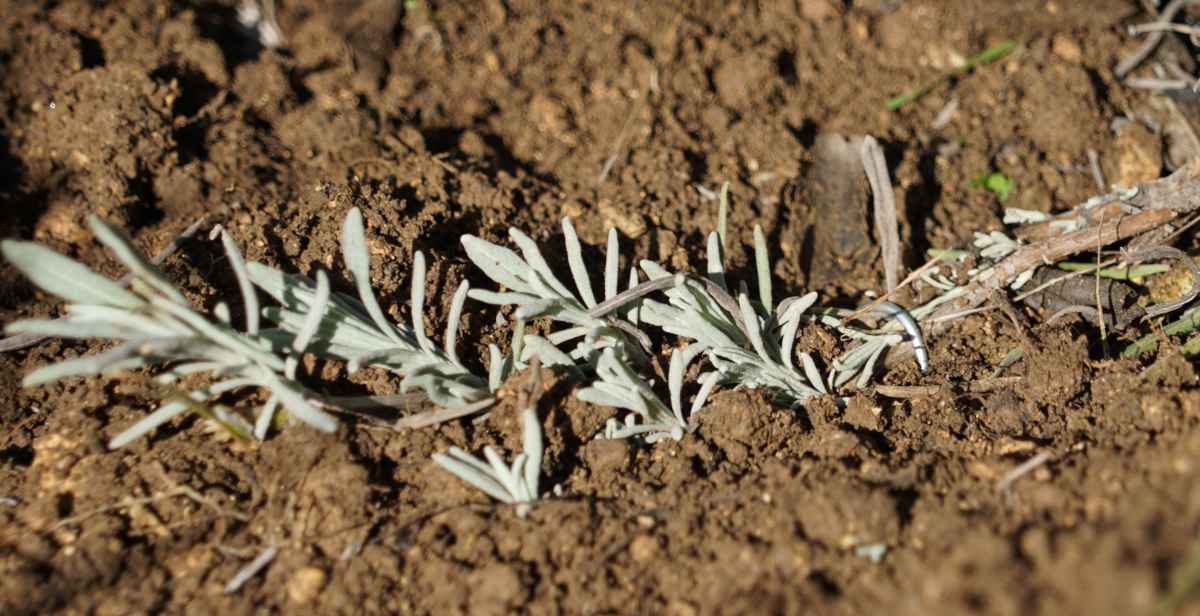
Shallow shavings reveal the green cambium, which stays intact.
Scrape off little shavings of bark, lengthwise, along the portion of the branch that is already closest to the ground. This is called scarring.
Shavings should be very shallow. Just below the gray-brown surface, a thin layer of green cambium appears. Keep this intact.
Immediately, without curing the wound, cover this portion with healthy, sterile soil mix.
Cover it generously, burying the branch under at least 1 or 2 inches (3-5 cm) of soil mix.
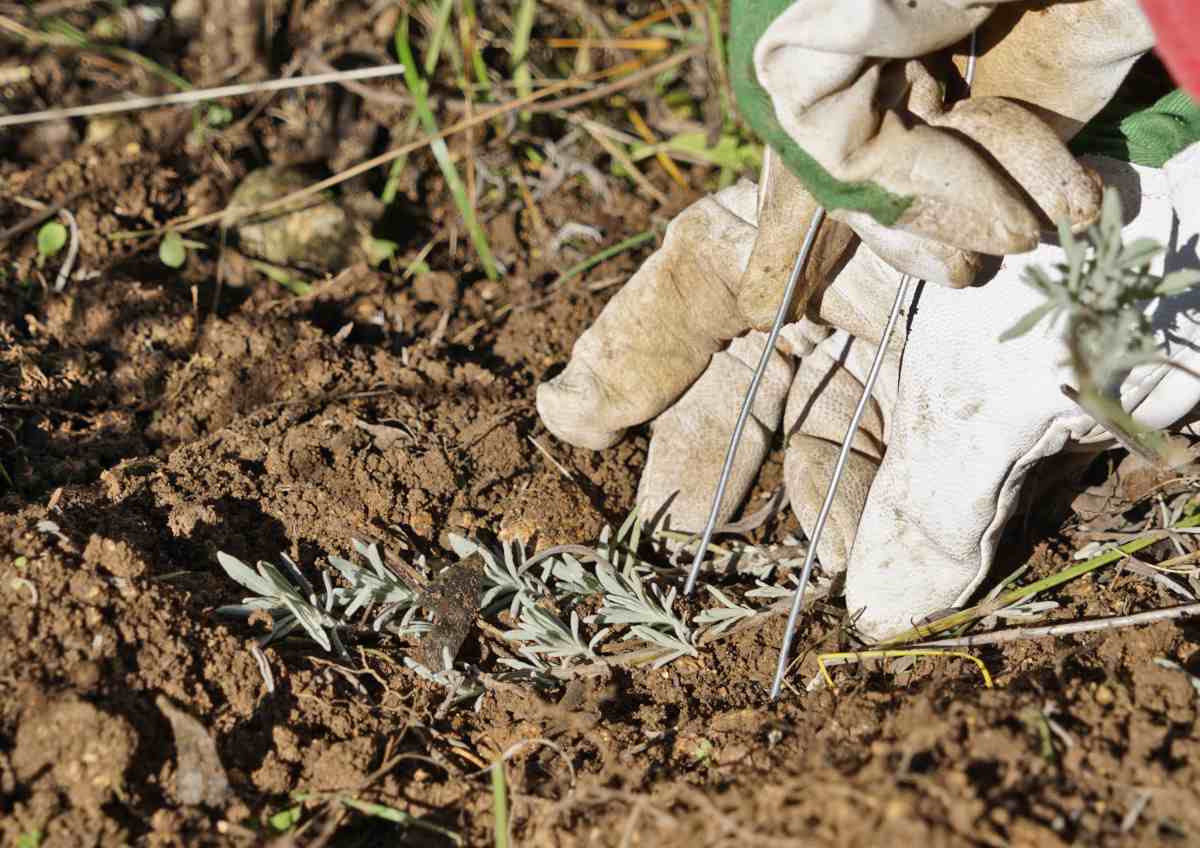
A small metal hoop keeps the branch firmly in place.
Attach the branch to the ground with a small metal hoop which will keep the branch in place.
You can also wedge the branch between two sticks, crossed just above the buried branch. Tie these two sticks together to fasten and lock the branch under them.
To keep soil from drying up or washing away, cover it with mulch. Any type of mulch works fine here.
One or two years later…
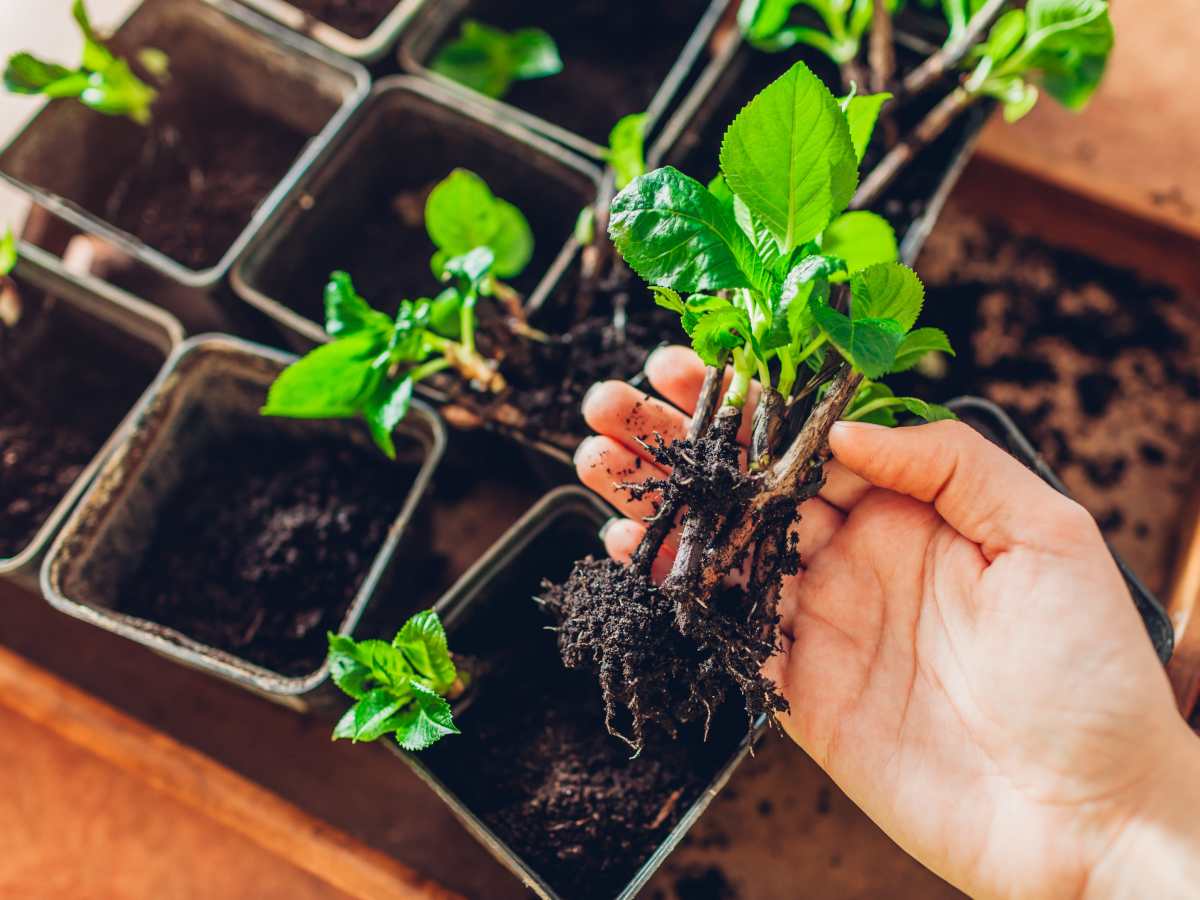
The bend that was underground will have sprouted roots. These nourish the extended portion of the branch.
If the root system seems strong enough after a year, you can transplant. However, it’s best to wait two years to make sure.
Cut the branch that connects the new plant to the old mother plant.
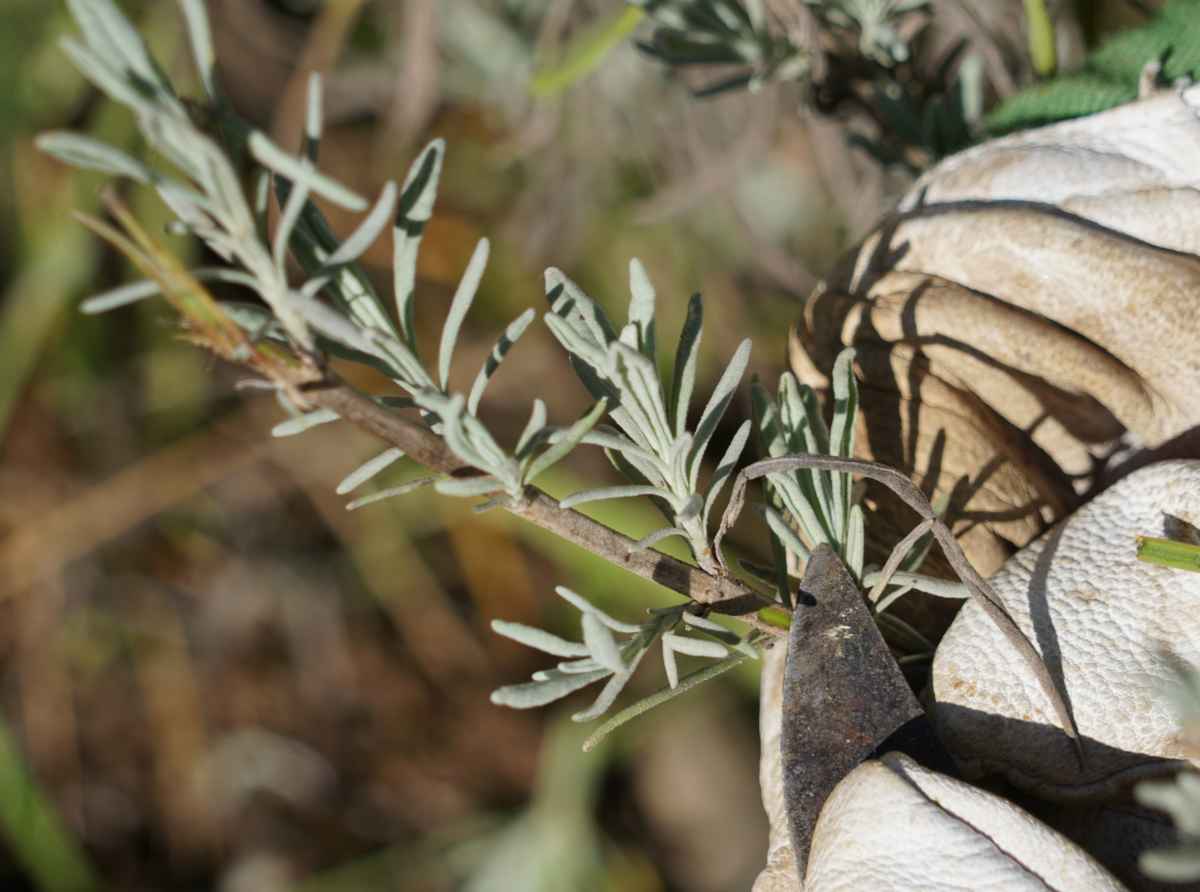
As always when transplanting, prune off part of the plant. Take care to remain within a section still carrying green leaves (old wood, even from a layered lavender, has trouble sprouting new shoots).
Which lavender to layer: popular varieties compared
Layering copies the parent exactly, so it is worth knowing what you are multiplying. The lavenders below are the ones most often found in British and North American garden centres and catalogues.
Which lavender to layer: popular varieties compared
Variety
Flower colour
Size band
Hardiness
Best use
Imperial Gem
Dark purple
Compact
Fully hardy
Neat hedging, cutting
Miss Katherine
Deep pink
Compact
Fully hardy
Borders, pots
Hidcote
Deep violet-purple
Compact
Fully hardy
Low hedging, edging
Folgate
Blue-violet
Compact
Fully hardy
Early flowers, cutting
Willow Vale
Deep purple, long bracts
Medium
Borderline hardy
Sunny free-draining beds
Nana Alba
White
Dwarf
Fully hardy
Containers, edging
Rosea
Pink
Compact
Fully hardy
Mixed borders
Munstead
Soft blue-mauve
Compact
Fully hardy
Borders, pots
Grosso
Violet-blue
Tall
Hardy
Oil, dried bunches
Provence
Pale lavender
Tall
Hardy
Drying, long stems
Edelweiss
White
Tall
Hardy
Large hedges
Phenomenal
Blue-violet
Medium to tall
Very hardy
Humid or cold gardens
Anouk
Purple with plum bracts
Compact
Borderline hardy
Patio pots
Fathead
Dark purple, fat heads
Compact
Borderline hardy
Containers, gravel
Kew Red
Crimson with pale bracts
Compact
Borderline hardy
Pots, sheltered spots
Increase chances of success
Lather rooting hormones on the wound you created to trigger rooting.
You can use natural rooting hormones such as aloe vera gel or even honey.
Stop all blooming on layered branches. Pinch off flowers on the layered branch.
The first time you water, use sugar water: 10 ounces to a gallon or 70g to a liter of sugar. Sugar water feeds healthy fungus and helps them partner with new lavender roots.
Bury the branch under one to two inches of soil mix.
Pin down more branches than you want plants, since not every lavender layer will root, and any extras that do take can simply be potted up or given away.
Choose stems that still bend easily and show green under the bark, because the brittle grey wood at the base of an old lavender almost never roots.
Keep the mound evenly moist but never waterlogged, watering once the surface begins to dry, since lavender is rot-prone and a constantly saturated collar can damage the wounded stem before roots form.
Air-layering the entire trunk, a brilliant option
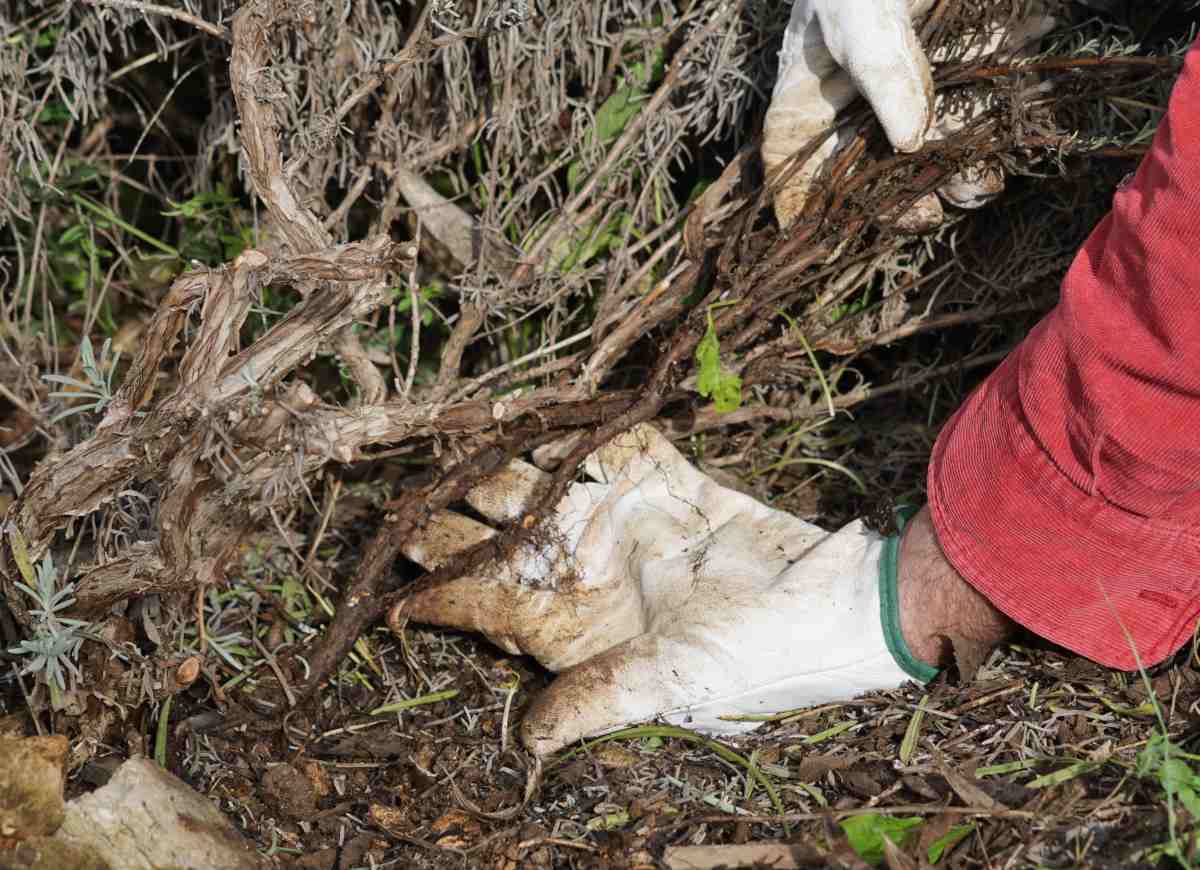
What you do for large branches, you can try on the entire trunk! Air-layer the trunk or main branches of the original old lavender plant.
It’s critical to make sure everything drains extremely well. Otherwise, the trunk will wallow in moisture and rot.
Use draining soil mix, gravel or clay pebbles, and cover with light mulch. Remember to scar the trunk in places before piling the soil up around it.
New growth will start sprouting from the area, success! Clear out old branches that block the sun out and start pruning it yearly as for a young plant.
Wait for an entire year before cutting the older, larger branches off or you might shock and kill the lavender, even though a small shoot has appeared.
When new shoots are well established, check to see if you can remove the mulch and extra soil. If ever too many roots have developed directly from the main branches, keep the soil in place.
Resume regular pruning.
Smart tip on layering lavender
Make sure the branch is well secured to the ground. Any movement due to wind or animals will destroy new young roots!
Images: dreamstime: Anna Griessel; own work: Rosalyn & Gaspard Lorthiois
Written by Gaspard Lorthiois | Loves helping out, especially when it comes to growing things. Worked in herbal medicine, runs a farm, and dabbles in tech. Master's degree and engineer.