How to trim lavender – maintenance and hard pruning
·
0
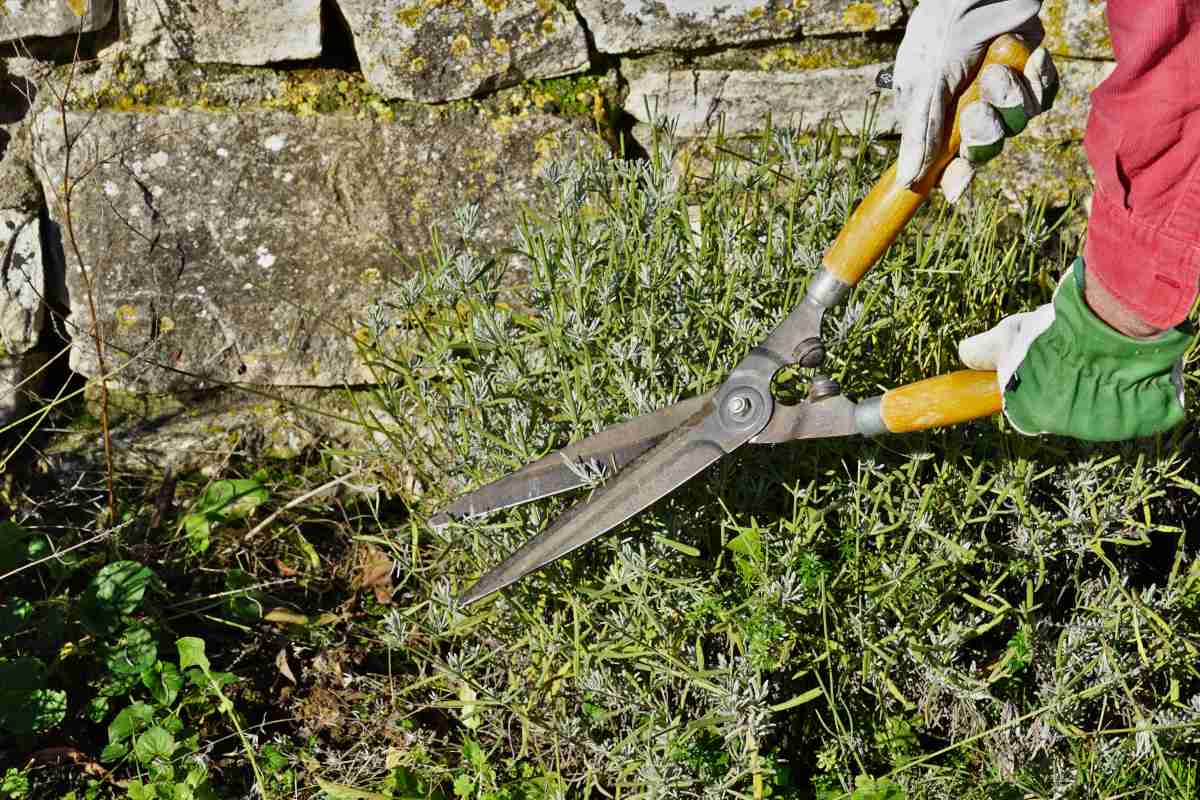
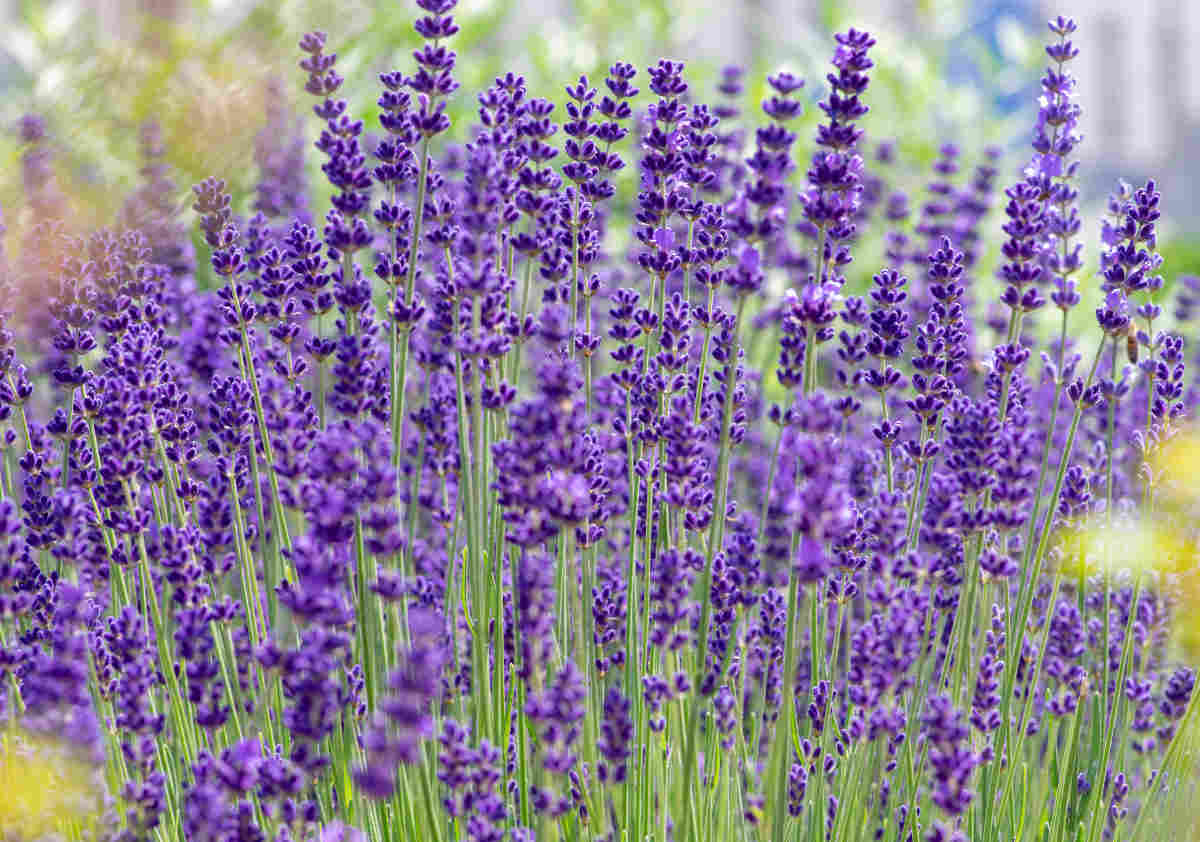
Flowers cut while still open, placed in a closet in a pouch, pot-pourri or bowl, give the laundry a nice smell — true lavender (Lavandula angustifolia) is grown for that harvest as much as for its shape. Trimming lavender, also called pruning lavender, is simply a matter of knowing where to cut: snip only the current year’s leaves, never the old dry wood, and repeated pruning will give magnificent plants.
Although the plant will grow fine if it isn’t pruned, your lavender will never be more beautiful than if you care for it regularly. Lavender blooms magnificently when the plant is well trimmed, so that the best flowers and the best fragrance appear.
Maintenance pruning on lavender also keeps it from seeming bare or sparse.
You may also use flowers that are still open and place them in a closet in a pouch, pot-pourri or bowl. This will give the laundry a nice smell.
Maintenance pruning of lavender
After blooming, remove wilted flowers and preserve the shape of the lavender shrub with the following steps:
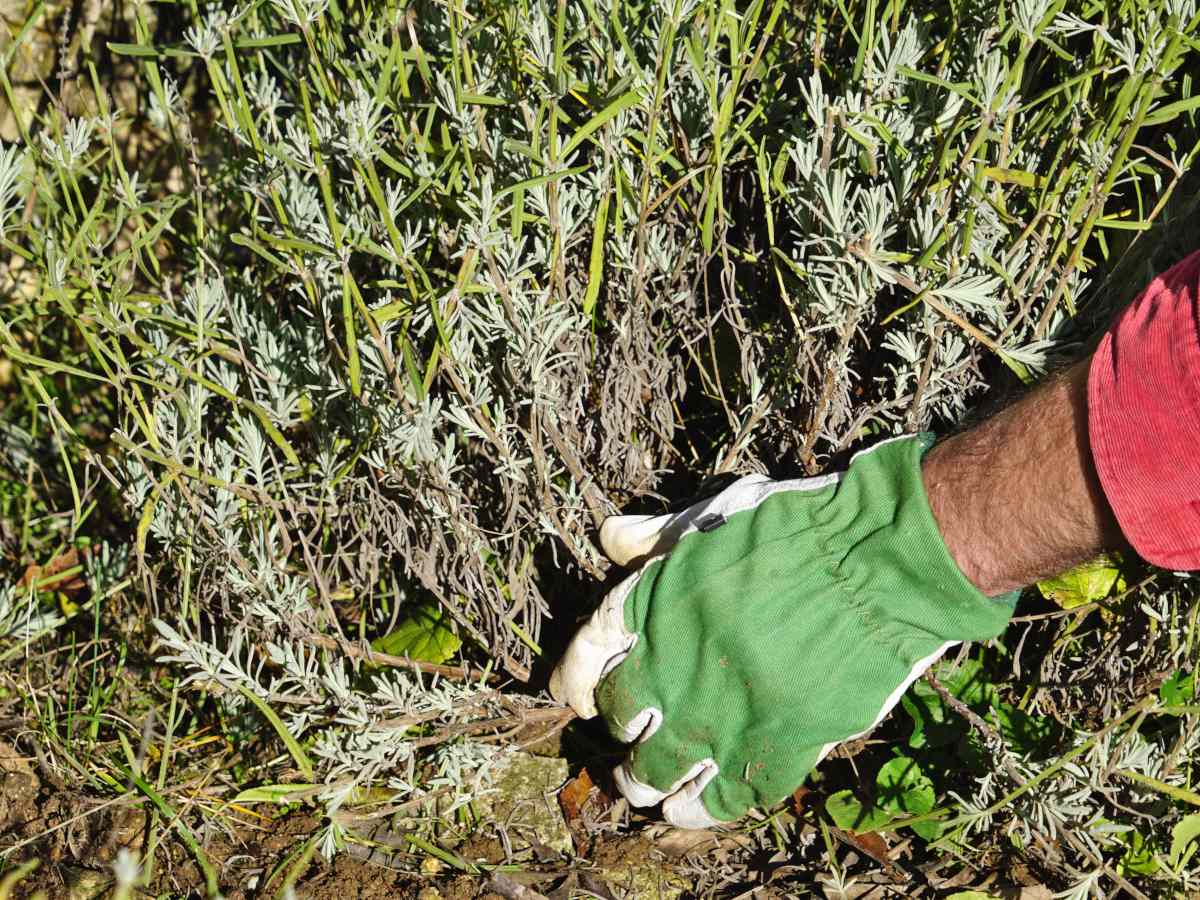
Cut on the current year’s leaves never on old wood
Lavender is only pruned on tender wood, ideally on the year’s growth.
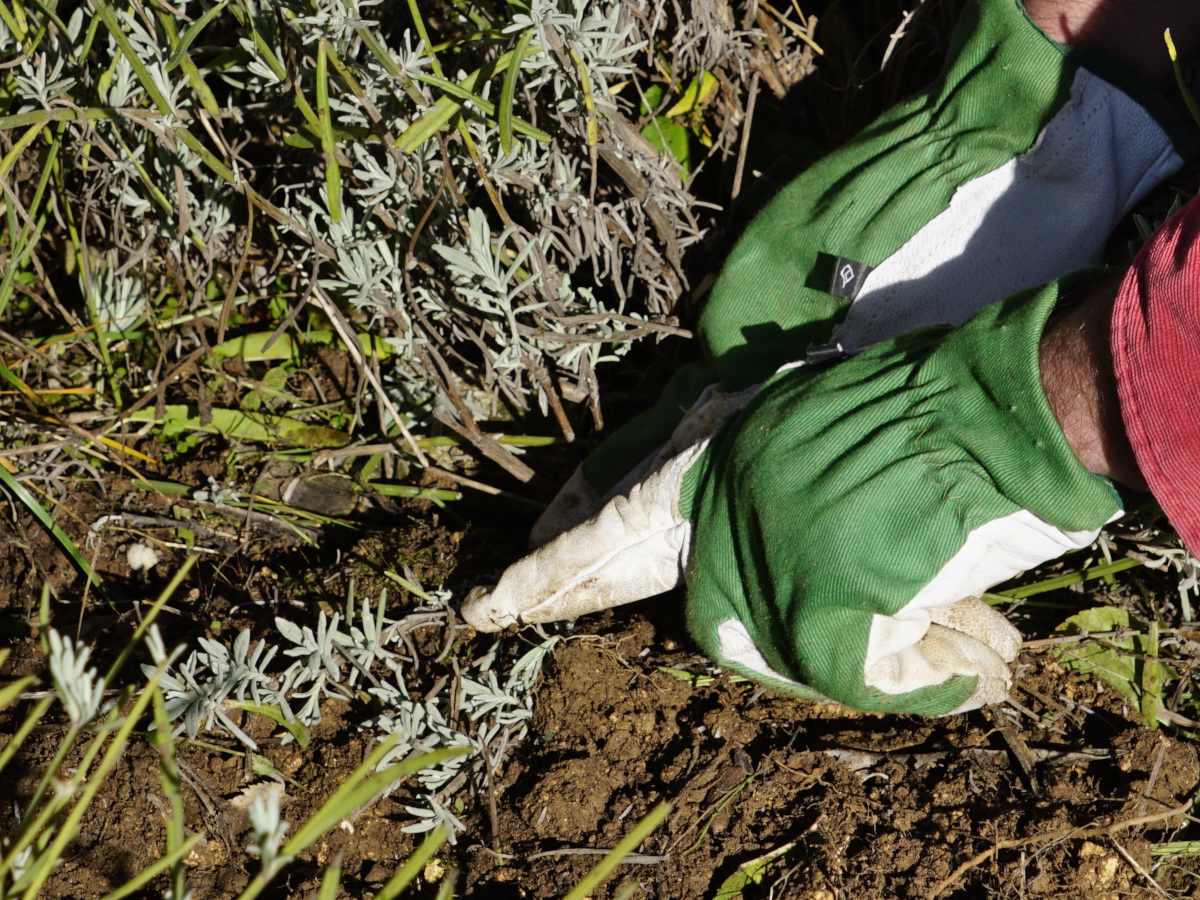
Old growth never sends new shoots out (curious why?). If lavender is pruned on old growth, it can’t grow back, and there is a chance it would die.
Best practices are to snip all around the lavender plant, without ever cutting old, dry wood.
A good way to do this is to cut on the current year’s leaves.
Common lavender varieties and what they ask of you
All lavenders follow the same rule — cut on the current year’s growth, never on old wood — but size, colour and hardiness vary a good deal between the types sold in garden centres. Use the table below to pick the one that suits your spot, and to judge how much trimming it will need.
Common lavender varieties and what they ask of you
Variety
Height
Flower colour
Hardiness
Best use
Hidcote
40–60 cm
Deep violet-purple
Fully hardy
Low hedging, edging
Folgate
45–60 cm
Lavender-blue
Fully hardy
Cut and dried flowers
Provence
60–90 cm
Pale mauve-blue
Hardy in mild spots
Wands, pot-pourri, scent
Phenomenal
60–75 cm
Blue-purple
Very hardy
Damp or cold gardens, hedging
Anouk
40–50 cm
Purple with pale ears
Half-hardy
Containers, sheltered sunny spots
A video on trimming lavender
Here is a quick, fun two-minute video on how to correctly prune your own lavender.
What the video shows:
How to trim the plant so the best flowers and the best fragrance appear.
When to do it, with a simple pruning calendar.
The tools to use, and how to avoid building up useless old wood.
Use sharp, clean shears or secateurs on lavender: they slice stems cleanly instead of crushing or tearing them, which is why standard pruning guidance recommends well-maintained tools over blunt or dirty ones.
Leave a few centimetres of green, leafy growth below every cut on lavender, since the buds that will make next year’s shoots sit on that leafy part and not on the bare stem beneath it.
Prune lavender on a dry day rather than in damp weather: this is standard horticultural advice for a plant that dislikes persistent moisture, since dry conditions after cutting reduce the risk of fungal infection.
Which type of lavender pruning do you need?
Lavender isn’t pruned the same way at every stage of its life. Use this table to match the state of your plant, or your intentions, to the right technique and the right moment.
Which type of lavender pruning do you need?
Technique
When
What you cut
Why do it
Maintenance pruning
After blooming, at the end of summer, every year
Wilted flowers and the current year’s leaves, all around the plant
Keeps the shape, stops the shrub looking bare or sparse, enhances next year’s blooming
Harvest pruning
Occasionally, during the blooming
Flowering stems, still open
To harvest flowers for lavender wands, pouches, pot-pourri or bowls that scent the laundry
Hard pruning in portions
Spread over several years
Part of the plant at a time, never all the old wood at once
Rejuvenates an old, woody lavender instead of pulling it out
Layering
As an alternative to pruning an old plant
No cutting back of old wood at all
Renews an old, woody lavender by rooting its own branches
Whichever route you take, the golden rule stays the same: never cut into old, dry wood.
Other types of pruning for lavender
You might have read that lavender can’t take a hard pruning. That’s true, but it doesn’t mean that the only solution for an old lavender is to pull it out!
When renovating an old lavender in stages, cut each stem back to a point where green leaves or visible buds remain, because bare grey wood rarely resprouts and often dies back instead.
Because lavender seldom reshoots from bare old wood, staged renovation is unreliable for it; instead prune lightly each year into young leafy growth, and replace plants that have already become woody and leggy.
To layer a woody lavender, peg a low, flexible outer branch down so a section of it sits in contact with the soil, leaving the leafy tip free, and keep that spot lightly moist until roots form.
If an old lavender has split open at the centre and shows nothing but bare grey wood at the base, take cuttings from young non-flowering shoots as insurance before attempting any rejuvenation.
Credits for images shared toNature&Garden(all edits by Gaspard Lorthiois):
Trimming lavender by Rosalyn & Gaspard Lorthiois, own work
Written by Gaspard Lorthiois | Loves helping out, especially when it comes to growing things. Worked in herbal medicine, runs a farm, and dabbles in tech. Master's degree and engineer.