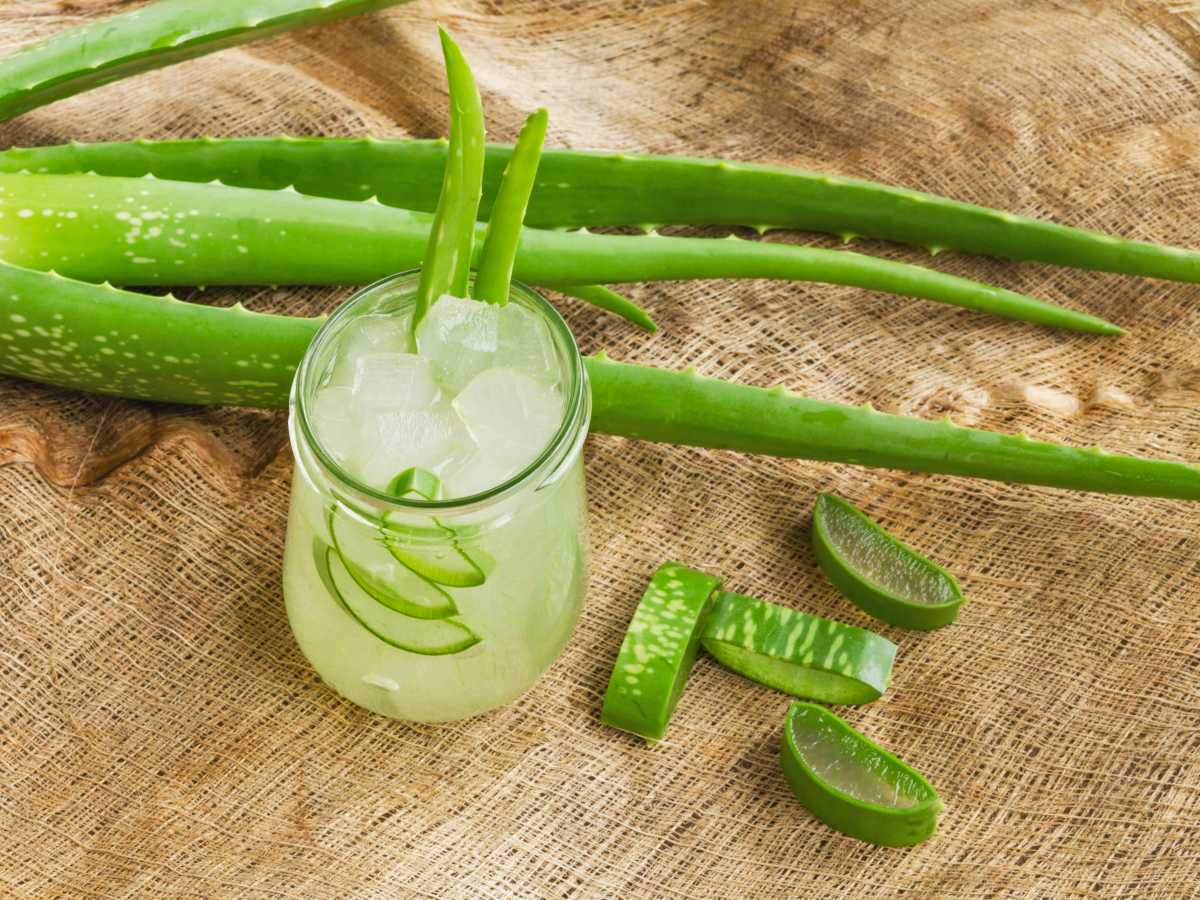
Aloe Vera is a well-known plant for its numerous benefits for the skin and hair. While its gel can be purchased ready-made, it’s also possible to harvest it yourself. Here’s how to harvest Aloe Vera gel.
It’s important to note that the inside of Aloe Vera leaves consists of two distinct parts:
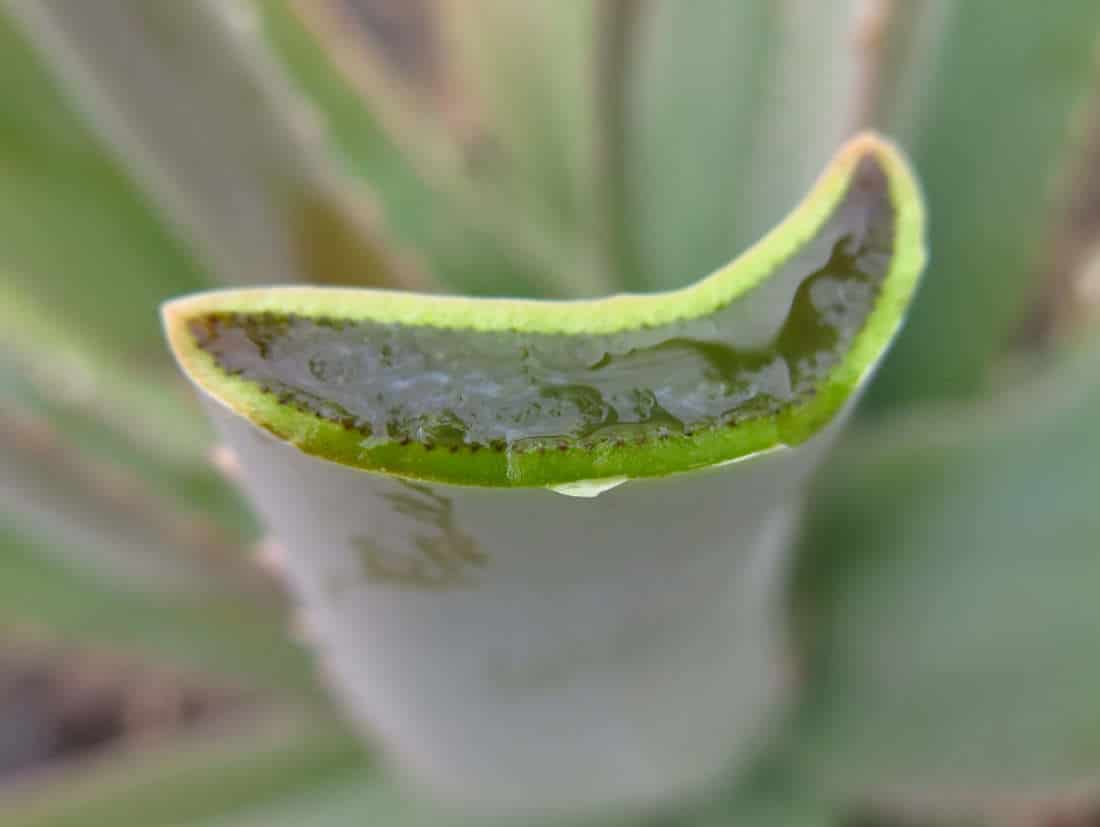
Clear gel at the core, yellow latex in the skin
The latex, a yellow sap found in the outer skin, which is never used.
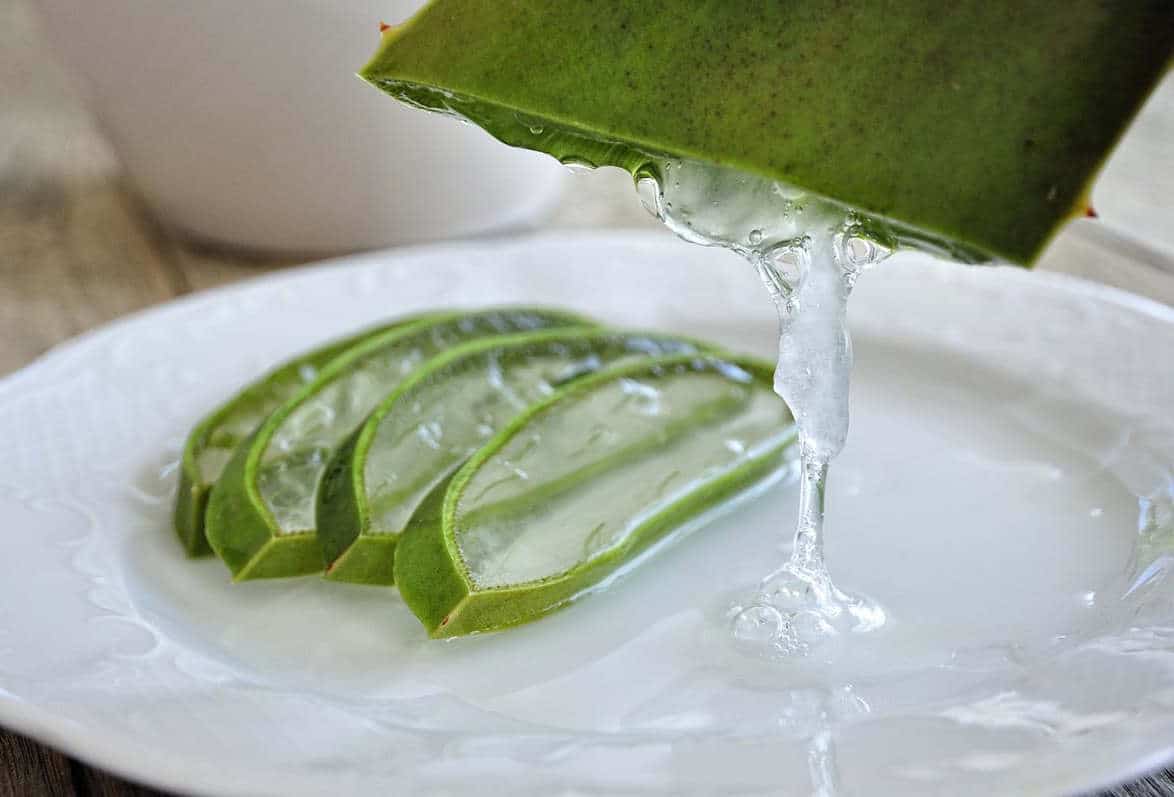
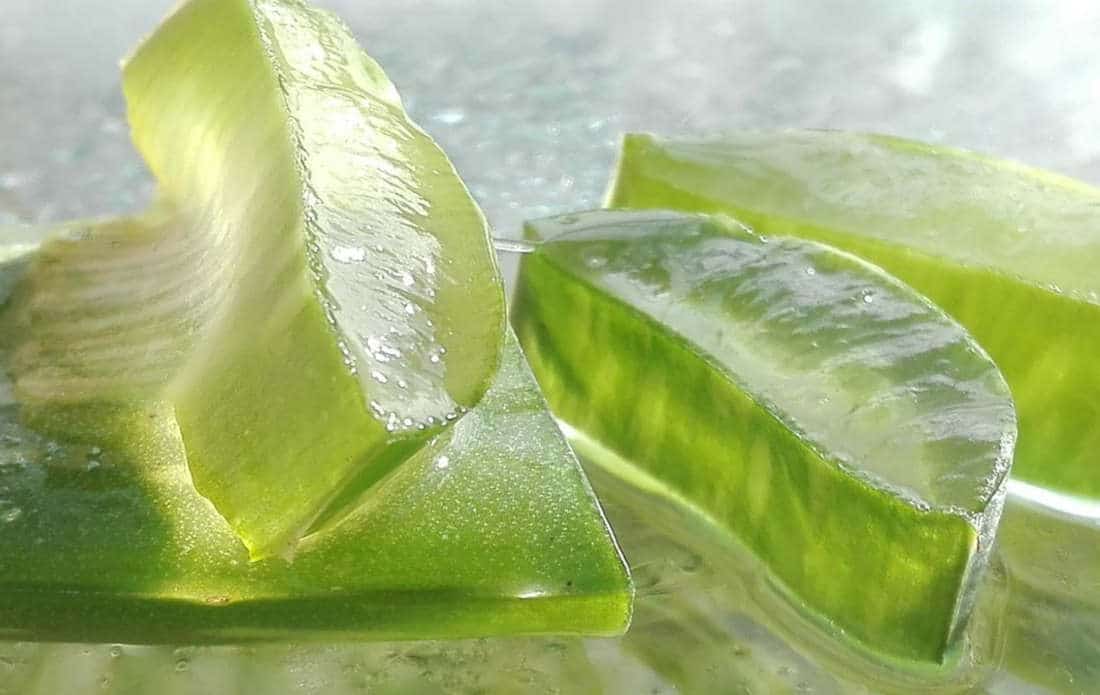
The gel, a clear and translucent sap found at the core of the leaf, is the only part used in cosmetics and dermatology due to its many benefits.
When extracting the gel from your Aloe Vera plant, be sure not to touch the yellow latex, as it contains 20 to 40% of molecules with laxative effects and can be toxic when in contact with the skin.
Selecting the Aloe Vera Leaf
First and foremost, the selected leaf should be taken from an adult Aloe Vera plant that is at least 3 years old and approximately 40 cm in height. This is an essential condition to benefit from the maximum active principles.
Take the fleshiest mature leaves from the plant’s base
Next, select the most mature leaves, which are the fleshiest ones, typically located at the base of the plant.
Use a sharp and clean knife.
Cut the leaf at its base, being careful not to harm the rest of the plant.
Extracting Aloe Vera Pulp
Once you have a fleshy leaf filled with gel, you need to extract the gel in several steps:
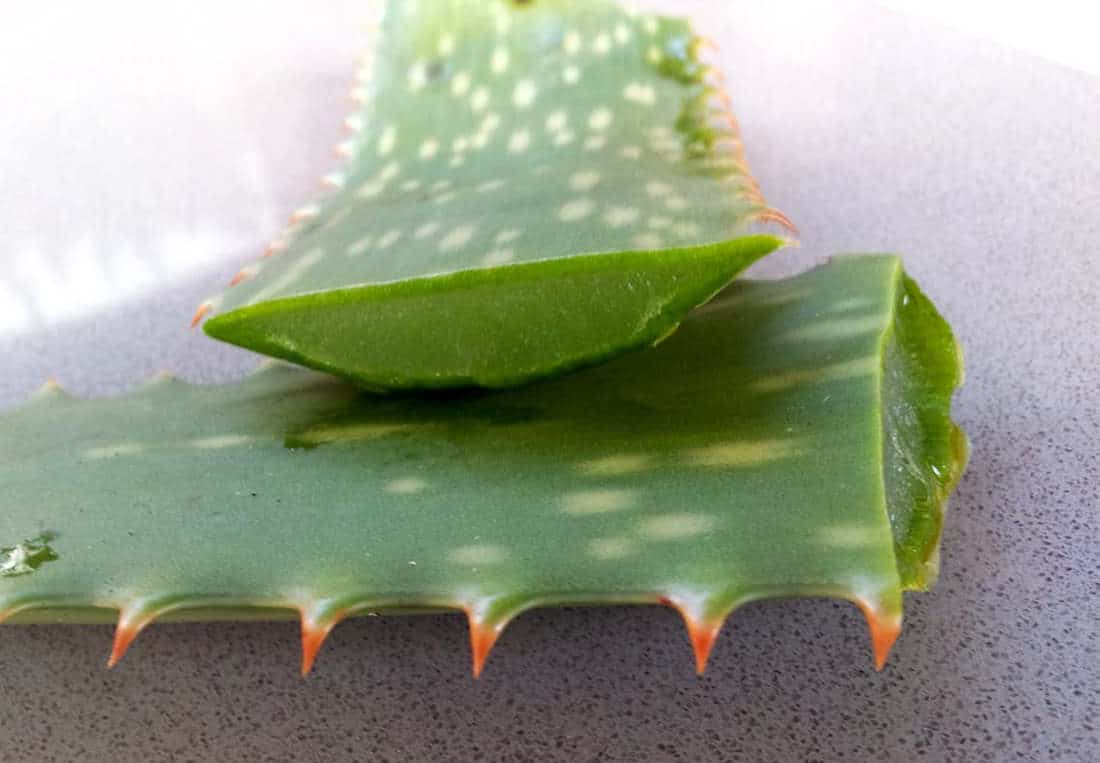
Using your sharp knife, start by removing the teeth on each side of the leaf.
Remove the base of the leaf and set it aside (you won’t use it).
Stand the leaf upright with the cut side down for 30 minutes to remove the aloin (toxic latex).
Cut the widest part of the leaf into 2 to 3 cm thick slices.
Soak them in a bowl of water for 1 hour.
Remove the skin or outer layer around the pulp.
Rinse the pulp with clear water to remove any residual latex.
Place the collected Aloe Vera pulp in a blender and blend it to obtain a thick and homogeneous gel.
Transfer the obtained gel to a previously sterilized container.
Optionally, add a few drops of grapefruit seed extract for better preservation and to reduce oxidation.
Storing Homemade Aloe Vera Gel Freshly harvested
Aloe Vera gel can be stored in the refrigerator for 3 to 4 days. If you want to keep it longer, pour the gel into ice cube trays and place them in the freezer.
Also, unopened Aloe Vera leaves can be stored at room temperature for a maximum of 3 months. Store them in a dry place away from light. An opened leaf, however, cannot be stored for more than 2 days. Wrap it in food paper and keep it in a dry, cool place at a maximum temperature of 5°C.
Aloe Vera Gel and Leaves: How Long Each Keeps
Whether you blend the pulp straight away or keep a cut leaf for later, the keeping time changes completely. This table sums up what the article says about each option.
Aloe Vera Gel and Leaves: How Long Each Keeps
What you are storing
Where to keep it
How to keep it
Keeps for
Freshly blended gel
Refrigerator
In a previously sterilised container
3 to 4 days
Blended gel for long keeping
Freezer
Poured into ice cube trays
Longer than refrigerated gel
Unopened leaf
Room temperature
Dry place away from light
Maximum 3 months
Opened leaf
Dry, cool place at 5°C maximum
Wrapped in food paper
No more than 2 days
Adding a few drops of grapefruit seed extract helps preservation and reduces oxidation of the blended gel.
What Are the Benefits of Aloe Vera Gel?
Blend the rinsed pulp into a homogeneous gel
Rich in vitamins (A, B1, B2, B3, B12, C, E…), Aloe Vera gel also contains numerous minerals (iron, sodium, potassium, copper, zinc, chromium) and essential amino acids.
In cosmetics, it is particularly appreciated for its antioxidant properties, making it an anti-aging agent for the skin. Additionally, Aloe Vera gel offers astringent and healing properties, ideal for soothing minor burns, including sunburns, and certain dermatological issues.
Before using homemade gel widely, dab a little on the inside of the elbow and wait a day, since allergy to aloe does occur.
Homemade aloe vera gel contains no preservatives and spoils within days, so refrigerate it and discard it if it turns pink or brown, smells sour, or shows mold.
Home-extracted aloe gel can still contain traces of aloin from the yellow latex layer, a laxative irritant, so unlike commercially purified, decolorized aloe drinks it is not reliably safe to swallow.
Written by Gaspard Lorthiois | Loves helping out, especially when it comes to growing things. Worked in herbal medicine, runs a farm, and dabbles in tech. Master's degree and engineer.